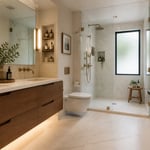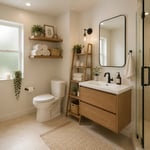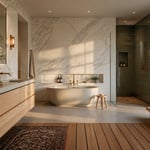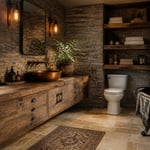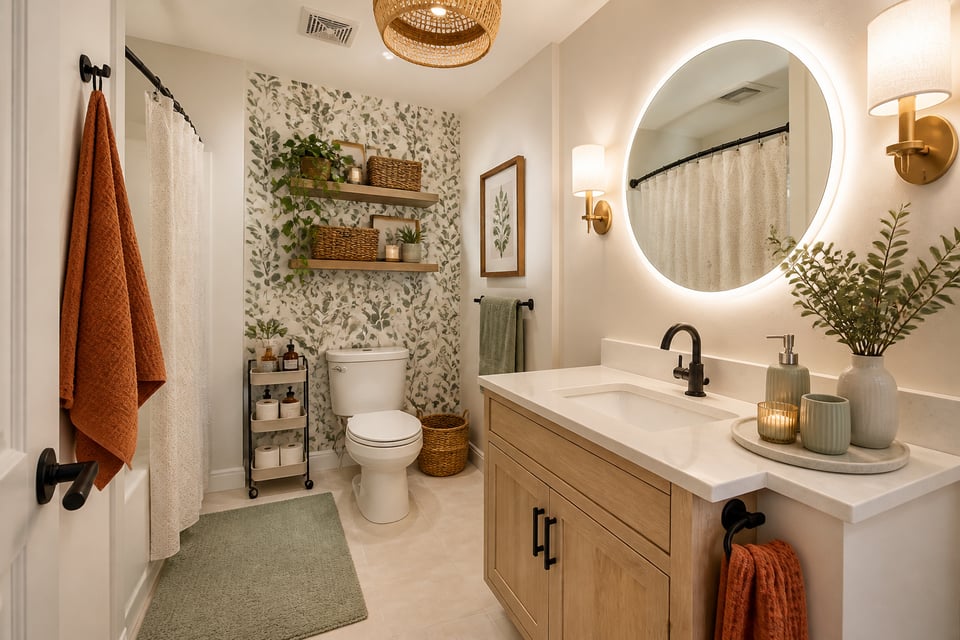
There’s a particular kind of frustration that hits when you open a rental bathroom cabinet and everything falls out at once. I’ve stood in my share of those cramped little rooms — maybe 35 square feet, a vanity that’s seen better decades, one sad shelf above the toilet — trying to figure out where exactly I was supposed to put everything I owned. Most people assume the answer is to just own less. That’s not a storage solution; that’s giving up.
What actually works is a systematic approach to apartment bathroom ideas that treats every wall, every gap, and every inch of vertical space as an asset. The good news: you don’t need to drill a single hole to transform the way your bathroom functions and feels. These sixteen strategies build on each other, starting with the highest-impact storage fixes and working toward the finishing touches that make a rented bathroom feel genuinely like yours. Whether you’re working with a tight budget or just moved in and don’t know where to start, this is the framework that actually sticks.
1. Over-the-Toilet Storage That Transforms Apartment Bathroom Ideas
The space above your toilet is one of the most underused real-estate in any apartment bathroom. A standard toilet tank sits around 17 inches wide, which means you have a clear vertical column of wall space — typically 24 to 30 inches wide and 5 feet tall — that most renters leave completely empty. That’s a significant organizational miss.
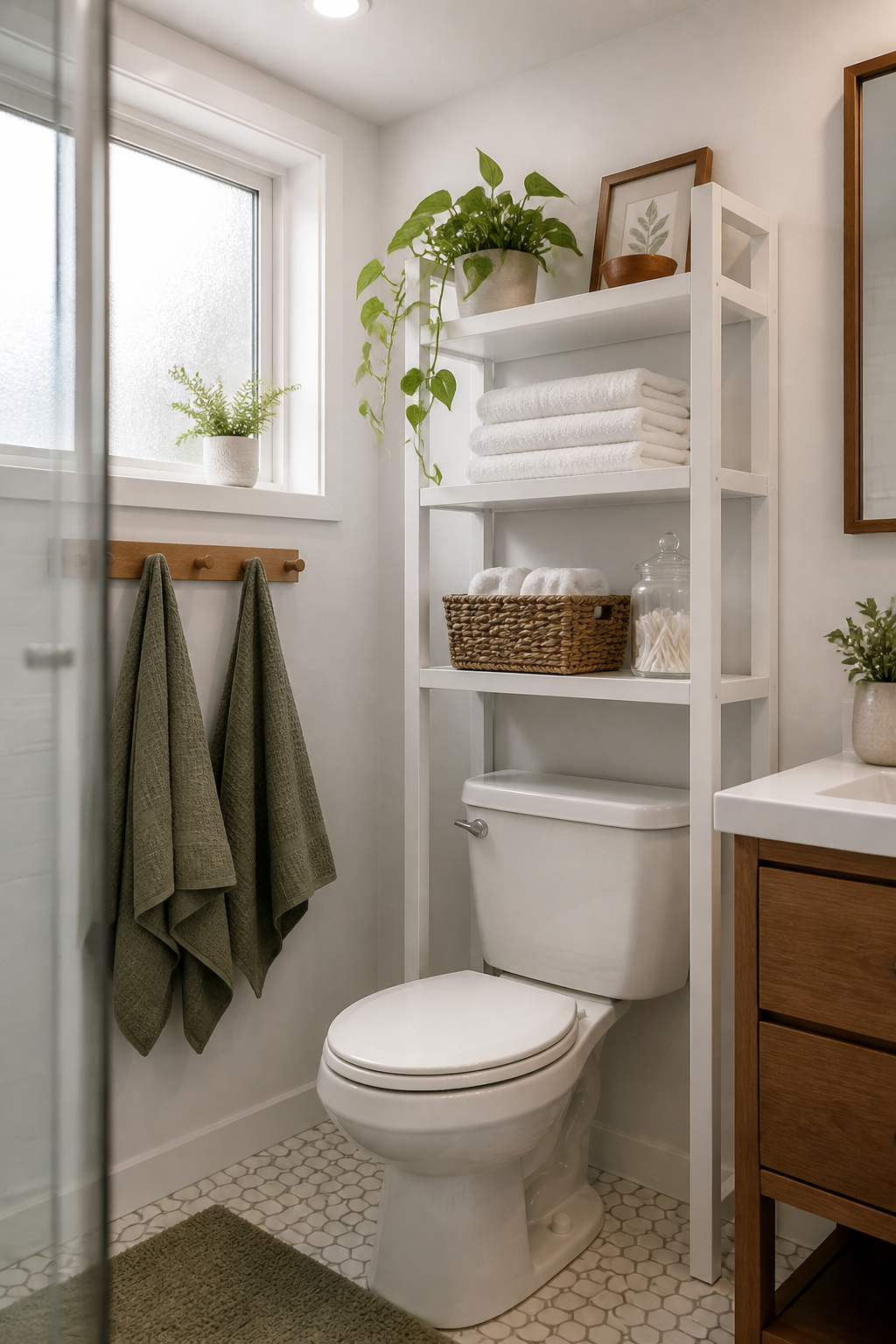
Freestanding etagere units are the most renter-friendly solution because they require zero drilling, sit flush against the wall, and move with you when you leave. Look for units with adjustable shelves and a depth of 8–10 inches so they clear the tank without tipping. For a more polished look, the IKEA HEMNES series offers a solid wood finish that reads far more expensive than its price point. If you prefer lighter visual weight, consider 3-tier floating glass shelves — the transparency means the shelves essentially disappear against the wall, which matters a lot in tight spaces where visual clutter compounds quickly.
Once your shelving is in place, the key is containment. Woven baskets or fabric bins on the lower shelves keep loose toiletry items corralled and out of sight. Assign one basket per category: hair tools in one, cleaning products in another, spare soap and paper products in a third. That system means you’re never hunting for anything, and the shelves look intentional rather than jammed.
For renters who can mount into studs or have landlord permission, simple floating shelves at staggered heights create a more custom built-in look. A pair of 24-inch floating shelves at 60 and 72 inches off the floor holds everything you’d store in a medicine cabinet — and they photograph beautifully, too, if that matters to you.
2. The Narrow Rolling Cart You’ll Use Every Single Day
Somewhere between your toilet and your wall, there’s probably a gap. It might be six inches. It might be eight. Most people assume it’s unusable. It isn’t.
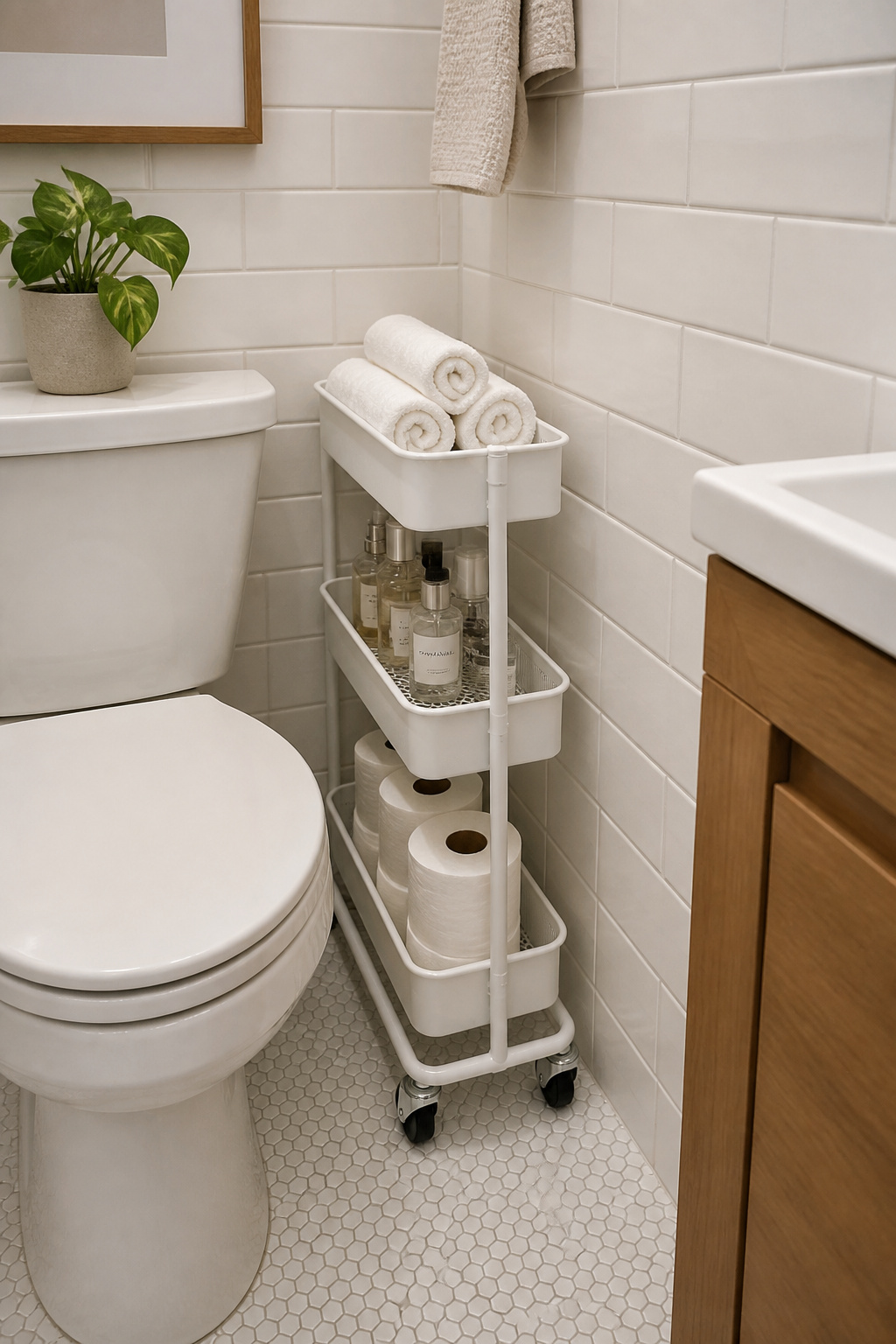
The IKEA RÅSKOG utility cart — $29.99, available in white, gray-blue, and black — measures just under 14 inches wide and 18 inches deep, which slots into the narrow gap beside a toilet in the vast majority of apartment bathrooms. Three open mesh tiers give you enough room for toilet paper rolls, extra hand towels, a small first-aid kit, and your most-used cleaning supplies. Lockable casters keep it stationary when you want it there, and unlockable when you need to reach behind it to clean. The mesh sides reduce visual bulk so the cart doesn’t feel like a storage unit dropped into your bathroom — it reads as a piece of furniture that belongs.
If your gap is tighter than 14 inches, IKEA’s RÅSHULT is approximately 11 inches wide and is specifically designed for those truly narrow bathroom sidelines. Both options are light enough to move without effort, which means cleaning the floor takes 10 seconds instead of a genuine rearranging project.
The real advantage of a rolling cart over built-in storage is flexibility. When you move — and in an apartment, you will move — you take it with you. Nothing stays behind, nothing gets patched or painted over. It’s the kind of storage that compounds its value across multiple apartments and many years. For more small bathroom storage ideas, see what other renters have found effective in similar footprints.
3. Mirrors That Double Your Perceived Space
Light is the primary tool for making a small room feel larger, and mirrors are the most efficient way to manipulate it. Position a mirror directly opposite a window and you’ll effectively double your natural light — research suggests that strategic mirror placement can boost light reflection by up to 80 percent, which not only makes a bathroom feel larger but also reduces the need for artificial lighting on brighter days.
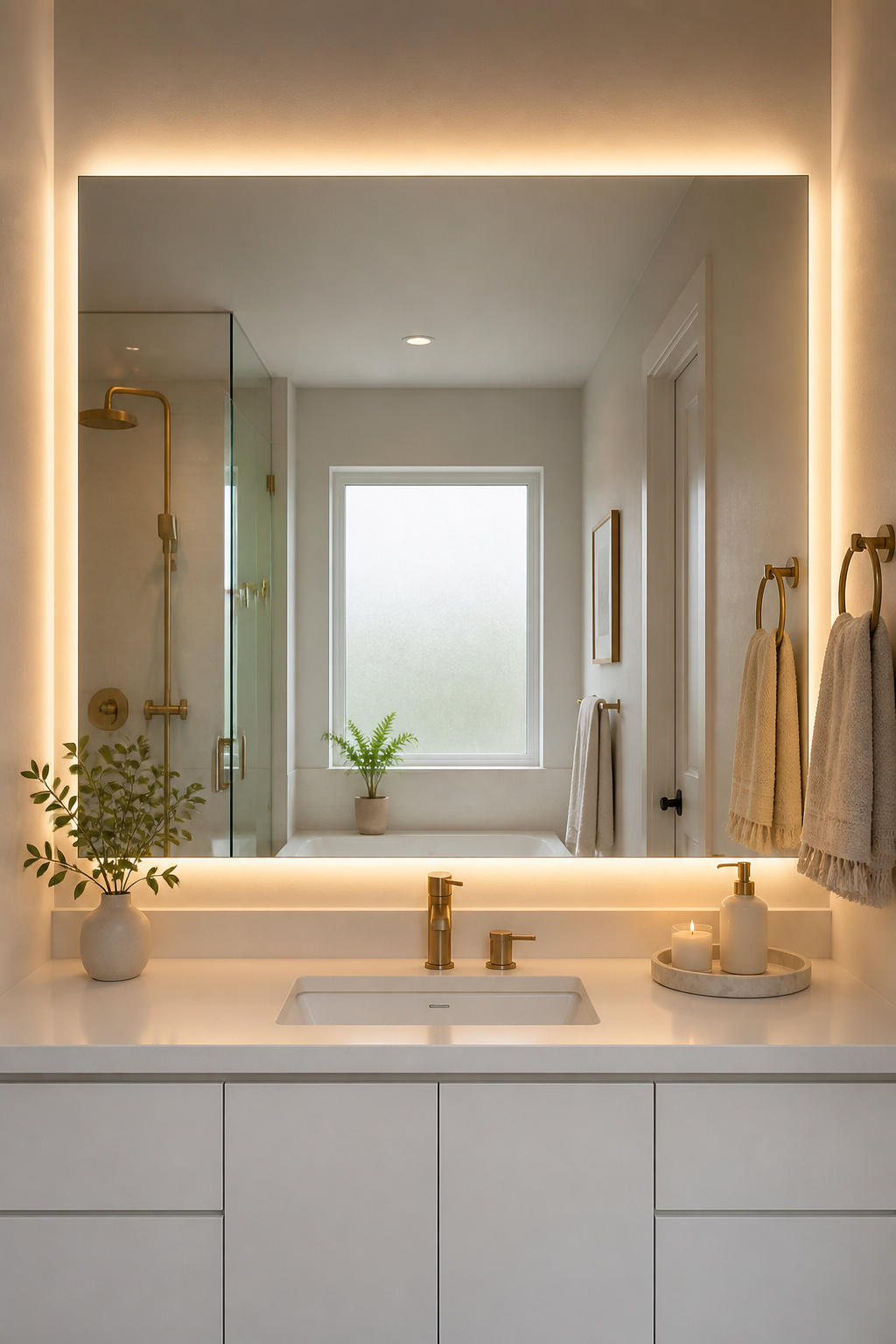
Size matters more than shape here. Designers consistently recommend going larger than feels intuitive in a small bathroom: a 24 x 36 inch minimum for a single vanity, or wider if your wall allows it. Frameless mirrors are the cleaner choice for small spaces — the absence of a frame keeps the visual boundary between the mirror and the wall soft, which prevents the room from feeling boxed in. Backlit LED mirrors take this further by creating a floating effect; the light spreads evenly around the perimeter, which eliminates the harsh shadows that most overhead bathroom lights create across your face.
If you want something with more personality, round mirrors are having a genuine moment — not just as a trend but as a functional choice, because the curved edge softens the angular geometry that makes small bathrooms feel clinical. Pair a 24-inch round mirror with a plug-in sconce on each side and you’ve created a vanity setup that looks professionally designed.
One installation tip worth knowing: most apartments have medicine cabinet recesses behind the mirror. If yours does, upgrading to a larger flat mirror over the recess adds storage (the cabinet stays accessible) and dramatically opens up the room. You don’t need to remove the medicine cabinet — just frame it visually with a mirror that extends 4–6 inches beyond it on each side.
4. Apartment Bathroom Decor: The Countertop Tray System
Countertop clutter is one of the fastest ways to make a small bathroom feel chaotic, and it’s one of the easiest problems to solve. The fix isn’t having fewer things — it’s giving everything a deliberate home within a defined zone.
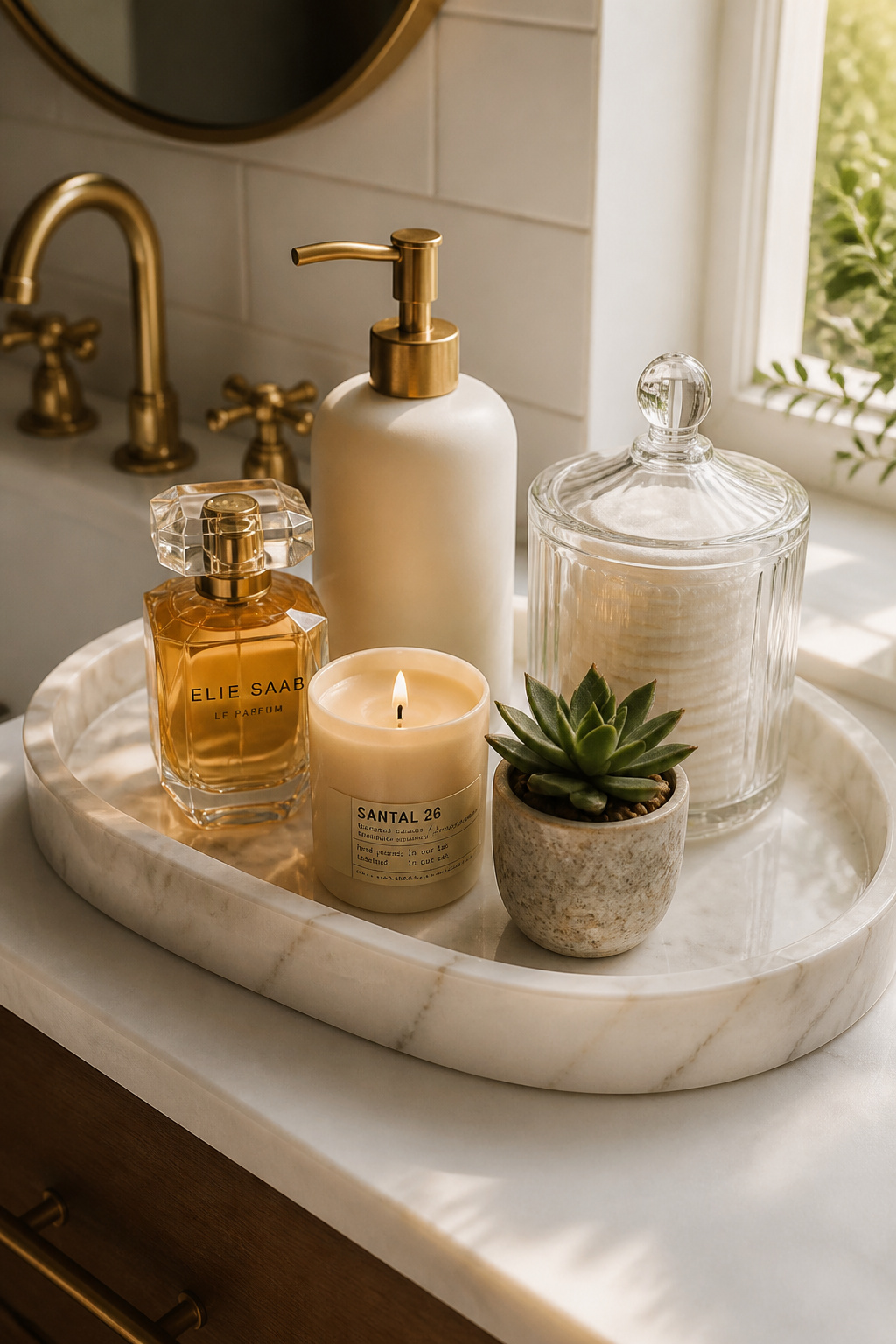
A tray is the simplest version of that zone. Place a marble, rattan, or lacquered wood tray on your vanity and suddenly the items inside it look arranged rather than abandoned. The rule is three to five objects maximum: a perfume bottle, a hand lotion, one candle, and maybe a small succulent or decorative jar. Anything outside the tray needs a different home entirely — in a drawer, in a basket under the sink, or inside the medicine cabinet. What stays on the tray is the edited version of your counter life, and that curation is what makes the difference between a bathroom that reads as stylish and one that reads as cluttered.
For apartment bathroom decor that goes a step further, replace generic plastic containers with glass or ceramic apothecary jars. A set of three — one for cotton balls, one for Q-tips, one for hair elastics — costs $15–$30 and immediately adds a sense of order and intention. Tiered acrylic organizers ($15–$35 on Amazon) do the same job vertically, which is important when your counter is only 18 inches deep and you need to preserve usable space.
The goal of the tray system isn’t perfection. It’s a reset point — a place you can always return things to at the end of the day so the bathroom resets to its baseline rather than accumulating layers of mess.
5. Peel-and-Stick Wallpaper That Fools Everyone
The single biggest visual upgrade in most apartment bathrooms costs under $100 and takes a Saturday afternoon. Removable peel-and-stick wallpaper has improved dramatically in the past five years — the current generation from brands like Tempaper, NuWallpaper by WallPops, and Spoonflower uses moisture-resistant adhesive that survives bathroom humidity without bubbling or peeling at the seams, and removes cleanly without damaging the wall beneath.
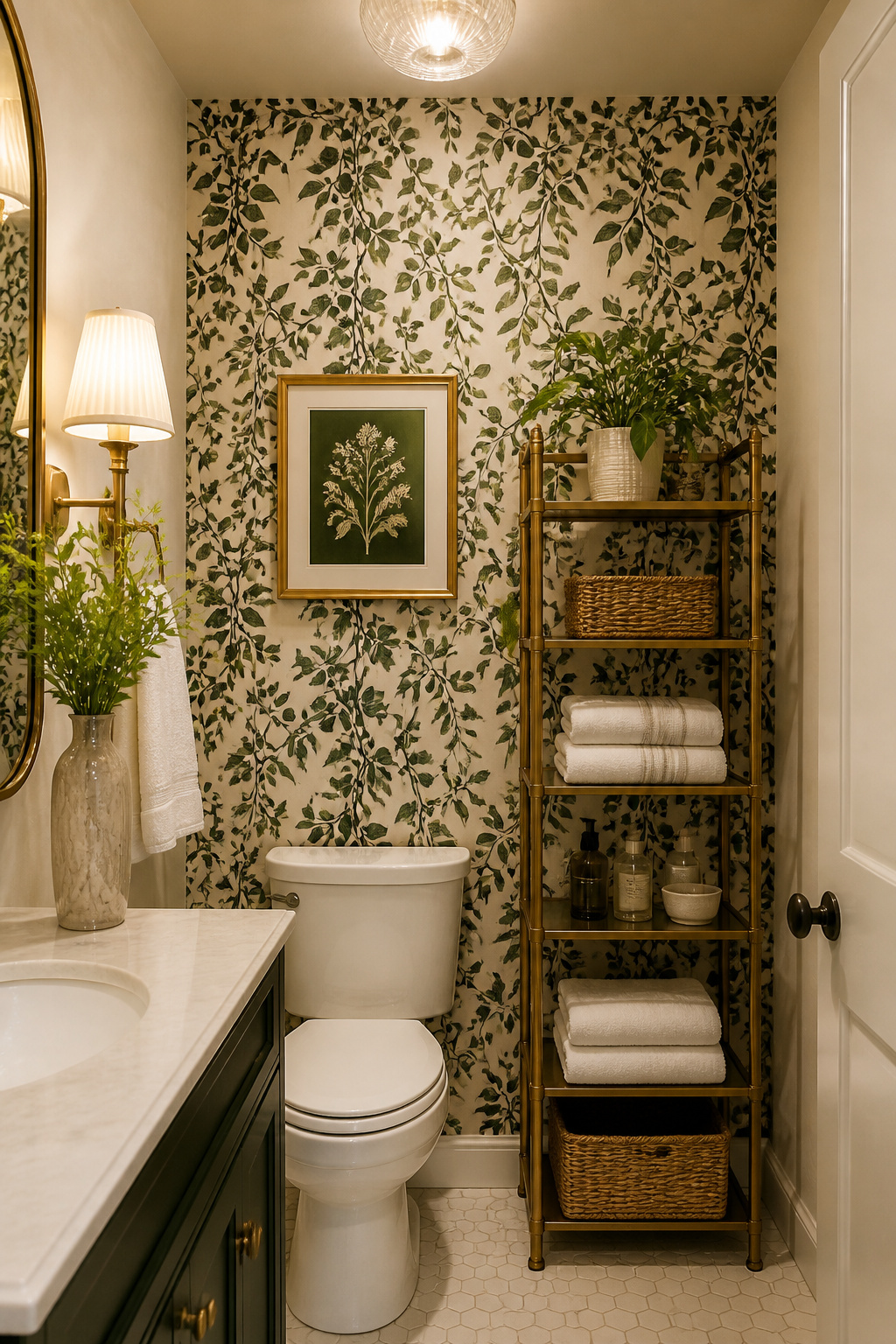
The strategic play in a small bathroom is a single accent wall: the wall behind the toilet, the wall behind the vanity, or — if you’re ambitious — the entire ceiling. A ceiling treated with wallpaper transforms a small bathroom from a box into a room with actual design intention. Soft botanical prints, classic subway tile graphics, or subtle geometric patterns all work well because they add visual interest without overwhelming the limited square footage.
Before applying, surface prep is everything. Peel-and-stick wallpaper adheres best to eggshell, satin, or semi-gloss painted walls. Flat or matte finishes are risky because the adhesive can pull the paint off during removal, which is the opposite of the deposit-safe experience you’re aiming for. Let any freshly cleaned walls dry for a full 24 hours before applying, and remove by peeling at a 45-degree angle — slow and steady. At $30–$60 per roll covering approximately 28 square feet, one accent wall behind the toilet runs under $100 and changes the entire feeling of the room.
6. Plug-In Lighting That Upgrades Your Whole Bathroom
Most apartment bathroom lighting is an afterthought — a single overhead fixture that casts unflattering shadows and leaves the vanity area chronically under-lit. The good news is you don’t need an electrician or landlord permission to fix it.
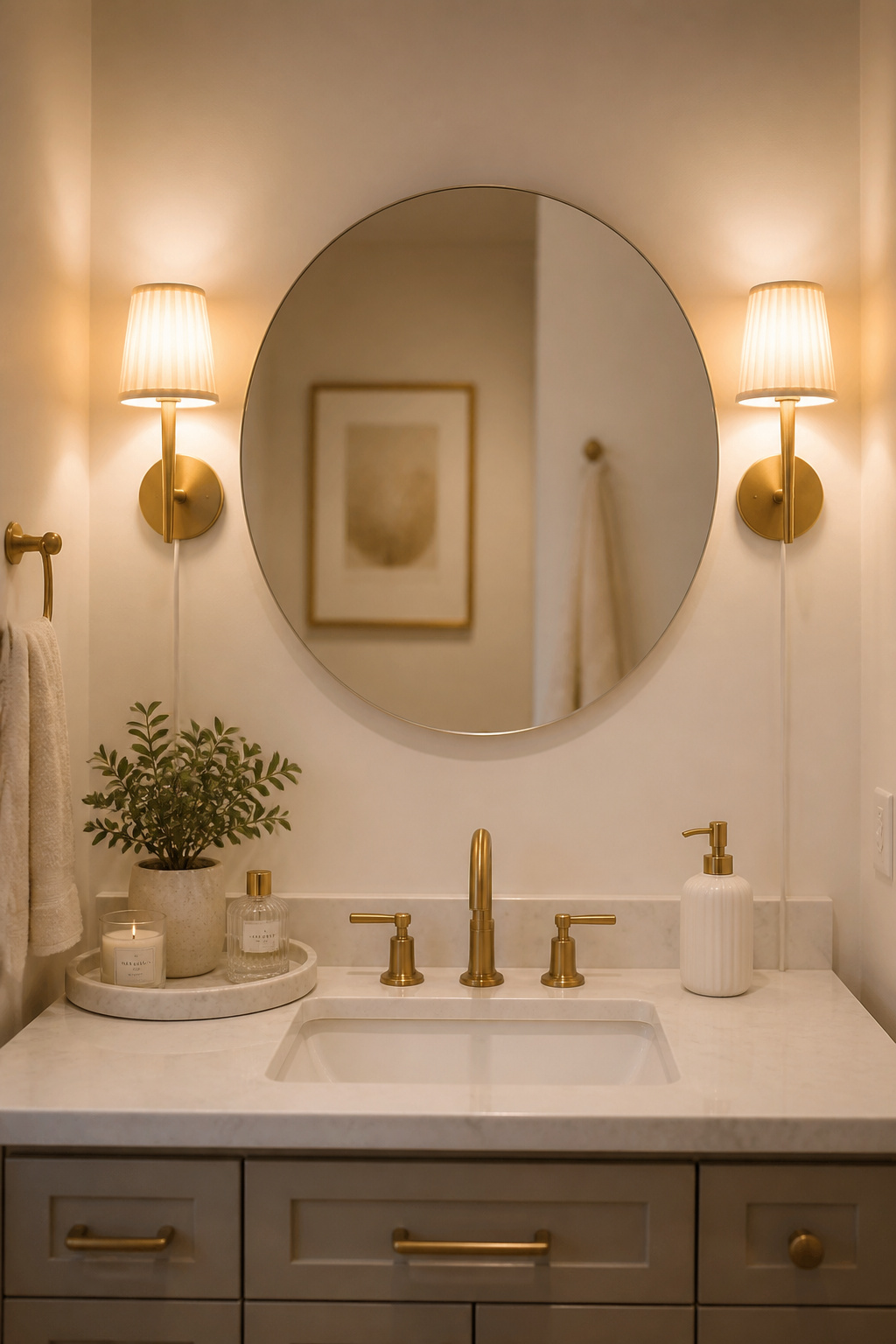
Plug-in wall sconces are the most effective upgrade. They look identical to hardwired fixtures but include a cord that plugs into a standard outlet. Run the cord discreetly down the wall and cover it with a paintable cord channel sleeve — from six feet away, it’s indistinguishable from a hard-wired installation. Brands like Residence Supply and Pooky offer plug-in sconces with damp-location ratings, which is the designation you need for any fixture near a sink or shower. Apartment Therapy documented a $30 renter-friendly vanity light upgrade using plug-in fixtures from Target that generated one of the site’s most-shared renovation posts.
For the vanity specifically, LED strip lighting is the other reliable option. Adhesive-backed strips along the top and sides of your mirror create the same diffused, shadow-free illumination that ring lights provide — but integrated into the room rather than sitting on your counter. Look for strips rated at 2700K to 3000K (warm white) and make sure they’re labeled for damp locations before placing them anywhere near a sink. For more ideas on bathroom vanity lighting that work in small spaces, that guide covers specific fixture types that have proven effective across a range of bathroom sizes.
The difference between flat overhead light and properly placed vanity lighting isn’t subtle. It affects how you see yourself, how the room feels in the morning, and how guests perceive the space — which makes lighting one of the highest-return upgrades you can make in any apartment bathroom.
7. The Double Shower Curtain Trick for a Spa-Like Bathroom
A single shower curtain on a basic chrome rod is the default apartment bathroom setup — and it’s also one of the lowest-hanging upgrades available. Two changes work together here: adding a second curtain and upgrading to a curved rod.
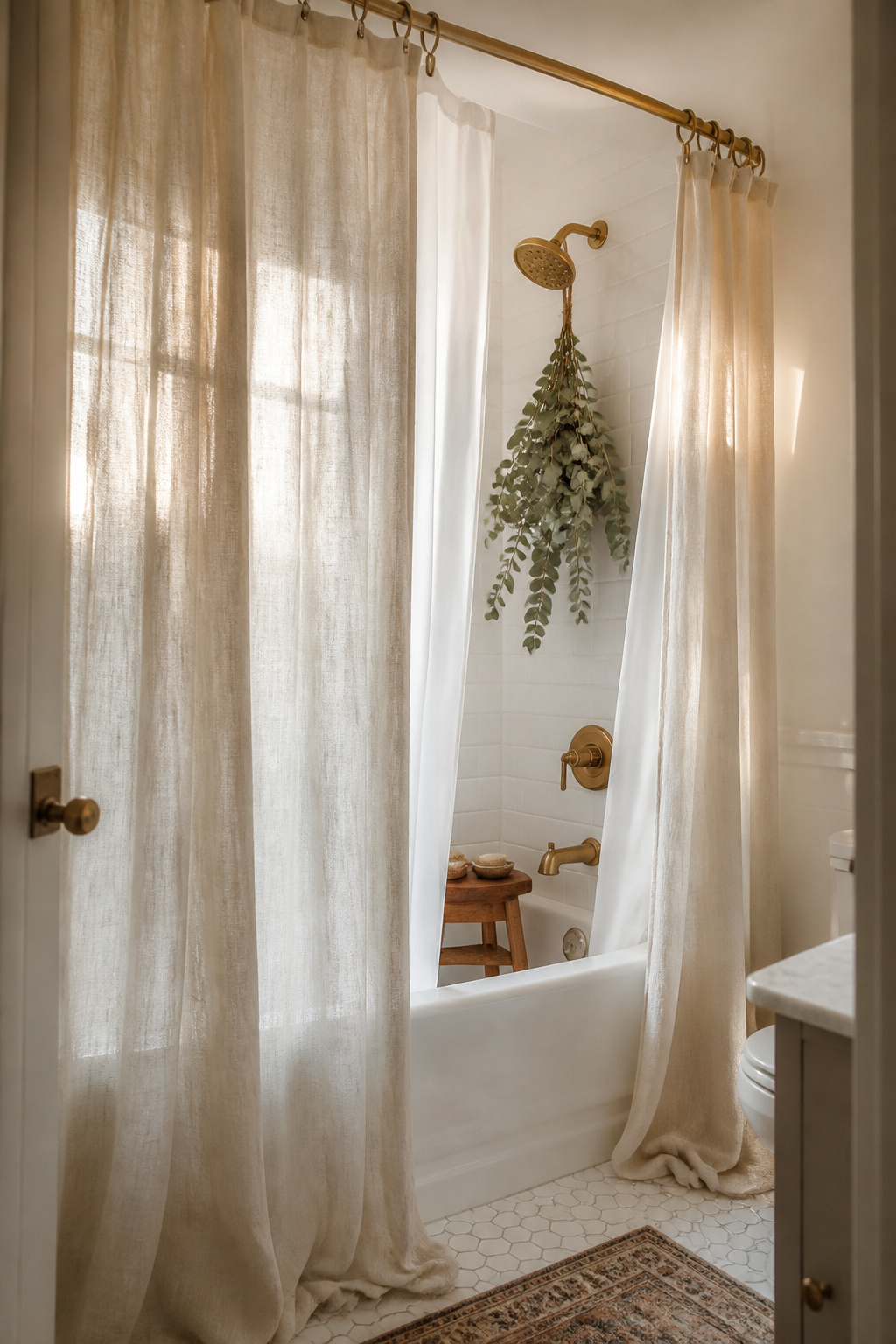
The double curtain technique involves two tension rods placed two inches apart, with a decorative outer curtain on the front rod and a plain waterproof liner on the inner rod. This separation means your decorative curtain never actually gets wet, which extends its life dramatically and makes laundry easier. The combination of a sheer or lightly textured outer panel over a solid white liner reads as genuinely luxurious — the fullness and layering of fabric is exactly what you see in hotel bathrooms, and it costs under $20 to add the second curtain to a rod system you probably already have.
A curved shower rod adds to this by pushing the curtain arc outward into the bathroom, which expands the interior shower space by 25 to 30 percent. That’s a significant difference in how cramped a tub-shower combination feels day to day. Curved rods come in both permanent and tension-mount versions — the tension-mount option is fully renter-friendly, requires no drilling, and transfers to your next apartment without leaving a mark.
Full-length curtains (84 inches) rather than standard 72-inch panels create a taller, more elegant drape that visually raises the ceiling — particularly effective in bathrooms with 8-foot ceilings where the extra 12 inches of curtain creates a vertical line that the eye follows upward.
8. Small Apartment Bathroom Color Strategies That Open Up Space
Color has a more powerful effect on perceived room size than most people expect, and the conventional wisdom — always paint small rooms white — is only partially right. What actually works is understanding how light and color interact in your specific bathroom.
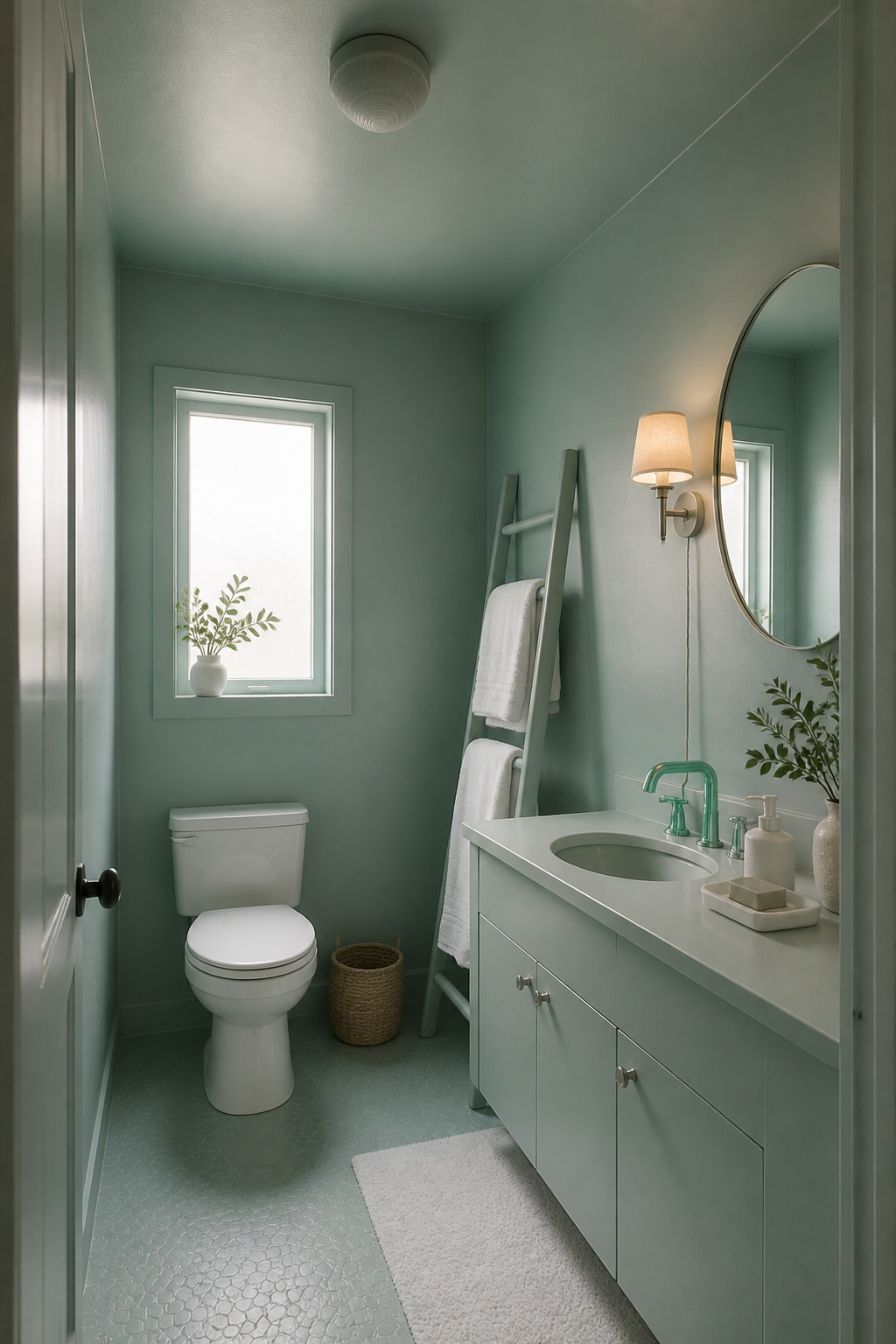
For renters who can paint, the designer consensus for small apartment bathrooms leans toward warm whites over cool whites. Benjamin Moore White Dove (OC-17), Sherwin-Williams Alabaster (SW 7008), and Snowbound (SW 7004) consistently top recommended lists because their warm undertones read as lighter and airier than stark cool whites, which can feel clinical under artificial light. Soft blues and sage greens are the next tier — Sherwin-Williams Rainwashed (SW 6211) is a particularly popular choice for its spa-like quality that works in both natural and artificial light.
The ceiling trick is less well-known but highly effective: painting the ceiling the same color as the walls eliminates the visual boundary between wall and ceiling, removing the “box” effect that makes tiny rooms feel even smaller. In a bathroom under 50 square feet, this single decision changes the spatial experience substantially.
For renters who can’t paint at all, color still reaches the room through towels, rugs, wallpaper, plants, and accessories. A bathroom with white walls and white tiles can still read as warm and intentional if the textiles are in terracotta, sage, or dusty rose — the accessories do the color work without touching the walls.
9. Under-Sink Organization That Reclaims Lost Space
The cabinet under a bathroom sink is one of the most chaotic storage spaces in most apartments — a tangle of cleaning supplies, spare toiletries, and the occasional mystery product that migrated there years ago and was never retrieved. Solving it costs almost nothing.
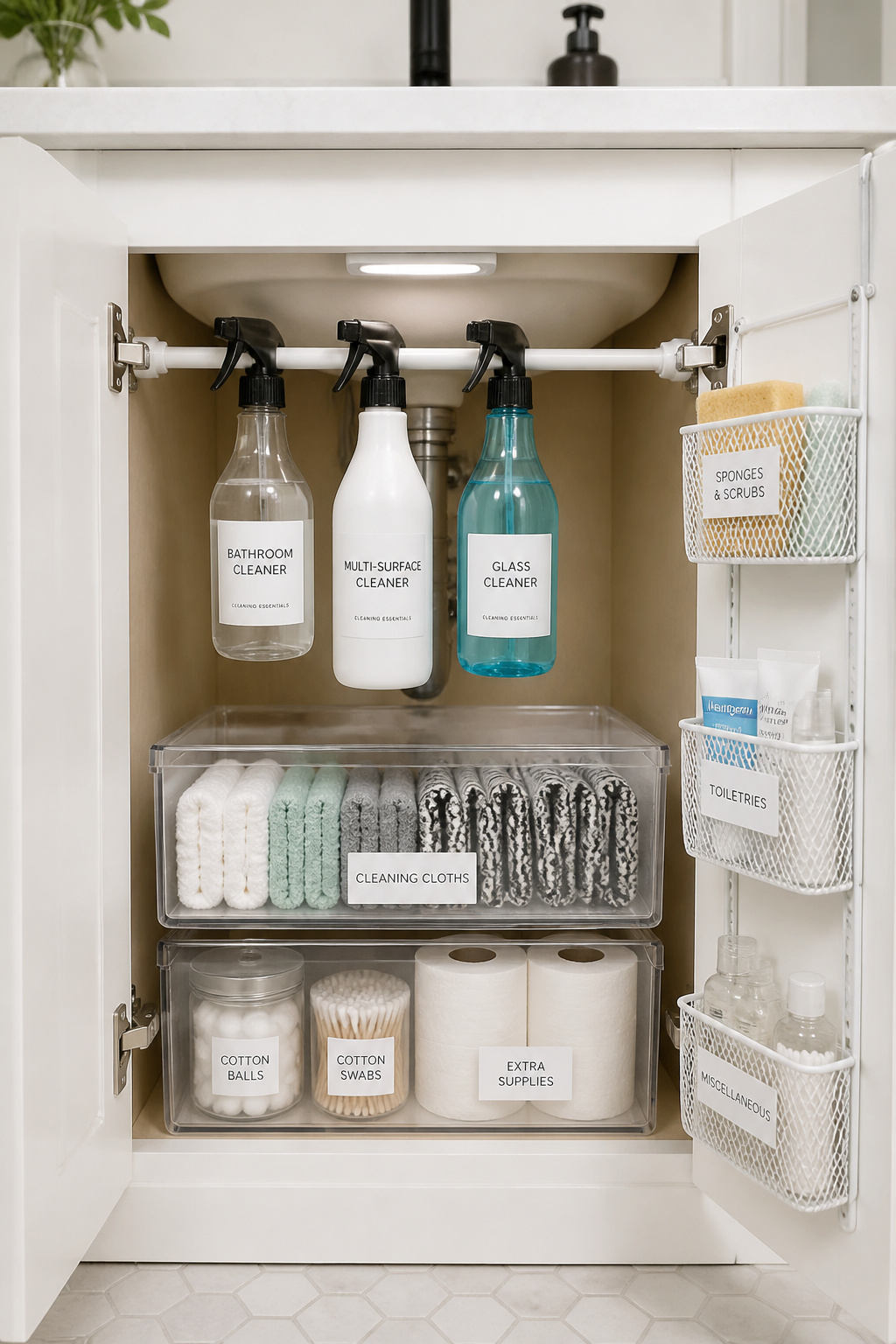
Start with a $6–$10 tension rod mounted horizontally inside the cabinet, positioned toward the front and high enough that spray bottles can hang from their triggers without hitting the plumbing below. That single rod eliminates the pile of bottles on the cabinet floor and reclaims four to six inches of usable shelf depth beneath it. It also makes it easier to grab what you need without pulling everything out first — the bottles are visible, accessible, and off the floor where they inevitably get knocked over.
For the remaining space, sliding pull-out bins work around the plumbing pipes that make under-sink organization genuinely difficult. The Lynk Pro Slide Out Cabinet Organizer ($25–$40) is specifically designed with a cutout for pipes and pulls smoothly on rails, which means you can actually use the back of the cabinet rather than losing things in the dark corners. Pair it with stackable clear bins in 6-inch and 9-inch widths for categories like first aid, skincare backup stock, and cleaning products. The small bathroom organization guide breaks down exactly how to audit what you have before investing in containers, which saves both money and space in the long run.
Over-the-door organizers with mesh or wire pockets add one more storage layer on the inside of the cabinet door — perfect for cleaning supplies, extra soap bars, or the small items that otherwise clutter the counter.
10. Bathroom Plants That Actually Survive Apartment Life
Plants in a bathroom are not purely decorative. They absorb the excess humidity that leads to mildew, improve air quality, and add a layer of warmth that no amount of accessories fully replicates. The challenge in most apartment bathrooms is that conditions are difficult: inconsistent light, variable temperature, and the kind of benign neglect that comes with busy schedules.
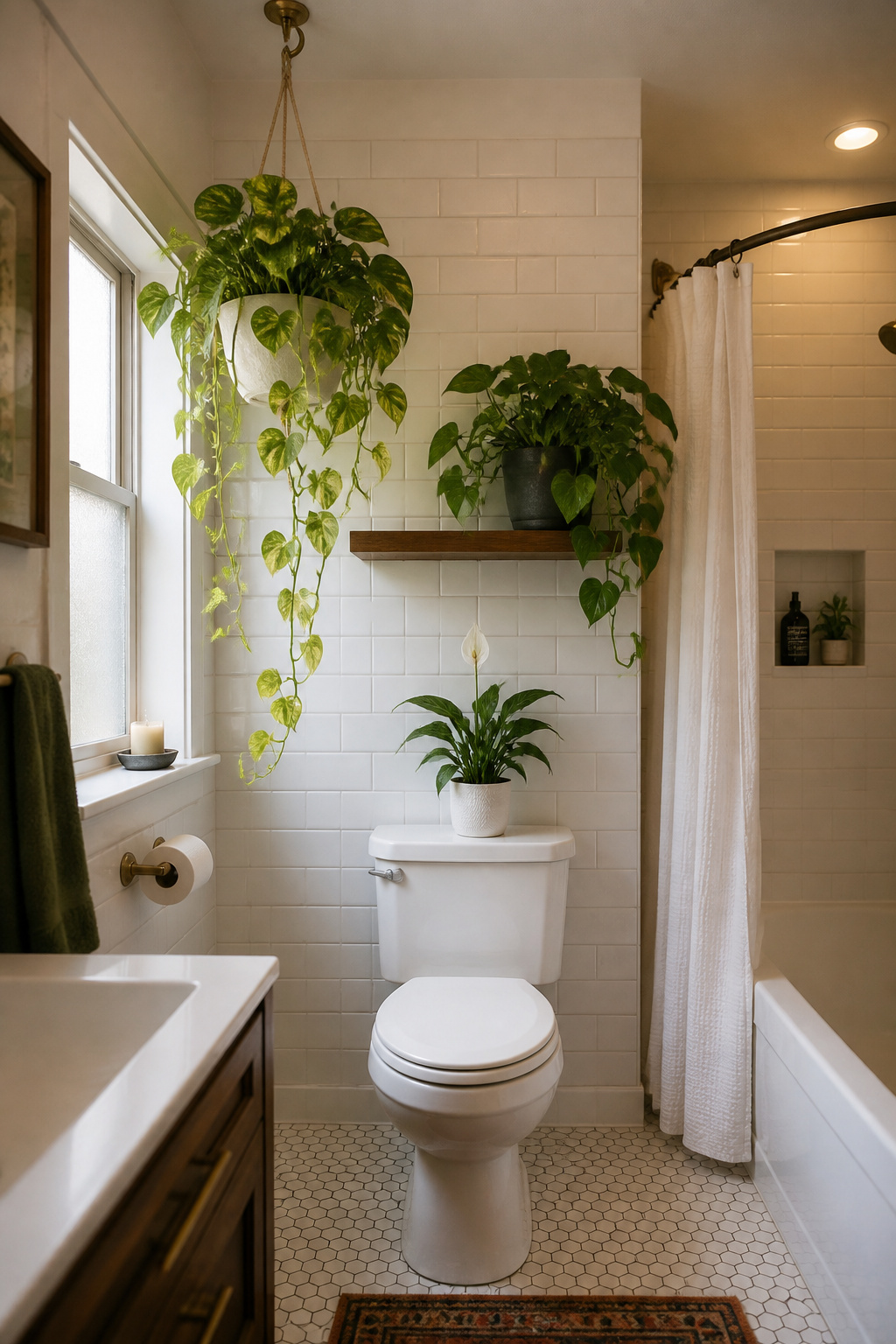
The plants that reliably survive these conditions are the ones that evolved to thrive in similar environments. Pothos is the most forgiving option — it tolerates low light and irregular watering, trails beautifully from shelves, and grows fast enough to fill vertical space within a few months. A single pothos in a 6-inch pot on an over-toilet shelf will cascade down 12 to 18 inches over a summer. Heartleaf philodendron is similarly resilient, with the added quality of loving warm moisture — a steamy shower essentially functions as its ideal climate.
Peace lilies are worth the slightly more attentive care they require. Their white blooms add something genuinely elegant to a bathroom, and their preference for indirect light makes them ideal for bathrooms with frosted or north-facing windows. ZZ plants are the nuclear option for low-light bathrooms with no natural light at all — they store water in their rhizomes, require watering only every two to three weeks, and maintain their glossy, polished appearance with almost no effort.
One placement note: avoid putting plants directly in the shower spray zone. A shelf at counter height or a small plant stand in a corner gives them the ambient humidity they need without the damage of direct water exposure.
11. Contact Paper and Vinyl Tricks for Tired Vanities
The bathroom vanity in most rental apartments is a low-cost laminate construction that has survived many tenants and shows it. Replacing it isn’t an option. Covering it is.
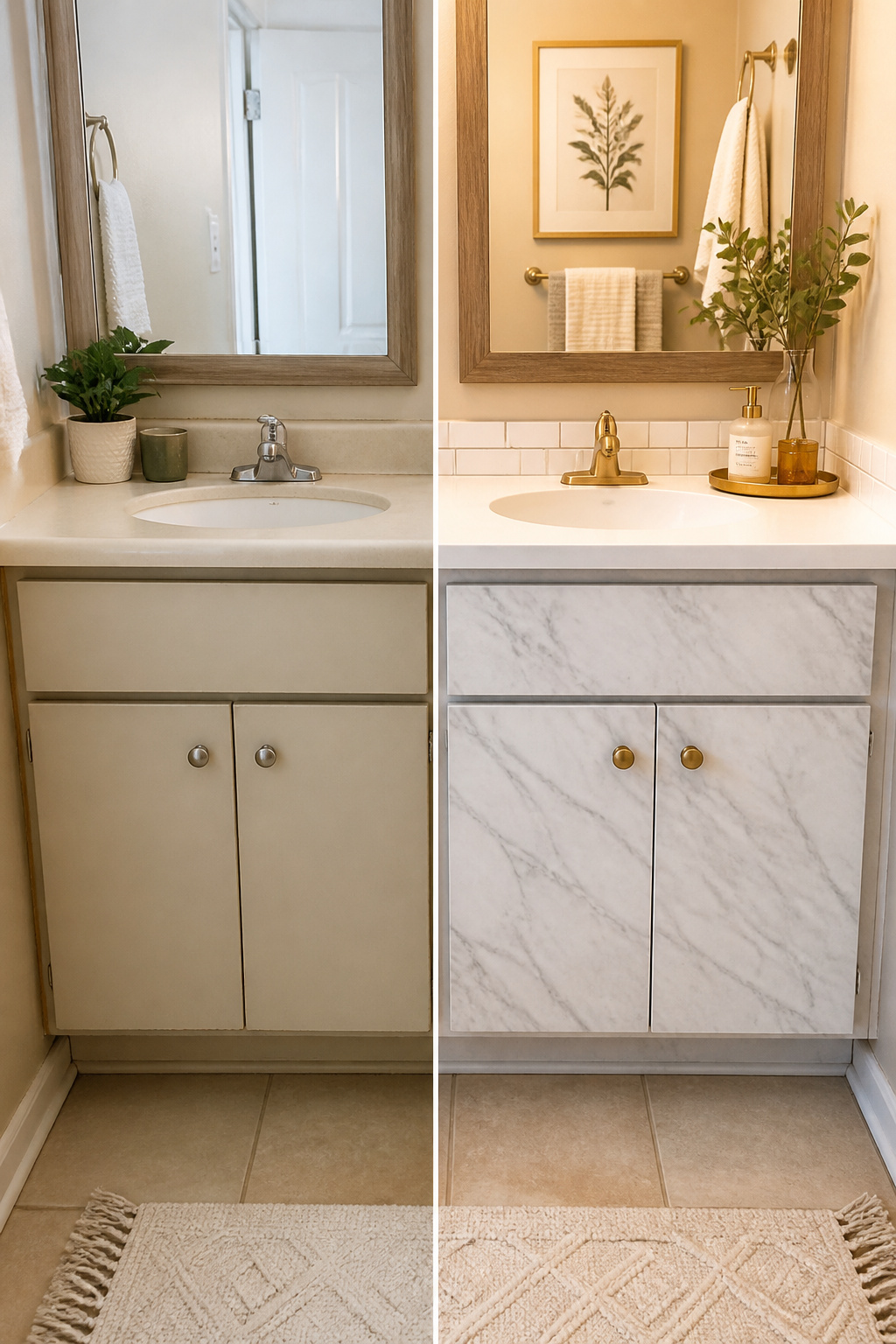
Contact paper has become one of the most genuinely useful renter tools available, and the quality at the current generation is far better than the bubbly, misaligned version from ten years ago. Marble-finish or wood-grain contact paper ($17–$25 per roll on Amazon, enough for two to three cabinet door fronts) resurfaces laminate so convincingly that at arm’s length, the effect is indistinguishable from real material. Apply it to cabinet doors, drawer fronts, and the side panels of the vanity, and the entire piece reads as updated. Peel-and-stick decorative tile strips applied along the back edge of the countertop create an instant backsplash — a detail that small bathrooms frequently lack, and one that photographs well.
Hardware updates are the fastest version of this same principle. Removable adhesive cabinet knobs and pulls (no drilling required) update dated hardware in under an hour. Pair brushed brass pulls with a marble-finish contact paper application and the vanity that came with the apartment becomes one of the better-looking elements in the room. Removal is straightforward: peel at a 45-degree angle, and any adhesive residue clears with a small amount of Goo Gone on a cloth. Nothing left behind, no damage to the original surface, no deposit risk.
12. Bathroom Ideas for Apartments: Towel Storage Without a Bar
Most apartment bathrooms come with a single towel bar. It holds two towels if you’re careful, one towel if you value them not touching. For anyone with more than one person in the apartment — or anyone who keeps a separate hand towel, bath towel, and washcloth — that bar is immediately insufficient.
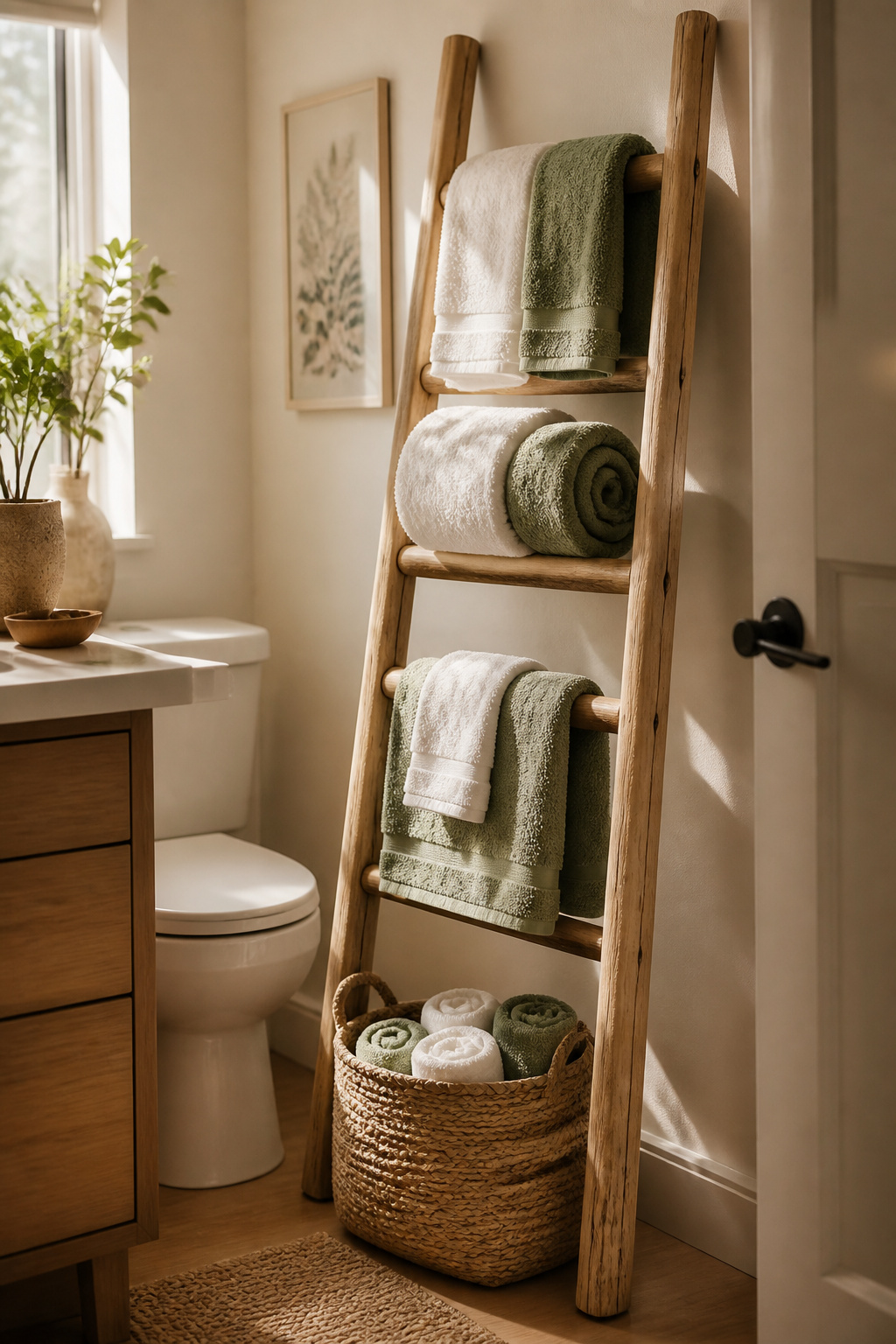
The freestanding wooden ladder rack is the most versatile solution. Available for $30–$60 at Target, IKEA, or Amazon, a lean-to ladder sits against the wall without anchoring to it, holds three to five towels on its rungs, and occupies a floor footprint of roughly 14 by 6 inches. In a narrow strip of floor between the toilet and the door — a space that’s otherwise wasted — a ladder rack creates legitimate towel storage without requiring any permanent installation. It also doubles as a display element: fold your best towels neatly over the rungs and the rack becomes intentional decor rather than a functional afterthought.
For individual towels near the shower, 3M Command adhesive hooks (the large size, rated at 5–7.5 pounds) hold full-size bath towels reliably on most painted surfaces. Apply them according to the package instructions — particularly the pressing-and-waiting step, which most people skip and then wonder why the hook failed. Over-the-door towel racks with 8 to 10 bars fit any standard bathroom door and hold four to six towels without any hardware at all. See more bathroom organization ideas for complete towel and linen storage systems that work in rented spaces.
13. Peel-and-Stick Floor Tiles for a New Foundation
Outdated floor tile is one of the most visually aging elements in a rental bathroom and one of the few things that genuinely stops a room from feeling finished, regardless of how good everything else looks. Peel-and-stick floor tiles solve this without a contractor, a lease violation, or a large budget.
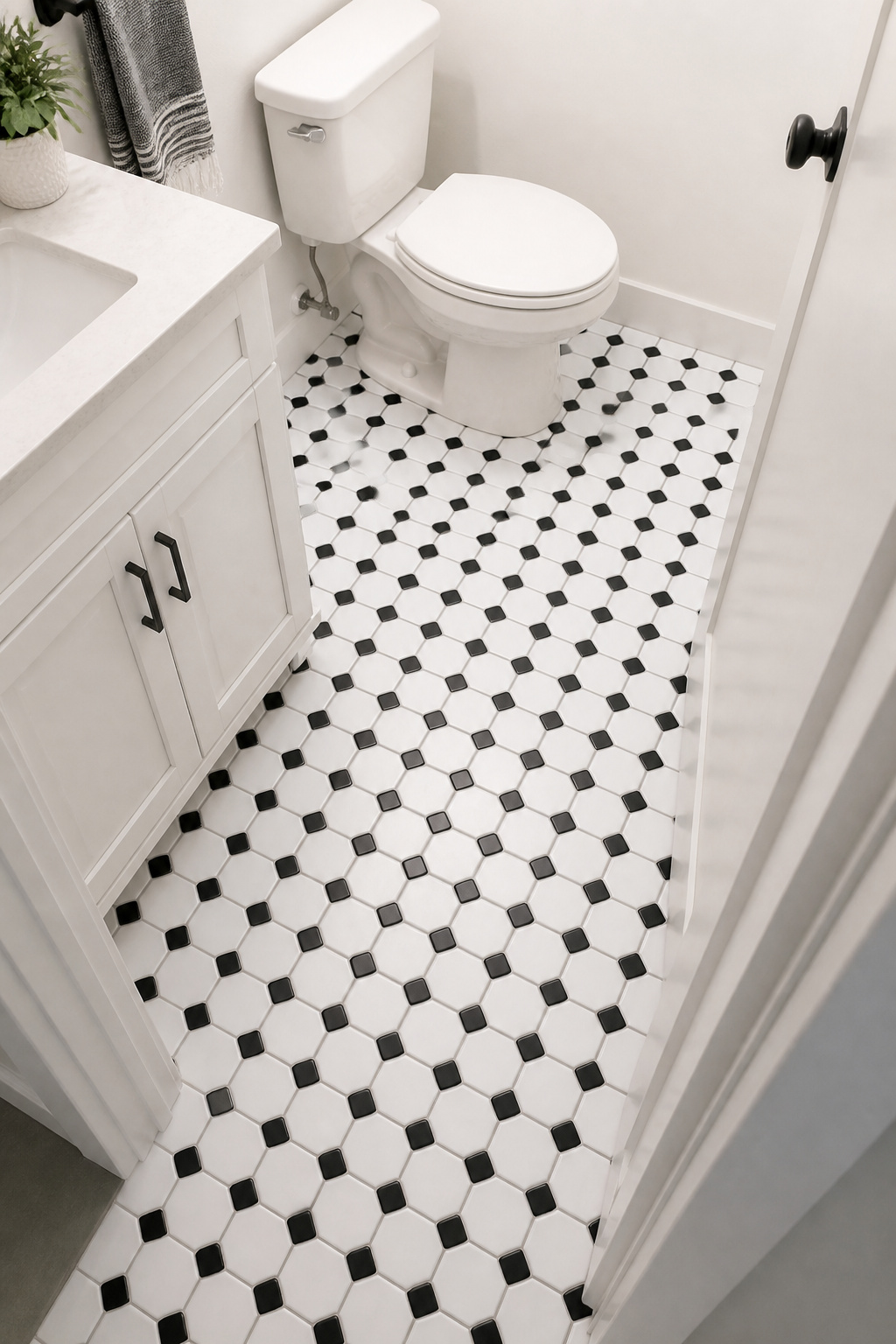
The key distinction to make when choosing peel-and-stick floor tiles is between flexible vinyl (which telegraphs every bump and grout line in the existing floor) and rigid-core vinyl with a stone-plastic composite construction. The rigid-core option bridges grout lines and minor surface imperfections rather than conforming to them, which produces a result that reads as proper tile work rather than a craft project. Brands like FloorPops, Art3d, and Chasing Paper’s non-toxic line all make rigid-core options that have proven reliable in bathroom conditions.
Average cost runs $1–$5 per square foot, which means a 30-square-foot bathroom floor — a realistic size for a small apartment bathroom — costs $30 to $150 total for material. Surface preparation determines the outcome more than the tiles themselves: the existing floor must be clean, dry, and as smooth as you can get it. Use a sharp utility knife to trim tiles around the toilet base and door jamb — precision here is what separates a professional-looking result from an obviously DIY one. At move-out, peel tiles off carefully and any adhesive residue can be removed without damaging the floor beneath.
14. The Shower Caddy Setup That Ends Counter Clutter
Products migrating from the shower to the counter and back again is a common pattern in small apartments where the shower has no built-in storage. Solving it means having a caddy that’s genuinely better than the counter — more convenient, more organized, and actually positioned where you need things when you need them.
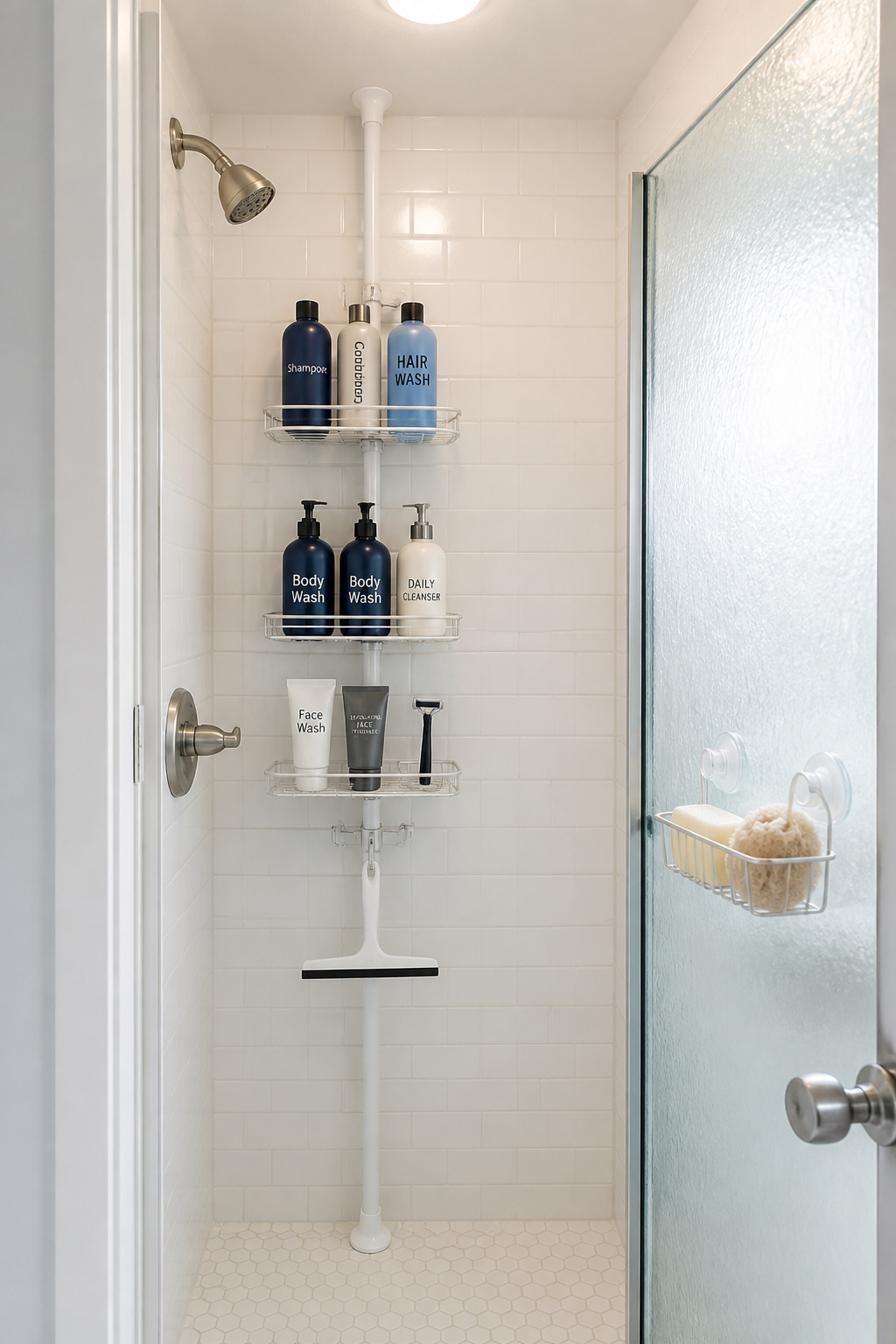
The IKEA KROKFJORDEN caddy ($9.99) hangs on a shower mixer or rail with no drilling required and holds shampoo, conditioner, body wash, and a razor across two wire tiers. It’s zinc-plated for rust resistance and adjusts to fit different rail widths. For shower stalls with smooth tile walls and no rail, the IKEA TISKEN suction cup basket ($8.99, 4.2-star average from hundreds of reviews) attaches to any smooth surface — glass doors, tile, or acrylic surround — and holds securely when installed correctly. The key is re-wetting the suction cup before pressing it into place; dry application is what causes the midnight crashes that everyone has experienced at least once.
For a more comprehensive setup, tension pole shower caddies from brands like Zenna Home ($30–$50) stand floor-to-ceiling without any hardware and include three to four adjustable shelves that hold 20-plus products comfortably. Corner-mount tension caddies use two walls for stability and fit neatly into the shower corner without occupying the floor area that bathrooms need for movement. Getting shower storage right is foundational to the small bathroom makeover process — once products are off the counter and off the floor, the rest of the space becomes dramatically easier to manage.
15. Rugs and Mats That Anchor the Whole Room
A bathroom rug is one of those elements that people treat as purely functional — something to absorb water and prevent slipping — but that actually does significant design work in any small space. The right rug grounds the room, adds warmth, introduces texture, and creates a visual anchor that makes the rest of the decor feel intentional.
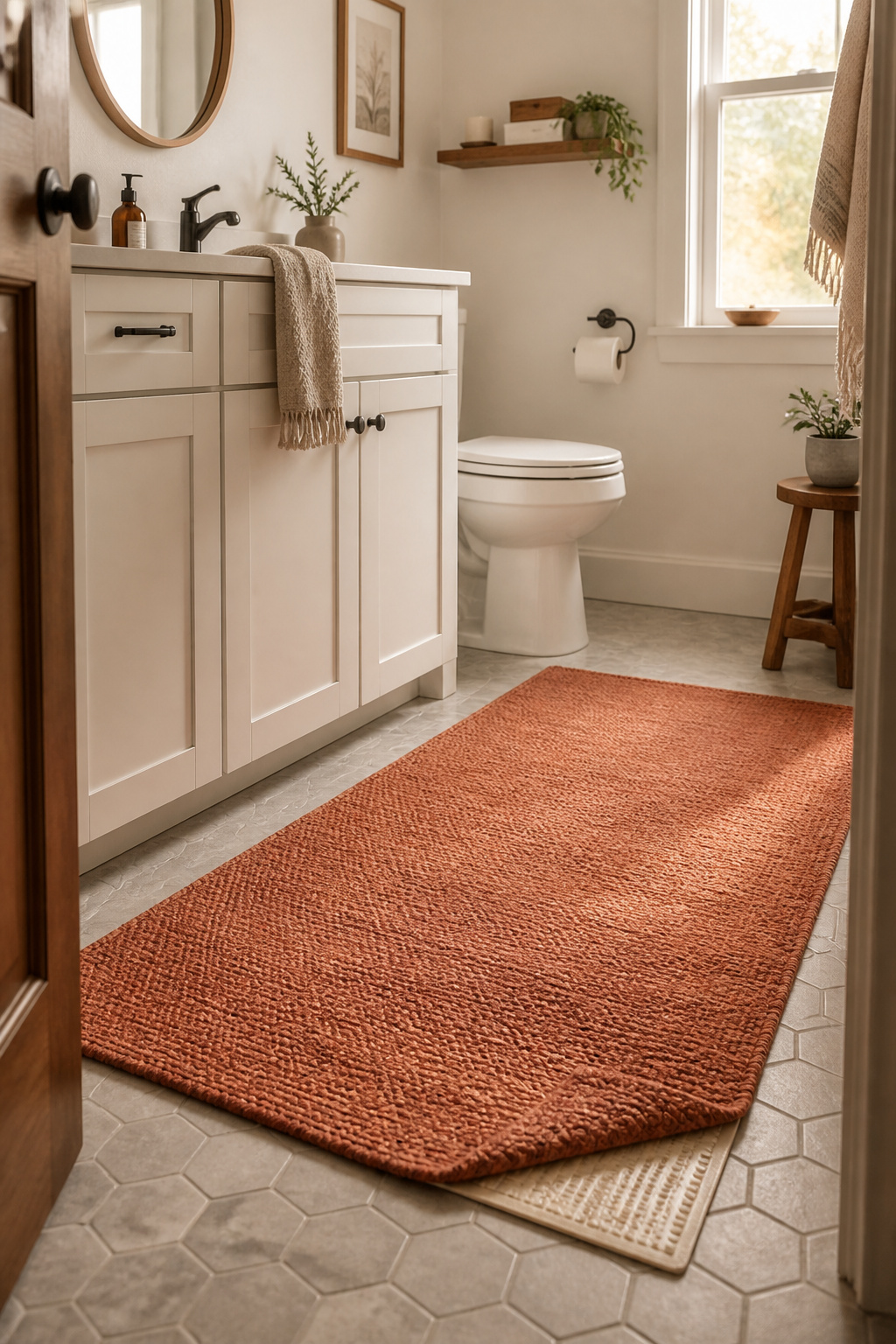
Sizing matters more than people expect in a small apartment bathroom. A 17 x 24-inch bath mat fits the zone between the vanity and toilet in most small bathrooms without overwhelming the floor or blocking the door swing. Going too large creates a cramped, wall-to-wall effect that makes the room feel smaller rather than more finished. For layout, the placement in front of the toilet and vanity is more important than placement in front of the shower — that’s where people actually stand.
Ruggable’s machine-washable bathroom rugs have become a practical standard for apartment dwellers specifically because they use a two-piece rug-and-pad system: the decorative rug layer detaches from the non-slip pad and goes through a regular washing machine, which matters enormously in small bathrooms where humidity accelerates mildew. Low-pile or flat-weave materials are the practical choice for everyday use in a small, less-ventilated bathroom — they dry faster, resist odor, and hold their shape through regular washing. For style, the trend moving into 2026 leans toward treating the bath mat as a small area rug in warm terracotta, warm gray, or cream — colors that add warmth without fighting the rest of the palette.
16. Apartment Bathroom Ideas: The Finishing Details That Tie It All Together
Storage and function come first, but the finishing layer is what transforms a well-organized small bathroom into one that feels genuinely designed. These details cost less than any structural upgrade, take less than a day to implement, and produce disproportionate visual results.
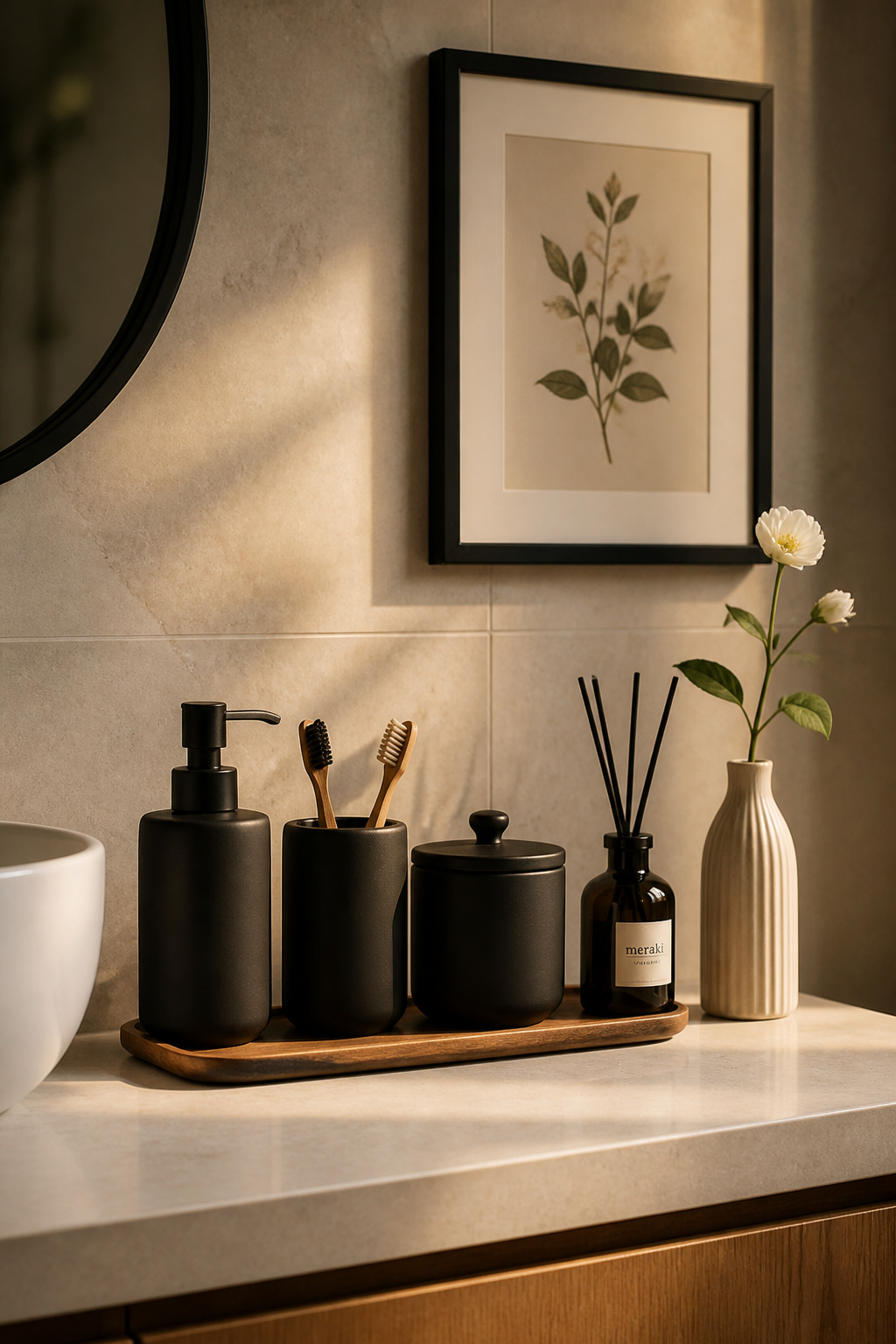
Start with your dispensers. The generic soap dispenser and toothbrush holder that came with the apartment communicate nothing except that you’ve accepted the defaults. Replacing them with a matched ceramic or glass set — toothbrush holder, soap dish, cotton jar, and liquid soap dispenser — in a single finish (matte black, brushed brass, or clean white ceramic) creates cohesion that makes every other element in the room look more intentional. A quality set runs $25–$60 and lasts through multiple apartments.
Framed art is underused in bathrooms and immediately noticed when it’s done well. The key constraint is moisture: choose pieces printed on aluminum or protected behind glass rather than open canvas prints, which warp in humidity. A single 8 x 10 print in a simple frame at eye level on an otherwise empty wall costs almost nothing and anchors the room visually in a way that no amount of product arranging achieves.
Scent is the final layer. A reed diffuser in eucalyptus, cedar, or white tea runs $15–$25 and adds multi-sensory dimension that no one can quite articulate but everyone notices. Group it with your candle and a small plant on the counter tray, applying the rule of three — odd-numbered groupings at different heights create the visual balance that makes displays feel considered rather than random. These are the apartment bathroom ideas that turn a functional space into one worth walking into every morning.
Making Your Apartment Bathroom Ideas Work for Your Life
The most common mistake in transforming an apartment bathroom is starting with the decorative layer — buying the pretty accessories before solving the underlying storage problem. Beauty on top of chaos doesn’t hold. The sequence that actually works is systematic: audit what you have and where it currently lives, establish a storage system that keeps it off the counter and out of sight, and then — only then — build the aesthetic layer on top of a foundation that works.
In terms of budget priority, the highest-return investments per dollar spent are the ones that are both functional and visible: a rolling cart or over-toilet shelving unit ($30–$60), a lighting upgrade ($30–$80), and a statement mirror ($40–$150). Those three changes, done in that order, transform how the bathroom functions and how it looks. The finishing details — the wallpaper, the plants, the rugs, the accessories — are genuinely satisfying to add, but they’re the reward for getting the foundation right, not the starting point.
For renters specifically, the renter-safe-first principle is worth holding onto as you shop: if it requires drilling, permanent adhesive, or modification of any fixture, find the removable alternative first. Most of the time, the removable version performs just as well. And when you move — which you will — you take all of it with you, which means every dollar you spent on apartment bathroom ideas follows you to the next space and starts working again from day one. For more ideas on budget bathroom remodeling that looks anything but budget, the principles that apply in apartments translate directly to owned homes when the time comes. The 21 Ingenious Bathroom Organization Ideas guide is also worth bookmarking for your next space.
The bathroom is often the smallest room in an apartment and the one where people spend the most time. Treating it as worth the investment isn’t indulgent — it’s practical. Fifteen minutes in a well-organized, well-lit, thoughtfully appointed bathroom sets a different tone for the day than fifteen minutes in one that isn’t. That difference, multiplied across 365 days, is worth every rolling cart and every square of peel-and-stick tile.