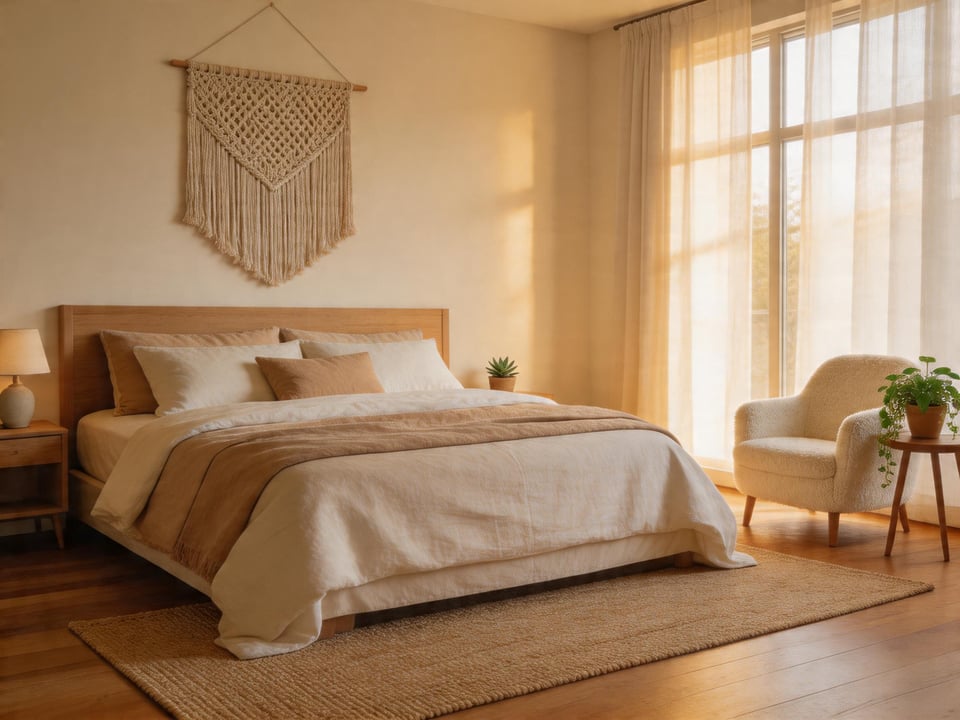
There’s a particular kind of restlessness that comes from a bedroom that functions fine but doesn’t feel like yours. The bed is made. The furniture fits. But you walk in at the end of the day and something is still off — a flatness, a lack of warmth. After years working with fabrics and soft furnishings, I’ve come to believe that most bedrooms don’t need a renovation. They need texture. They need the kind of deliberate layering that signals someone made a choice here.
The bedroom decorating ideas in this guide are built around that principle. Textiles are the fastest, most reversible, and most affordable way to transform how a room feels — and they work at every budget. Start with one idea that resonates, live with it for a week, and go from there.
1. Layered Bedding With Textured Throws for a Cozy Bedroom
The bed is the first thing anyone sees when they walk in, which makes it the highest-leverage place to invest your decorating energy. Layered bedding is the approach that turns a flat, hotel-ish bed into something genuinely considered — and it doesn’t require a matching set.
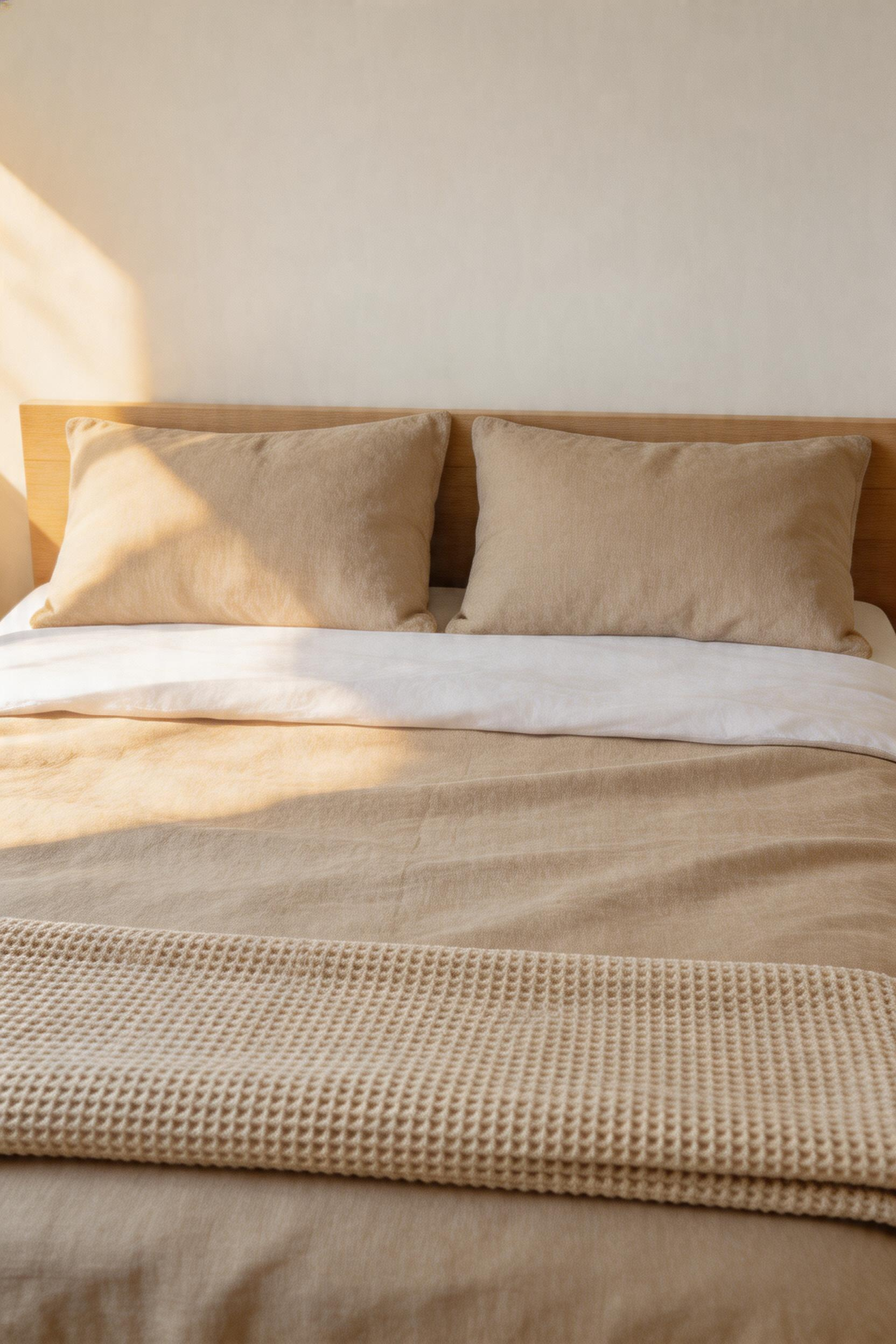
The logic is simple: vary the texture while keeping the color palette tight. A cotton fitted sheet as the base, a linen duvet as the main insulating layer, a waffle-knit or chunky-knit throw across the foot. All in ivory, oatmeal, and soft white. The eye reads the depth of weave rather than a clash of colors, and the result is a bed that looks considered without requiring it.
Waffle-weave blankets are worth knowing about specifically. The raised grid pattern creates air pockets that regulate temperature year-round — which means your cozy winter throw doesn’t need to live in the linen cupboard from April to October. These bedroom decorating ideas often start here because the impact-to-effort ratio is unmatched. Waffle-weave washes beautifully and gets softer with each cycle.
Fold the throw lengthwise into thirds and lay it across the bottom third of the duvet — placed, not thrown. And if you want to see how this layered approach reads in a more contemporary setting, modern bedroom ideas provide strong visual starting points for calibrating the palette. One honest note on chunky-knit throws: they photograph beautifully and attract pet hair with equal commitment. A lint roller in the bedside drawer is not optional.
2. Bedroom Decorating Ideas: Mixing Throw Pillow Patterns Without the Chaos
The most common pillow mistake isn’t mixing patterns — it’s mixing patterns of the same scale. When a bold stripe, a medium floral, and a geometric print are all fighting for visual dominance at the same size, the arrangement reads as noise. Scale contrast is the fix, and it changes everything.
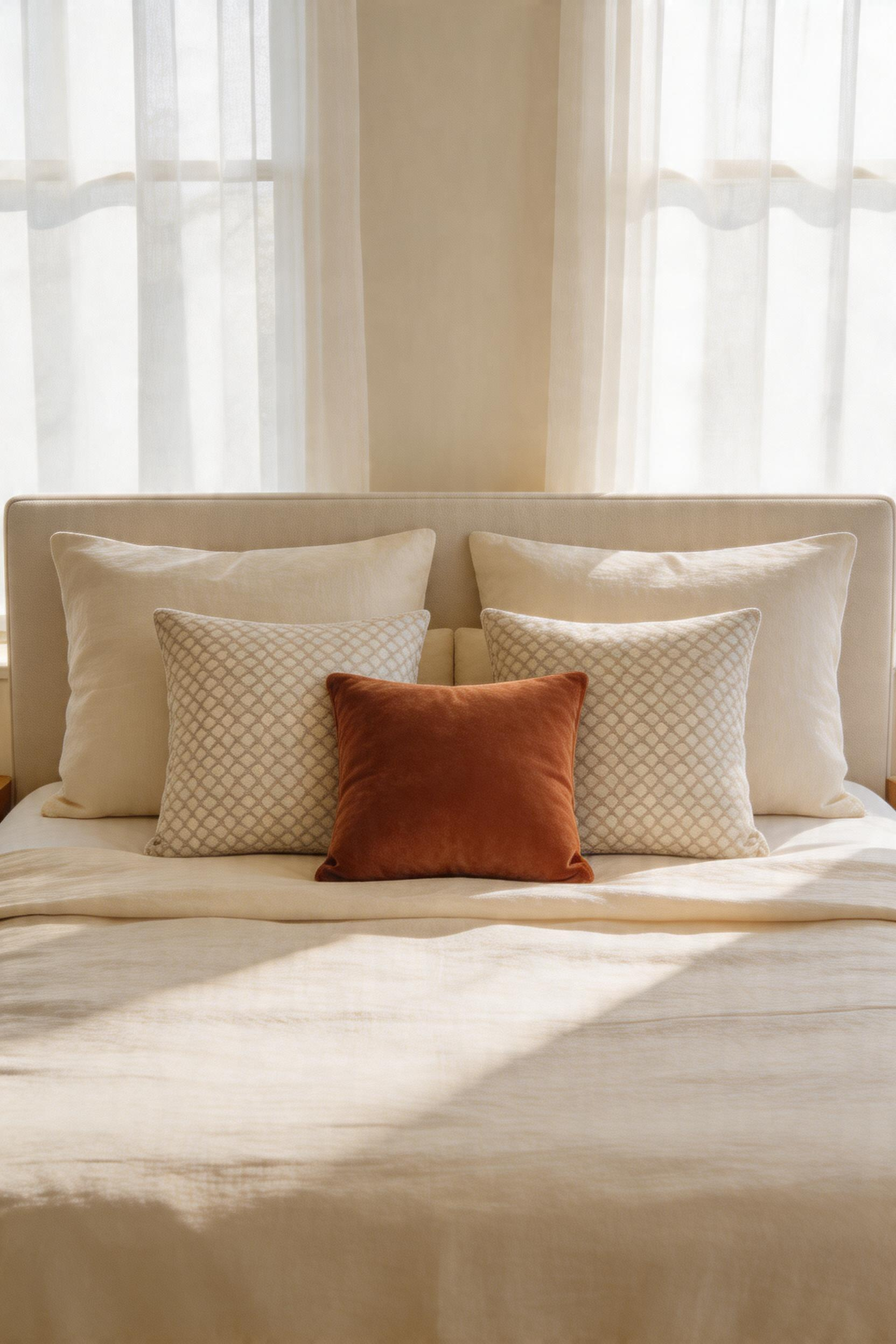
One large-scale pattern as the hero. One medium or small supporting element. A solid or texture-only neutral gives the eye somewhere to rest. The hero doesn’t have to be loud — it just has to be clearly larger than its neighbours.
The unifying element can be color rather than style. Pull two or three tones from something already in the room — the rug, artwork, curtains — and make sure every pillow shares at least one of those tones. For sizing: a queen bed works with two 26-inch euro shams at the back and two 20-22 inch accent pillows in front. Fewer larger pillows reads more contemporary than a pile of competing smaller ones.
Mix the fabric textures — velvet, woven linen, nubby chenille — and the result is intentional layering. For more guidance on building a complete master bedroom textile scheme, the master bedroom decor guide covers the broader room coordination approach well. Rotating pillow covers seasonally is one of the best low-cost bedroom decorating ideas available: swap velvet covers in winter for linen in summer and the room changes mood for under $40.
3. A Velvet Accent Chair That Earns Its Place in the Room
Every bedroom needs somewhere to sit that isn’t the bed, and a velvet or boucle accent chair is the piece that makes the space feel like a retreat rather than a sleep station. The functional case is simple: a designated seat changes how you use the room. The design case is stronger — an upholstered chair in a quality fabric is one of the few bedroom decorating ideas that pays back its visual presence every time you enter.
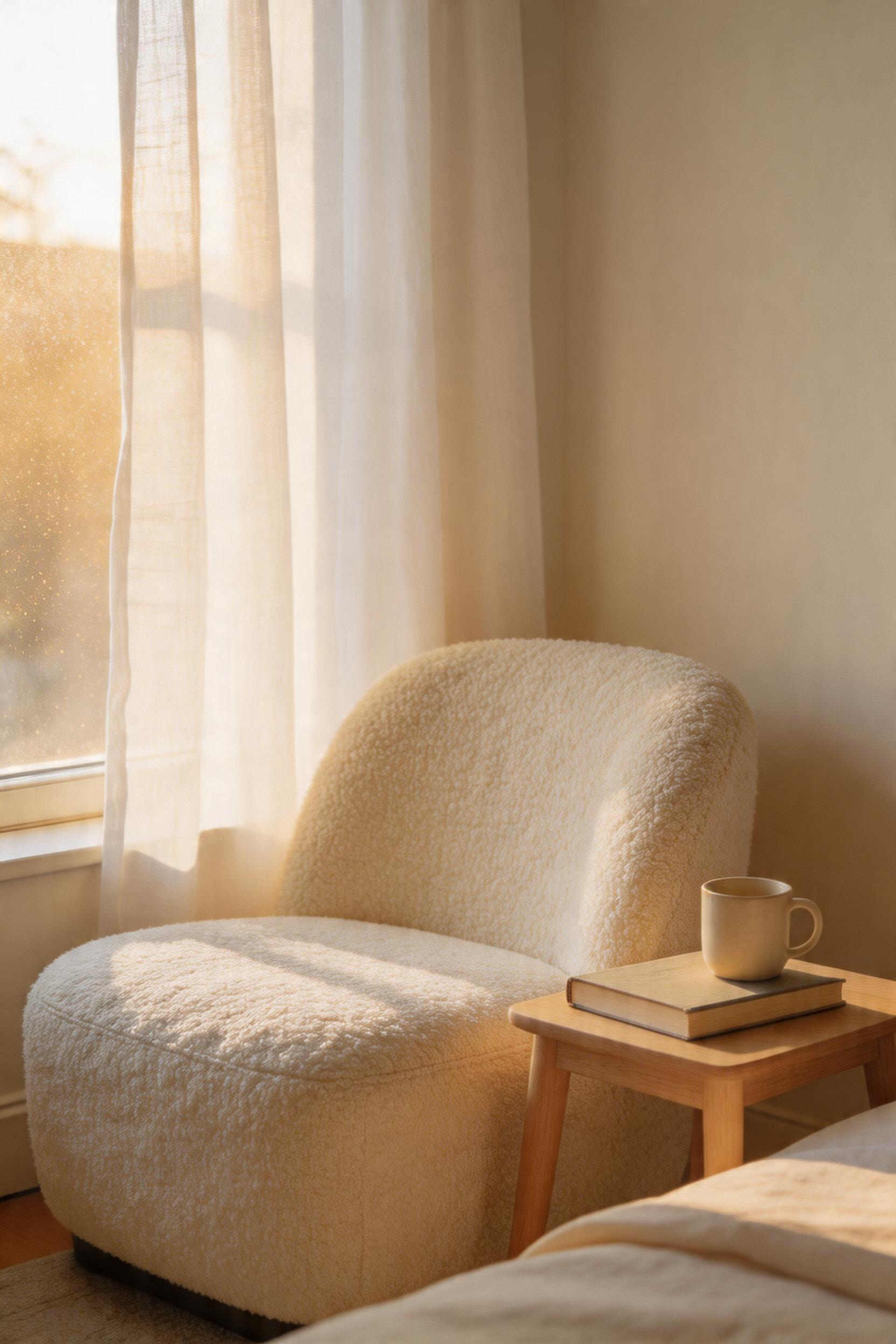
Velvet is rich and light-catching; synthetic velvet (not cotton velvet) is the practical choice for a bedroom chair because it resists crushing and cleans easily. Boucle — the looped, textured fabric that has become a mainstay of contemporary bedroom design — is more forgiving for everyday use because the texture disguises minor creasing. For homes with pets or children, performance velvet or Crypton-treated fabric handles real life far better than either standard velvet or natural boucle.
Chair placement is where this piece either works or becomes an expensive clothes rack. Position it near natural light — a window corner turns it into a destination. Add a small table and a proper lamp, and the chair becomes a reading spot with its own logic. A chair with arms is more practical than a slipper chair in a bedroom where you’ll sit and stand repeatedly during dressing. For most rooms, a chair under 30 inches wide is the right scale.
4. Woven Wall Hangings That Add Warmth Without Painting a Single Wall
Textile wall art — macrame, tapestry pieces, fiber weavings — does something flat prints cannot: it absorbs sound. In a bedroom with hardwood floors, the acoustic difference is noticeable. Woven hangings soften high-frequency sound while simultaneously adding texture to the wall, which makes them one of the most efficient bedroom decorating ideas available.
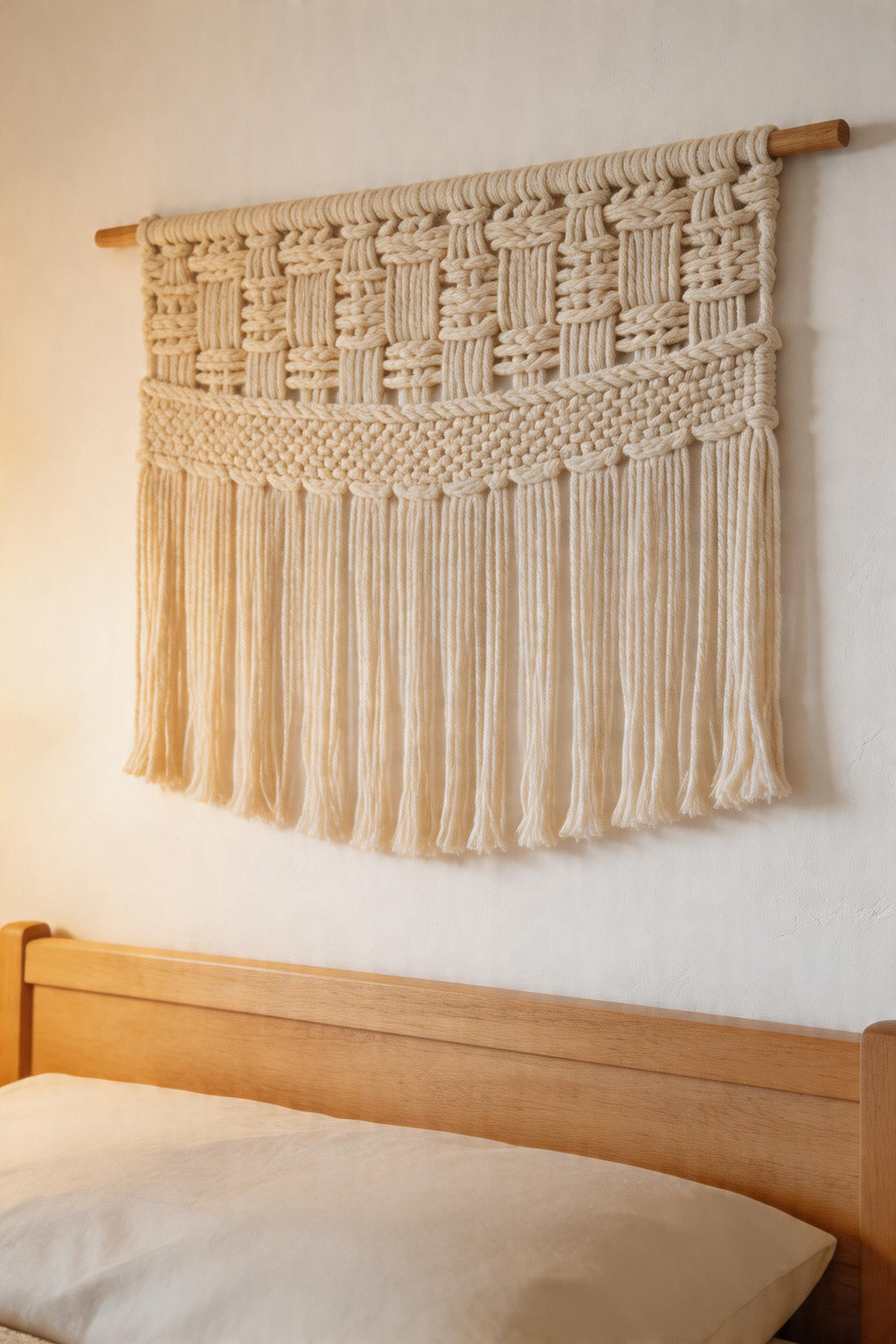
For the wall above a headboard, the piece should be roughly two-thirds the width of the headboard. With a queen bed (60-inch headboard), a 38–42-inch piece works. Aim for 48–54 inches with a king. Too small and it floats disconnected; too large and it overwhelms.
100% cotton rope macrame is the most forgiving material — holds knots, resists fraying, and comes from independent makers on Etsy in standard sizes: 32×42 inches (medium), 49×61 inches (large portrait), 59×75 inches (extra-large). Woven tapestry pieces are flatter and work in more contemporary or Japandi-influenced bedrooms. Avoid cheap synthetic fiber art — polyester doesn’t drape as naturally and carries none of the acoustic or tactile benefits of natural fibers.
Installation is simpler than it looks: most pieces include a hanging rod with a two-hook wall mount. The common mistake is hanging it too high — the bottom of the piece should sit about 6–8 inches above the headboard, not near the ceiling. For vintage textile approaches in this space, vintage bedroom ideas and antique tapestries work especially well above the headboard in a contemporary bedroom.
5. Bedroom Decor Ideas With Linen Curtains for Soft, Filtered Light
Linen curtains filter light through a natural fiber weave and cast a warm, amber-tinted glow. It’s a subtlety that becomes obvious the moment you compare it to polyester sheers. The quality of light through linen is softer, warmer, and more flattering to both the room and the people in it.
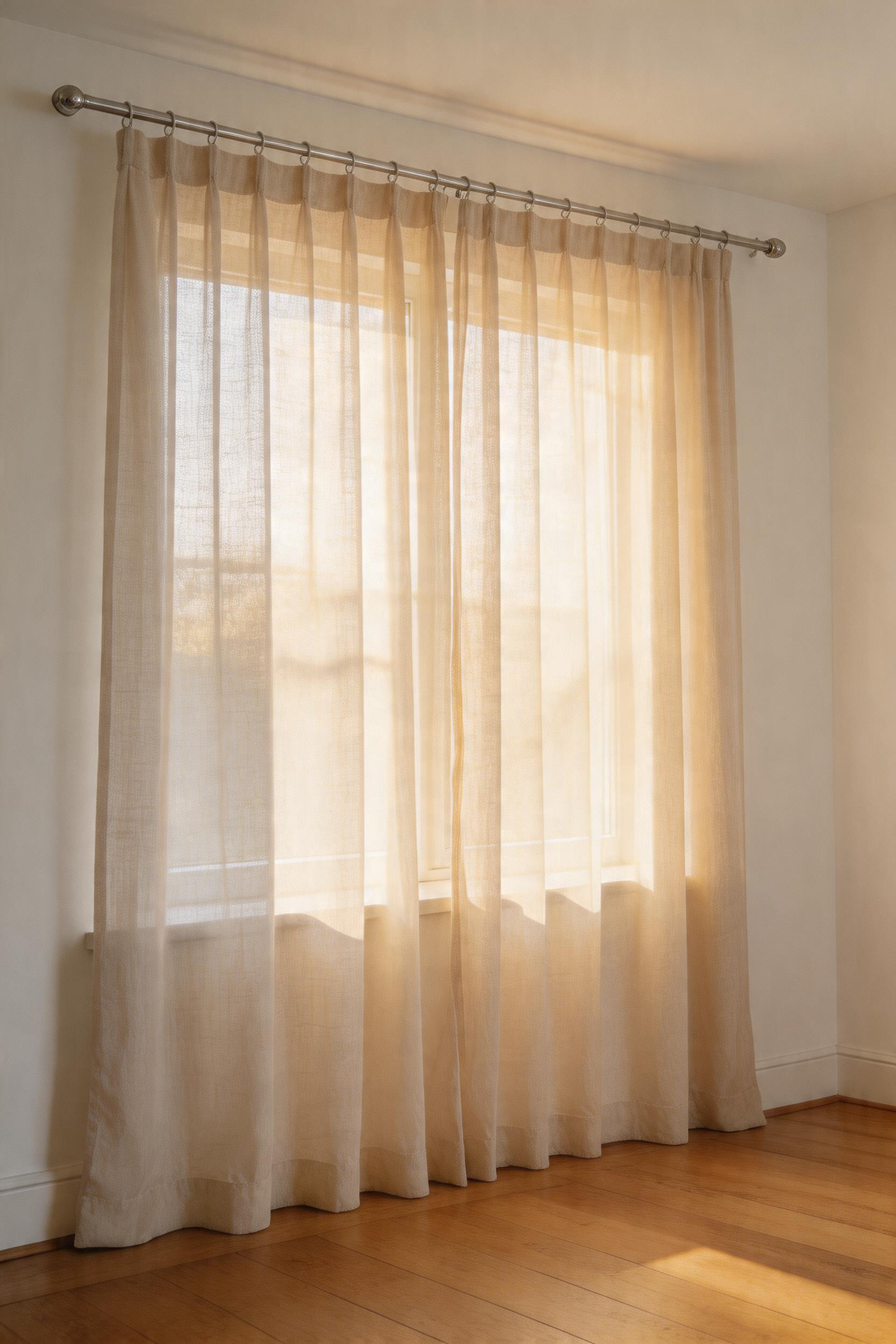
For most bedrooms, semi-sheer linen is the right weight — it diffuses direct light and provides privacy during daylight hours without the heaviness of a fully lined panel. Linen also has modest thermal properties: modest insulation in winter, breathable in summer.
The most impactful thing about linen curtains isn’t the fabric itself — it’s rod placement. Mount the rod 4–6 inches below the ceiling and extend it 8–12 inches beyond the window frame on each side. When curtains are open, they stack completely off the glass, exposing the full window. This single change makes an average bedroom window look architectural. This rod placement effect is most visible in light, tonal bedroom schemes — the window appears to grow into an architectural feature rather than a hole in the wall.
For light control: a basic cotton lining reduces light 30–50%, enough for most bedrooms. Blackout lining achieves 95–99% light blocking while the visible exterior still shows the linen face. A dual-rod system — sheer linen on the inner rod, blackout panel on the outer — gives the most flexibility.
6. A Statement Headboard in Boucle, Velvet, or Upholstered Linen
The headboard is the one bedroom piece where spending more consistently delivers returns. It’s central, permanent, and acts as the room’s largest textile surface — every other element visually responds to it. A plain wooden or metal headboard asks the bedding to carry all the weight. An upholstered headboard in quality fabric changes the entire equation.
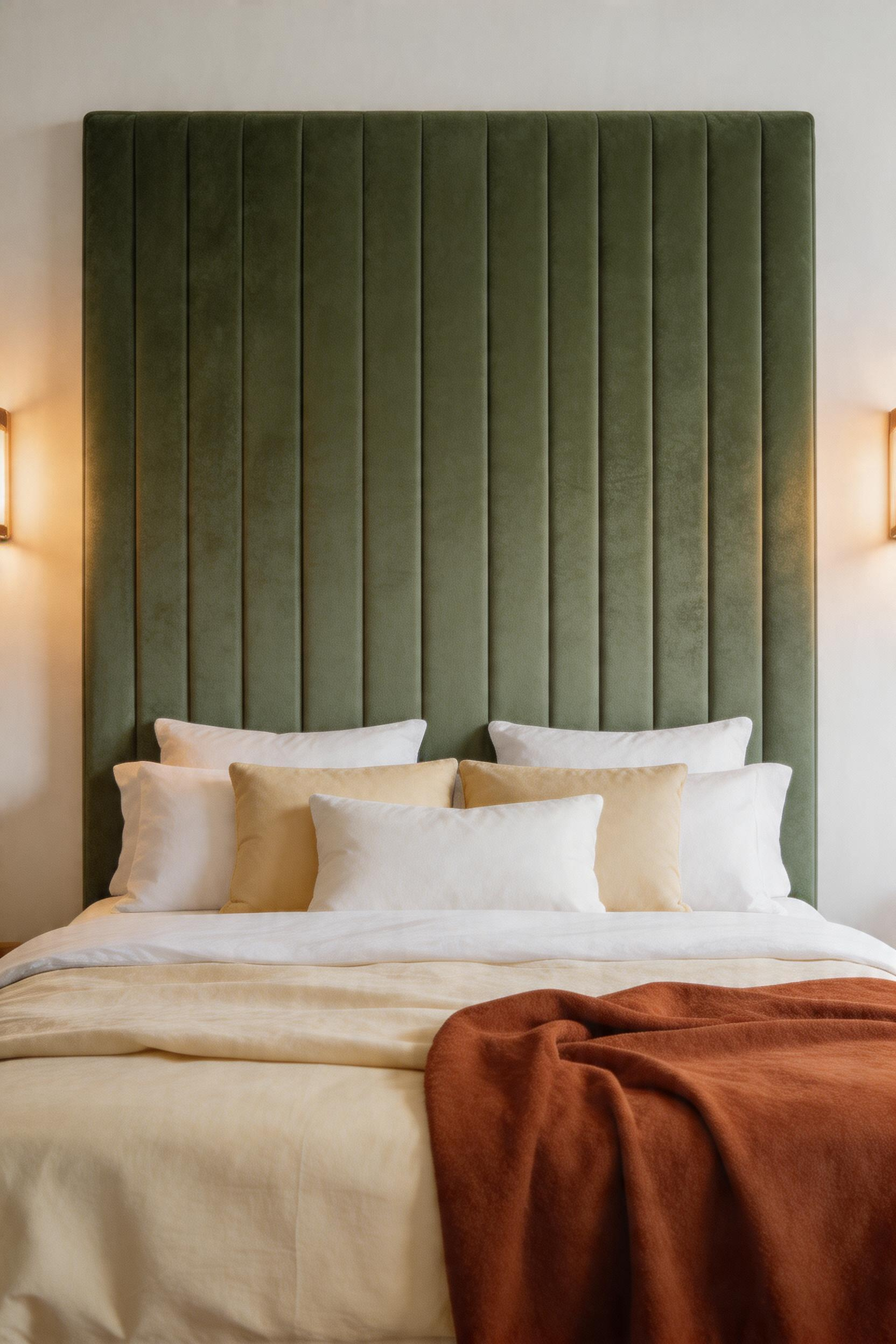
Boucle suits modern, Japandi, and Scandinavian-influenced bedrooms — its looped texture reads warm but restrained. Velvet adds richness for more layered or traditional rooms. Linen is the most versatile, fitting contemporary, coastal, and farmhouse styles alike.
The DIY case is genuinely strong. Materials — plywood, 1–2 inches of high-density foam, batting, and fabric — run to approximately $170 plus 4 yards of 54-inch-wide upholstery fabric for a queen. No sewing required: wrap and staple at the back. DIY gives access to the exact fabric you want rather than whatever’s available at the ready-made price point.
Care matters more than most people realize. Weekly vacuuming with a soft brush attachment removes the dust that dulls upholstery over time. Spot clean with a slightly damp cloth and mild soap — test first on velvet. Boucle benefits from a fabric shaver every few months to remove any surface pilling from the looped texture. Among bedroom decorating ideas with lasting impact, a quality headboard is consistently at the top.
7. Layered Rugs to Add Dimension and Define the Bedroom Zone
The layered rug approach grounds the bed with a large neutral base piece and introduces pattern or softness through a smaller, more personality-forward top layer. The result is warmer and more dimensional than either rug alone.
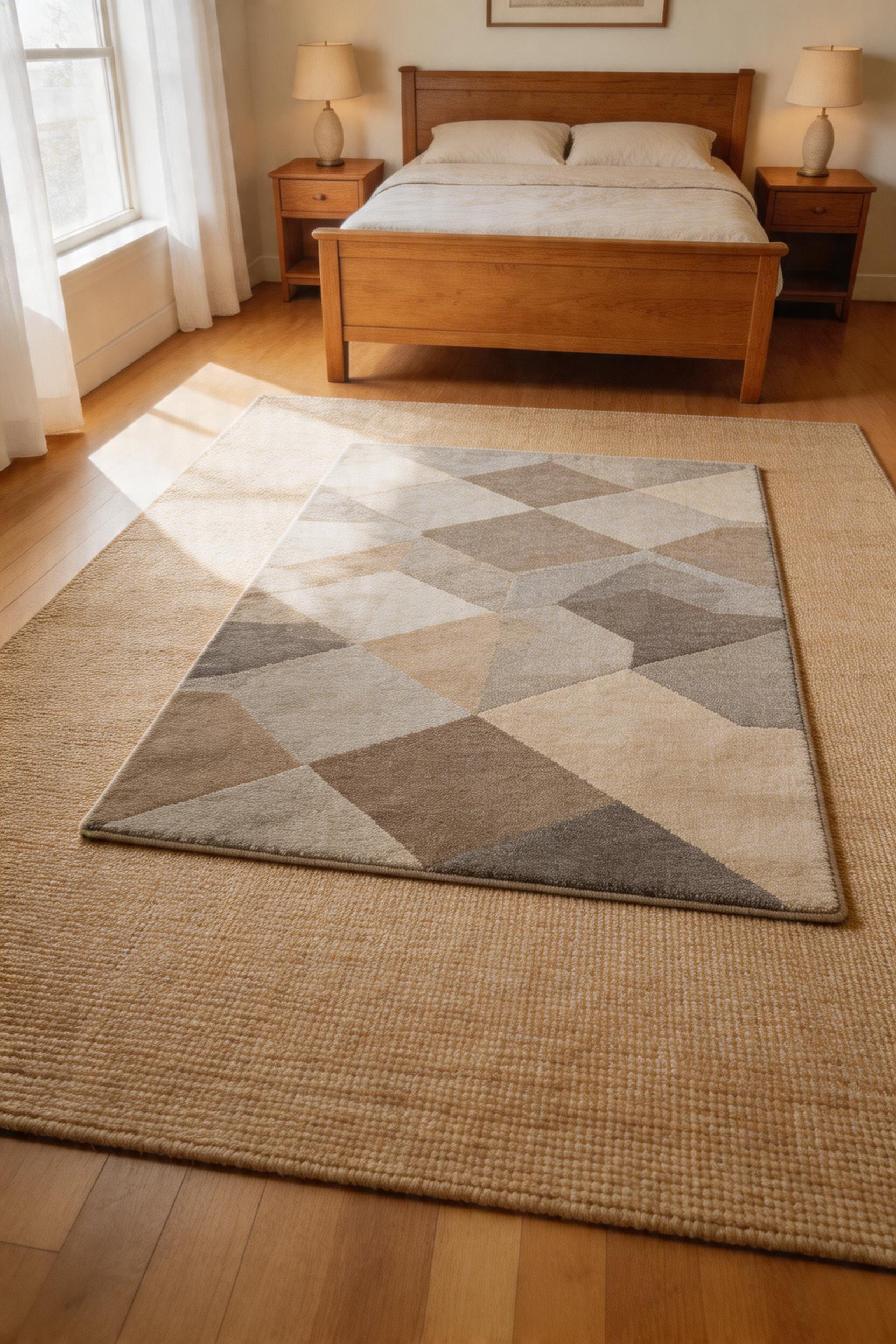
The base layer is a large neutral flatweave — jute or sisal. Tightly woven jute doesn’t shift under furniture and acts as a stable platform. The top layer is where the softness lives: a medium-pile wool, a printed cotton, or a vintage kilim. Size the top at roughly two-thirds the base — an 8×10 base pairs with a 5×8 or 6×9 top, leaving at least 3–10 inches of the base visible around the perimeter.
For a queen bed, the base rug should be 8×10 at minimum, positioned so 18–24 inches show on each side and at the foot. The rug extends two-thirds of the way under the bed — intentional, not accidental. For a king, a 9×12 or 10×14 gives adequate visual framing. The same sizing principles apply in living rooms — the living room rug placement guide maps the logic clearly if you want to see the approach applied across a different room.
Pile height pairing matters underfoot. A low-pile flatweave base combined with a medium-pile top creates the most satisfying tactile contrast. Avoid pairing two high-pile pieces — the top rug won’t lie flat. Place the softest piece where feet land first in the morning.
8. Bedroom Decorating With a Gallery Wall: Mixing Art, Textiles, and Objects
A gallery wall made entirely of flat prints in matching frames is a fine thing. One that mixes prints with a mirror, a woven panel, a ceramic piece, or a shelf crosses from decoration into something personal. The difference is dimension — some elements come off the wall toward you, creating depth that flat art can only suggest.
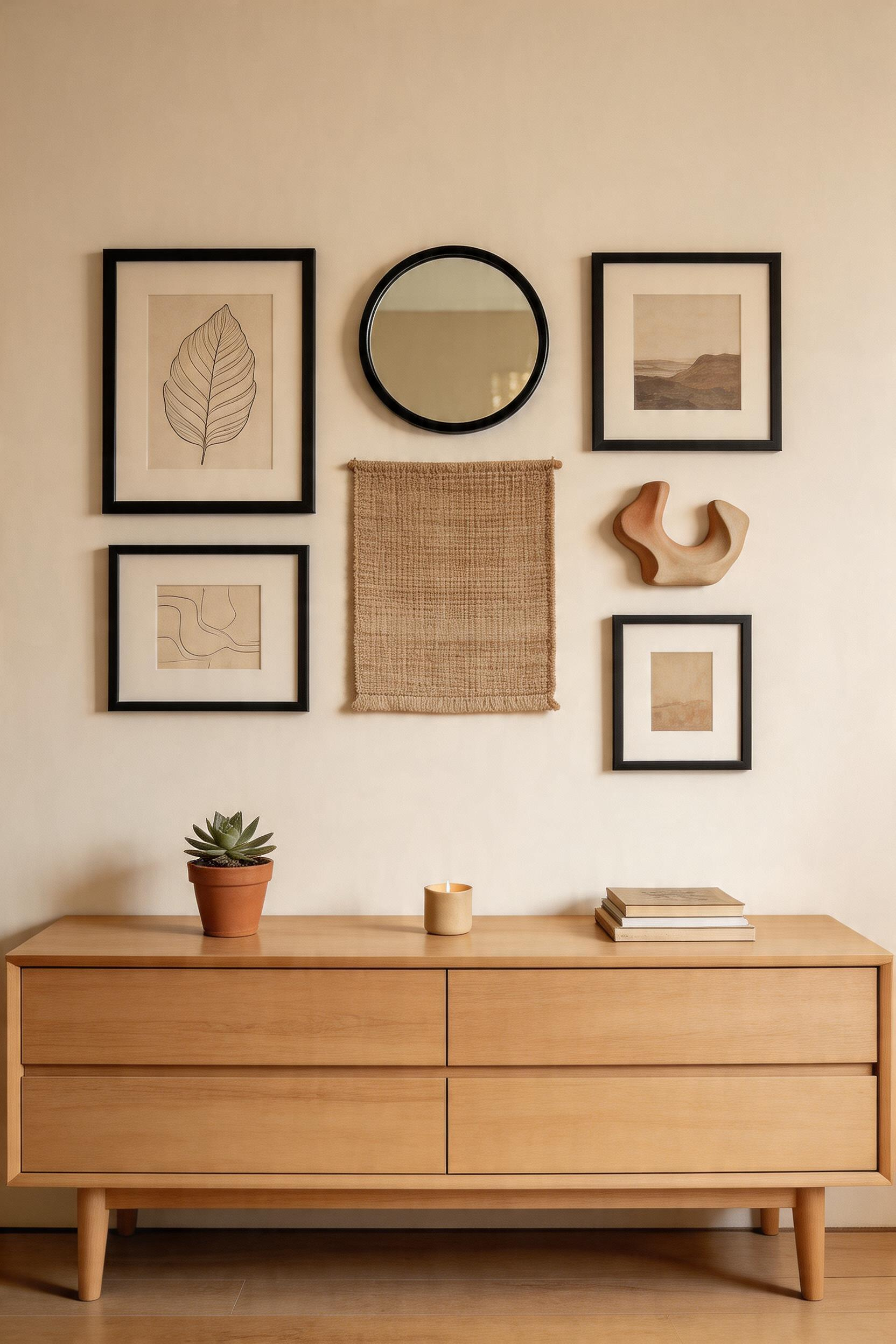
Start with one hero piece — larger than everything else, set slightly off-center on the wall. Around it, build with smaller framed prints, then layer in one or two three-dimensional elements: a mirror (which bounces light while breaking the flat surface), a small woven basket or textile panel, a sculptural object. This is one of the bedroom decorating ideas where constraint is your friend — one strong three-dimensional element is enough.
Consistent frame color holds a mixed-style gallery together. All matte black frames — metal, wood, or plastic — read as cohesive even when the art inside ranges from photography to abstract print. White frames do the same.
Before any nails go in, lay the entire arrangement on the floor and photograph it. Transfer positions using paper templates taped to the wall. This single step prevents most gallery wall regrets. Hanging everything in a perfectly symmetrical grid is the most common mistake — it reads as furniture store display rather than collected personal gallery.
9. A Draped Canopy Over the Bed That Feels Romantic, Not Overdone
A bed canopy creates intimate enclosure and architectural interest without requiring a new bed frame. The key is keeping the fabric light. Velvet or heavy linen canopies look theatrical; voile, sheer linen, and chiffon look like something the room grew rather than something installed.
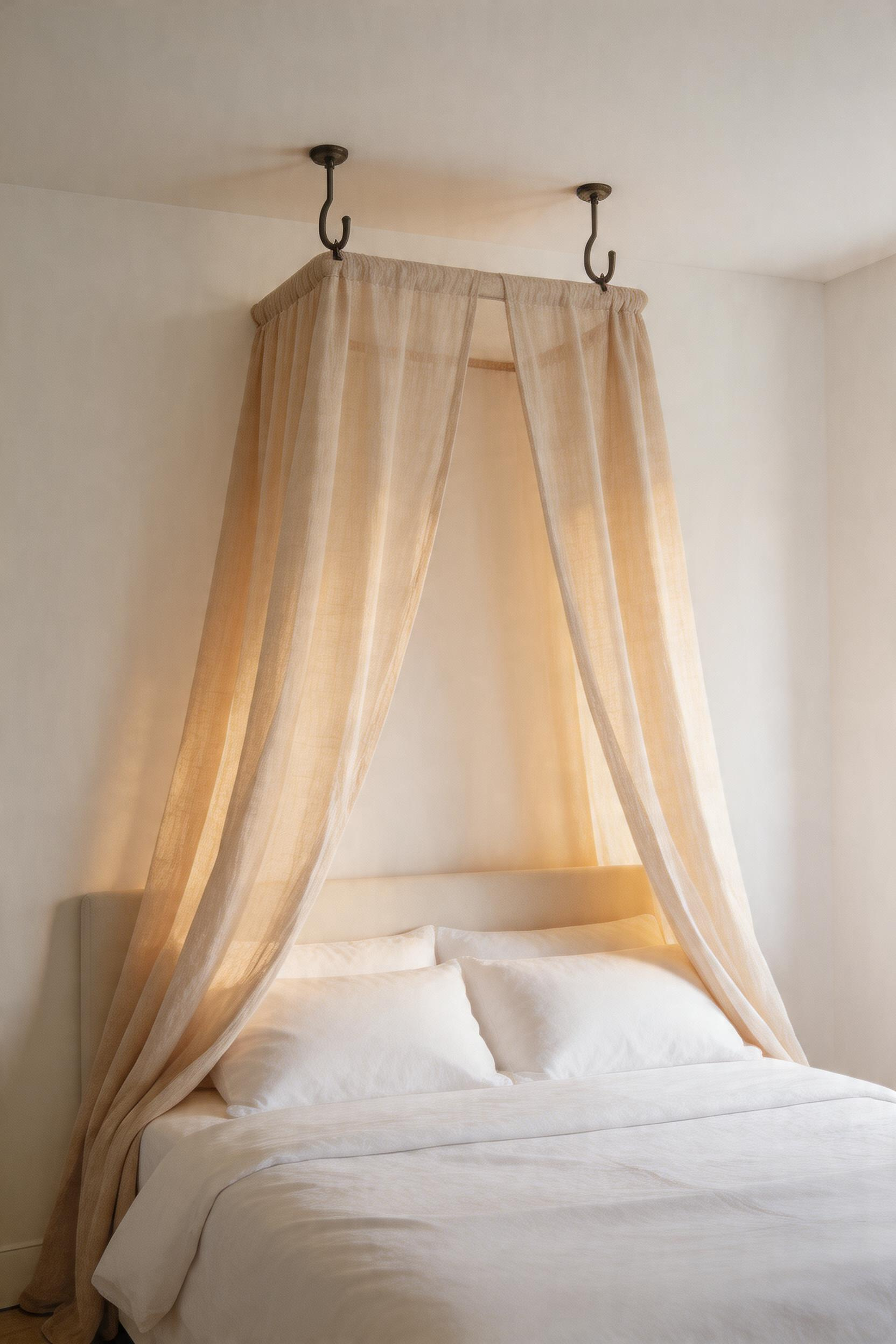
The simplest approach: ceiling hooks screwed into joists (use a stud finder) with a lightweight wooden dowel suspended horizontally above the headboard. Drape the fabric over the rod and let it fall to each side. Total material cost: $15–40. The effect punches significantly above that price.
For a more complete canopy surrounding the bed: decorative ceiling-mount bracket systems with elbow connectors allow curtain rods to run along all four sides, creating the silhouette of a four-poster frame. Allow approximately 4 yards per panel for adequate fullness.
Voile gives the most gossamer, romantic effect and pools beautifully on the floor. Sheer linen is more textured and natural-feeling — better for earthy, organic bedrooms. Semi-sheer linen has enough body to drape with real shape rather than floating indefinitely. All three look deliberately designed rather than improvised, and all three wash easily when the time comes.
10. Knitted Poufs and Textured Ottomans at the Foot of the Bed
An ottoman or pouf at the foot of the bed is a small piece that carries disproportionate design weight. It gives the bed a visual endpoint — the arrangement stops intentionally rather than trailing off at the footboard. And it provides somewhere to sit while dressing, which, once you have it, becomes hard to give up.
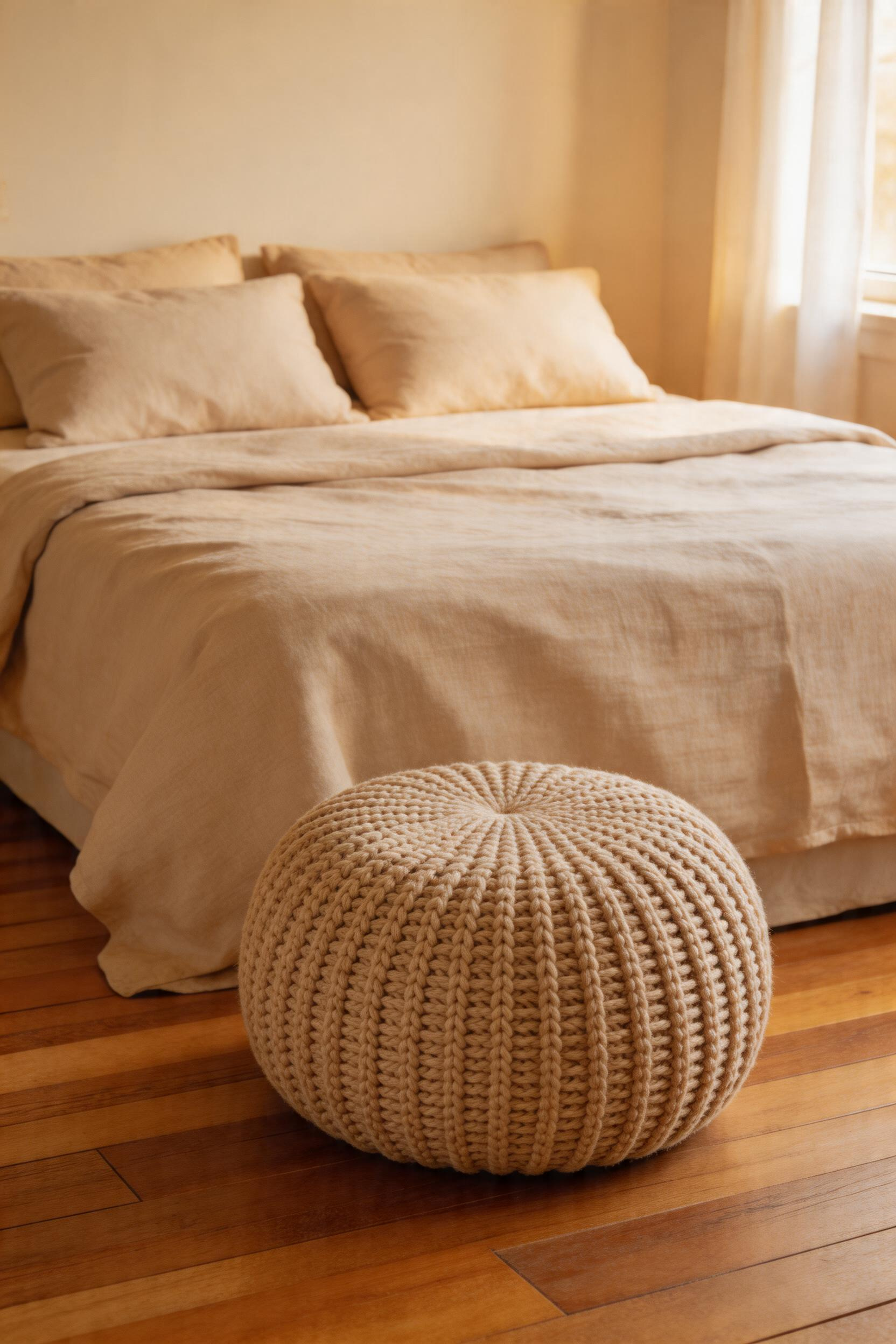
For a chunky knit pouf: look for 100% cotton construction in the 18–20 inch height range with a removable, machine-washable cover. Standard diameter is approximately 18.5 inches, supporting up to 200 lbs. These are soft and visually beautiful — among the simplest bedroom decorating ideas for adding texture at the bed’s foot — but better for occasional sitting than daily load-bearing use.
For daily use as an actual seat, an upholstered bench ottoman or a leather pouf is more practical. Leather wipes clean with a damp cloth and holds its shape through years of use. An upholstered bench with lift-top storage handles the visual design, seating, and seasonal storage simultaneously.
Proportion matters: the ottoman or pouf should be roughly 60–75% of the bed’s width. For a queen (60 inches), 36–45 inches wide. For a king (76 inches), 48–56 inches. Leave at least 18 inches between the foot of the bed and the front of the ottoman for comfortable movement.
11. Bedroom Decoration Inspiration: Bringing Plants and Natural Textures Indoors
Plants in a bedroom are a design decision and a wellbeing decision simultaneously. The challenge is matching plant choice to the light conditions — most bedrooms have indirect or filtered light at best, which rules out more than half the typical houseplant roster.
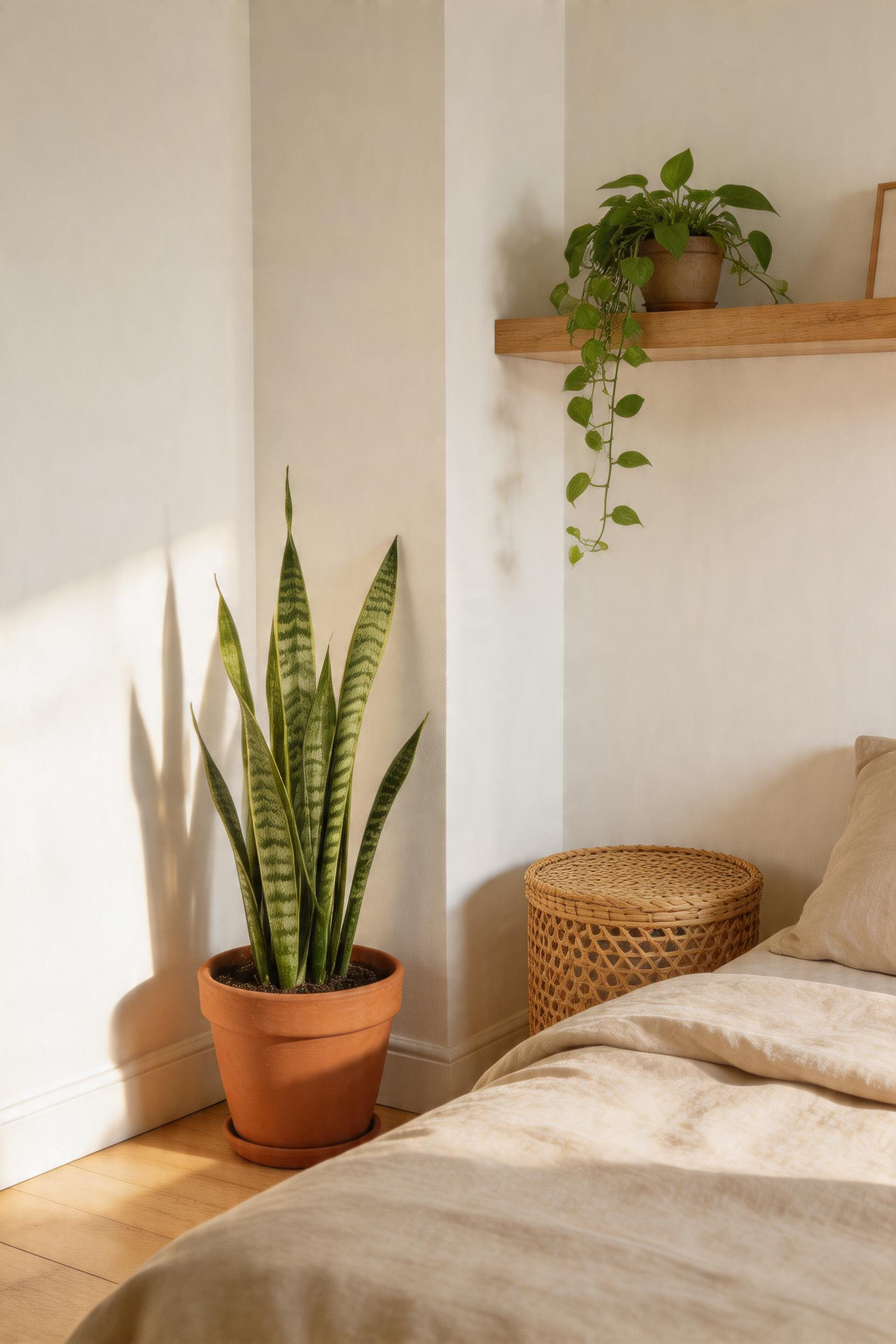
Three plants reliably thrive in low-light bedrooms: snake plant (Sansevieria), pothos, and peace lily. The snake plant is the most bedroom-specific — it converts CO2 to oxygen at night (unusual among plants), tolerates deep shade, and asks almost nothing of the person caring for it. Pothos trails beautifully from a shelf or nightstand and forgives both low light and missed waterings. Peace lily is the one flowering option in this group, with white blooms that add visual softness — it prefers its soil moist rather than wet, which means weekly attention.
The planter matters as much as the plant for design purposes. Terracotta is functional (porous clay absorbs excess moisture) and aesthetic — the warm tone pairs with linen, cotton, and natural wood beautifully. Woven baskets work as cachepots but always need a plastic liner to protect the fiber from moisture. Ceramic in a matte finish ties cleanly to the room’s textile palette.
Rattan furniture or shelving alongside plants creates a consistent natural material story — both materials live in the same register of organic texture. Pairing plants with raw linen pot covers and macrame hangers extends the textile theme from soft furnishings to the plant styling itself.
12. Curtain Draping Techniques That Make Windows Look Bigger Than They Are
The single highest-impact, lowest-cost intervention in most bedrooms is moving the curtain rod. Not replacing the curtains — just raising the rod closer to the ceiling and extending it further beyond the window frame on each side.
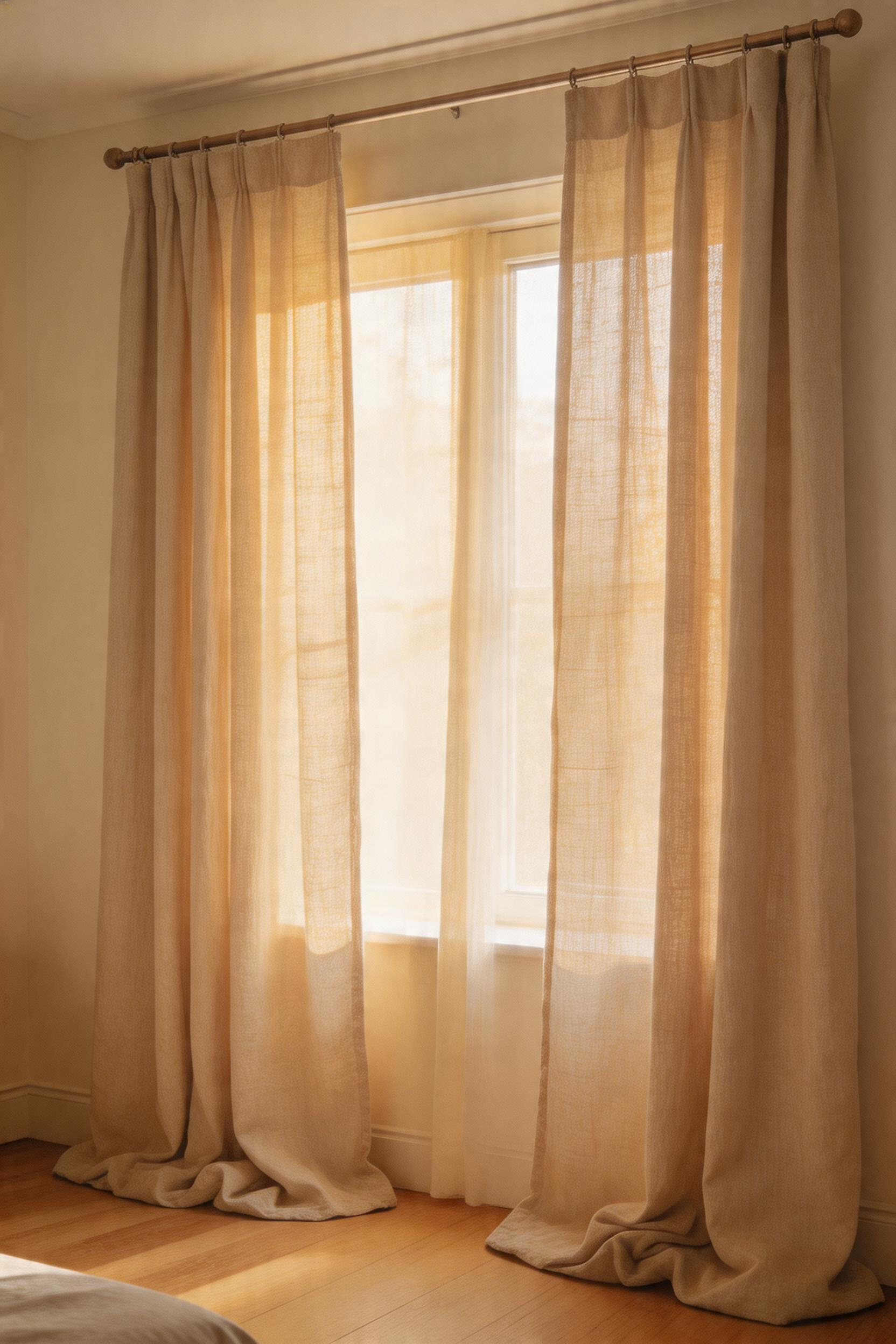
The rule: for a standard 8-foot ceiling, the rod should sit 3–5 inches below the ceiling. For taller ceilings, mount 8–12 inches above the window trim. Extend the rod 8–12 inches past the window frame on each side. When curtains are open, they stack completely off the glass, exposing the full window. Both the window and the room feel larger.
Hem length is a separate decision. Barely grazing (1/2 inch above floor) is the most practical — clean, no tripping, no dust collecting. A slight break (1–2 extra inches) adds a touch of luxury without the maintenance commitment. Full pooling (3–6 inches extra) works best in low-traffic areas or in fabrics with enough body to pool elegantly rather than bunch.
For the curtain heading: grommet tops suit relaxed linen panels in contemporary rooms. Pinch pleat is the most formal — structured folds suit traditional styles. Each panel should be 1.5–2 times the window width for natural fullness. This is one of those bedroom decorating ideas where the execution detail matters more than the curtain itself.
13. Color Blocking With an Accent Wall and Coordinated Textiles
The wall behind the headboard is where color makes the most sense in a bedroom. It frames the bed, is the first thing the eye finds when you enter, and has the most visual surface area in any direct sightline. Getting the wall right can pull an entire textile scheme together.
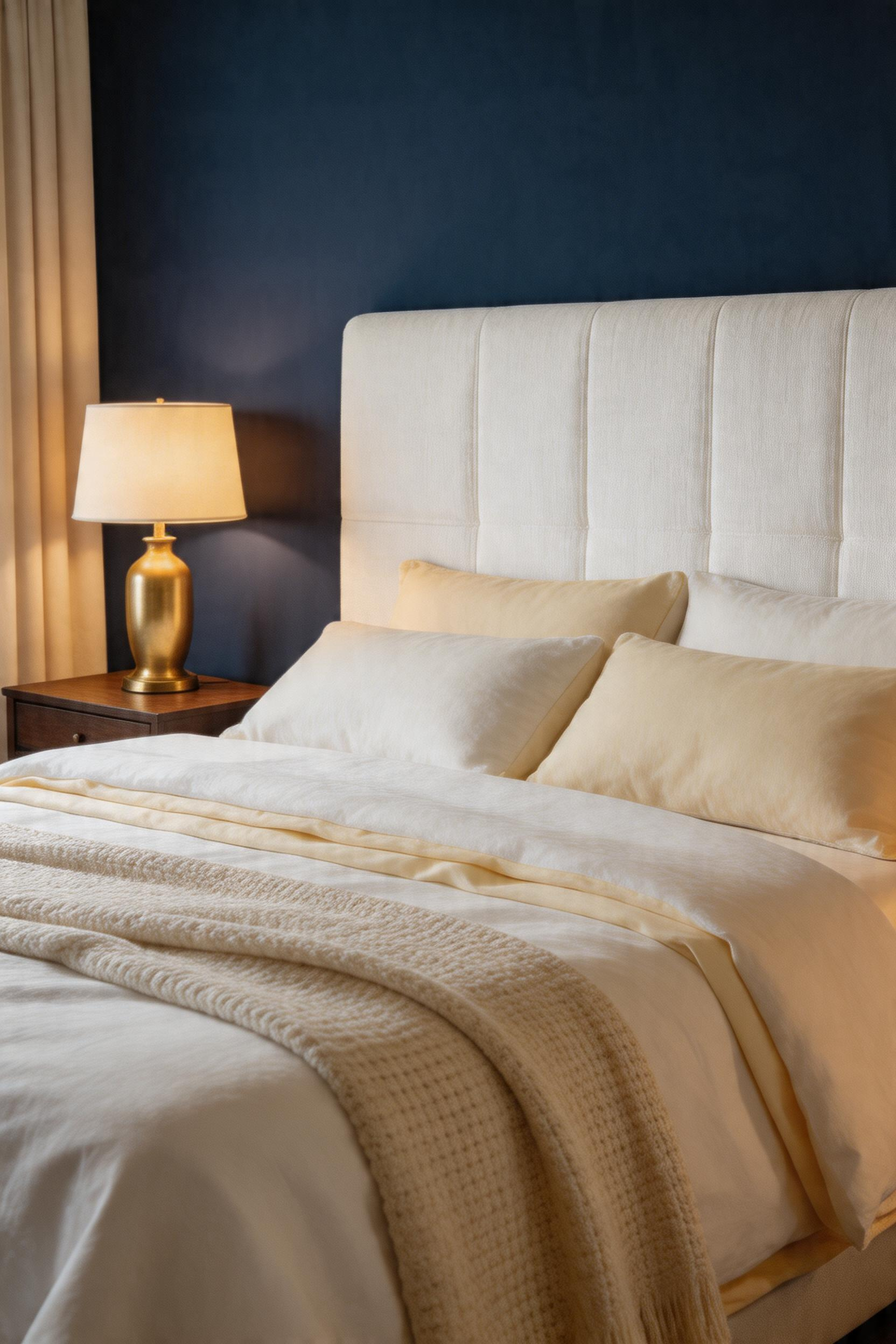
The safest starting point for choosing an accent wall color: pull it from something already in the room. A secondary tone in the rug, a hue in the bedding, or a color in existing artwork creates harmony rather than competition.
Trending Color Directions for 2025–2026
Deep navy pairs with brass hardware and warm white or cream bedding. Forest green is earthy and calming, pairing naturally with terracotta, oatmeal, and linen tones. Warm terracotta works across beige, cream, and natural fiber textiles. The two-tone approach — accent wall at a mid-depth tone, bedding in lighter and darker versions of the same hue — is particularly effective. A sage green accent wall with an oatmeal linen duvet and a deep olive throw is one color family at three depths.
Paint vs. Removable Wallpaper
For renters or frequent redecorators: peel-and-stick wallpaper installs in under an hour, removes without wall damage, and is now available in sophisticated botanical, abstract, and landscape mural prints ($150–500 for a standard wall). Bedroom wallpaper modern ideas covers the full spectrum from traditional paint to high-design peel-and-stick. Low-VOC or zero-VOC paint is worth specifying in a bedroom where you’ll breathe that air for 7–8 hours daily.
14. Bedroom Decorating Ideas on a Budget: High-Impact Textile Swaps
The most cost-effective bedroom transformations consistently come from textiles rather than furniture. A new duvet cover — swapping the cover rather than the whole duvet — is the highest visual impact change available for the lowest investment. It changes the largest expanse of fabric in the room.
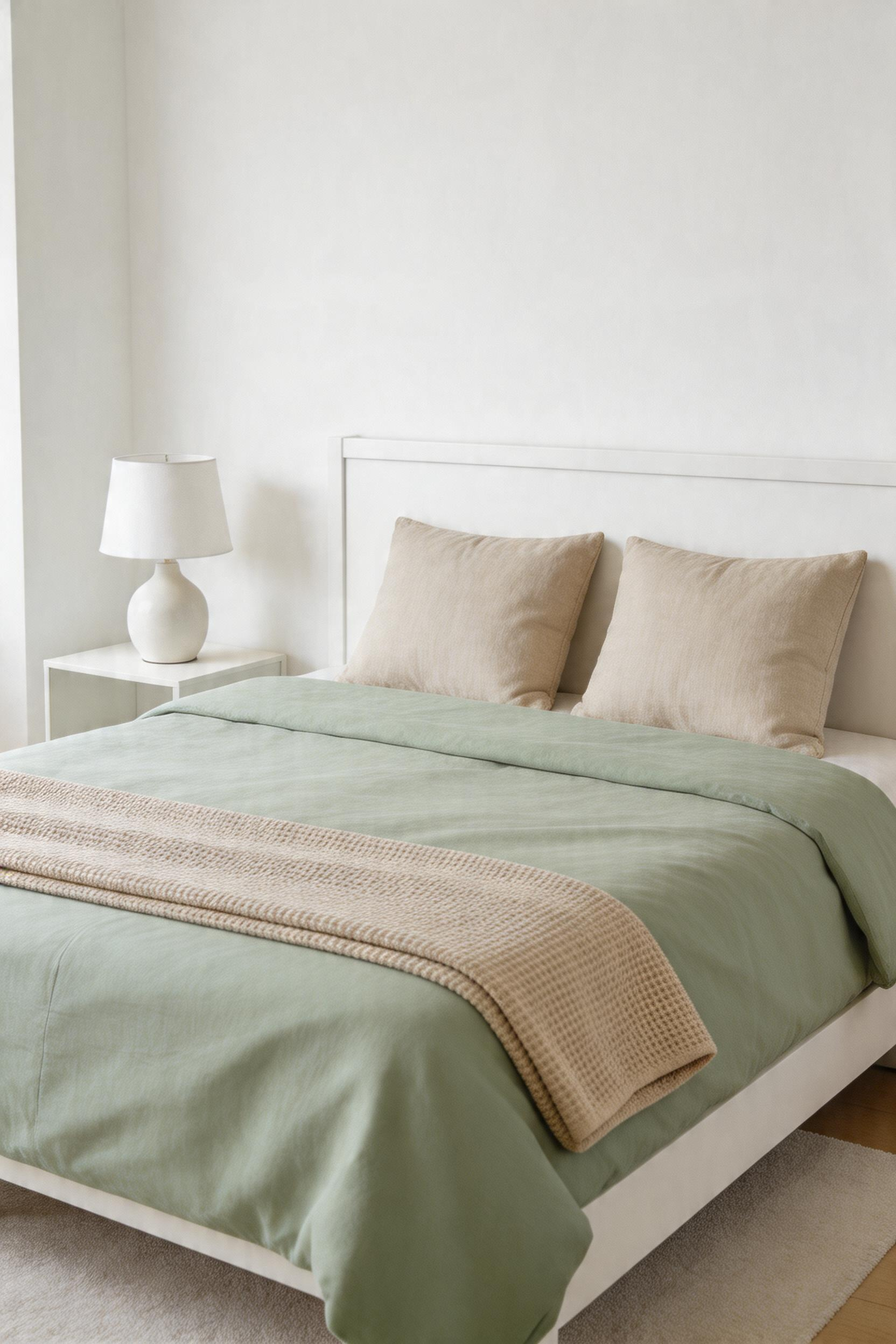
After the duvet cover, the sequence that delivers the most visual return: a throw blanket at the foot of the bed ($30–80 for a decent waffle-weave or cotton knit), new curtain panels if upgrading from mini-blinds to linen ($60–150 per pair), and two new throw pillow covers ($20–50 each). Those four bedroom decorating ideas on a budget can entirely shift a room’s character for under $300.
For quality at accessible prices: Quince’s 100% organic European flax linen bedding typically runs $80–130 for a full/queen duvet cover at quality comparable to premium specialty stores. Target’s Threshold line includes waffle-weave comforter sets in 10+ colorways for under $80. Thrift stores and estate sales remain the best sources for vintage quilts and woven blankets with real character. For a full strategy on working within a tight budget, bedroom makeovers on a budget covers the approach with more depth.
The most important principle: one quality piece outperforms several cheap ones. A $120 linen duvet cover outlasts three $40 polyester sets and feels better every night.
15. Woven Storage Baskets and Linen Bins That Look Good Out in the Open
Open storage in a bedroom only works when the containers themselves are worth looking at. Natural fiber baskets in seagrass, water hyacinth, and rattan meet that standard when chosen thoughtfully. They’re texture additions as much as storage solutions.
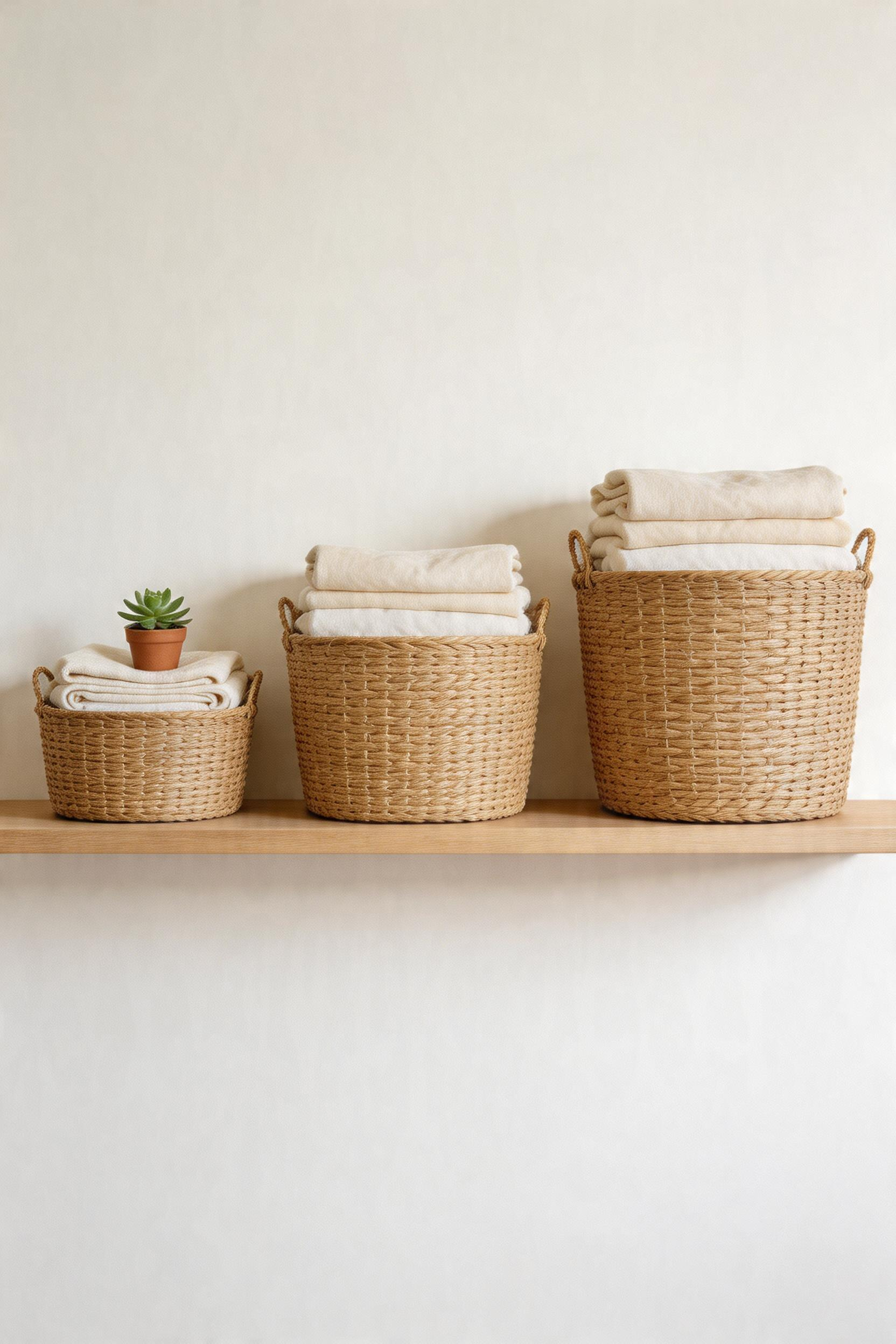
Seagrass resists moisture and mold naturally — the best choice for higher-humidity bedrooms. Water hyacinth is the most widely available in decorative shapes: lightweight, strong, and biodegradable. Rattan is the most structurally rigid, better for heavier loads like seasonal bedding storage.
Grouping and Sizing
Group baskets in odd numbers and in the same material but graduated sizes. Three seagrass baskets — large, medium, small — reads as a deliberate collection. Under-bed baskets work at 6–8 inches height in flatweave seagrass, starting around $35. Blanket baskets for seasonal duvets work in the 18–24 inch width range with a lid to keep dust off contents.
Lid or no lid is a real choice: lidded baskets look cleaner; open-top baskets invite the casual toss of a throw blanket and look beautiful with a folded linen edge showing above the rim. Among bedroom decorating ideas that work with rather than against daily habits, styled open storage is quietly one of the best.
One firm rule: always line natural fiber baskets with a plastic liner before using them as plant containers — moisture damages the woven fiber from the inside within weeks.
16. Layered Lighting: Bedside Lamps, Wall Sconces, and Ambient Glow
A bedroom lit by a single overhead fixture, regardless of how good the bedding is, never quite achieves warmth. Overhead light projects downward, casts flat shadows, and illuminates everything at the same intensity. It’s the least intimate possible light source for the most intimate room in the house.
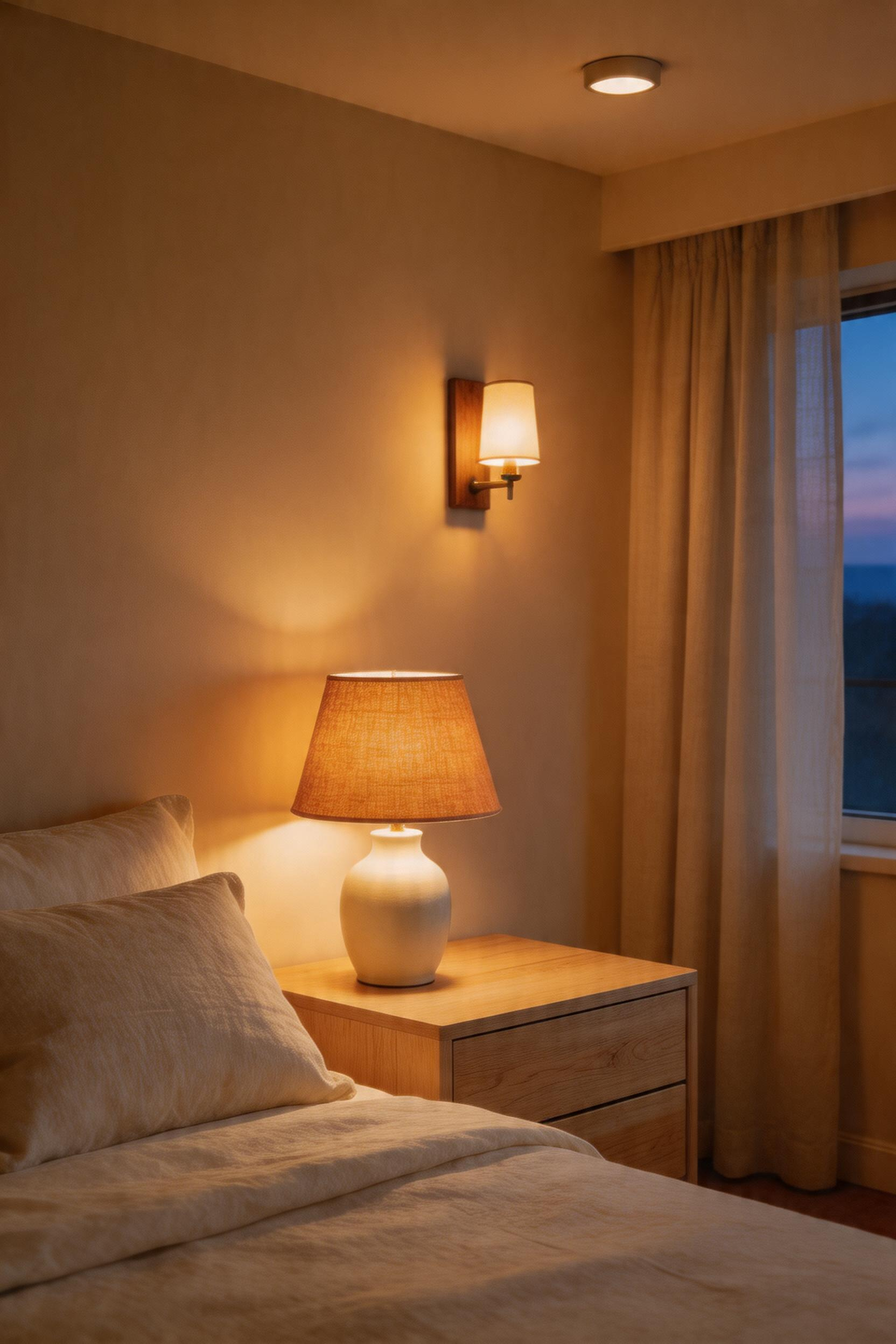
The three-layer approach: one ambient source (overhead on a dimmer), one to two task lights (bedside lamps or wall sconces at reading height), and one to two accent sources (a floor lamp in a corner, fairy lights, a lamp illuminating wall art). Three to five sources total transforms the atmosphere.
Choosing the Right Bulb Temperature
2700K is the warm amber tone that complements natural textiles, looks flattering in a bedroom, and supports the body’s natural sleep-wake cycle. Anything above 3500K in a bedroom reads like a bathroom — alerting rather than calming. Dimmable bulbs at 2700K are the most flexible solution.
Lamp Shades and Textile Coordination
Linen or cotton lamp shades emit the warmest light — the natural fiber adds a slight amber tint. A dark shade (charcoal linen, deep navy) creates directional, intimate light; a cream or white shade diffuses more evenly for reading. Among bedroom decorating ideas that cost nothing to change, swapping a bright cool bulb for a 2700K dimmable alternative is the most immediate transformation available.
17. Decorating Your Bedroom With Vintage or Secondhand Textile Finds
A handmade vintage quilt at the foot of a bed carries something no new bedding set can replicate regardless of price: evidence of making. The slight irregularities in the patchwork, the density of cotton softened through decades of washing — these aren’t flaws. They’re the point.
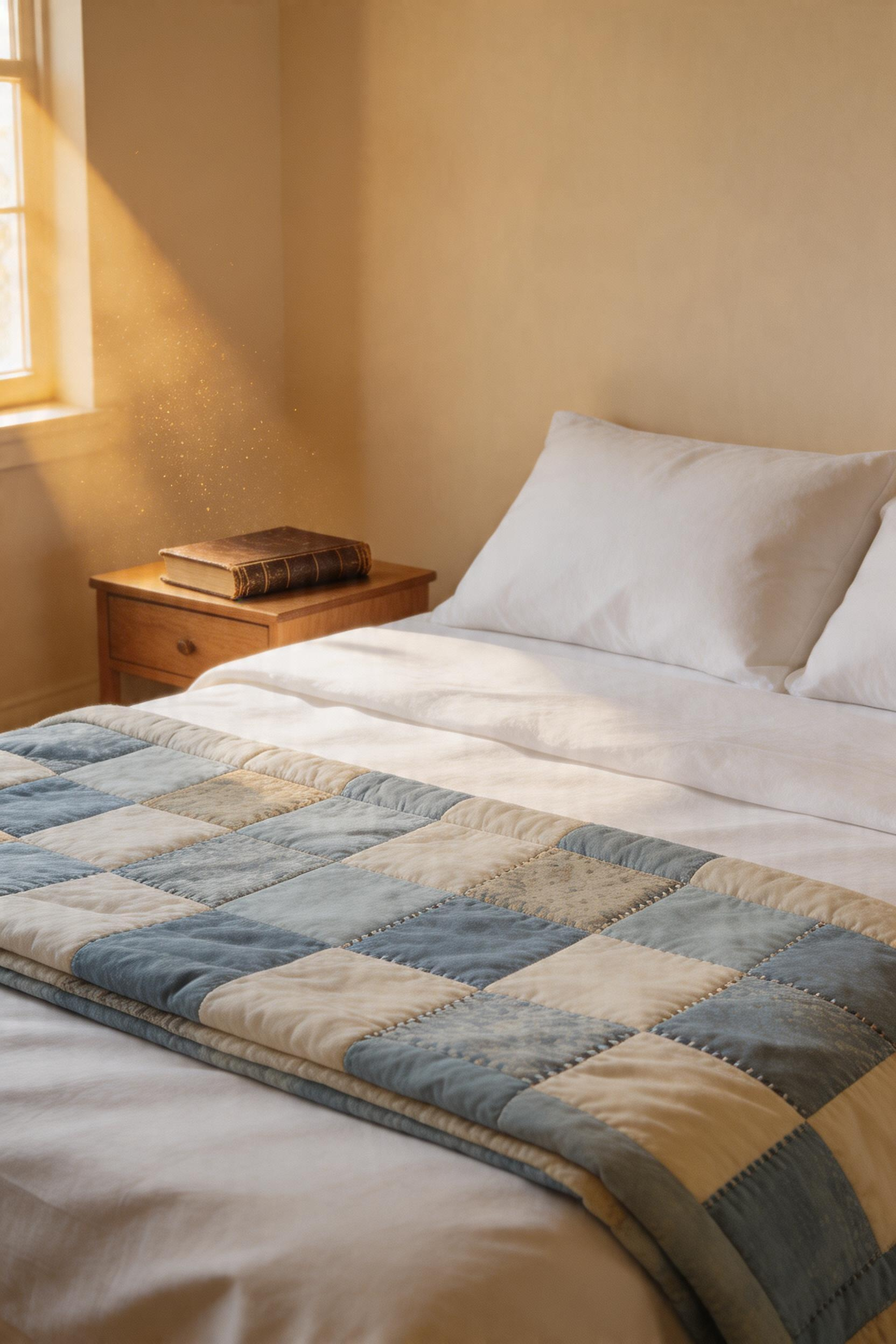
Estate sales, antique markets, and online resale platforms (Etsy vintage, eBay, Facebook Marketplace) regularly yield vintage quilts, Pendleton wool blankets, and hand-loomed rugs at $20–200. A 1960s Pendleton wool blanket in a classic plaid, draped across the foot of a contemporary bed, contributes more to the room’s character than most furniture purchases at ten times the price. For broader inspiration on incorporating vintage elements into a full bedroom scheme, vintage bedroom ideas that stay timeless is worth bookmarking.
When sourcing, check for three things: intact seams (run your fingers along the stitching), no mildew smell (musty odour usually washes out; actual mildew does not), and even fading rather than uneven spotting (which often indicates chemical damage that may not wash out).
Cleaning vintage finds requires care. Vintage cotton quilts do best with a gentle hand wash in cool water with Woolite, laid flat to dry — never wrung. Vintage wool items are safer at the dry cleaners. For significant or fragile pieces, professional textile conservation services can clean, repair, and stabilize historic textiles using methods (suction-table cleaning, localized spot treatment) that preserve fragile fibers. Among bedroom decorating ideas with real staying power, a good vintage textile investment is among the most lasting.
18. Performance Fabrics for Families, Pet Owners, and High-Use Bedrooms
The case against performance fabrics was always that they looked and felt synthetic. That case no longer holds. Modern performance fabrics — Crypton, Sunbrella indoor, treated linen blends — are visually and tactually indistinguishable from their untreated equivalents in most applications. The difference shows up when the coffee gets knocked over.
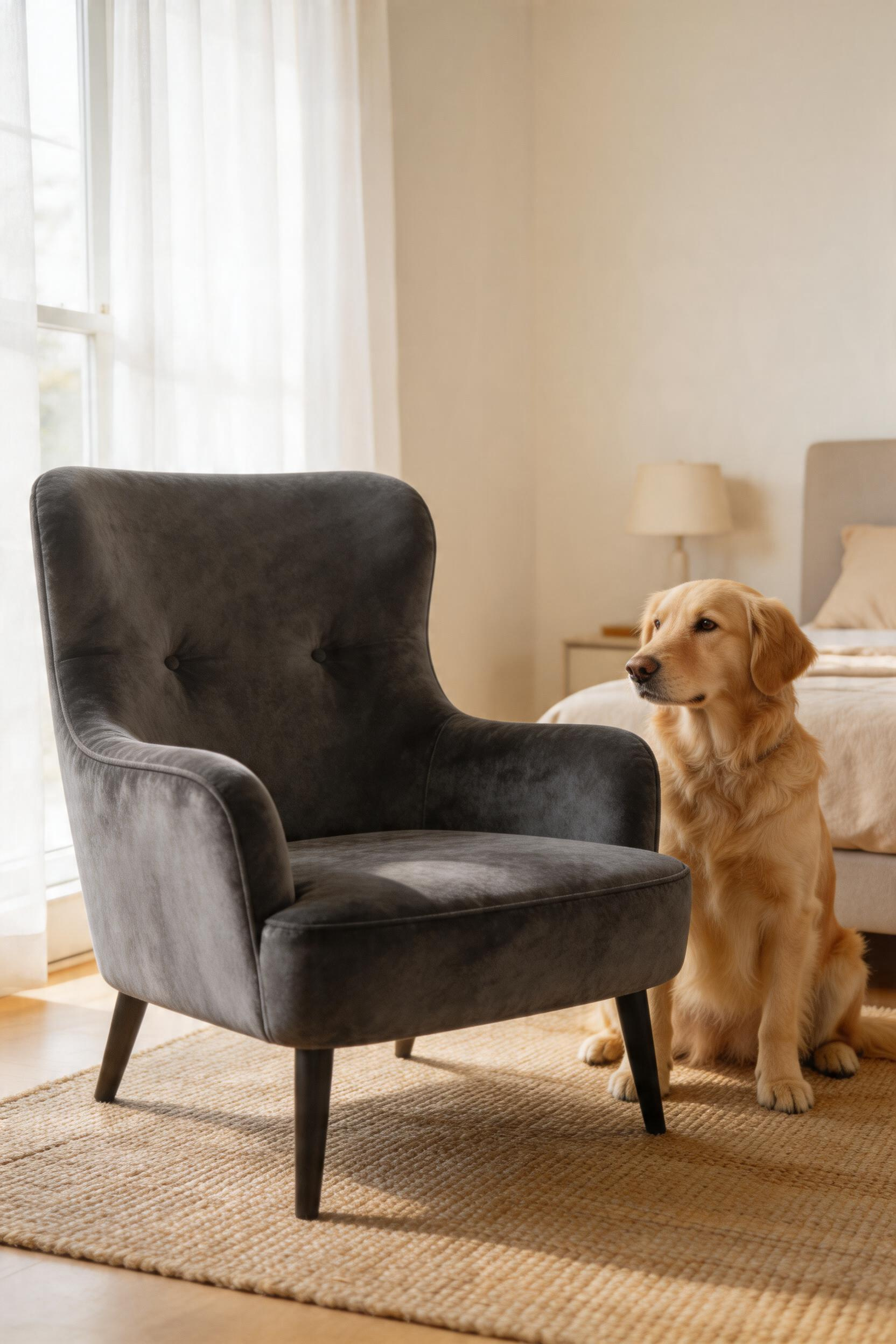
Crypton fabric goes through an immersion bath then a 300-degree oven that cross-links the protective technology into every fiber — not as a surface coating, but as a permanent part of the structure. It’s rated at 50,000+ double rubs, compared to the industry standard of 30,000. Crypton is available in velvet, chenille, and linen-look fabrics, and launched a Spring 2025 furniture collection with Four Hands that brought the range significantly broader.
For bedrooms specifically: upholstered headboards, accent chair upholstery (particularly where pets treat the chair as a personal lounger), and decorative pillow covers in high-contact positions are the three most useful applications. Crypton Cotton — a newer option — combines the protection technology with 100% cotton fiber for those who want natural fiber feel with performance behavior.
Cleaning is straightforward: blot spills immediately with a dry cloth (the protection buys time before liquid penetrates), then clean with warm water and mild dish soap. For stubborn organic stains, diluted hydrogen peroxide — tested first in an inconspicuous spot — clears what soap alone cannot.
Finding the Right Bedroom Decorating Ideas for Your Home and Budget
The most useful question isn’t which of these ideas to do — it’s what bothers you most about the room right now. Start there. If the bed looks bare and underdecorated, address the bedding layers first. If the room feels dark and flat regardless of what else is in it, lighting and curtains matter more than any furniture arrangement. If everything reads fine but still lacks personality, that’s usually a texture and layering problem — one good throw blanket and a woven wall hanging can fix it in an afternoon.
The sequence that tends to deliver the most satisfaction: bedding first (largest visual surface area), then lighting (sets the entire atmospheric quality of the room), then curtains (the high-and-wide rod placement alone is transformative), then rugs and floor texture. Only after those foundational layers feel right does wall art and accent placement make full sense.
Textiles have one significant advantage over every other bedroom decorating decision: they’re reversible. A throw that doesn’t work goes back in the linen cupboard. A duvet cover that doesn’t suit the room becomes a guest room piece. Before committing to paint or furniture — the permanent and expensive categories — use a textile or two to test the color direction, live with it for a week, and let the room tell you what it wants next.
The best bedroom decorating ideas don’t come from completing a plan all at once. They come from a room you’ve taken the time to observe.