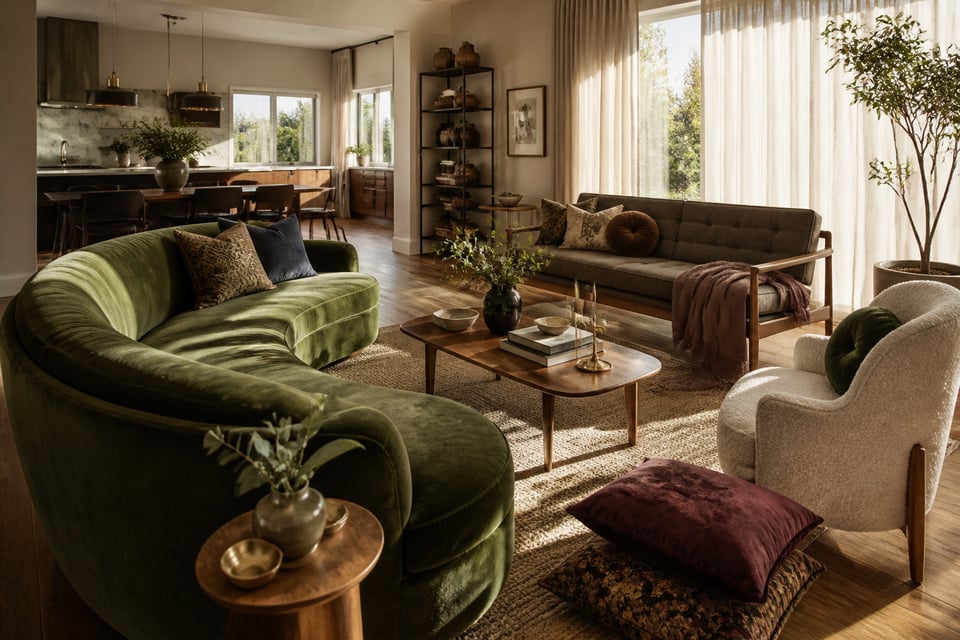
The moment you walk into a living room, your eye goes to the couch before it registers anything else. It’s the silhouette that sets the tone, the fabric that either invites you to sink in or quietly asks you to sit up straight. I’ve spent years with my hands in upholstery samples. Most people choose a living room couch with their eyes, then regret it with their hands a year later. The fabric they loved in a showroom photo turns out to be the wrong call. That’s especially true for a house with kids, a dog, or just a lot of real living happening on it.
That’s the lens I bring to this list. As a textile and upholstery specialist, I care less about whether a silhouette is trending. What matters more is what the fabric, fill, and frame underneath it will actually do for you. How it wears, how it feels against bare skin on a Sunday afternoon. And how forgiving it is the day someone spills red wine inches from the armrest. What follows are sixteen genuinely different directions for a living room couch, from sculptural curves to no-nonsense performance fabrics. Each one is here because it solves a real problem. Match one to how you actually live, not just how it looks in a photo. You’ll get a piece that earns its keep for a decade or more.
1. The Sectional Sofa That Anchors an Open-Concept Living Room
A sectional does something no single sofa can: it draws a boundary around a seating zone without a single wall going up. That’s exactly what an open floor plan needs to keep the kitchen, dining, and living areas from blurring together.
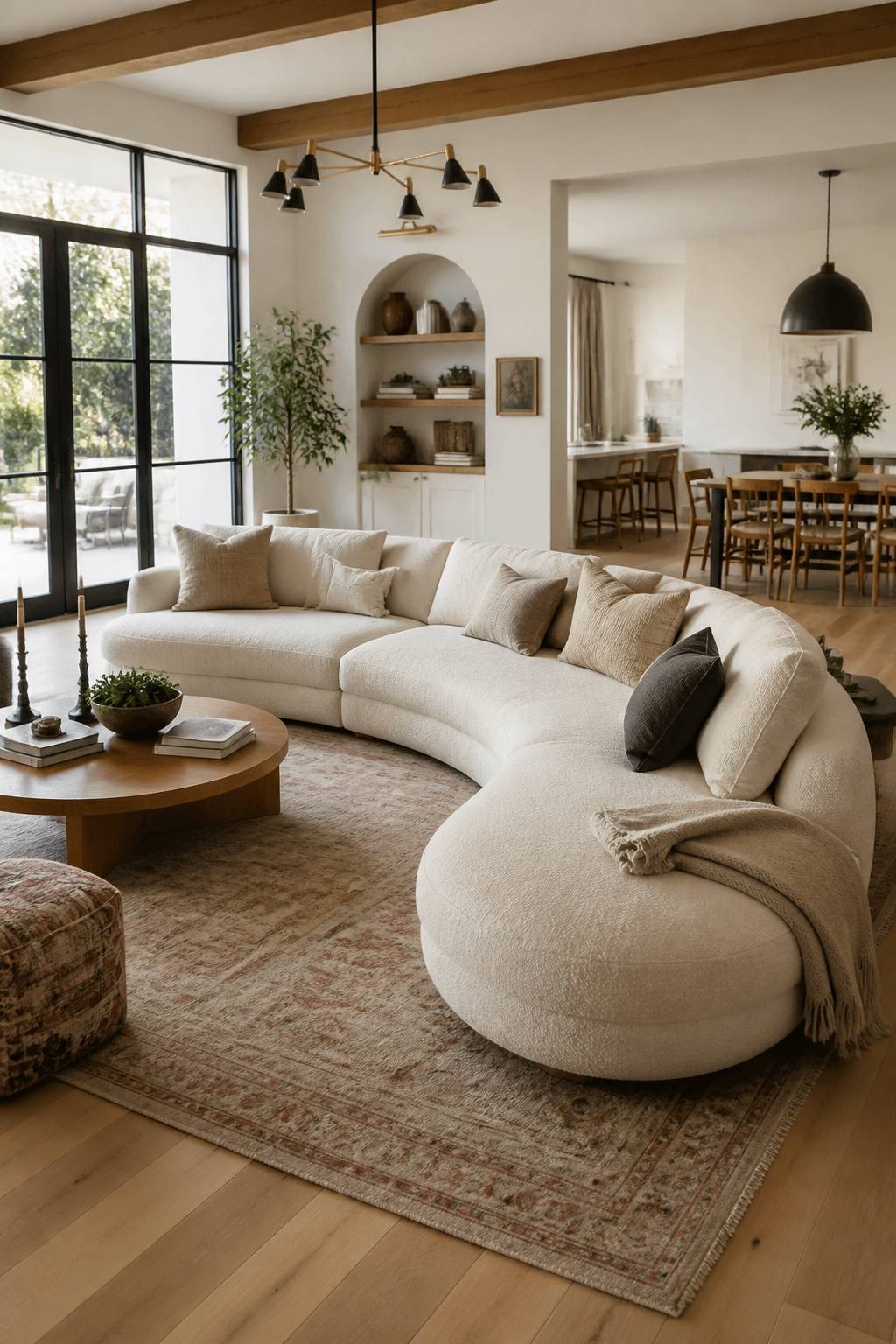
L-shaped sectionals suit rooms in the 10×12 to 14×18-foot range and seat three to five comfortably. Curved sectionals, meanwhile, are the leading 2026 direction for softening sightlines between zones. They work best floating in the room rather than backed against a wall, since the shape is meant to be seen and walked around. Crescent configurations often start at 110 inches wide and stretch past 130, so tape out the footprint before you fall for the showroom sample. Leave 30 to 36 inches of walkway clearance, and settle the chaise orientation before ordering. An 8×10 rug grounds a standard sectional; size up to 9×12 for a crescent shape, extending 18 to 24 inches beyond the furniture.
A sectional shows more fabric surface than any other piece in the room, so your upholstery choice sets the room’s tactile tone. A nubby boucle reads casual; a tight weave reads tailored. When you’re styling a sectional with layered textiles, let the rug and pillows carry the contrast instead of fighting the sofa for attention. Stick to a manufacturer’s core, long-running collection rather than a limited release. That way, a matching module is still available two or three years from now. It’s a detail that matters more for this living room couch style than almost any other.
2. A Curved Velvet Couch for Soft, Sculptural Living Room Seating
There’s a reason curved silhouettes have become the defining shape of 2026. They strip out the hard right angles that make a room feel rigid. In their place: a single sweeping line that invites a more open way of sitting together. Pair that shape with velvet and you get something genuinely sculptural. Light moves differently across a curved velvet surface than a flat panel, reading as luxurious without any pattern or color contrast doing the work.
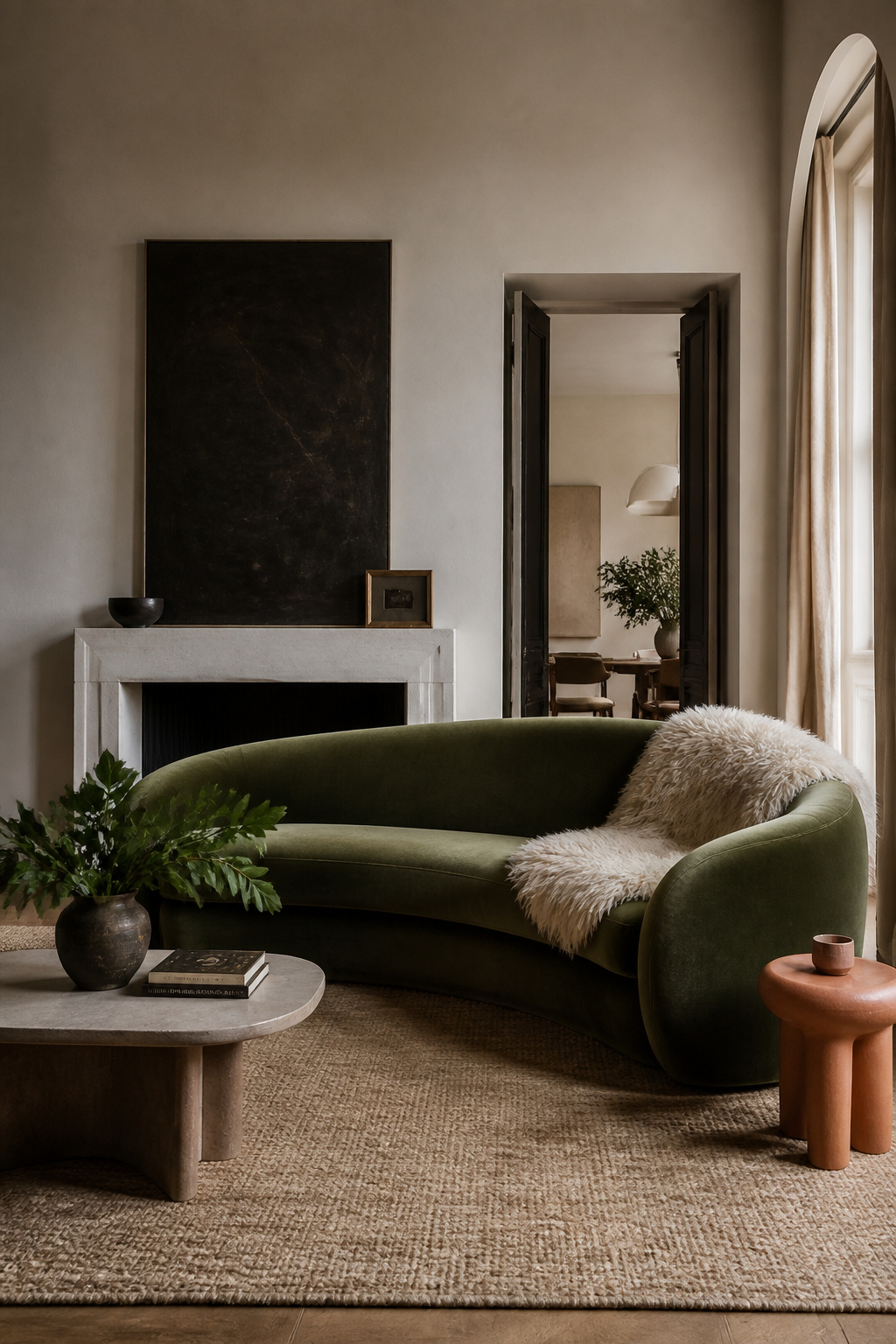
Performance polyester velvets are the smarter choice over natural mohair or silk, since they hold their pile shape on a curved frame better. Curved upholstery is harder to re-tension than a flat panel, after all. The matte finishes defining 2026’s “tactile minimalism” lean toward earthy tones: olive, terracotta, deep navy. They let the soft shape sit on a soft surface without shouting. Weekly vacuuming with a soft brush attachment keeps dust from settling into the pile, which matters more on curved arms that catch extra light.
Crushed or flattened pile from sitting is completely normal, not a flaw, and it’s reversible. Hold a handheld garment steamer about an inch from the fabric and work in the direction of the nap. Spills should always be blotted, never rubbed — rubbing drives liquid deeper into the pile and can leave a permanent shadow. Keep the sofa out of direct sun, too. UV exposure fades the dye and dries the pile faster than on a flat-weave fabric.
3. Performance Fabric Sofas Built for Family Living Room Couch Durability
“Performance fabric” isn’t a marketing label. It’s a textile engineering category, and understanding it is the most useful thing a buyer can walk away with. It determines what you can safely use to clean a spill years after the warranty card is gone.
Most performance fabrics use solution-dyed yarns, meaning color is added to the fiber while still liquid rather than after weaving. This resists fading and bleeding far better than piece-dyed fabric. Crypton uses a “repel and release” finish where liquid beads on the surface, buying time to blot a spill before it absorbs. It also tests higher on rub-count abrasion resistance. Sunbrella, the long-running benchmark for sun and stain resistance, runs $20 to $55 a yard. Newer Revolution fabrics offer boucle and velvet-look textures for $10 to $30. That gap matters since a full sofa needs around 16 yards, which can swing total cost by $160 to $400.
The detail every household should memorize is the W/S/WS cleaning code. Code W tolerates a water-based cleaning agent, covering most performance synthetics. Solvent-based cleaner only is what Code S means, since water on an S-coded fabric risks shrinkage or color bleed. The most forgiving and most common on performance lines is Code WS. For households with young kids, prioritize built-in moisture-barrier technology over a fabric that’s merely stain-resistant on the surface. Always test an unfamiliar cleaner on a hidden patch first. This is the single most useful thing to know before buying a living room couch for a busy family.
4. The Classic Chesterfield Couch for Timeless Living Room Charm
A Chesterfield’s identity is built entirely on upholstery technique, not silhouette alone. The design dates to the mid-1700s, commissioned by the 4th Earl of Chesterfield, with high rolled arms meant to protect gentlemen’s coattails from wrinkling.
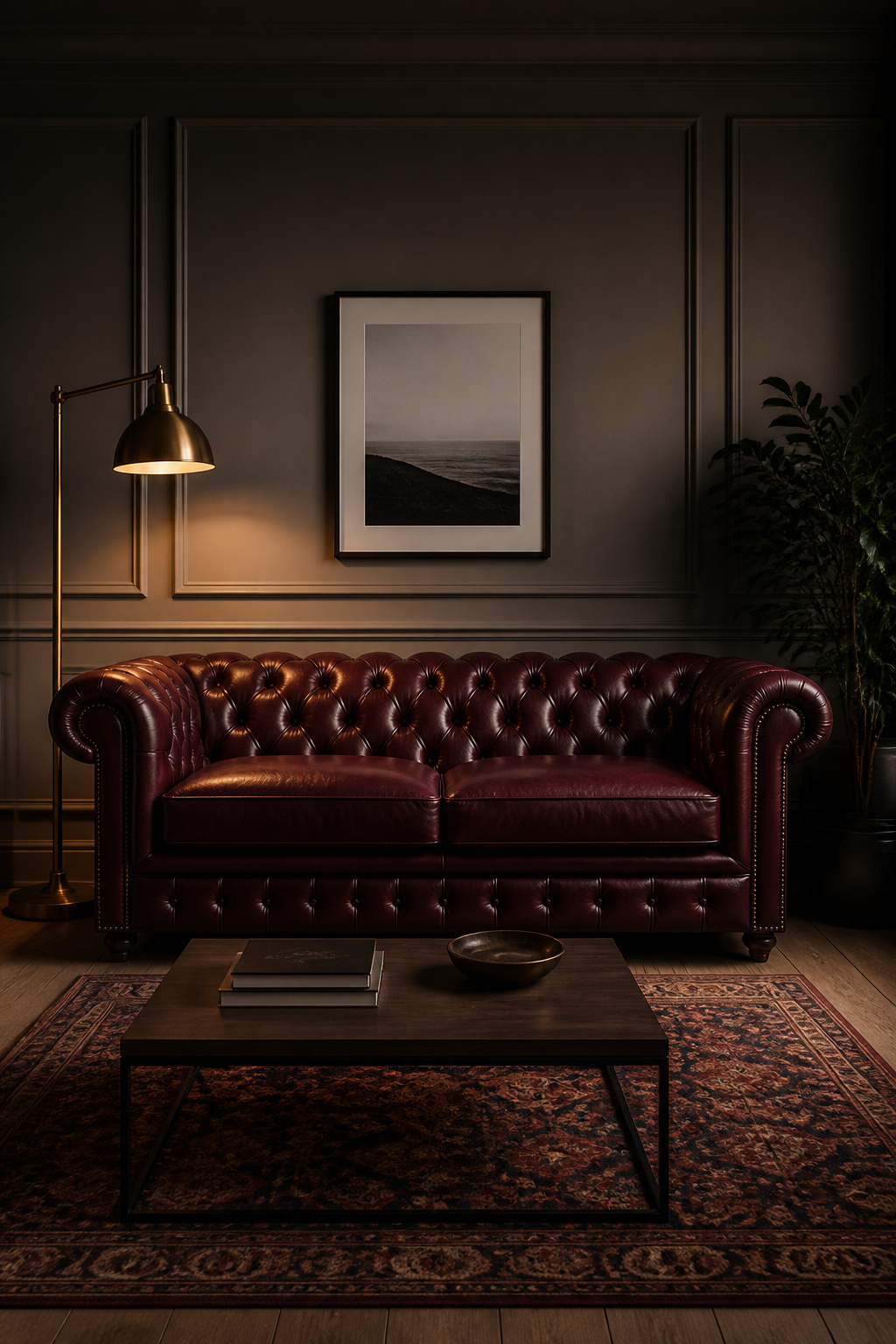
What separates a true Chesterfield from a generically “tufted” sofa is deep button tufting. It pulls fabric down into the frame in a continuous diamond pattern across both back and arms, not a pattern stitched onto the surface. Rolled arms set at the same height as the back create one unbroken silhouette line. It’s the detail your eye reads as “Chesterfield” from across a room. Top-grain leather remains the traditional choice because it’s supple enough to tuft deeply while durable enough to hold its shape for decades. Velvet has become a popular alternative, holding the tufting just as crisply while introducing color leather can’t. Wool and linen blends appear too, though looser weaves don’t hold a tufted line as sharply.
A leather or velvet Chesterfield reads as one bold textural statement, so it pairs best against pared-back, modern furnishings rather than other ornate pieces. Choosing an unexpected color — forest green or burgundy velvet instead of traditional brown — keeps the shape from feeling like a period reproduction. Because the tufting is structural, not decorative, a well-made Chesterfield can be reupholstered later without losing the silhouette. It’s one of the few couch styles built to outlast a fabric change entirely.
5. Slipcovered Sofas for an Effortless, Updatable Living Room Couch
Slipcovers solve a problem fixed upholstery simply can’t: full washability. The 2026 market has moved well past the baggy-couch-cover reputation. Brands now offer machine-washable performance-grade fabrics in genuinely tailored fits.
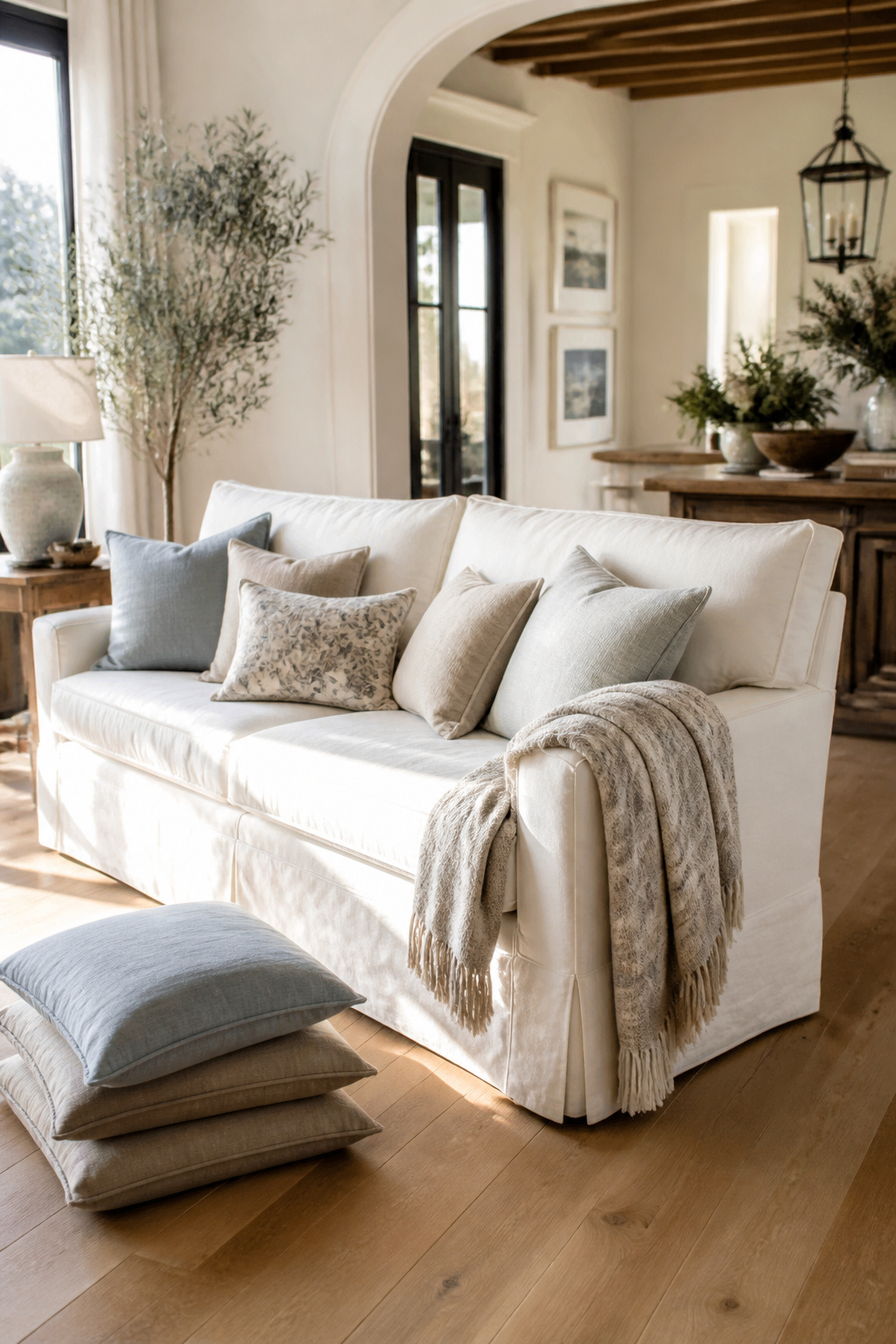
A fully removable, machine-washable slipcover means a stained cushion cover goes in the wash instead of requiring professional cleaning. Not every “washable” slipcover is home-machine safe, though, so check the care label before buying. Brands like Inside Weather and Anabei now offer performance-fiber slipcover fabrics that combine stain resistance with true washability. Fit has become as much a style decision as pattern. A tailored fit with piping and structured seams reads as intentional, while a loose, casual fit like IKEA’s Uppland wrinkles more but feels relaxed. Pottery Barn’s York Slope Arm offers over 130 upholstery options, with replacement slipcovers sold separately. That makes it one of the more flexible slipcovered options for a living room sofa that needs to evolve with a household.
Slipcovers also let you change a sofa’s entire look seasonally without touching the frame underneath. Swap in a fresh fabric the way you’d rotate bedding or curtains. Order a swatch and pre-wash it once if possible, since some natural-fiber fabrics shrink slightly on first wash. Once it’s on, smooth and re-tuck regularly after sitting. That single habit does more for a tailored look than fabric choice alone.
6. Mid-Century Modern Couches With Tapered Wood Legs
Tapered legs are a mid-century signature for a reason that’s purely visual. The gradual thinning toward the floor lightens the entire sofa, letting it appear to float rather than anchor the room. That illusion matters most on a fabric sofa with substantial upholstered bulk up top.
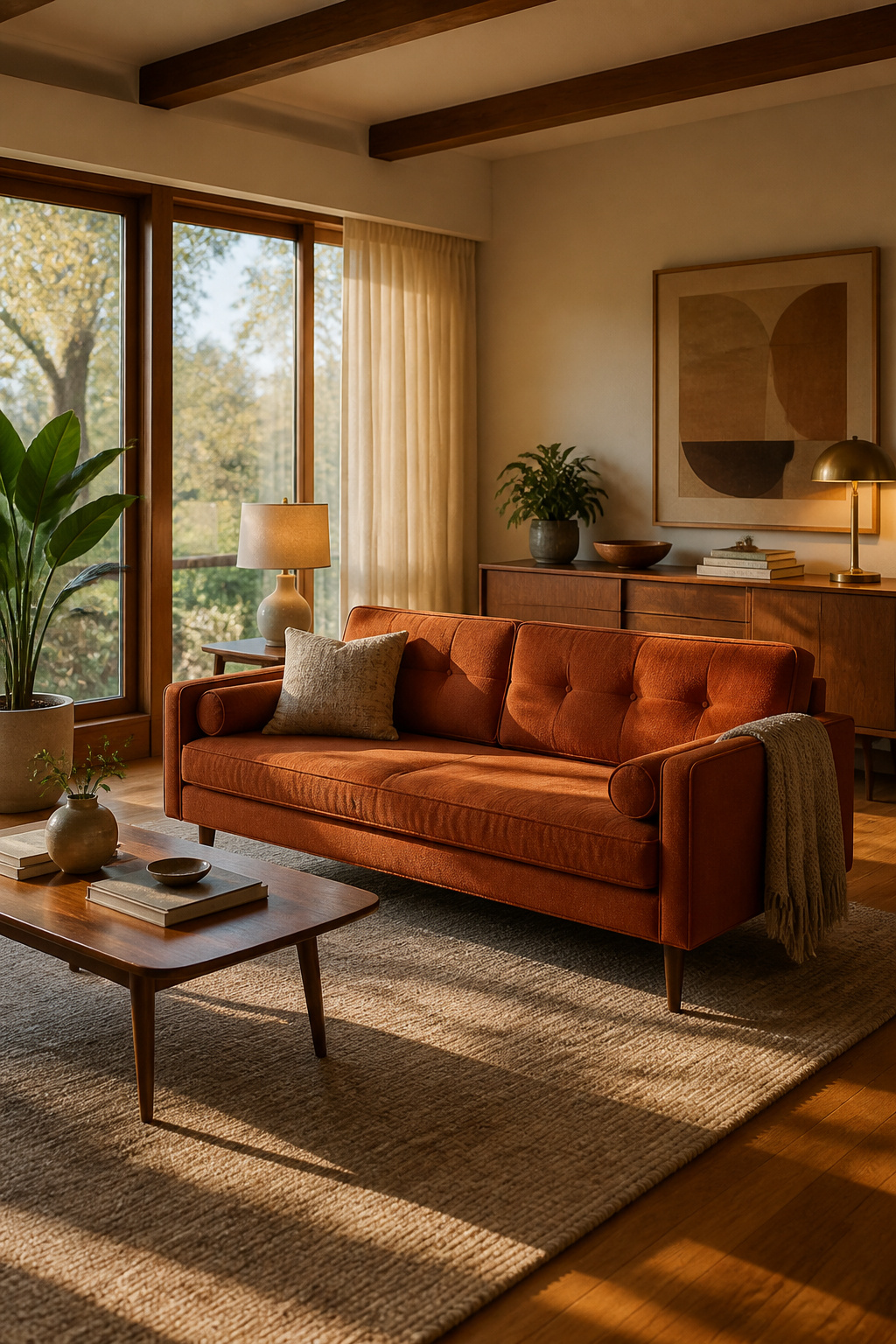
The construction tell is in the wood. Premium tapered legs come from solid hardwoods: walnut, oak, maple, cherry. Soft pine or thin veneer over particleboard won’t hold the taper’s integrity under repeated weight shifts. Hand-turned legs from solid stock sit a step above mass-produced dowel-style replacements. Check how the leg attaches to the frame, too: a bolted, reinforced connection holds up far better than one simply screwed into particleboard. Four properly constructed legs can support up to 800 pounds, so don’t mistake that slim profile for fragility. On the upholstery side, look for fabric that wraps cleanly around frame corners with no puckering. It’s a detail worth checking on any living room couch with exposed legs.
Match the undertone of the wood legs, warm honey versus cool gray-brown, to your room’s existing wood furniture. Don’t chase an exact species match. Walnut legs pair especially well with jewel-toned upholstery like rust, olive, or deep teal, on-trend for 2026. If you’re mixing wood tones throughout the room, keep one large anchor piece in the dominant tone so the space doesn’t feel scattered.
7. Modular Sofas That Adapt to a Growing Living Room
Modular systems solve a textile problem easy to underestimate until you’ve lived it. Buying pieces over time risks visible dye-lot mismatches between your original sofa and whatever you add later. Independent modules rearrange into an L-shape, U-shape, chaise lounge, or two separate pieces, which is especially appealing for renters and frequent movers.
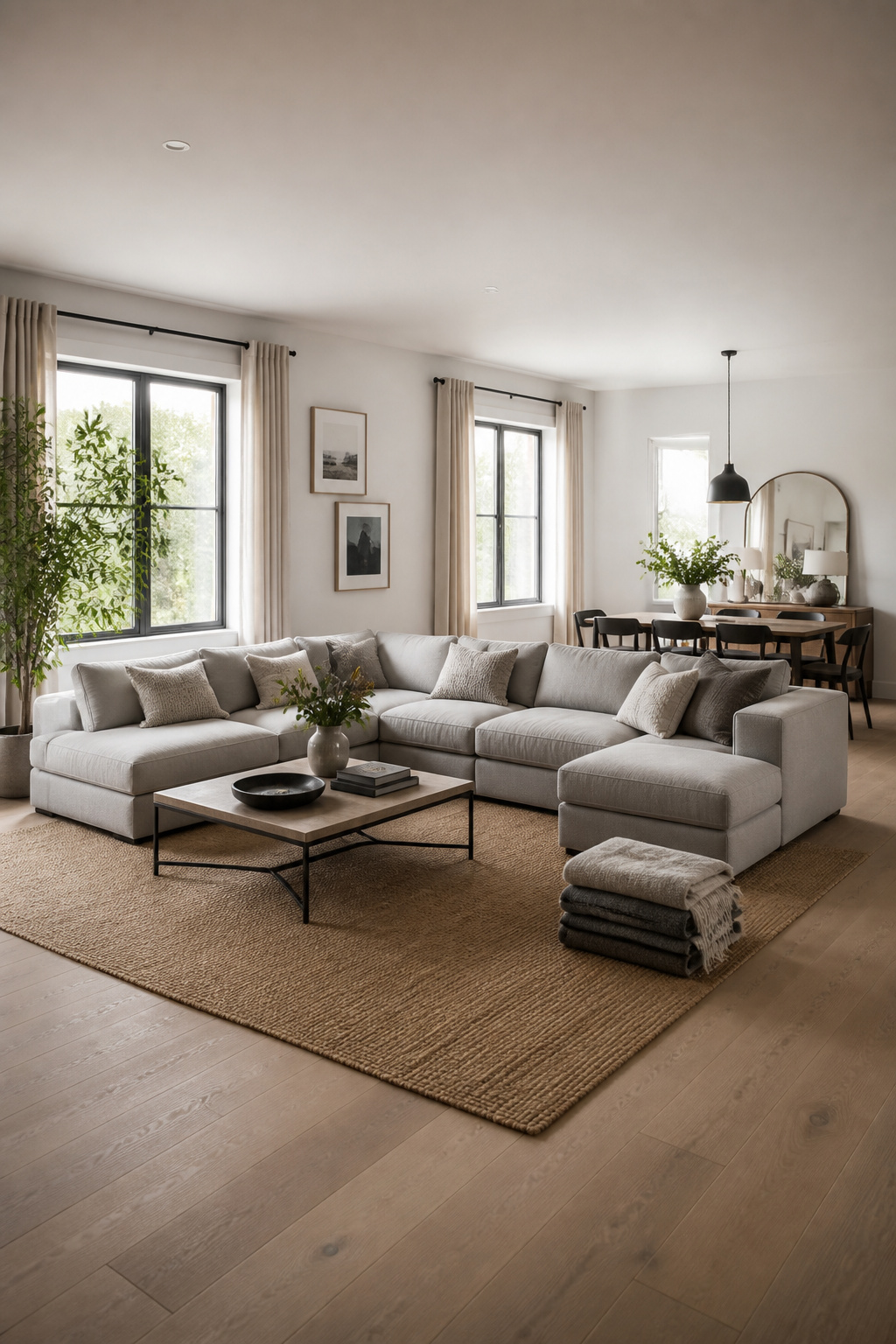
Because modules are sold individually, a household can start small. It can genuinely grow into a full sectional over several years instead of buying oversized capacity upfront. That flexibility puts real pressure on consistent fabric production, since pieces are often purchased years apart. When planning this kind of living room couch layout, measure the maximum anticipated configuration now, not just the starting setup. Leave 30 to 36 inches of clear walkway after future modules arrive. Note each module’s orientation before ordering. Ask whether the manufacturer offers a fabric swatch program, a signal the collection will stay in production long enough to expand into.
The single biggest point of failure is forgetting to keep a fabric swatch from your original purchase. Dye lots vary between production runs. Existing pieces also show UV fading or foam compression compared to new ones, so perfect color matching years later can’t be guaranteed. Still, a physical swatch is the most reliable way to get close. Rotate cushions regularly and test a new module in your actual room lighting before finalizing.
8. A Leather Couch That Patinas Beautifully Over Time
Leather is the one material here that’s meant to visibly change with age, and which grade you choose determines exactly how. Full-grain leather is the highest grade, taken from the topmost hide layer with its natural scarring intact. It absorbs oils and moisture and develops the richest, most sought-after patina over years of use. Top-grain sits one step below: buffed and sanded for a more uniform look. Pores are sealed during coloring, so water and oils wipe away rather than absorb. That trades dramatic aging for stain resistance.
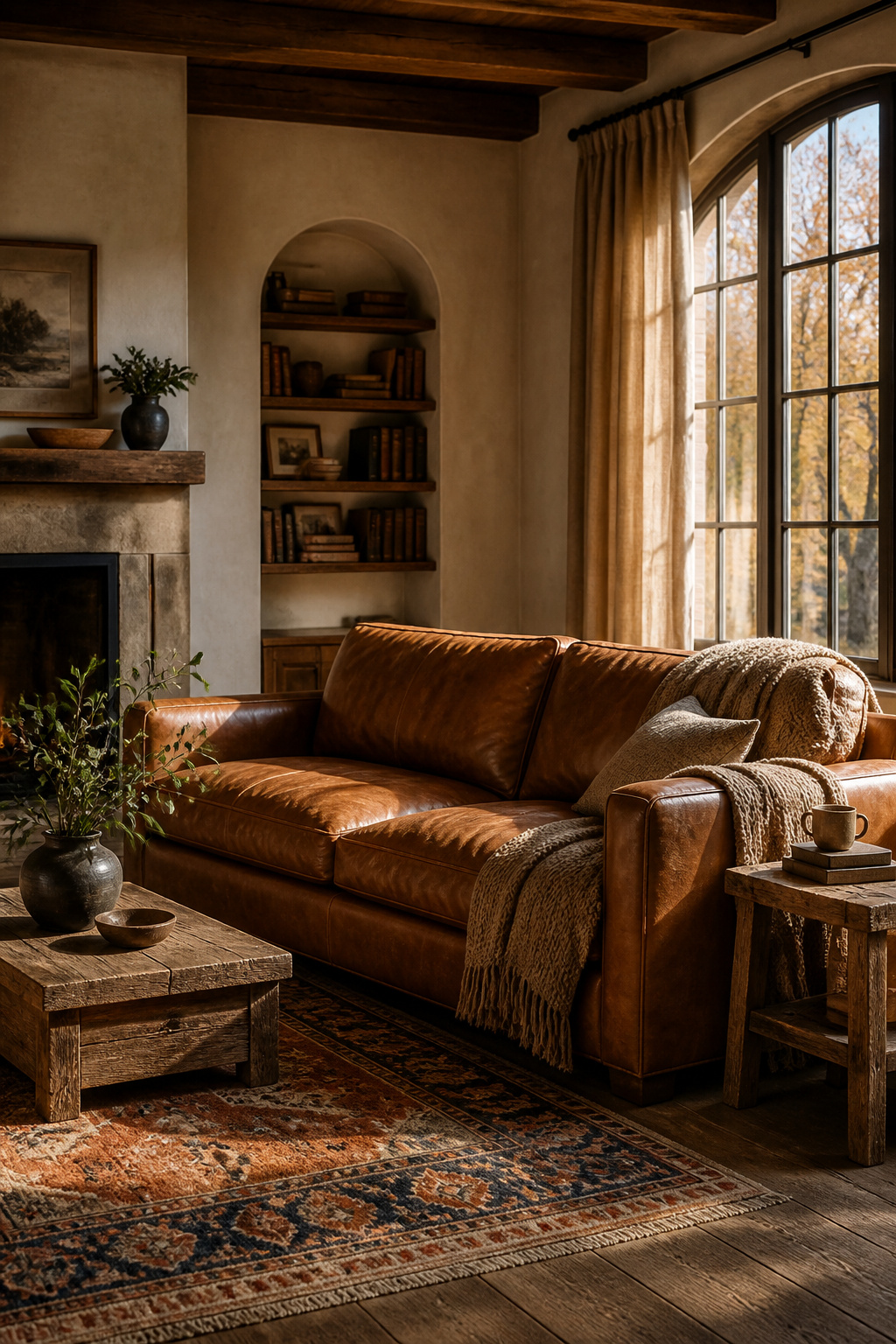
How much patina top-grain develops still depends on finish. Semi-aniline leathers develop deeper character than fully protected or pigmented leathers, which age more uniformly. Full-grain is more expensive and demands meticulous care since it’s prone to scratches — the right call for a household that wants visible character. Top-grain is the more practical everyday choice, since its sealed surface resists spills and wipes clean easily. Watch the tag. “Genuine leather” and “leather match” (a leather-and-vinyl blend) are lower-durability terms used to soften the fact you’re not getting full- or top-grain.
Conditioning is the habit that matters most for leather furniture care. Condition every six to twelve months, applying conditioner with a soft cloth in circular motions, then buffing off the excess. Keep leather out of direct sun and away from heat vents, since both accelerate cracking. Wipe spills immediately with a dry cloth rather than scrubbing.
9. Boucle Upholstery for a Living Room Sofa With Texture
Boucle means “curled” in French, referring to a looped-yarn weave that creates a nubby, cloud-like surface instead of a flat one. It’s become the defining texture of 2026 because it carries all its visual interest in the surface itself, with no pattern competing for attention. A boucle sofa pairs beautifully in rooms that already have pattern elsewhere, in a rug or piece of art.
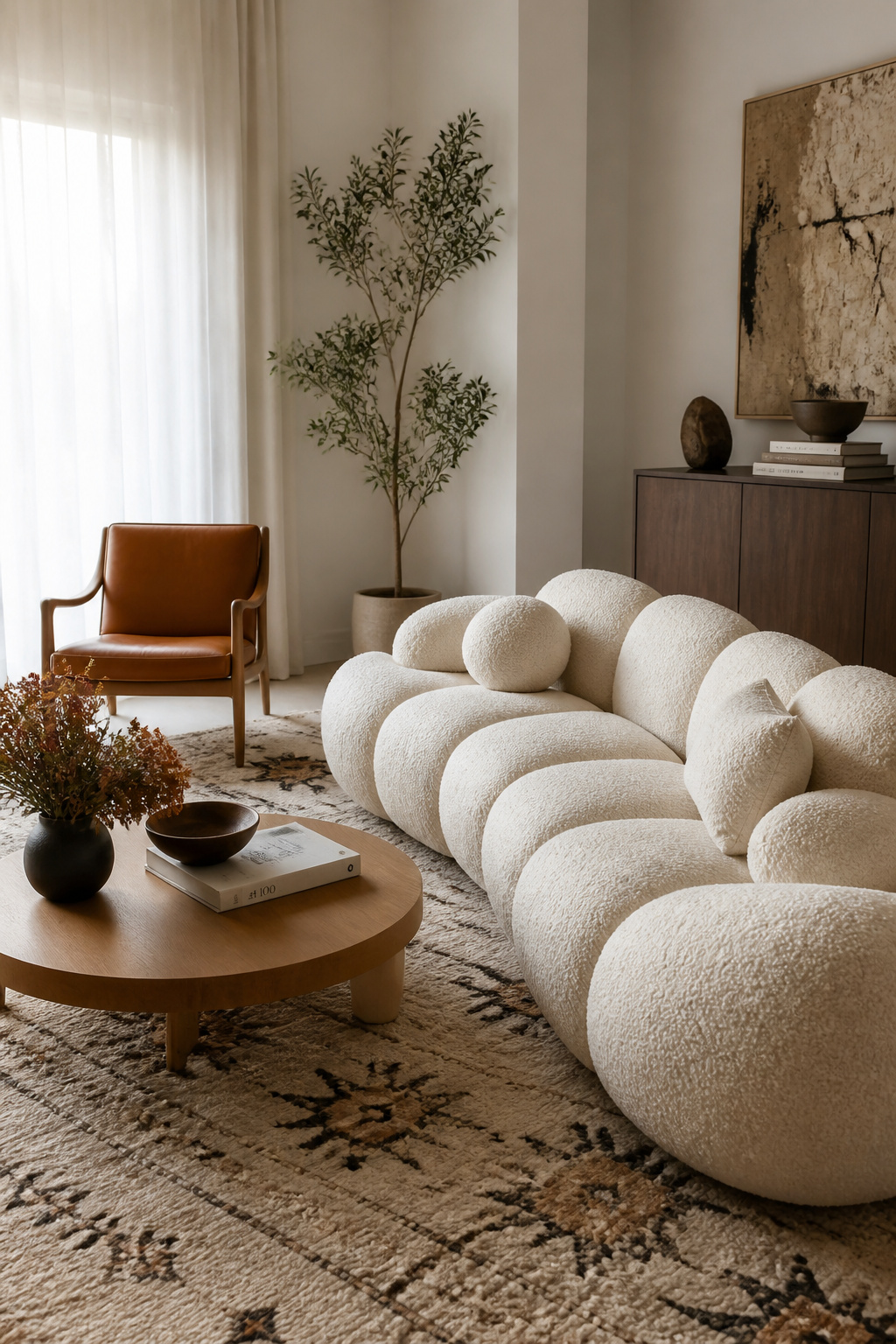
Quality varies enormously by fiber and construction. High-end boucle from reputable mills uses long-fiber wool or high-twist yarns to prevent pilling. A well-made piece can last 10 to 15 years with proper care. Inexpensive boucles made from short-fiber wool pill faster under friction. Tug gently on a loop in the showroom to gauge tightness rather than judging by hand-feel alone. A polyester-blend or performance-blend boucle is the smartest pick for most households. It keeps the look while resisting staining far better than pure wool.
When layering texture without adding pattern elsewhere in the room, pair the boucle sofa with smoother, structured textiles: leather accent chairs, a flat-weave rug. That way, the looped texture stays the standout element. Expect some initial pilling and cushion settling in the first three months. That’s normal, and it tends to taper off as the fabric develops a lived-in character. Use a fabric shaver periodically, just as you would on a sweater.
10. The Sleeper Sofa That Doubles as a Living Room Couch and Guest Bed
A genuinely good sleeper sofa replaces a dedicated guest room, which matters enormously in apartments where every square foot counts. The daily comfort of living with one as your everyday couch depends on two things. The mattress mechanism, and upholstery that doesn’t broadcast its second job.
Pocket coil mechanisms last 7 to 15 years depending on construction. They provide a springier feel that back and stomach sleepers prefer, with better airflow than traditional memory foam. Memory foam inserts typically run 7 to 10 years, though high-quality versions can match or exceed coil lifespan. They excel at motion isolation, useful for households expecting two guests. For a sleeper used often, prioritize coil or hybrid mechanisms for longevity and a smoother fold-out.
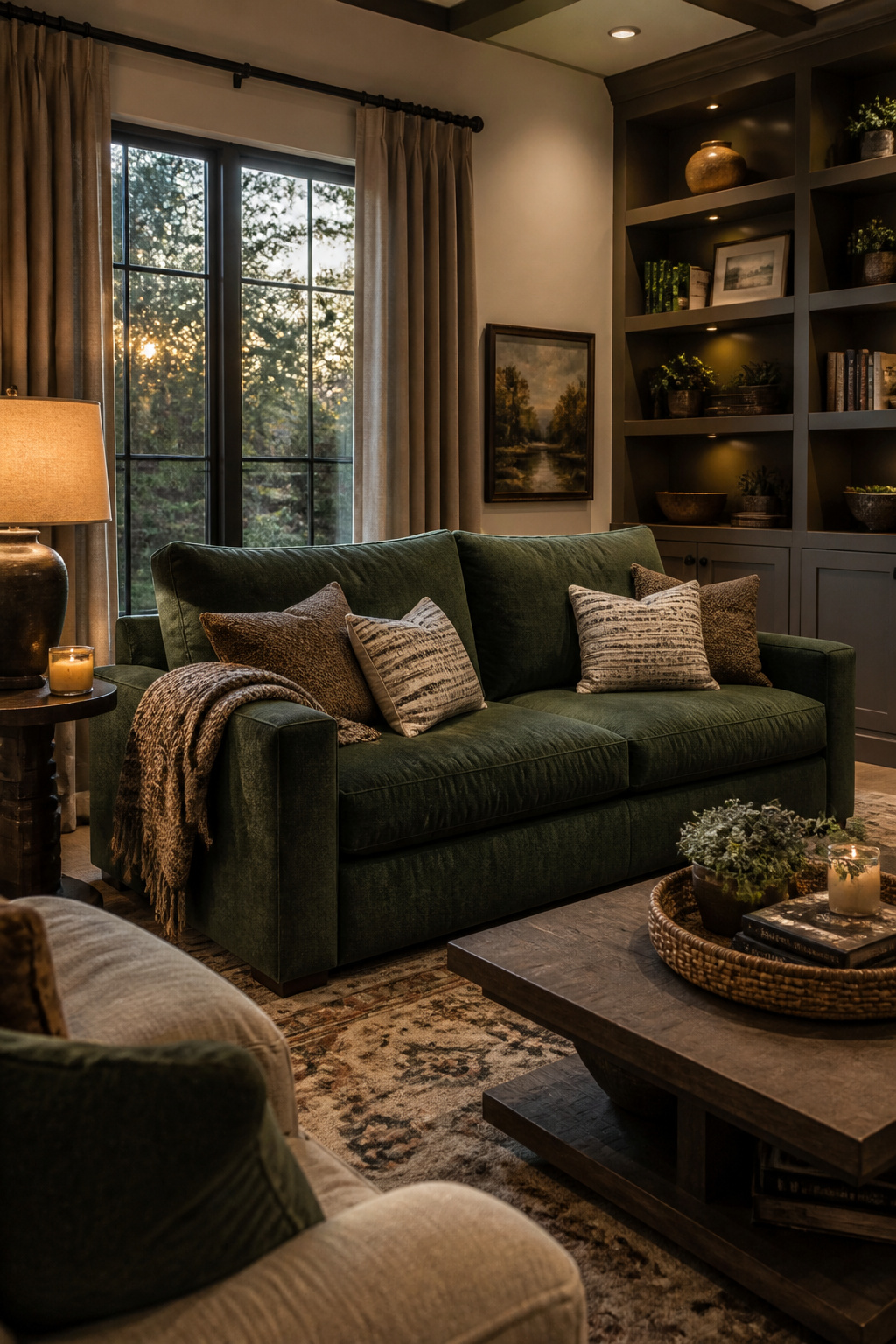
The upholstery decision is where this earns its place on a textile specialist’s list. Textured fabrics, boucle, chenille, performance weaves, disguise the crease lines a folding mechanism leaves. A smooth, tightly stretched fabric shows every fold within months. Darker, richer colors and patterned fabrics camouflage fold-related wear better than pale solids. A performance fabric is especially valuable here, since the sofa does double duty as daily seating and a surface guests sleep directly on. Avoid a directional nap, like velvet, over the fold seam if you can.
11. Petite Loveseats for Small Living Room Couch Layouts
A loveseat’s compact footprint makes it the right scale choice for rooms around 10×12 feet. A full sofa would crowd the walkways here rather than anchor the space. Standard loveseats run 52 to 60 inches wide and 30 to 40 inches deep. Petite versions drop under 50 inches wide, with apartment-sized options as compact as 30 inches deep.
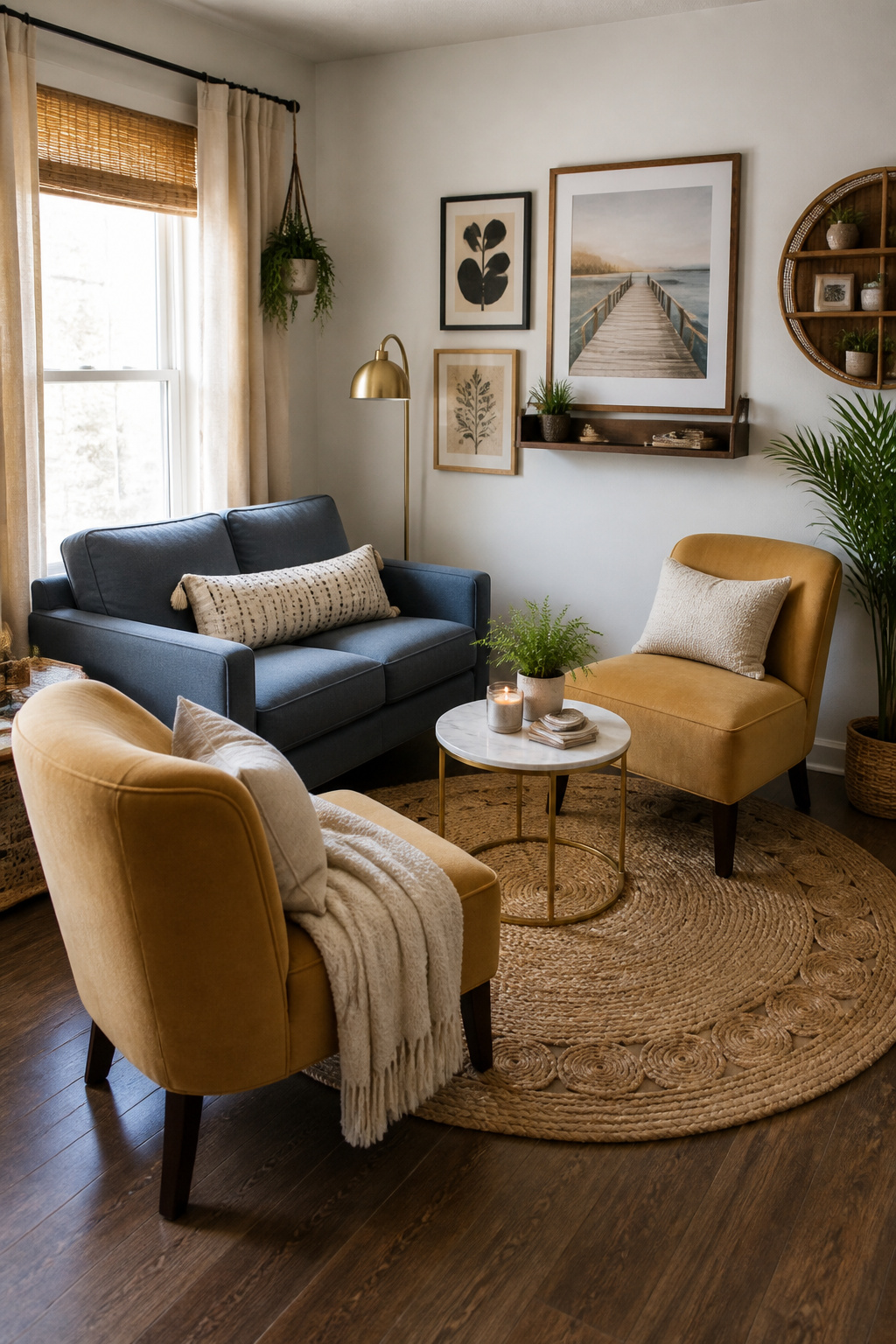
There’s a real upside hiding in that smaller scale. A loveseat’s upholstered surface is so much smaller than a full sofa’s. That means a higher-end fabric or leather becomes far more affordable per square foot of room impact. Leave at least 30 inches of clearance between the loveseat and a TV stand or walkway, and measure the room before buying. A few extra inches in a compact space can block a doorway swing you didn’t account for. An L-shaped arrangement of one sofa and one loveseat optimizes a corner without blocking circulation.
Don’t treat a loveseat as a lesser substitute for a sofa — pair it deliberately. One or two accent chairs in a complementary, not matching, fabric create flexible seating that rearranges for movie nights. Repeating a secondary color from the loveseat in one chair ties the grouping together. A petite loveseat plus two slipper chairs often seats as many people as a standard sofa while leaving more floor space open. Size for the room you’re actually placing it in. A loveseat sized for a small space reads as undersized in a large, open-plan room.
12. Pet-Friendly Sofa Fabrics That Still Look Polished
Pet-friendliness in upholstery comes down to weave tightness more than fiber type. Microfiber’s tight weave resists both scratching and fur accumulation. Performance fabrics like Crypton, Outdura, and Sunbrella combine that same tightness with built-in stain resistance, a strong combination for dog and cat households alike. Velvet, counterintuitively, is also a smart pick: its dense pile prevents claws from looping into the threads. Linen’s open weave and tweed’s textured surface, on the other hand, are fabrics to avoid with pets. Hair embeds in the gaps, and claws snag loose threads.
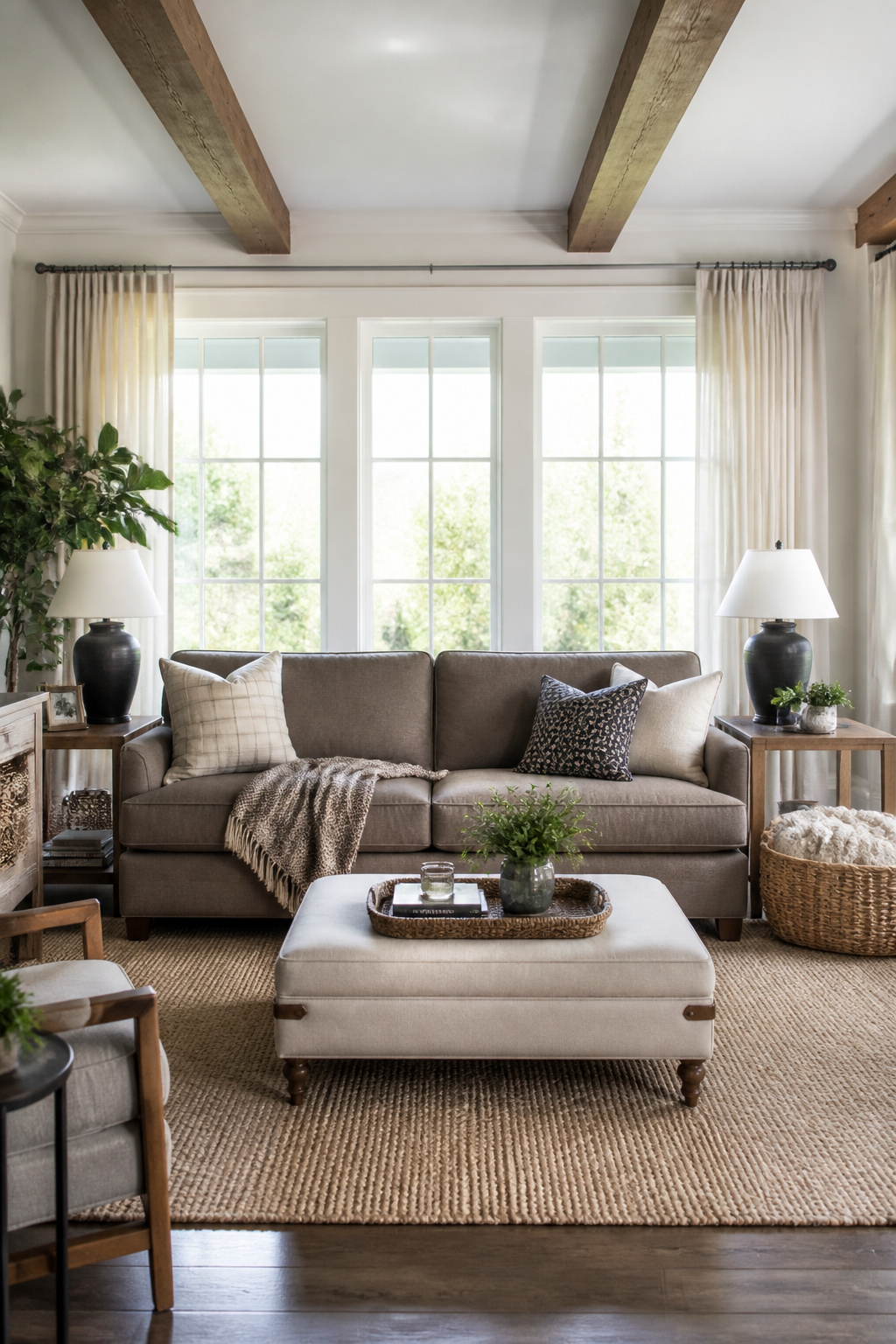
For durable fabric choices in busy households with pets, canvas is a tightly woven, practical option. It resists scratches and wear while reading as clean and tailored. Faux leather and vinyl are particularly strong for dog households since they wipe clean entirely, though they trade away some cozy hand-feel. Performance velvet, a blended, treated version of the real thing, offers that same dense, pet-resistant construction with easier cleanability.
Color and pattern do the rest of the work weave can’t finish alone. Matching upholstery color to your pet’s fur is a reasonable baseline. But a busy pattern or subtle tonal texture hides stray hair of any color better than a solid ever will. Mid-tone, slightly textured solids tend to hide both pet hair and everyday smudging best. Boucle or chenille will still need more frequent lint-rolling to stay sharp, though.
13. Statement Color Couches That Make the Living Room Sofa the Focal Point
2026’s statement sofa colors balance boldness with staying power: burnt orange, deep plum, sapphire, smoky teal. All read as confident without locking the room into a fleeting trend cycle. Burnt orange in particular has emerged as a major color of the year, warm and characterful rather than gimmicky. Green sofas in sage and olive have moved from niche to mainstream too. They’re increasingly treated as “the new neutrals” because they pair so easily with natural wood.
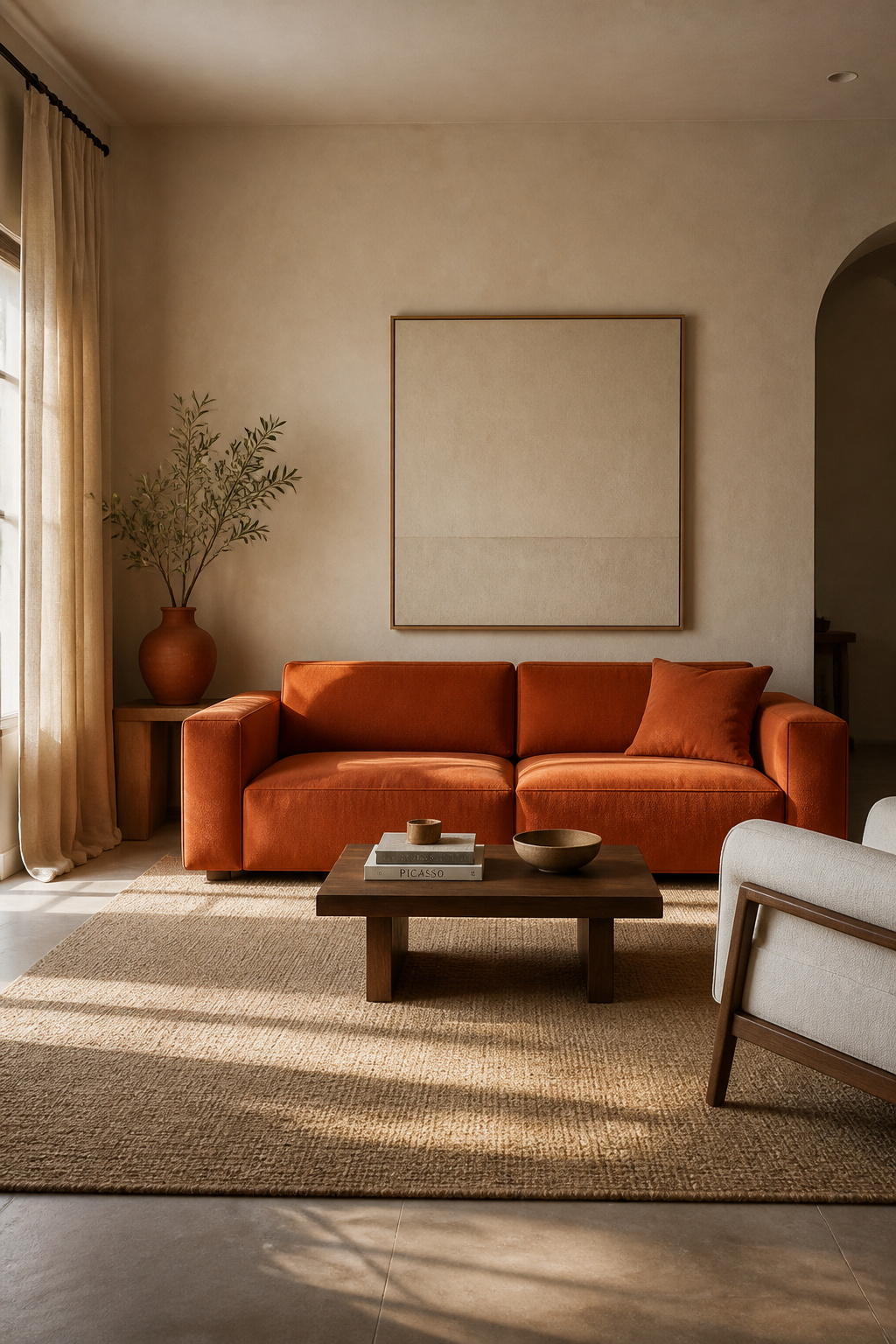
The underlying design principle is simple but easy to forget in the showroom. One richly colored sofa can replace the need for busy pattern everywhere else in the room. Once the sofa is doing that visual work, walls, rugs, and drapery can stay quieter. Sandy beige, warm taupe, and terracotta-adjacent tones are 2026’s go-to backdrop choices. Repeat a small accent of the sofa’s color elsewhere, in one throw pillow or a vase, at roughly 10 to 20 percent its visual weight. Keep secondary furniture in flat, low-pattern textiles so it doesn’t compete, and let a nubby rug or linen drapery provide texture instead.
The cautionary tale worth remembering is rose quartz, a wildly popular pastel from the mid-2010s that now reads as dated. That’s exactly the trap a trend-chasing color becomes on a major furniture investment. Earth-derived tones referencing sand, stone, clay, or dried grass tend to have longer design lifespans than saturated trend brights. They’re rooted in natural material color rather than fashion cycles. If a bold color still feels risky, test it on a smaller piece first, an accent chair or ottoman, before scaling up.
14. Layered Throw Pillows That Elevate Any Living Room Couch
Pillow styling might be the lowest-cost, highest-impact textile change available to any homeowner. Odd-numbered groupings — three or five pillows — feel more natural than even numbers, because the eye moves across the arrangement more smoothly. A 20-inch square suits a regular-size sofa, while 18-inch or 16-inch pillows sit more proportionately on a modern low-back frame. Positioning larger pillows toward the back corners with smaller accents up front creates real visual depth rather than a flat row.
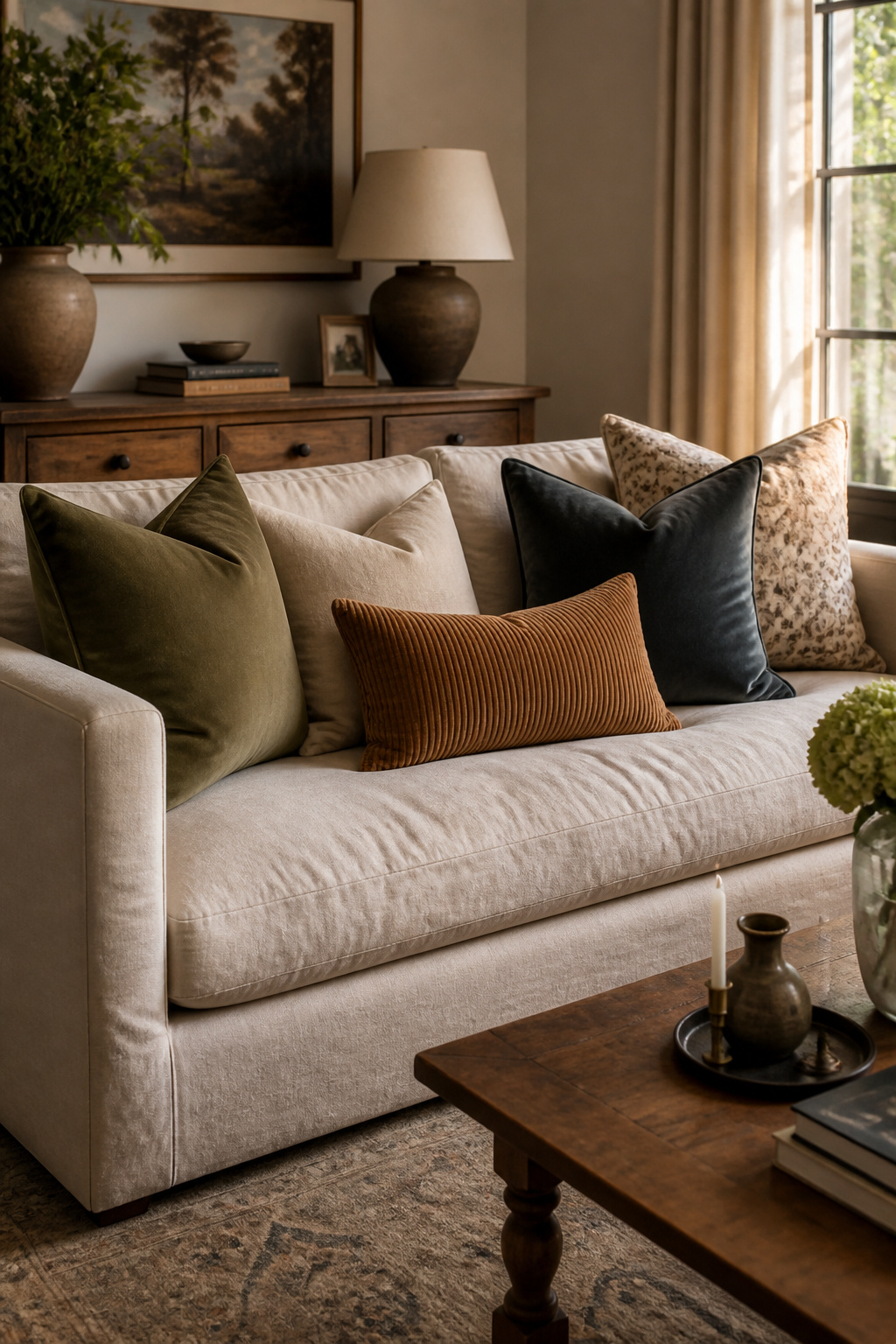
The Shea McGee 2-2-1 formula (two matching pillows, two coordinating, one statement piece) is a reliable five-pillow framework for most sofa widths. It also pairs naturally with mixing texture: matte, structured linen against plush velvet creates contrast that reads as intentionally layered. A lumbar pillow, typically 12×20 inches, introduces a third shape and breaks up an otherwise all-square arrangement. Whatever combination you land on, keep color families consistent across the grouping even while varying scale.
Swapping pillow covers, rather than full inserts, seasonally is the cheapest way to refresh a sofa’s entire look. Keep one set of quality down or down-blend inserts and rotate covers around them. Lean into heavier textures like wool, boucle, and corduroy for fall and winter, and lighter weaves like linen and cotton for spring and summer. Store off-season covers flat or rolled, not tightly folded, to avoid crease lines settling into delicate fabrics like velvet.
15. Low-Profile Sofas for a Relaxed, Lounge-Style Living Room
Low-profile sofas trade traditional seat height for a grounded, loungy feel that fits neatly into 2026’s relaxed-minimalism moment. The silhouette uses a low, rounded or wide frame, often bookended by narrow club arms that maximize usable seat width. The whole design invites a more relaxed way of sitting: cross-legged, or reclining sideways. It’s a departure from the upright posture a standard-height living room couch usually encourages.
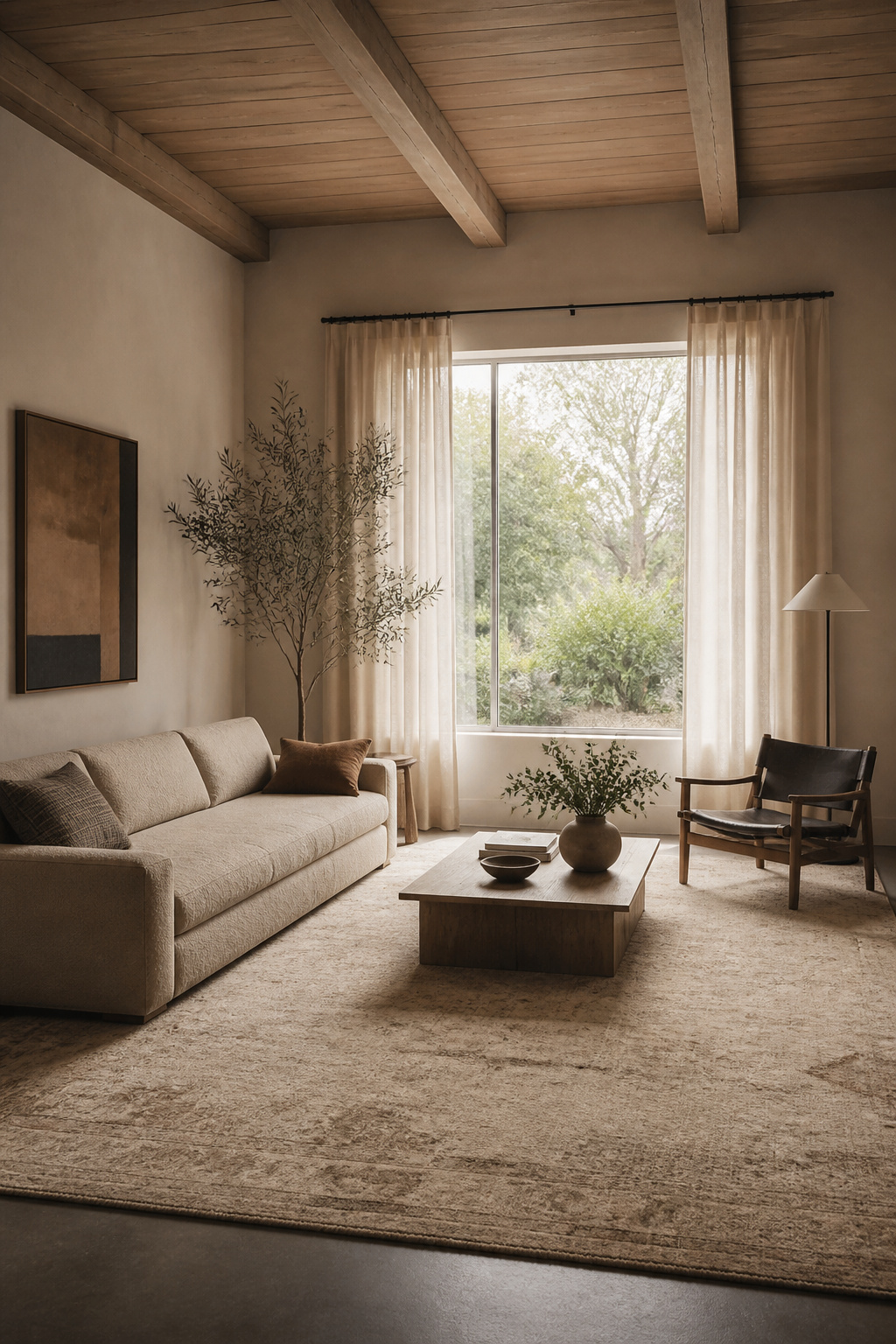
Balancing the rest of the room around that lower seat height takes a little intention. Pair a low-profile sofa with a coffee table close to the same height as the seat cushion. A standard table will just tower over it. Mix in one or two higher-backed accent chairs too, so the room doesn’t feel visually flat. Floor lamps and low side tables read more proportionate next to a low sofa. Area rugs carry more visual weight here too, since more of the rug stays exposed above a lower furniture line.
Cushion fill is the detail that determines whether the whole thing feels relaxed or just feels collapsed. High-resilience foam keeps the silhouette crisp and prevents an already-low seat from sinking further. A combination fill, foam wrapped in down or fiber, gives the soft, sink-in feel popular in lounge-style sofas without losing seat height over years. Pure down fill on a low-profile frame can start to feel like sitting on the floor within a year or two as it compresses. Look for a high down-to-feather ratio, and plan to fluff cushions weekly.
16. Reversible Chaise Sectionals for Flexible Living Room Seating
A reversible chaise sectional solves the single most common anxiety in sectional shopping. You no longer have to commit to a left- or right-facing layout before you know how the room will function day to day. The chaise detaches and reattaches to either side of the sofa base, letting a household reconfigure as needs shift. That’s particularly valuable for renters and frequent movers. Depending on the system, these designs can reconfigure into a U-shape, L-shape, simple chaise lounge, or even a sleeper.
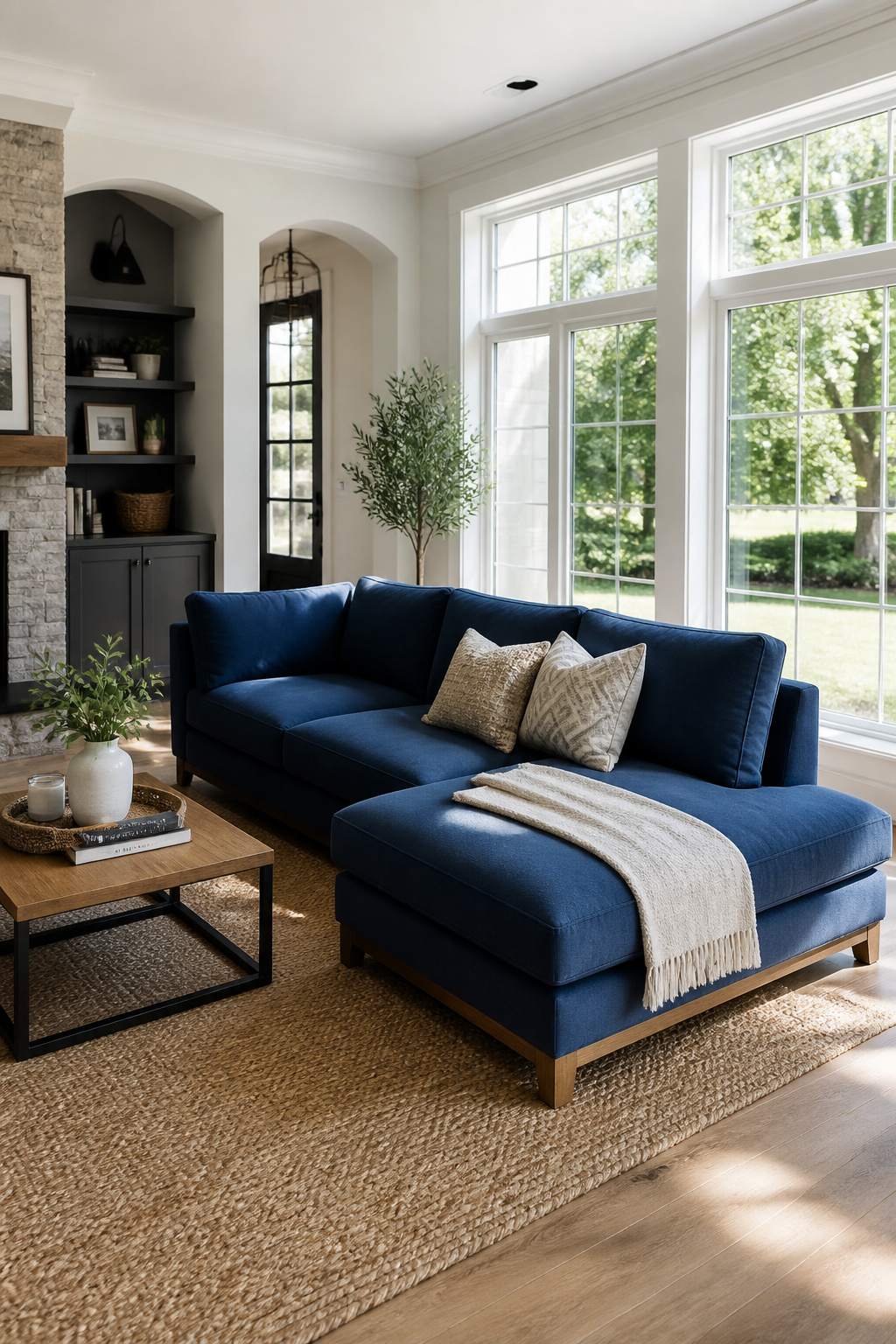
Before committing to a configuration, it’s worth genuinely planning a flexible living room layout rather than guessing. Tape out both possible chaise configurations on the floor before deciding. The better option is often counterintuitive until seen at full scale. Walk the room’s actual traffic patterns with each taped layout to see which keeps pathways genuinely clear. Account for window and light placement too. A chaise facing away from the main light source can feel like an afterthought even when the floor plan works on paper.
On construction, look for a secure interlocking connection that aligns and clicks into place, rather than pieces held together by friction alone. A solid, engineered wood frame holds that mechanism’s alignment far better over repeated reconfiguration than a lighter particleboard frame. It’s worth asking how many reconfigurations the connection is rated for. Matching fabric exactly between the chaise and main body is non-negotiable, since both sit visibly adjacent in every configuration.
Choosing the Right Living Room Couch for How You Actually Live
The throughline here is the same: let how your household actually lives drive the decision before silhouette or color enter the conversation. A family with young kids or a shedding dog benefits from a performance or solution-dyed fabric regardless of which style pulls at you. The good news is that texture and color trends, boucle, statement hues, curved shapes, are all compatible with practical, durable fabrics now. There’s rarely a real tradeoff left between current style and a living room couch that holds up. I’d steer a household with toddlers toward performance velvet over silk mohair every time, trend be damned.
Budget plays out in fairly predictable bands. Sofas in the $300-800 range typically use particleboard frames and lower-density foam, lasting three to five years. The $800-2,000 mid-range brings hardwood frames with seven-to-ten-year lifespans. Anything north of $2,000 tends to bring kiln-dried hardwood, eight-way hand-tied springs, and a piece that outlasts a decade. Ask for the specific wood species behind any “hardwood” claim — that word alone can still describe a weak species like poplar.
Once you’ve narrowed the field, request a fabric swatch and live with it in your room’s actual lighting for a few days. Showroom lighting distorts color, and a swatch is the cheapest insurance against a costly surprise on a piece this central to daily life. Measure your space, tape out the footprint, and trust your hands as much as your eyes when you finally sit down on the living room couch you’re about to bring home.