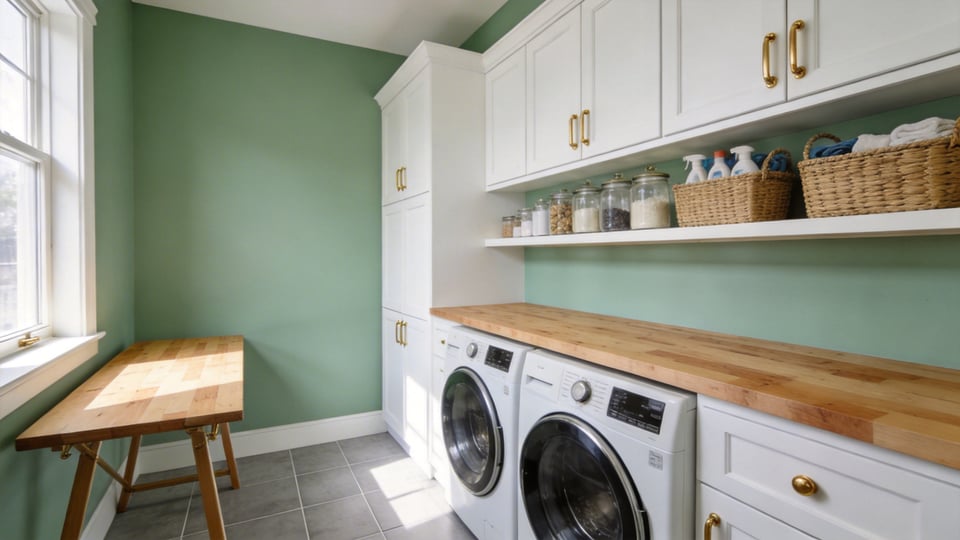
Most homeowners believe appliances are the center of laundry room design. People naturally focus on selecting machines with the latest high-tech features. However, a successful space relies heavily on hidden architectural principles. Your room will inevitably fail if cabinetry matches the exact appliance dimensions. Therefore, designers must consider the 15% Rule before installing a single machine. Discerning homeowners understand that premium laundry room storage isn’t just about shelving. Specifically, it requires architectural precision and bespoke cabinetry to facilitate an ergonomic workflow.
This vital principle dictates that 15% of the room remains dedicated to dead space. Clearances and buffer zones are essential for handling kinetic energy and utility lines. High-efficiency washers, for instance, create extreme vibrations during fast spin cycles. Custom cabinetry will suffer joint separation without a proper one-inch air gap. Similarly, standard machines require hidden depth for dryer venting and water hoses. Failing to plan for this guarantees aesthetic and functional disaster.
Unfortunately, many professionals overlook these crucial transition paths when planning a modern layout. A beautiful design quickly transforms into an ergonomic nightmare with ruined flush aesthetics. Room temperatures can spike dangerously without proper airflow clearances. Likewise, trapped humidity will warp expensive storage materials over time. This guide reveals how applying the 15% Rule prevents these systemic design failures. Next, we will show you how to integrate 20 strategic design elements for transforming your laundry decor while maximizing efficiency. In fact, smart spatial planning and custom millwork ultimately elevate both function and visual appeal.
Phase 1: The Accessible Foundation (Establishing Essential Flow)
Historically, the laundry room was isolated in noisy basements. Today, we integrate these spaces ergonomically into living areas. Therefore, establishing essential flow begins with the laundry triangle. This layout connects sorting, washing, and folding zones efficiently. Expert cabinetry design relies heavily on the 15-48 rule. Specifically, this places all essential detergents within a comfortable reaching corridor. You avoid painful crouching or precarious over-reaching. Utilizing storage pedestals raises front-loading machines fifteen inches. In fact, this shifts the appliance drum to a neutral waist height. Next, your floor plan requires a 60-inch turning circle. This breathing zone ultimately prevents bottlenecks with bulky hampers.
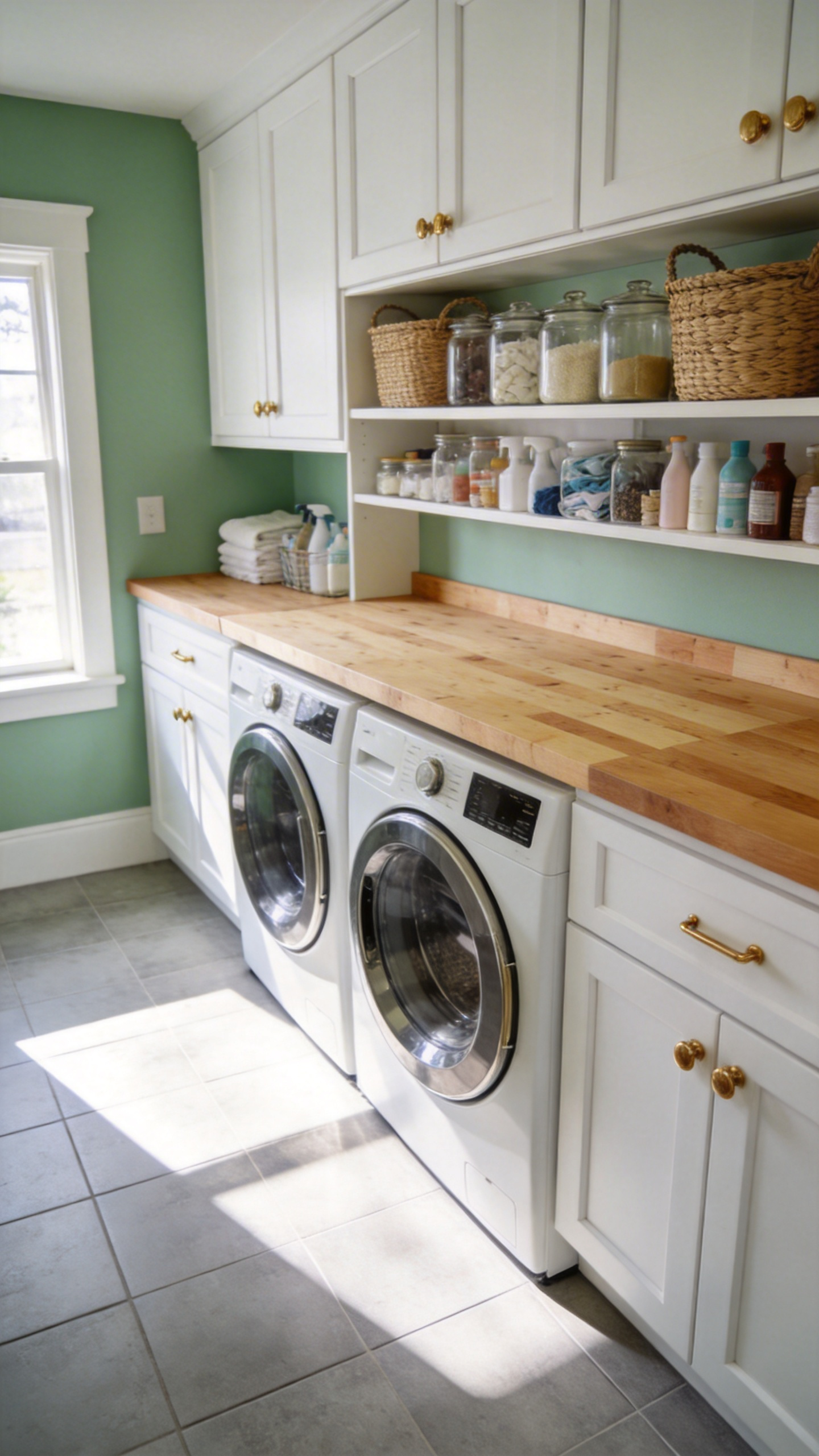
Modern cabinetry replaces static boxes with kinetic hardware. Pull-down shelving, for instance, brings upper items directly to you. Touch-to-open latches eliminate fumbling when carrying heavy baskets. Full-extension drawers ensure nothing disappears into dark shadows. Sensory comfort also plays a vital role in accessible foundations. Rubber isolation mounts, specifically, decouple loud machines from your floors. Meanwhile, contrasting dark countertops against light cabinets provides edge detection. Indeed, this visual contrast safely anchors the space for all users. True accessibility requires flexible, multi-level folding surfaces. A 34-inch scalloped counter allows comfortable seated folding. Conversely, a 38-inch section provides ideal ergonomics for standing tasks. Together, these thoughtful details transform utilitarian chores into calming routines.
1. The Pre-Wash Sorting Matrix: Designing a Three-Bin Pull-Out Hamper System
Historically, households relied on a single plastic laundry bin. Sorting massive piles became a reactive, exhausting chore. Today, modern textiles require a highly proactive storage approach. Therefore, I recommend implementing a three-bin sorting matrix. This spatial framework combats hidden cognitive decision fatigue. Specifically, designating bins for lights, darks, and delicates automates your sorting. This immediate physical drop-in removes endless floor clutter.
High-end pull-out systems operate like precision machines. Wet towels and heavy denim quickly exceed fifty pounds. Thus, full-extension ball-bearing slides are an absolute structural necessity. Soft-close kinematics also prevent heavy cabinet drawers from slamming. Ergonomically, housing bins within a standard 34.5-inch base cabinet is ideal. Users drop clothes in without enduring painful lumbar bending.
Proper moisture management dictates your material choices completely. Solid wood hampers, unfortunately, trap humidity and breed odors. Hybrid designs utilize aluminum frames with breathable canvas liners instead. Advanced PVC-coated mesh features antimicrobial silver nanoparticles. Indeed, these biostatic agents actively destroy sour, odor-causing bacteria. Visually, slatted cabinet fronts provide essential passive airflow. This customized system creates a seamless dirty-to-clean pipeline. Portable bags move directly from the intake valve to the machine drum. Therefore, you never have to touch the dirty laundry twice.
2. Vertical Door Reclamation: Implementing Over-the-Door Racks for Ironing Supplies
The space behind an interior door is often considered dead space. However, this unseen real estate offers immense organizational potential. Vertical door reclamation transforms simple partitions into high-capacity workstations. Over-the-door ironing racks illustrate this design concept perfectly. Expert organizers prioritize a thirty-inch ergonomic strike zone. Keeping heavy irons and boards at waist level significantly reduces physical strain. This accessible placement also creates a highly streamlined laundry workflow.
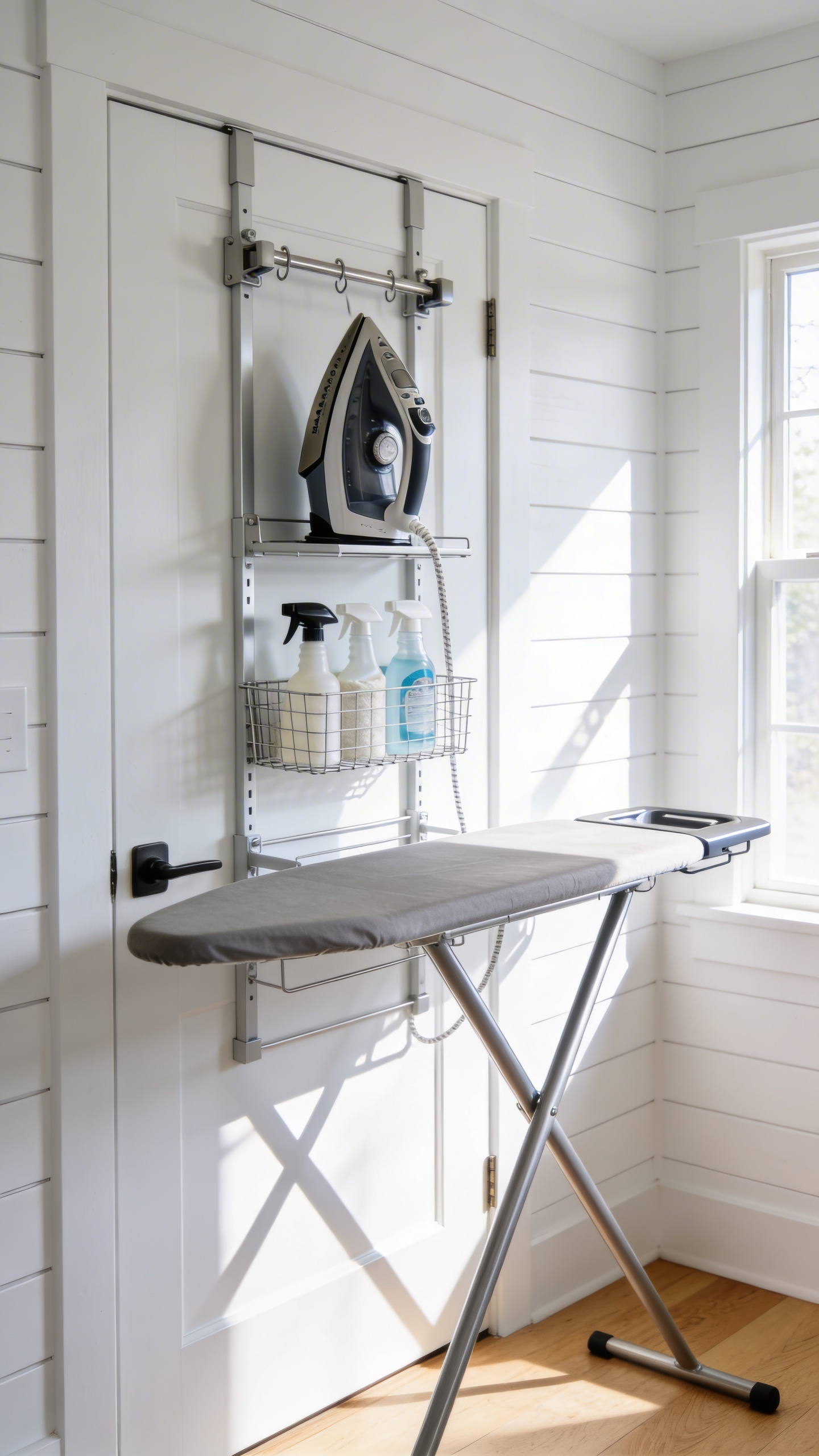
Implementing this requires respecting your door’s technical limits. Most modern interior doors feature a hollow-core cellular honeycomb interior. Consequently, they lack the structural integrity of solid wood. Dynamic loads from swinging doors can quickly loosen standard hinge screws. To resolve this, you must replace the top hinge’s center screw. Specifically, drive a three-inch king screw directly into the wall stud. This action safely transfers the rack’s weight into the house’s structural frame. Ultimately, this hidden shim prevents the dreaded sagging door syndrome.
Concealing bulky chore tools provides a vital sense of visual quiet. Hiding your ironing supplies actively reduces your cognitive load. In fact, 1920s Craftsman homes utilized built-in ironing closets for this exact reason. Today, sleek over-the-door racks act as a seamless modern successor. You can easily upgrade the installation’s overall sensory experience. For example, attach a small neodymium magnet to the ironing board’s base. Next, mount a matching metal strike plate onto the door itself. This magnetic lock completely eliminates annoying clanking when the door moves. Finally, choose matte-black powder-coated steel components to ensure a bespoke utility aesthetic.
3. Decanting and Dispensing: Standardizing Detergent Storage for Visual Calm
Branded detergent packaging creates intense visual noise in your laundry space. Bright colors and bold typography cause daily decision fatigue. Therefore, decanting products into uniform vessels instantly lowers cognitive load. The brain registers the shelf as one cohesive unit. This systematic approach turns a chore into a calming sensory ritual. Rather than industrial plastic thuds, you experience the gentle clink of glass. A weighted pump also offers satisfying, smooth resistance during use.
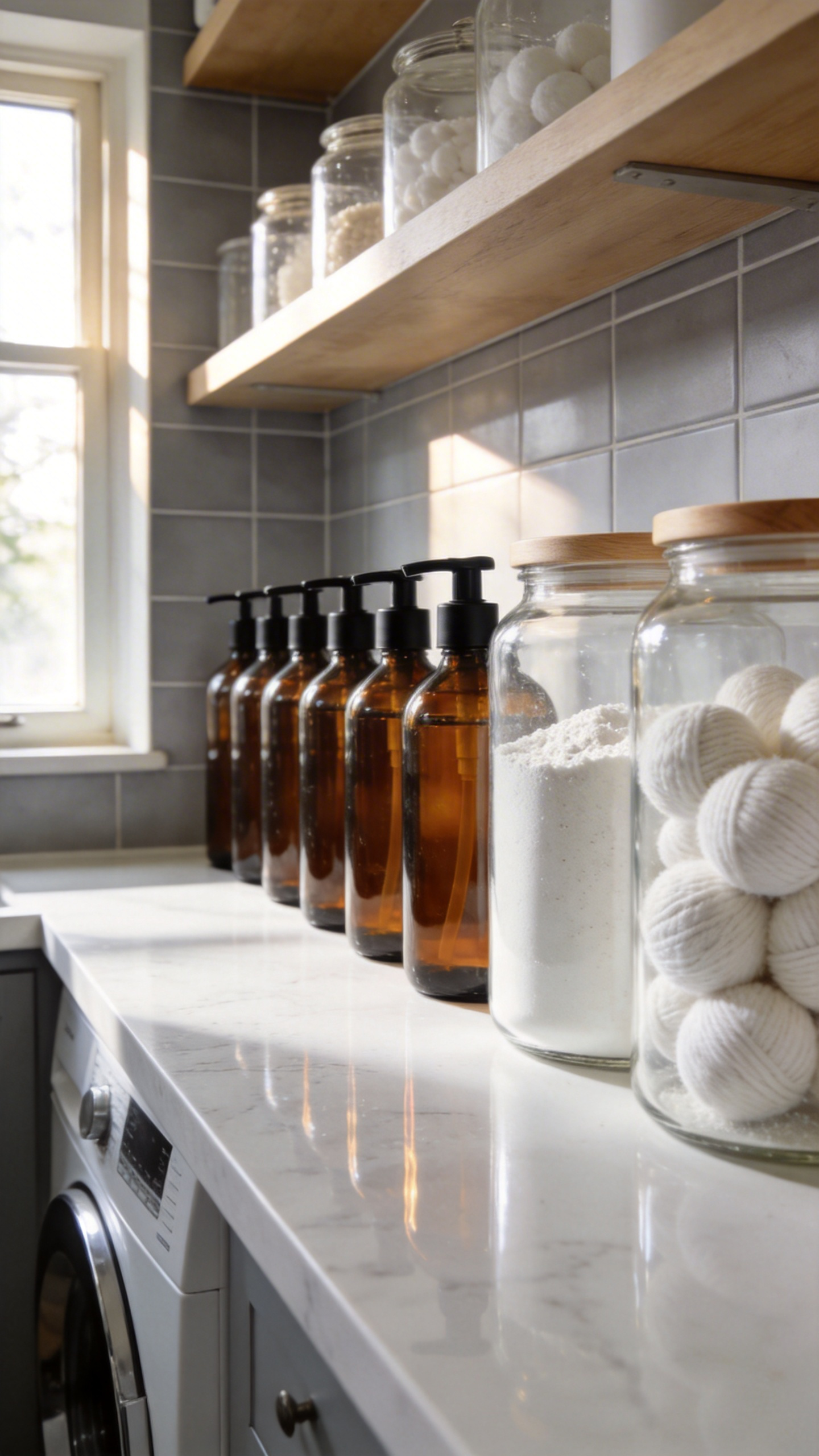
Material choices heavily affect your detergent’s actual chemical efficacy. Clear glass allows UV rays to degrade active enzymes. Thus, I recommend amber glass to block harmful light wavelengths. Airtight silicone gaskets prevent your powder detergents from clumping. Interestingly, glass is non-reactive and thoroughly prevents unwanted fragrance oxidation. Safety remains a critical concern for certain modern products, however. Colorful laundry pods look dangerously similar to edible candy. Therefore, transferring highly toxic pods to clear jars is hazardous.
Instead, keep pods securely locked inside their original opaque containers. Safe liquids can display beautifully on open, curated shelving. Historically, this practice returns us to pre-industrial bulk storage habits. Decanting reclaims your space from loud industrial marketing. Ultimately, you personally control the visual landscape of your utility room.
4. The Wall-Mounted Lint and Lost-Sock Station: Solving Micro-Clutter
Laundry rooms often succumb to frustrating micro-clutter. Stray socks and loose lint create disproportionate mental friction. Your brain suffers daily decision fatigue from these tiny items. Therefore, a dedicated wall-mounted station shifts this from active stress to reflexive habit. Statistically, the average person loses roughly 1.3 socks monthly. Mounting this station at chest-to-eye level prevents endless bending. This targeted zone ultimately saves hours of searching over time.
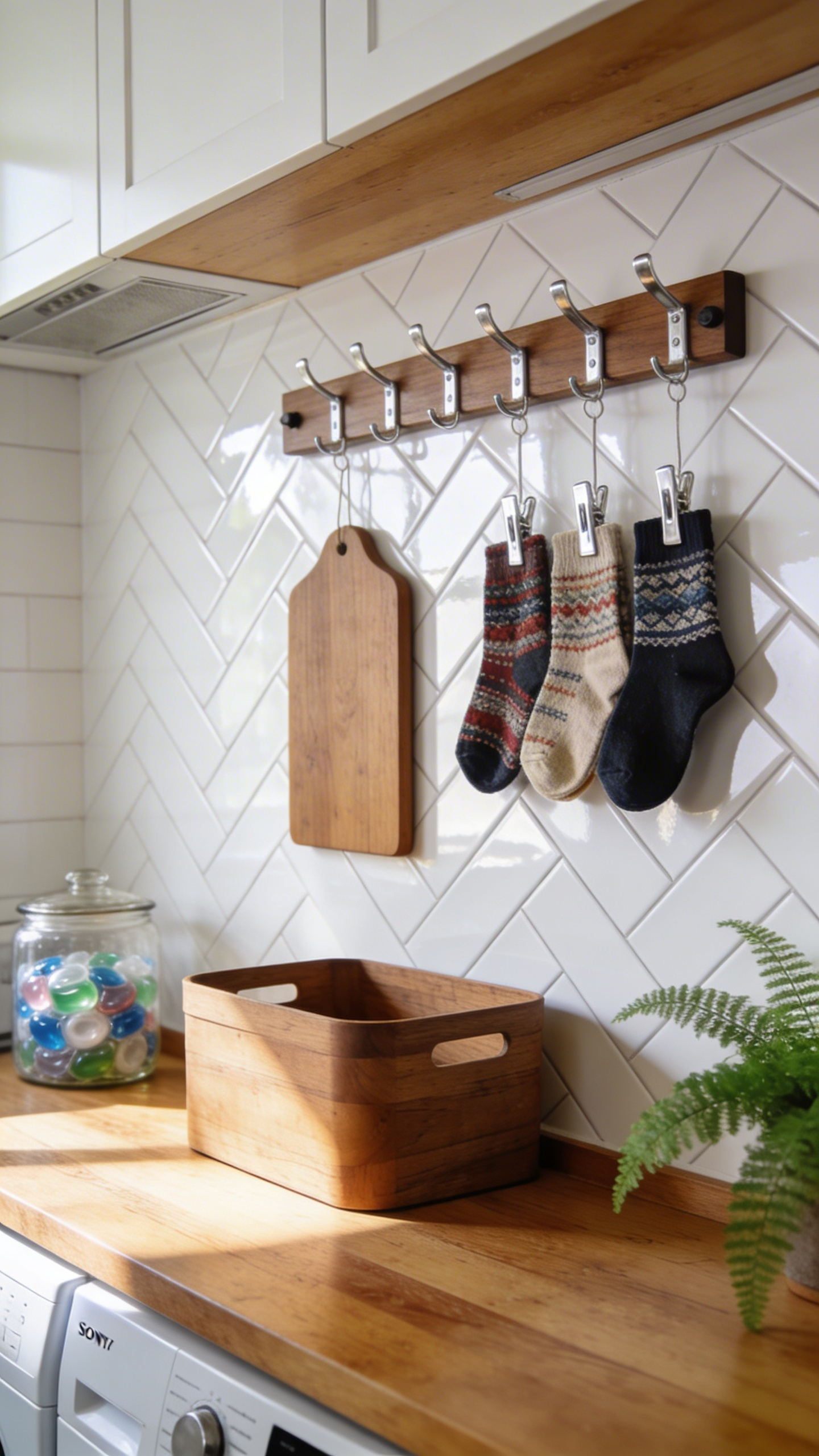
Aesthetic appeal matters heavily in these utilitarian spaces. Professional organizers prefer magnetic powder-coated steel bins. These matte-finish metals resist oily residue from dryer sheets perfectly. The satisfying auditory click of a magnetic bin also offers psychological closure. Reclaimed oak boards with industrial-grade clothespins bring tactile warmth. Experts debate how to display these lone garments, however. Visually, a sock board keeps orphans prominent for quick rescue. Minimalists prefer opaque bins to hide visual noise entirely. Regardless, you must implement a strict six-month purge rule. Otherwise, the station becomes a graveyard of good intentions.
Interestingly, lint was once saved for medical dressings during wartime. Today, it represents a severe household fire hazard instead. A mounted bin encourages a vital pre-load clearing ritual. In fact, you can even repurpose natural lint as eco-friendly fire starters.
Phase 2: Intermediate Development (Optimizing Surfaces and Cabinetry)
Intermediate laundry room development marks a transition toward high-performance design. Optimizing surfaces and cabinetry requires ergonomic engineering and material science. The traditional folding table becomes a dynamic multi-height task zone. A 42-inch high-fold counter prevents back strain during large loads. Conversely, a dropped 30-inch surface accommodates seated stain-treating and mending. Rounded waterfall edges prevent sharp corners from snagging delicate damp knits.
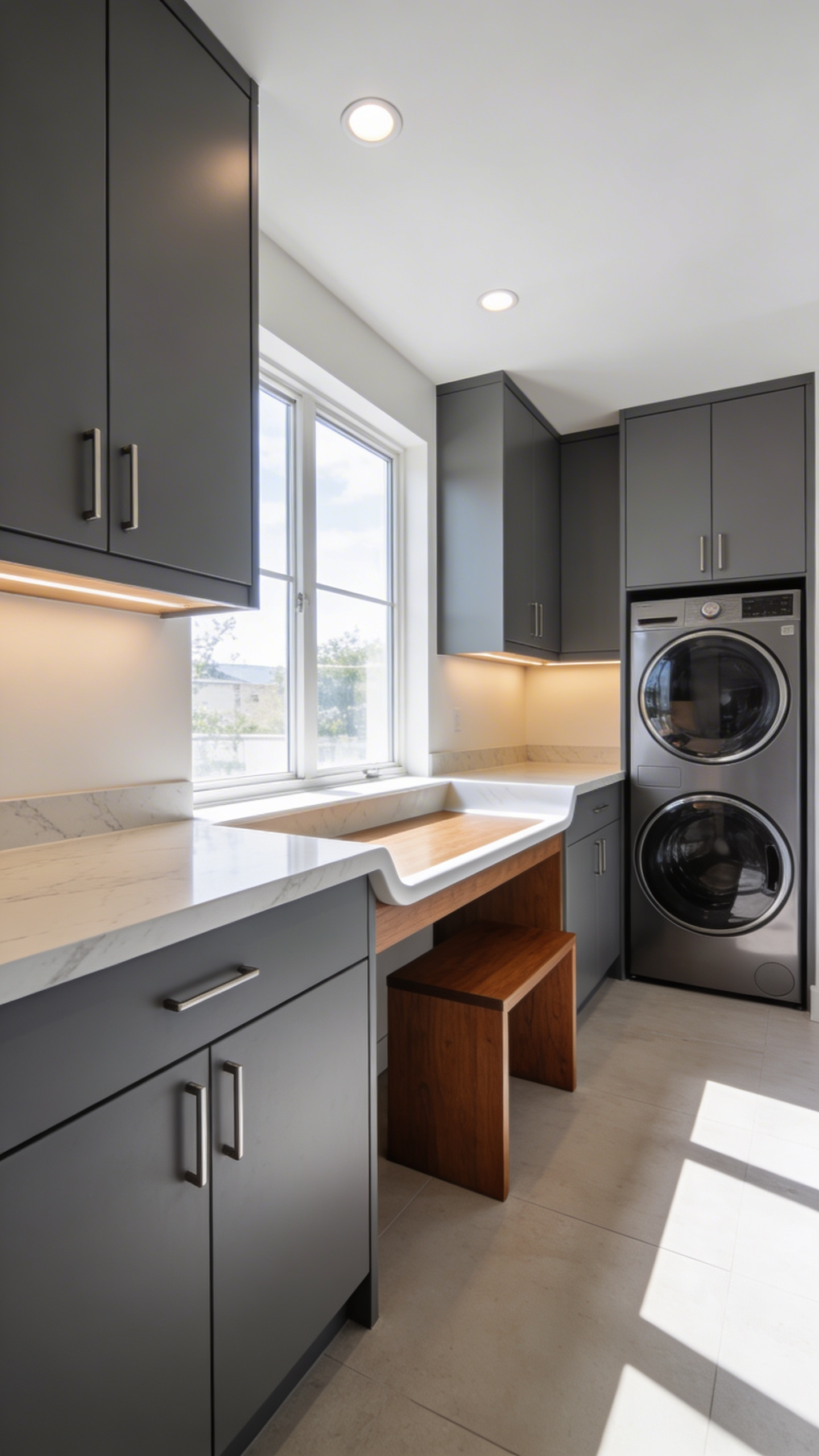
Material selection demands careful thought due to harsh chemicals. Engineered quartz resists chemical etching from highly alkaline laundry detergents. Alternatively, 16-gauge stainless steel completely prevents permanent bleach halo stains. Inside these units, standard MDF often swells from constant dryer humidity. Therefore, marine-grade plywood interiors easily withstand this internal tropical micro-climate.
Specialized cabinetry acts as an active participant in your workflow. Integrated pull-out drawer sorters eliminate the need for floor-cluttering hampers. Hidden toe-kick ladders also provide safe access to ceiling-height seasonal storage.
Designers often apply a clear narrative flow to the layout. A dedicated decompression zone captures heavily soiled items near the entrance. Acoustic foam insulation transforms the laundry area into a quiet sanctuary. Indeed, this tailored acoustic hush enables productive multitasking throughout the surrounding home.
5. The Waterfall Folding Counter: Maximizing Usable Real Estate Above Front-Loaders
The waterfall folding counter elevates utility spaces to architectural status. This design cascades the countertop vertically to the floor. It creates a visual bookend that completely anchors your appliances. Historically, exposed laundry machines left unsightly mechanical gaps highly visible. Today, a continuous slab provides a cool, permanent sensory touch. Therefore, the room transforms from a chaotic chore zone into a curated workspace.
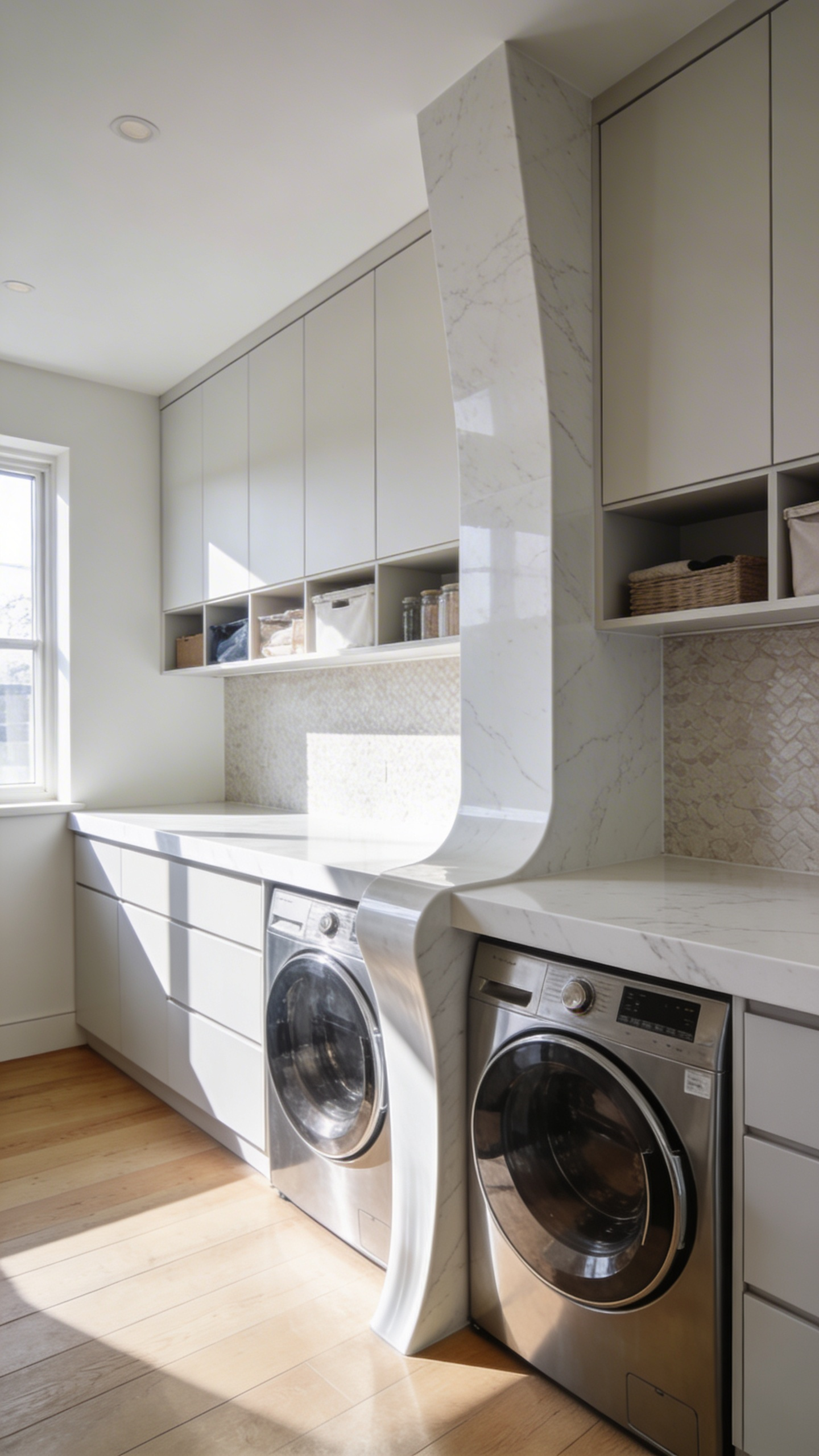
Installing this seamless surface requires precise structural engineering. Front-loading machines vibrate intensely during high-speed spin cycles. Professionals strictly follow the one-inch vertical clearance rule. This crucial gap creates a beautiful floating effect above the units. A sturdy cleat and gable system supports the heavy stone. Essentially, this hidden frame prevents the countertop from resting directly on moving appliances. As a result, you successfully avoid noise amplification and cracked mitered joints.
Functionally, this continuous surface reclaims immensely valuable physical real estate. It permanently eliminates the dreaded lateral and rear voids entirely. Stray socks frequently fell into these frustrating black holes. Fortunately, the seamless waterfall structure forms an enclosed, highly efficient zone. You gain roughly fifteen square feet of uninterrupted workspace. Specifically, this expansive area effortlessly accommodates long-form folding of bulky sheets.
Choosing engineered quartz over natural stone is incredibly crucial here. Non-porous quartz easily withstands harsh chemical detergents and highly humid environments. Fabricators utilize slightly rounded mitered edges to prevent laundry basket chips. This structural design often yields a brilliant hidden storage bonus. Extending the counter wider creates a narrow four-inch side niche. This shadow gap perfectly conceals a slim rolling utility cart. Ultimately, your main folding surface remains beautifully clear and systematically organized.
6. Floating Shelves vs. Concealed Cabinetry: Mastering the Visual Clutter Balance
Balancing floating shelves and concealed cabinetry dictates your room’s psychological flow. Too much open shelving quickly causes visual exhaustion. Every exposed detergent pod acts as stressful visual stimuli. Concealed cabinetry provides necessary visual quiet to combat this. Designers often apply the frequency rule to solve this balance. Therefore, place daily use items on accessible floating shelves. Conversely, hide ugly bulk supplies behind closed cabinet doors.
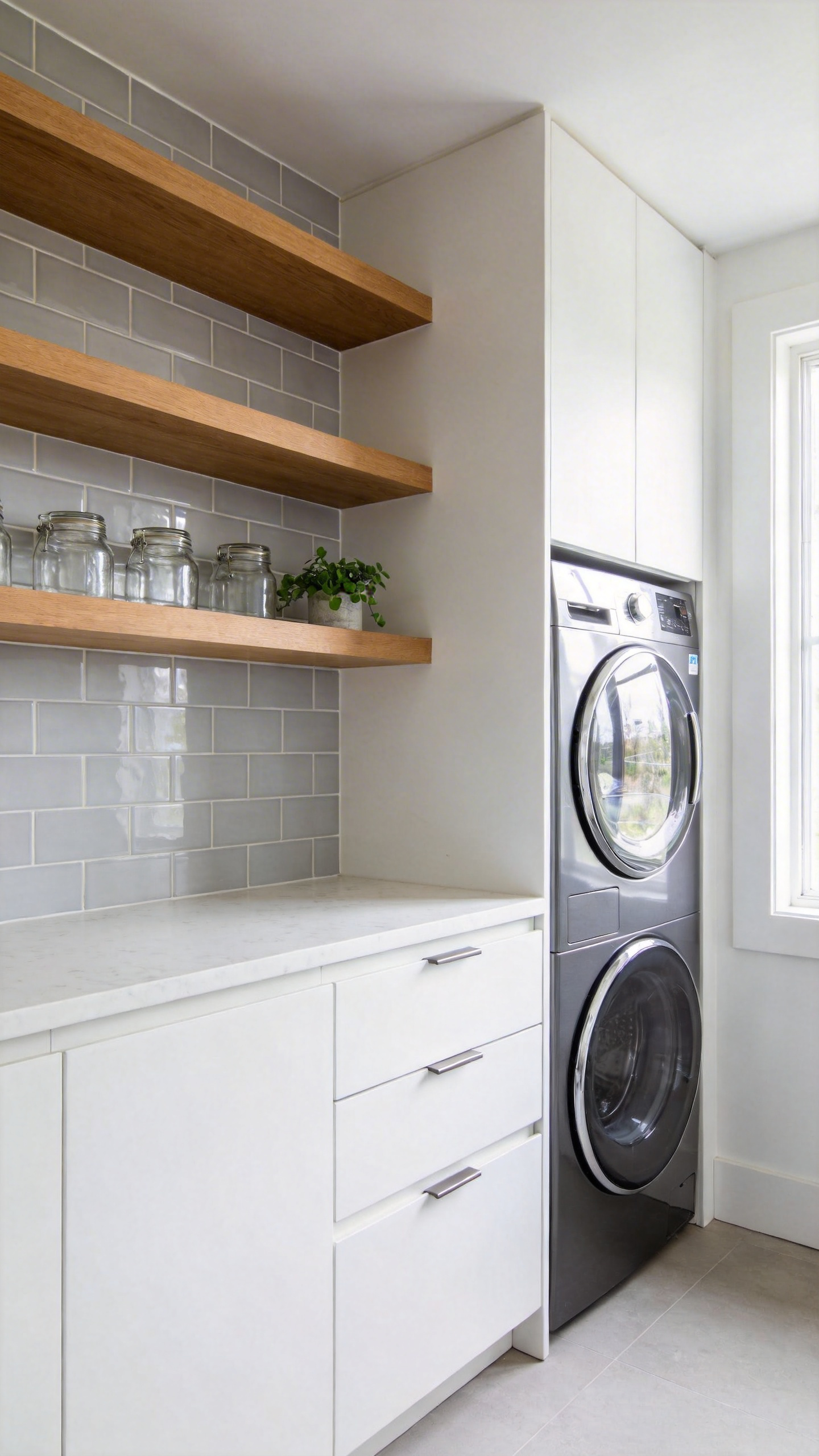
The laundry environment also poses unique physical challenges. Open floating shelves act as notorious lint traps. Fabric dust coats exposed surfaces rapidly within a few days. Thus, transfer open shelf supplies into easily wiped glass canisters. You must consider weight limits very carefully. A single liquid detergent jug weighs nearly nine pounds. Standard shelves sag under heavy machine vibration. Instead, rely on structural cabinetry for your heavy bulk storage.
Modern cabinetry design currently goes beyond simple passive storage. Slide-away pocket doors easily hide messy work zones. Integrated tilt-out hampers eliminate chaotic plastic floor baskets. Soft-close cabinet doors act as a crucial sound buffer. Ultimately, this systematic balance creates a highly efficient, calming sanctuary.
7. Under-Sink Architecture: Navigating Plumbing Voids with Tiered Pull-Outs
Designing under-sink storage is a distinct architectural challenge. Laundry sinks feature exceptionally deep basins. These basins compress the vertical space beneath them. Traditional shelving becomes entirely useless here. Central drain pipes and shut-off valves create major physical obstructions. Fortunately, modern U-shaped pull-outs solve this structural problem. They feature a clever central notch. Effectively, this design acts as a moat around the plumbing. Thus, you reclaim valuable inches on either side of the pipe.
Split-level tiered systems maximize this tricky layout. A heavy-duty bottom slide securely holds tall, bulky detergent jugs. A shallower upper tray glides independently beside the sink basin. This L-shaped configuration accommodates varied bottle heights perfectly. Adjustable tracks also let you customize the vertical spacing.
This high-humidity zone requires highly resilient materials. Marine-grade substrates prevent swelling from inevitable drips. Electrostatic chrome plating protects metal components from caustic chemical spills. Damped hydraulic pistons elevate the sensory experience. Indeed, they catch the momentum of heavy drawers effortlessly. Nylon-coated rollers glide silently to a halt. Ultimately, this quiet precision brings a soothing order to your workspace.
8. Retractable Drying Racks: Integrating Flush-Mount Solutions for Delicates
The modern laundry room demands precise aesthetic rigor. Bulky plastic drying racks are now completely obsolete. Homeowners increasingly favor zero-exposure, flush-mount storage solutions. These retractable units hide seamlessly inside custom cabinetry. Motorized ceiling units also reclaim unused vertical air space. These high-end fixtures often integrate bright, full-surface LED lighting. Therefore, the utilitarian chore disappears completely into the architecture.
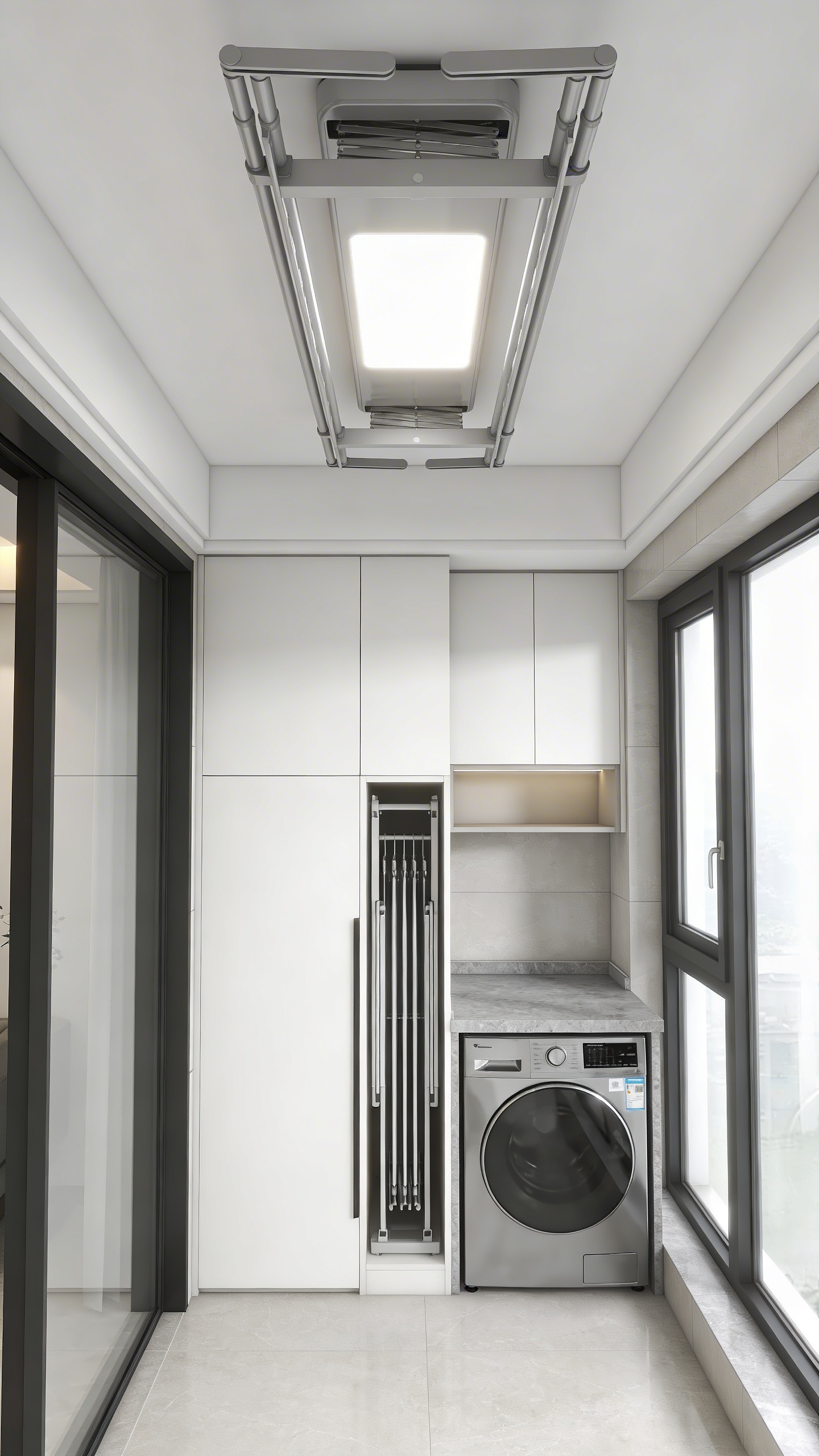
High-performance luxury fabrics require careful, specialized treatment. Merino wool and delicate silk must always dry flat. Otherwise, gravity stretches wet, heavy fibers and ruins garments. Integrated drawer-style racks solve this problem beautifully. They utilize taut, fine-gauge nylon mesh screens. These silent pull-outs glide on undermount soft-close slides. Thus, an expensive cashmere sweater rests softly and tension-free.
Hiding damp clothes creates a complex microclimate challenge. Enclosed wet fibers can rapidly breed musty mold. In fact, bacteria double every twenty minutes in high humidity. Custom cabinets must engineer proper, active airflow mechanisms. Designers leave gaps for a rising chimney effect. Whisper-quiet cross-ventilation fans are often built into the cabinetry. Ideally, these hidden racks sit directly beneath active HVAC vents.
These retractable solutions provide essential, comforting visual privacy. Historically, air-drying intimate apparel caused unnecessary household social awkwardness. Now, specialized snap-in clips conceal delicate garments behind elegant doors. Guests never see your personal intimates drying indoors. The laundry room maintains a beautifully clean sanctuary aesthetic. Indeed, the space elegantly functions as a high-traffic mudroom.
9. The Drawer-Mounted Ironing Board: Reclaiming Wasted Floor Space
In modern utility spaces, the drawer-mounted ironing board acts as a hidden architect. This clever hardware replaces bulky traditional boards to reclaim valuable floor space. Removing this visual noise creates a calming, organized atmosphere for daily chores. It eliminates the micro-friction of wrestling with a heavy folding frame. Reducing this physical setup time helps prevent procrastination and laundry piles.
These hidden boards rely on high-grade ball-bearing runners or epoxy-coated slides. Leading brands utilize over-travel systems to clear your extended countertop edges. Premium models feature a 180-degree swivel to maximize your ergonomic workspace. Integrating these sophisticated units always requires sacrificing a standard drawer footprint. Typically, you need a minimum cabinet depth of 20 inches for installation. However, custom false-front panels ensure the unit blends seamlessly into surrounding cabinetry. When closed, the board remains entirely indistinguishable from an ordinary linen drawer.
These compact surfaces require specialized fabric engineering to perform exceptionally well. Manufacturers use metallized cotton covers to reflect heat back into garments. This specialized aluminized surface allows for highly efficient, one-pass pressing on small areas. Finally, perforated metal bases let steam escape safely to protect the cabinetry interior.
Phase 3: Advanced Application (Custom Space Maximization)
Historically, laundry occurred in steamy, hidden basements. Today, advanced design elevates this space into a luxurious lifestyle suite. We treat the modern laundry room as a precision-engineered command center. Here, we replace traditional layouts with a systematic tri-zone workflow. Ergonomic anchoring becomes absolutely essential. Standard smooth quartz counters sit at 36 inches. Custom applications utilize variable-height cabinetry instead. We install 30-inch lowered stations for heavy-duty stain scrubbing. Conversely, 42-inch raised perches allow for comfortable standing folding without lumbar strain. A dedicated landing zone requires 18 to 42 inches of clearance. This unobstructed space effectively eliminates the messy basket-on-floor habit.
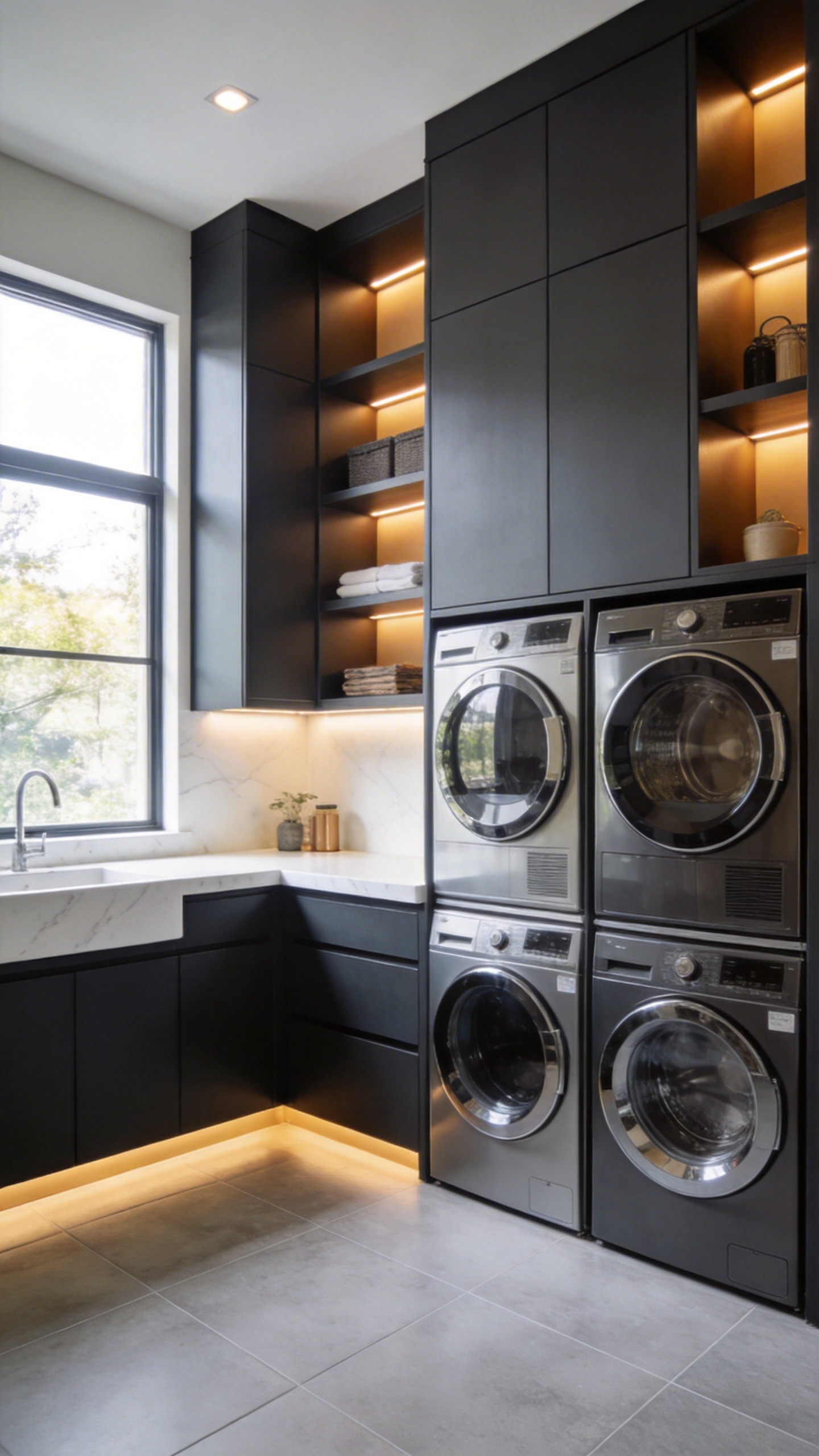
Custom maximization requires specialized, heavy-duty architectural joinery. Standard retail drawers simply cannot handle sloshing, heavy liquid detergents. We utilize industrial-grade ball-bearing slides gliding smoothly under 100-pound loads. Advanced suites frequently incorporate built-in drying vaults. These breathable units feature sleek, perforated stainless steel mesh. Crucially, maintaining a 2.5-inch vertical gap ensures crisp evaporation without damp mold risks. Next, integrating modern steam closets demands strict ambient moisture management. Manufacturers typically require specific airflow clearances for these appliances. Therefore, we meticulously design recessed louvered doors or hidden toe-kick vents. This invisible ventilation prevents heat buildup from warping warm, high-end walnut veneers.
Smart automation transforms silent storage into an active participant. Motion-sensing LED strips instantly illuminate deep, dark cabinets upon entry. Hidden auto-dose reservoirs connect directly to machines via sleek bulk-fill tubes. Ultimately, the storage itself performs part of the heavy daily labor.
10. The Six-Inch Solution: Designing Slim Rolling Pantries Between Appliances
Strategic optimization of narrow gaps between appliances requires careful planning. A slim rolling pantry perfectly balances mechanical safety and ergonomic efficiency. Designing this storage demands a strict understanding of thermal dynamics. Major manufacturers generally require a one-inch side clearance for proper appliance airflow. Therefore, placing a six-inch pantry in a seven-inch gap safely prevents dangerous overheating. Washing machines generate significant lateral kinetic energy during intense spin cycles. Lightweight plastic carts easily vibrate and cause heavy bottles to tip. Custom solutions use solid wood or heavy-gauge steel for necessary stability.
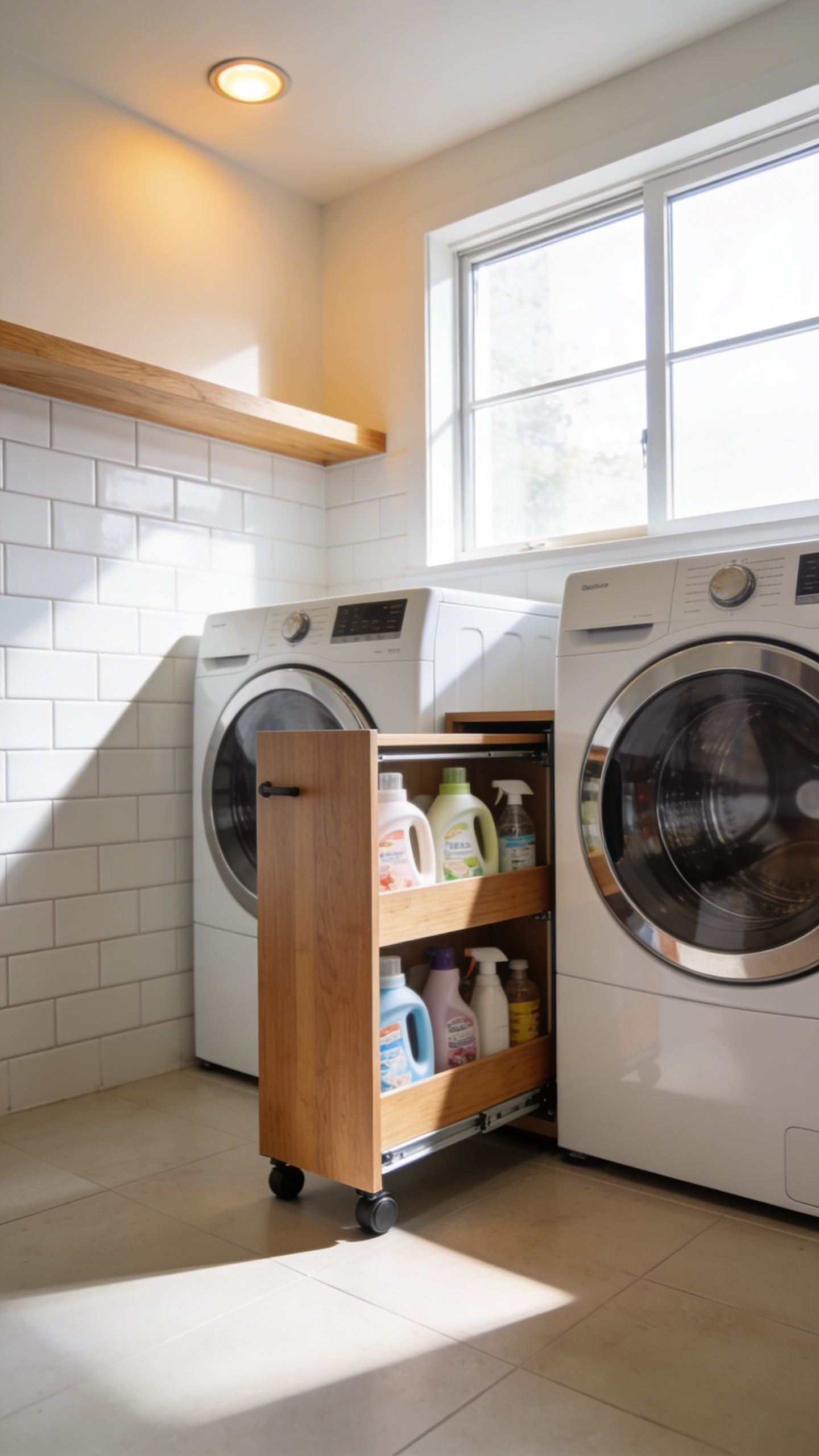
These narrow pantries offer incredible ergonomic benefits for tedious daily chores. Traditional over-the-machine cabinets are often too high for comfortable everyday access. Conversely, a rolling unit brings heavy detergent jugs into an optimal strike zone. Pulling the storage toward you effectively eliminates painful back strain.
The hidden pantry gracefully conceals overwhelming visual and olfactory clutter. Modern designers often face the cart with a matching cabinet panel. When retracted, the customized unit perfectly mimics a seamless architectural filler. The narrow single-file shelving safely prevents products from getting lost entirely. Ultimately, this clever micro-organization creates a visually serene and highly functional laundry room.
11. Structural Pedestal Drawers: Elevating Machines While Engineering Deep Storage
Standard front-load washing machines require a deep lumbar bend. Elevating the drum creates a much better ergonomic experience. Raising the machine by fifteen inches transitions the work to chest level. However, this elevation introduces a complex engineering challenge. A heavy washer spinning at high speeds exerts immense dynamic forces. The pedestal must provide rigorous structural stability. High-end laundry pedestals use a reinforced steel chassis. Indeed, this rigid framework transfers the machine’s weight directly to the floor.
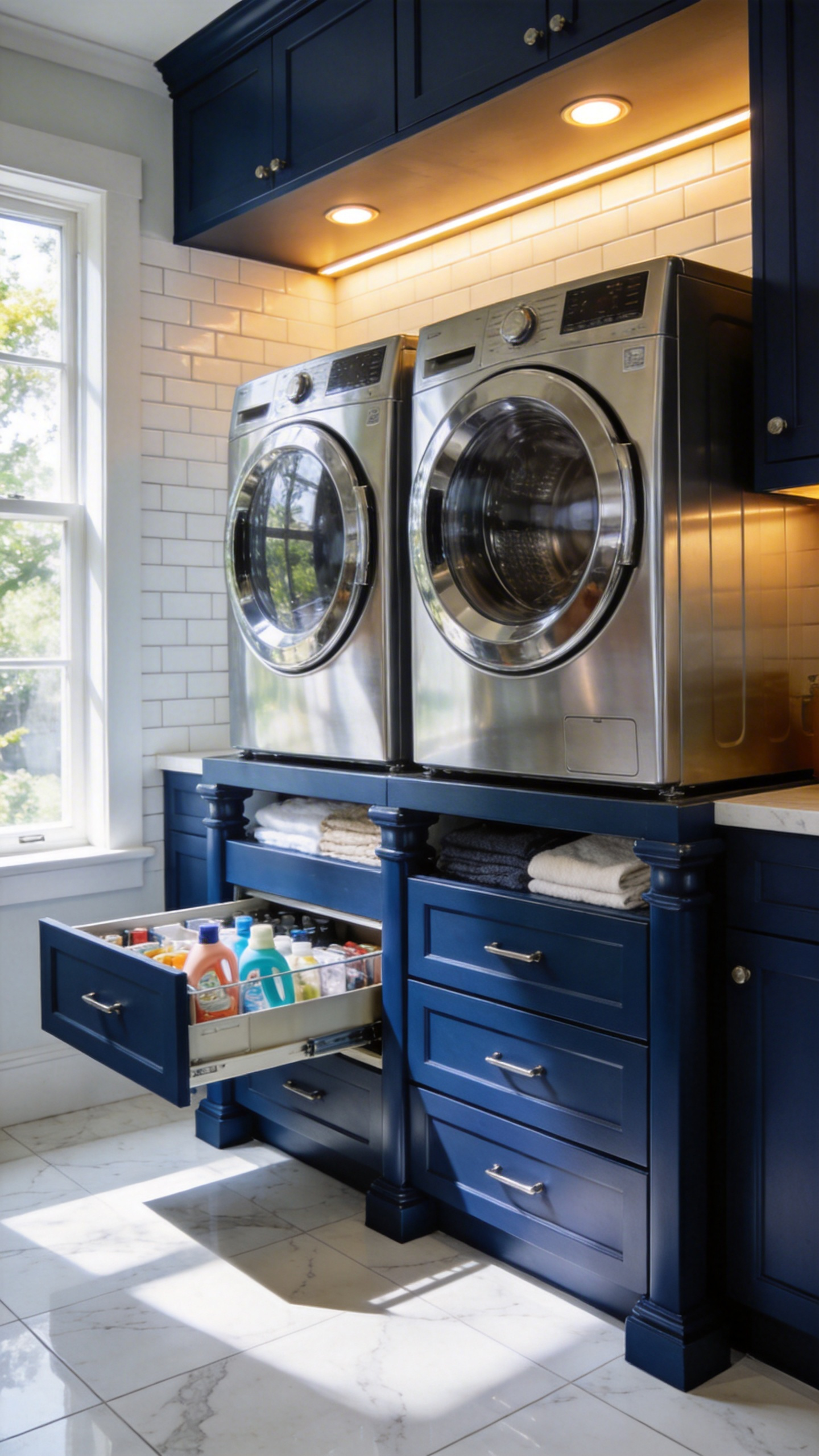
These hollow bases offer incredible deep storage potential. You can easily hide bulky detergent jugs inside. Heavy-duty telescopic ball-bearing glides ensure smooth drawer operation under stress. Soft-close mechanisms prevent the drawers from vibrating open during intense wash cycles.
Many homeowners prefer the seamless look of custom cabinetry. Unfortunately, custom wooden plinths often lack necessary lateral bracing. They risk dangerous sliding during an unbalanced laundry load. If you choose custom wood, you must anchor the structure securely to the floor joists. Otherwise, your beautiful custom cabinetry might act as a noisy vibration amplifier.
12. Floor-to-Ceiling Utility Armoires: Engineering Specific Zones for Vacuums and Mops
Historically, the armoire stored medieval armor and weapons. Today, this cabinetry efficiently conceals high-tech cleaning tools. A floor-to-ceiling utility armoire engineers a highly systematic space. Modern designs utilize open-base robotic garages. A floating cabinet leaves a small floor gap. Consequently, robotic vacuums can dock without human intervention. Custom shelving accounts for easy water tank removal. Recessed outlets keep tangled cords perfectly hidden.
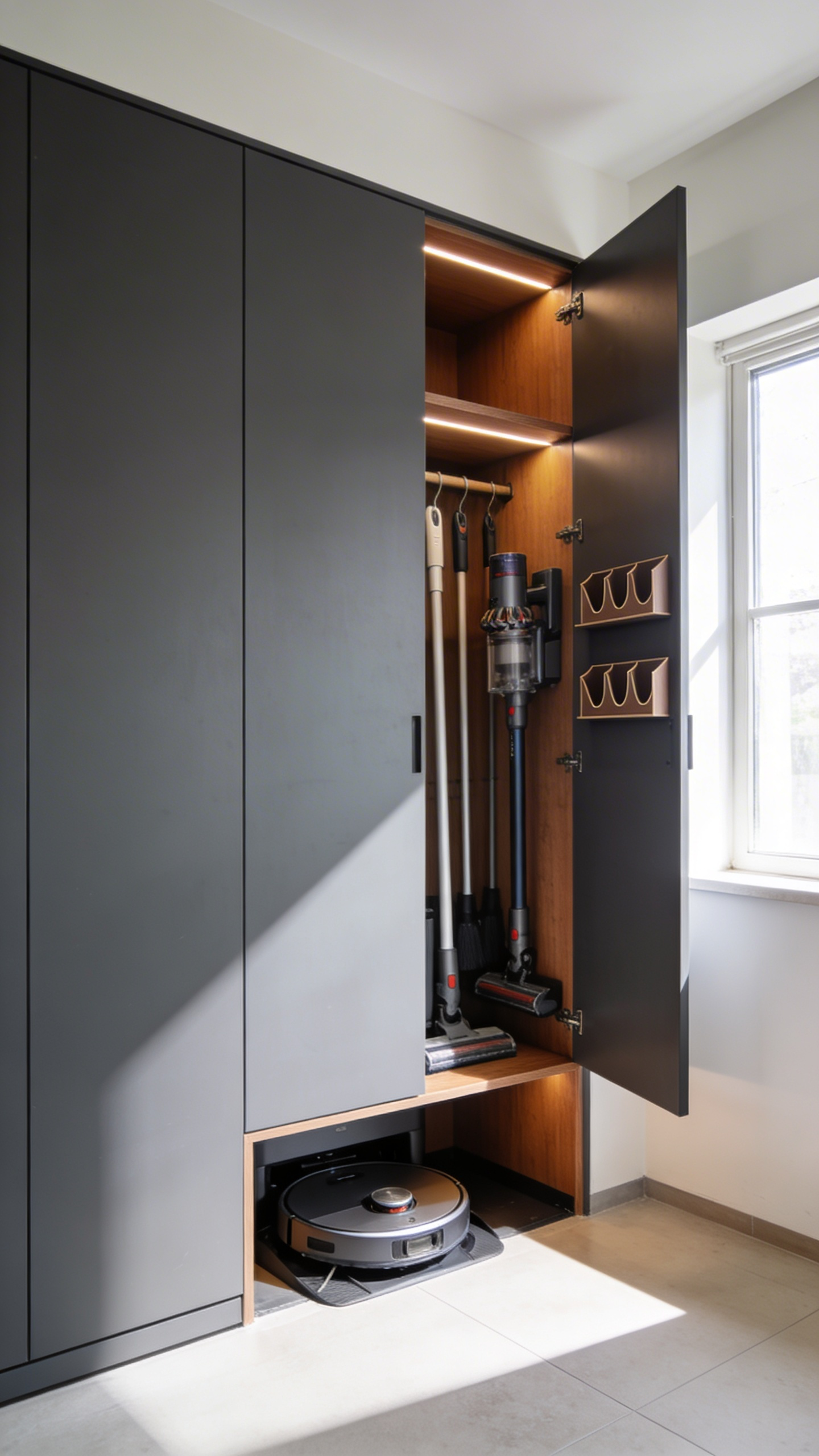
Trapping wet mops inside creates major mildew risks. Designers use perforated steel doors to solve this issue. These stylish panels offer crucial passive airflow. Some high-end units include whisper-quiet exhaust fans. They quickly cool warm lithium-ion batteries. Circulating air rapidly dries damp mop heads.
Daily wet work requires serious physical cabinet protection. Builders install custom polyethylene sump liners. These flexible trays securely hold accidental water spills. Ribbed base channels gently elevate the floor tools. As a result, air circulates fully beneath wet brushes. This smart setup completely prevents long-term wood rot.
Hiding these bulky tools creates essential visual quiet. Visible clutter acts like a stressful chore list. Closing the cabinet doors immediately lowers household anxiety. Sensory engineering ensures true acoustic peace. Interior acoustic felt easily muffles loud robot docks. Finally, soft-close hinges completely eliminate jarring metal clatter.
13. Drop-Down Valet Rods: Creating a Temporary Wardrobe for Steaming and Staging
In the hierarchy of laundry storage, the drop-down valet rod is an absolute unsung hero. These rods transform a basic utility room into a professional garment care suite. High-end variants utilize hydraulic-assist pivots for incredibly smooth mechanical operation. They lock into place with a satisfying thud to hold heavy damp clothing safely. In fact, professional valets easily support up to 60 pounds for efficient batch staging.
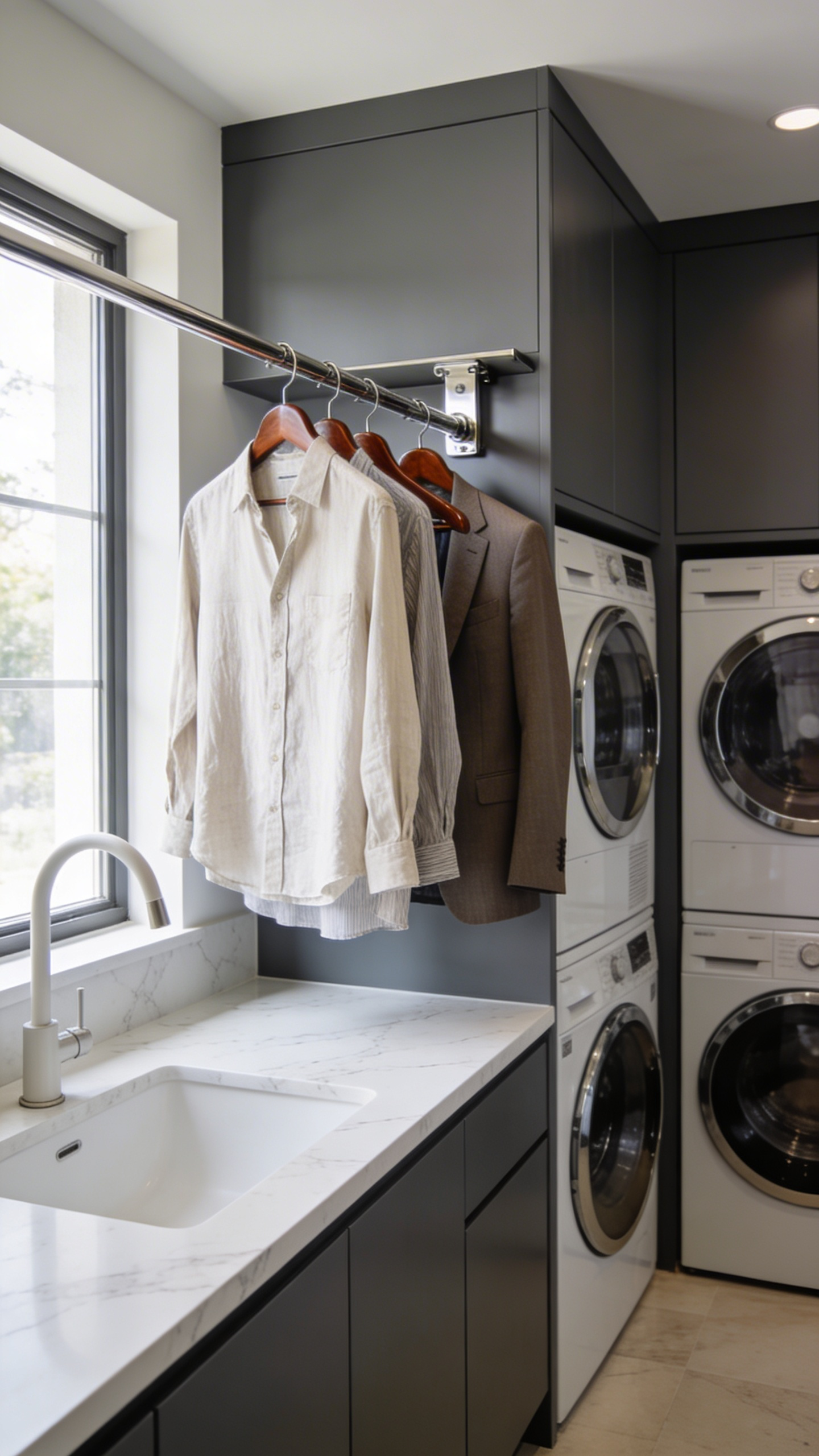
Standard closet rods sit too close to the wall for effective garment steaming. A drop-down rod extends your garments up to 14 inches away from cabinetry. Steam easily penetrates fabric from both sides without damaging adjacent woodwork. Anodized aluminum construction completely prevents moisture pitting over time. Ideally, you should mount these fixtures at a designer height of 66 to 72 inches. Long dresses and coats hang freely while gravity pulls out wrinkles.
Freshly steamed clothes need a dedicated 15-minute resting period to cool down entirely. This buffer zone prevents warm fibers from setting into new creases inside cramped closets. Always anchor your hardware directly into a drywall stud or reinforced cabinet gable. Applying semi-gloss paint behind the staging area prevents long-term steam peeling.
14. The Fifth Wall: Deploying Ceiling-Mounted Pulley Systems for Air-Drying
In laundry storage design, the ceiling remains highly underutilized. Interior designers often refer to this expansive plane as the “Fifth Wall.” Deploying a ceiling-mounted pulley system transforms empty vertical volume into an active drying engine. Historically, these systems were Victorian staples known as creels or pulleys. Today, their honest mechanical simplicity provides a tactile alternative to digital appliances. Beautiful components like cast iron ends and organic cotton ropes elevate the aesthetic. An empty rack sits flush against the ceiling as a discreet architectural detail.
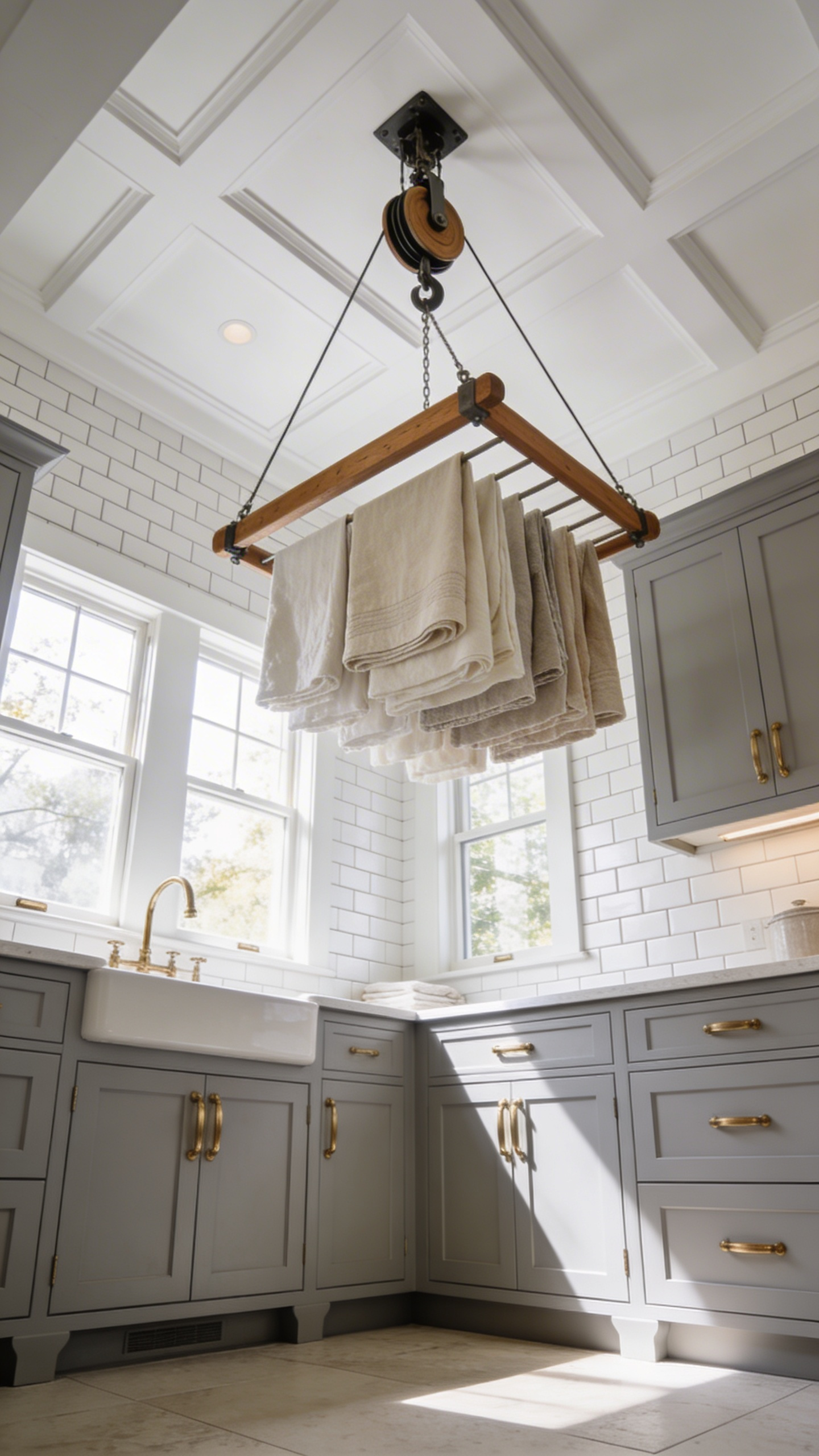
Elevating wet laundry utilizes the science of thermal stratification. Heat naturally rises within any room. By hoisting garments into this upper thermal zone, you capture the warmest available air. This setup exposes clothes to a continuous, natural convective loop. In fact, this strategic elevation can reduce drying times by up to fifty percent.
This system represents a masterclass in volumetric storage. A standard airer safely holds roughly 66 pounds of wet laundry. The mechanical pulley lets you raise heavy loads with a single hand. You effortlessly reclaim two square meters of valuable floor space. This traditional air-drying method involves zero mechanical stress. Delicate natural fibers are saved from the destructive heat of modern tumble dryers. Successful deployment requires anchoring the hardware directly into structural ceiling joists. Selecting nylon-wheeled brass pulleys ensures a smooth, rhythmic operation instead of a jarring squeak.
Phase 4: Mastery Integration (Multi-Functional Lifestyle Systems)
Historically, the utility closet was a hidden space. It now serves as a highly sophisticated, multi-functional lifestyle system. Mastery integration completely transforms this area into your home’s primary transition zone. A mudroom hybrid intercepts dirt quickly. This strategic design reduces household cleaning time by up to twenty percent. Custom cabinetry includes seamless drop-zone lockers alongside integrated charging ports. These units elegantly disguise pull-out hampers.
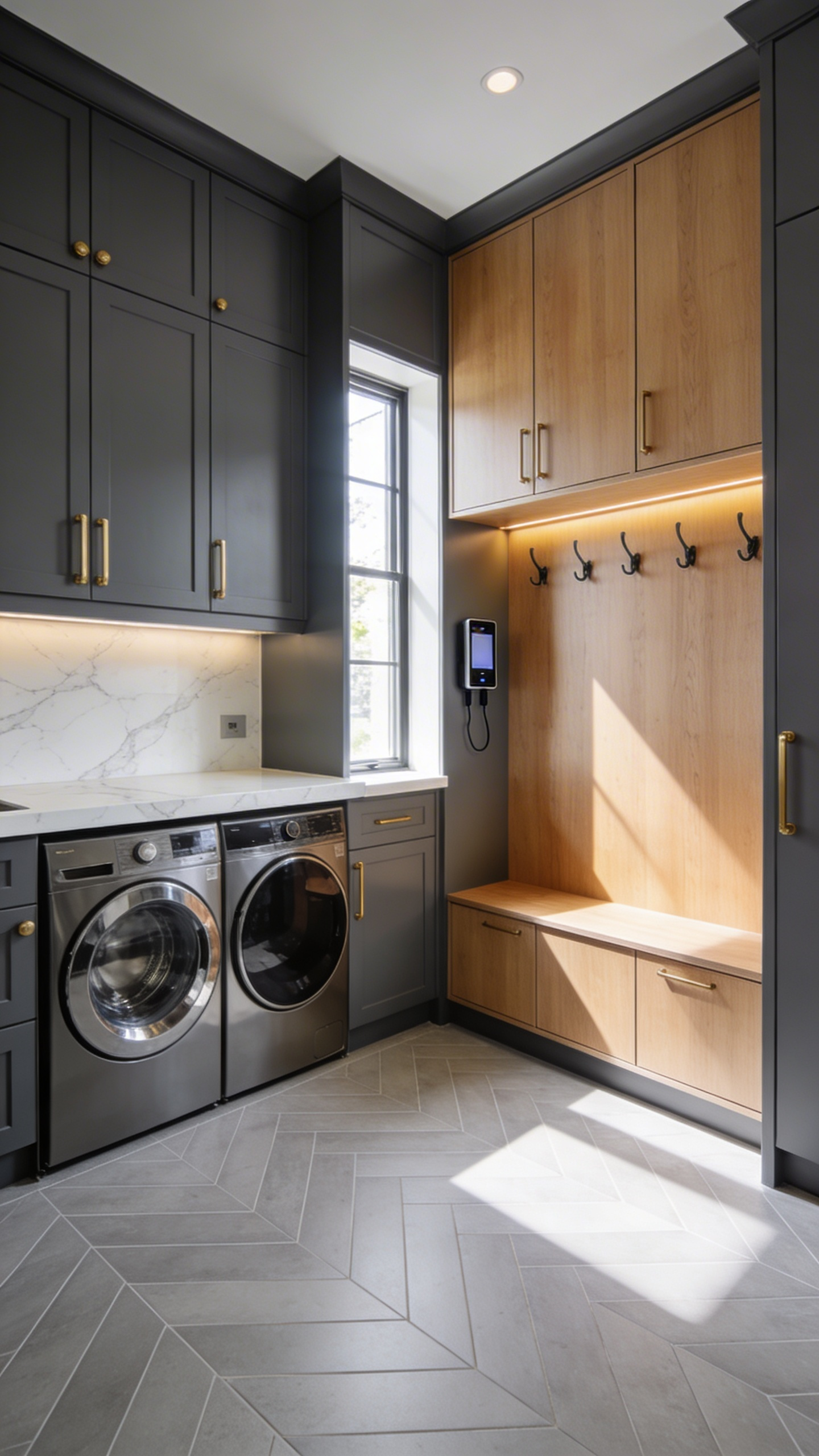
Elite storage revolves around a highly ergonomic work triangle. You might install a beautiful waterfall countertop over front-loading machines. Ideally, place this at a 36-inch height to avoid back strain. Specialized pocket doors slide back into the cabinetry to keep walkways totally clear. Therefore, visual serenity remains intact. Managing this beautiful environment requires solving the difficult moisture-noise paradox. Active ventilation prevents humid air from warping your expensive custom cabinets. Similarly, mass-loaded vinyl dampens the annoying hum of fast spin cycles.
Professional-grade pet care remains a vital integration. Toe-kick activated pull-out drawers hide unsightly kibble bins entirely out of sight. This ensures the room feels like a refined human sanctuary. Visual clutter vanishes completely in this phase. Harsh plastic jugs are replaced by uniform glass decanters. Thus, laundry becomes a mindful chore orchestrated within a perfectly curated space.
15. The Mudroom Hybrid: Architecting Zones for Wet Gear and Dirty Laundry Transition
Designing a true mudroom hybrid creates a vital pressure valve for your home. This space manages the friction between chaotic weather and your curated interior. Establishing a clear physical threshold is our first organizational priority. By exploring 20 methodical mudroom ideas and laundry solutions, you can master your home’s workflow. We borrow inspiration from the Japanese Genkan. We use a lowered entry floor made of hoseable stone. This surface immediately captures sand and moisture. A raised wooden step signals where the clean, dry zone begins. This level change prevents micro-clutter from migrating into living spaces.
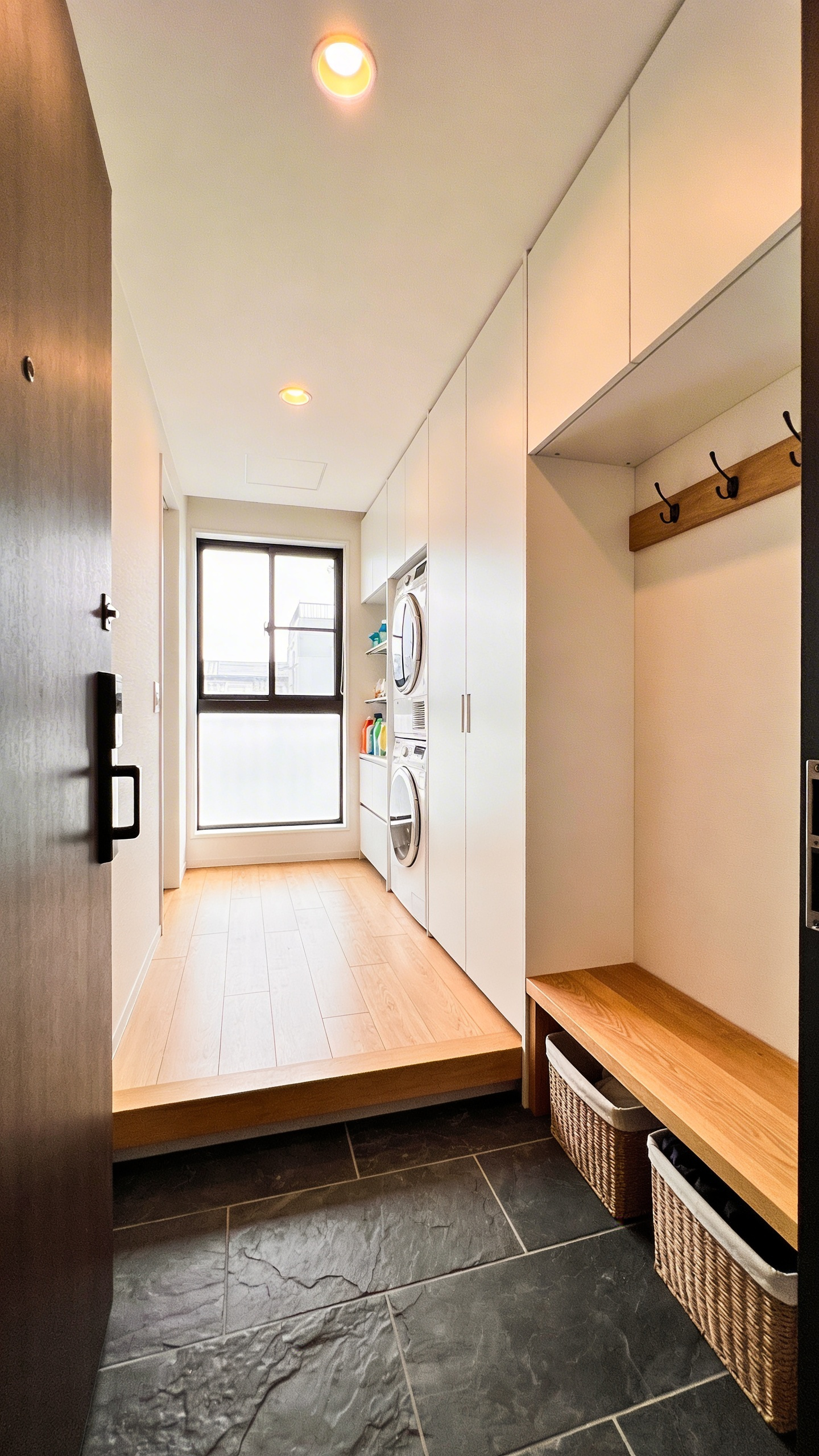
Next, we must address the reality of wet outdoor gear. Traditional tumble dryers quickly destroy technical fabrics and wool. Instead, we integrate slender Scandinavian drying cabinets. These units circulate warm air around hanging garments. They gently dry wet jackets without damaging mechanical agitation. Managing clutter requires understanding your family’s habits. Organizers generally fall into two categories: pilers and filers. A staggered storage system accommodates both styles perfectly. We install deep open hooks for quick drop-offs. Ventilated lockers keep gear hidden for those preferring clean lines. We integrate UV-C sanitizing lights inside these lockers. Ultimately, this destroys odor-causing bacteria at the source.
Technical rigor ensures this hybrid room functions flawlessly. Building codes require robust exhaust fans for high-moisture zones. A Heat Recovery Ventilator efficiently extracts humid air. Meanwhile, it pre-heats fresh air coming from outside. A linear floor drain allows for immediate gear rinsing. Visually, we soften the room using biophilic design principles. Waterproof composite flooring perfectly mimics raw timber. Together with clerestory windows, this creates a bright, welcoming vestibule.
16. Integrated Pet Wash Stations: Expanding Utility While Hiding Grooming Supplies
Integrated pet wash stations have become the crown jewel of modern utility rooms. This design trend is known as “BARKitecture.” Homeowners now integrate pet needs directly into the home’s architectural bones. Discerning owners often seek 19 genius tips for ultimate laundry organization for pet people to ensure grooming tools remain hidden. The ergonomic nightmare of standard bathtubs is eliminated. Modern wash stations blend seamlessly with surrounding laundry cabinetry. Experts strongly favor porcelain mosaic or penny tiles. These small tiles provide a high frequency of grout lines. Therefore, they offer a necessary natural tread for wet paws. A dynamic friction rating above 0.42 prevents panic-induced slipping.
Hiding grooming clutter requires truly systematic storage design. Stow-away stairs replace bulky, fixed floor ramps. These stairs slide out from disguised cabinet toe-kicks on heavy-duty glides. Afterward, they disappear entirely when bath time ends. Recessed wall niches maximize space efficiency beautifully. Often, these niches sit hidden behind phantom cabinet doors. Grooming shears and medicated shampoos remain accessible but completely invisible.
Custom cabinetry easily conceals built-in grooming blowers. Sound-insulating these spaces reduces stress-inducing high-pitched whines. High-CFM ventilation pulls wet-dog odors out of the air. Thermostatic mixing valves maintain a perfectly comfortable 98-degree wash. This dedicated footprint offers exceptional off-label utility. These ergonomic stations are perfect for rinsing muddy hiking boots. Placing them near washing machines ensures quick, effortless towel cleanup.
17. The Smart Utility Sink: Custom Cutting Boards and Drying Rack Inserts
Modern laundry rooms frequently double as secondary sculleries for messy household tasks. The smart utility sink acts as a crucial force multiplier for space. Unlike porous concrete basins of the past, these workstations feature tiered inner ledges. They are engineered from rigid 16-gauge stainless steel to prevent flexing. This ledge system supports custom-cut Sapele wood cutting boards seamlessly. High-density Sapele naturally resists the constant humidity of laundry environments. Because these boards glide smoothly across the sink, you effectively double your usable workspace. Dirty water drains directly into the hidden basin below the contained tasks.
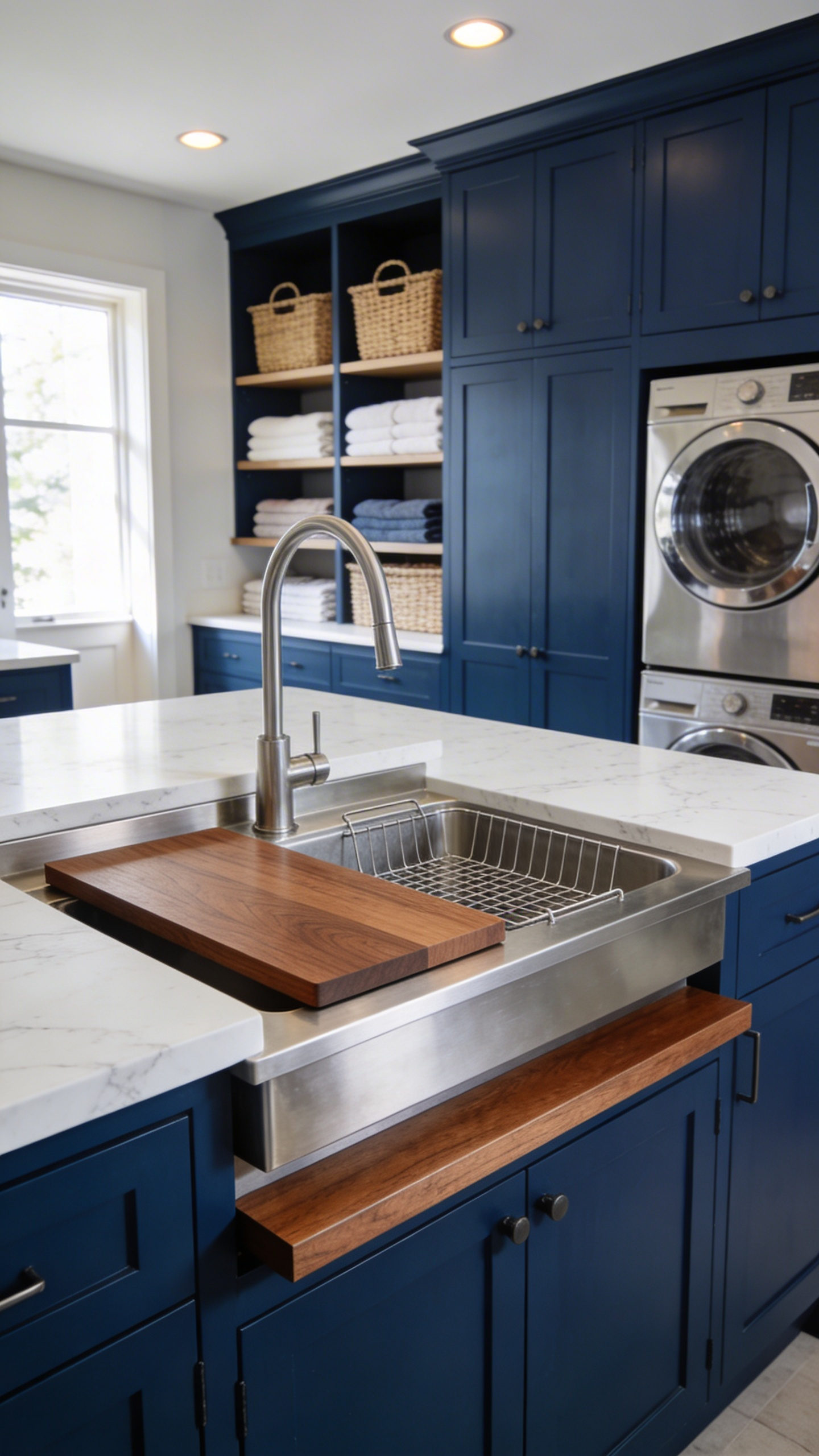
The sensory experience also upgrades the room beautifully. Specialized undercoating and thick rubber pads turn loud metallic clangs into dull thuds. Silicone-coated drying racks unroll silently to provide distinct tactile satisfaction. Storing these custom inserts properly requires systematic cabinetry planning. Trapped moisture could cause the expensive wood to warp over time. I always recommend designing vertical slots inside the under-sink cabinets. This specific storage strategy provides active drying airflow for the wooden inserts.
True smart sink technology eliminates even more physical clutter. Integrating a voice-activated faucet allows precise water measurement instantly. You no longer need bulky measuring buckets taking up valuable cabinet storage.
18. Seasonal Archival Storage: Vacuum-Sealing and Storing Winter Linens in High Zones
Storing winter linens in your laundry room’s upper reaches maximizes valuable vertical space. However, this high zone creates a volatile microclimate. Rising heat from appliances accelerates the oxidation of residual detergents. You must allow freshly dried linens to equilibrate for six to eight hours. This cooling period prevents trapped moisture from cooking inside storage bags.
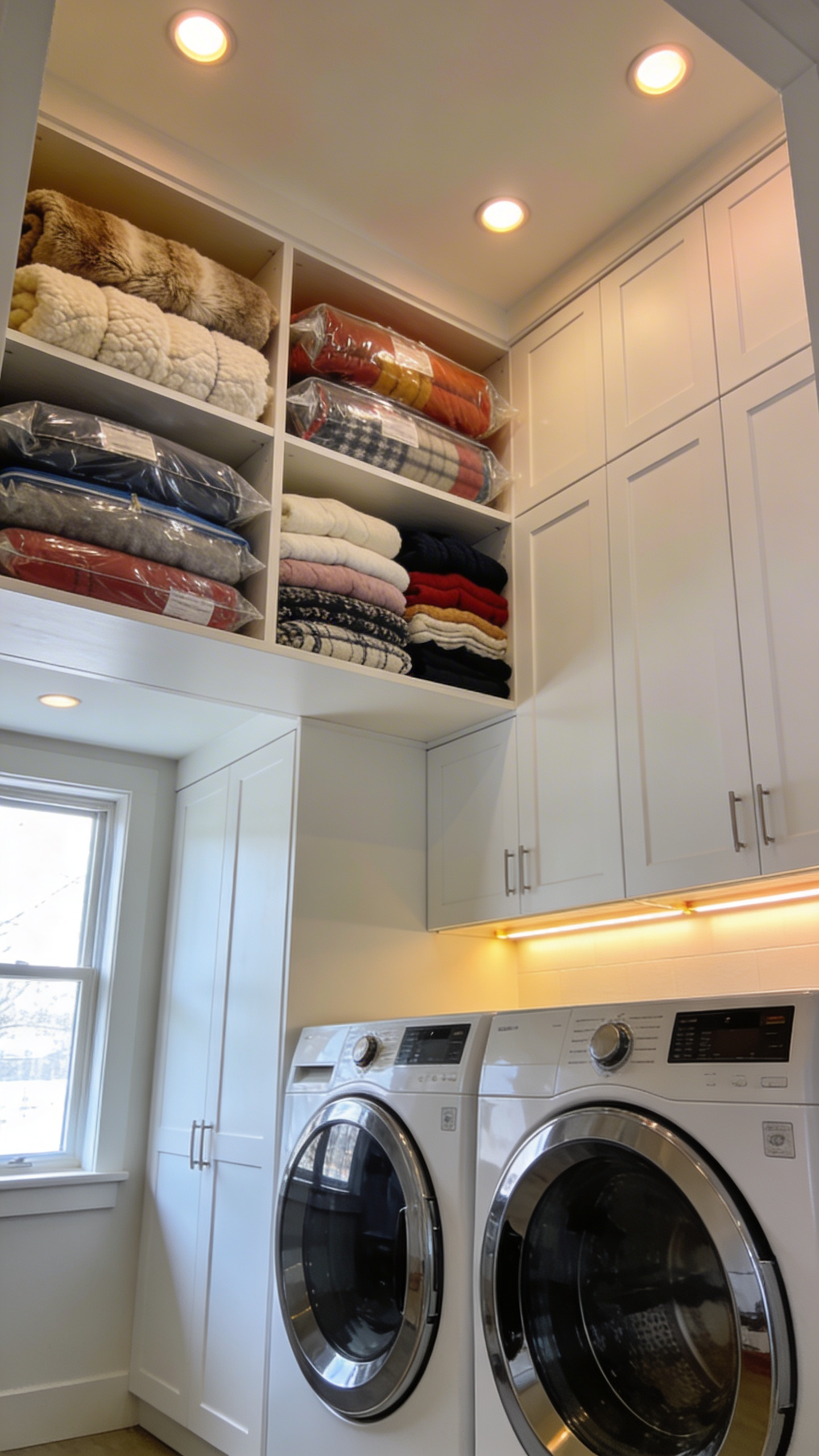
Next, consider the mechanics of vacuum-sealing these bulky fabrics. Authoritative textile science warns against total air evacuation. Instead, compress the bag until it feels like a ripe avocado. Leaving ten percent residual air prevents permanent fiber fatigue and deep creasing. Your choice of storage bag dictates the preservation quality. Standard plastic bags often contain chemical plasticizers that off-gas and yellow fabrics. Select archival-grade bags with multi-layer moisture barriers. These methods mirror the efficiency of 22 clever bedroom storage solutions used to organize primary suites.
Interleave delicate heirlooms with acid-free tissue paper to absorb acidic byproducts. Tuck a high-altitude lavender sachet into the package before sealing. Later, a concentrated burst of fragrance confirms that your airtight seal held perfectly. We must address the physical challenge of lifting heavy textiles. Historically, horizontal cedar chests forced awkward bending and straining. Today, modern cabinetry integrates vertical mechanical assistance for effortless high storage. Pull-down wardrobe lifts lower upper rods directly to chest height. Ultimately, these ergonomic pulley systems hoist your vacuum-sealed bundles safely out of the way.
Frequently Asked Questions
How can I maximize laundry room storage in a small space?
To maximize a small space, prioritize verticality by installing floor-to-ceiling custom cabinetry and utilizing over-the-door racks. Additionally, choose multi-functional furniture such as drawer-mounted ironing boards and waterfall countertops over appliances. This reclaims every square inch of usable workspace.
What is the most durable material for laundry room cabinets?
Engineered quartz and marine-grade plywood are the gold standards for durability. These materials easily withstand the high humidity and chemical exposure common in laundry environments. This effectively prevents the warping and etching often seen with standard MDF or natural stone.
How do I hide visual clutter in my laundry room?
Visual clutter can be eliminated through a combination of concealed cabinetry and standardized decanting. Use opaque cabinet doors to hide industrial detergent jugs. Transfer daily-use products into uniform glass vessels to create a cohesive, calming aesthetic on open shelving.
Conclusion: From Chore Zone to Curated System—Maintaining the Order You’ve Built
Your laundry room has evolved from a stressful labor zone into a self-soothing sanctuary. This transformation relies on smart cabinetry and mindful sensory design. Moisture-resistant materials and acoustic isolation protect the precise order you established. Visual clutter previously triggered daily anxiety for your household. The space now offers cognitive closure through uniform baskets and dedicated bins. This careful curation prevents the room from reverting to a chaotic state.
This systemic approach will elevate your future routines into calming, high-efficiency rituals. Your entire lifestyle benefits deeply when utility spaces mirror your refined living areas. Consistent maintenance naturally demands intentional habits rather than exhausting marathon cleaning days. Person-based sorting makes this process a collaborative family effort. Begin by auditing your current laundry hampers and replacing them with square, single-load vessels. This simple upgrade ensures your custom laundry room storage system remains beautifully intact.