1. The Bohemian Philosophy: Cultivating a ‘Collected, Not Decorated’ Space
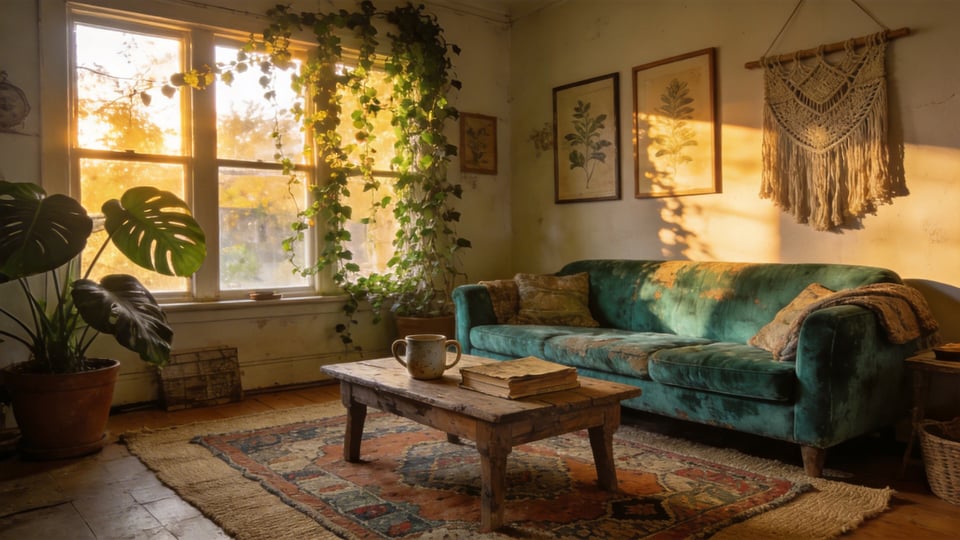
Mastering boho living room decoration is rarely about following rigid trends. Instead, it involves creating a deeply personal space. A true bohemian room rejects instant, catalog-perfect designs. In fact, I always encourage a slow, intentional evolution. This ‘collected, not decorated’ approach tells your unique story. Historically, the aesthetic emerged from 19th-century French counterculture. Specifically, early bohemians mixed salvaged aristocratic cast-offs with practical tools. Today, modern spaces honor this legacy by prioritizing provenance over price.
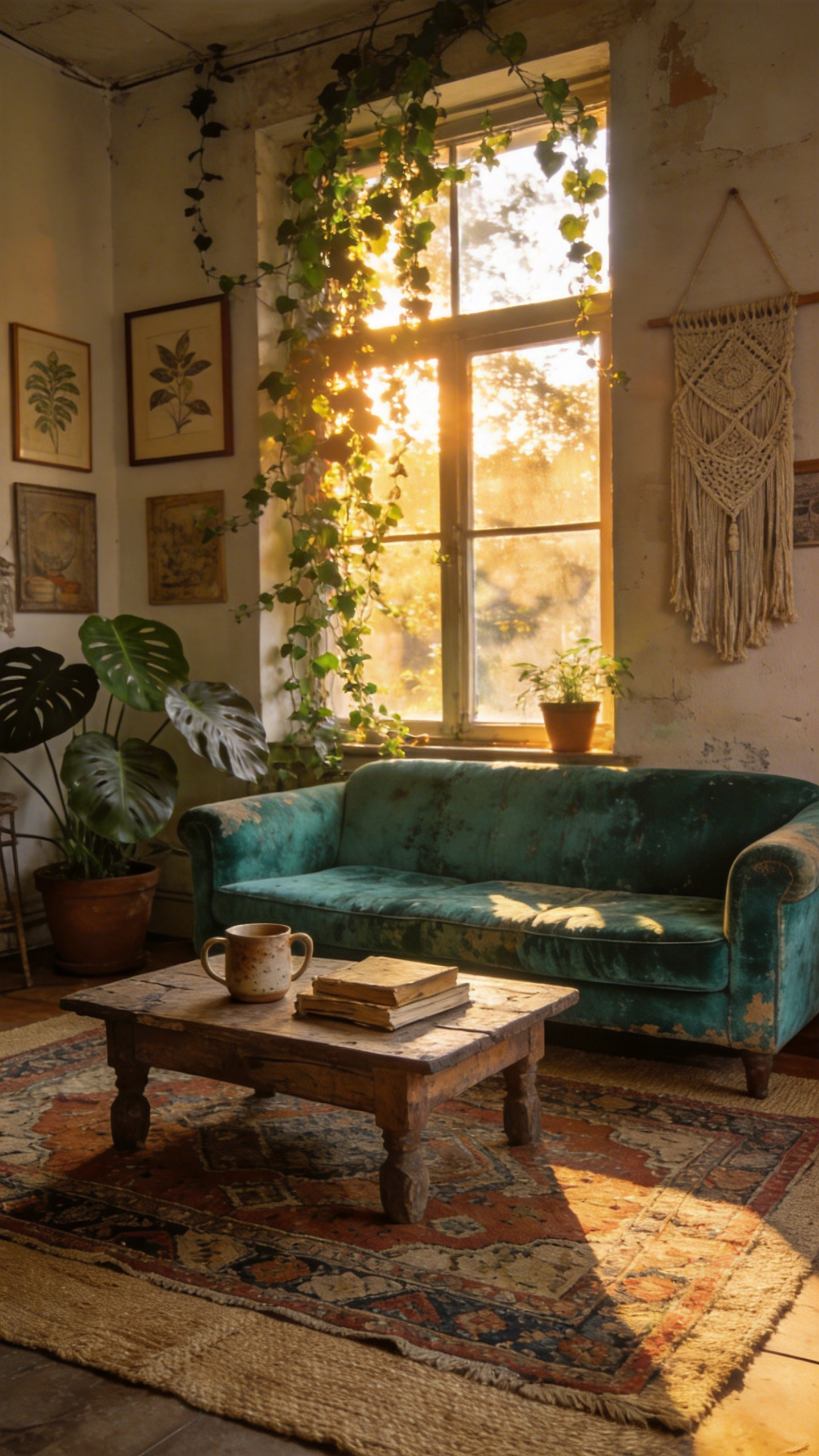
Every textile and object acts as a sensory anchor. Environmental psychology calls this deep connection ‘place attachment.’ Therefore, a well-planned interior works like a personal visual diary. For example, an inherited wool throw bridges your past and present beautifully. Indeed, this narrative depth stops layered rooms from feeling emotionally hollow.
Next, consider the practical 60/40 rule to maintain visual balance. Typically, 60 percent of your space should feature vintage or handmade pieces. However, the remaining 40 percent provides necessary contemporary comfort. For instance, try layering a structured modern sofa with vintage linen pillows. This material friction creates a relaxed, lived-in feel.
Modern retail often tries to commodify this authentic look. Unfortunately, mass-produced macramé and factory-aged furniture lack genuine history. Instead, authentic boho design relies on unique artisanal craftsmanship and rich textures. Therefore, uneven dye in a vegetable-tanned pouf shows true authenticity. These organic textile imperfections easily outshine standard store-bought decor. In fact, the thrilling hunt gives a collected space its soul.
2. Establishing an Earthy, Grounded Color Palette as Your Canvas
Establishing a bohemian canvas requires looking beyond flat beige or brown. You need to create a living, dynamic environment. Specifically, authentic spaces use high-refraction mineral pigments rather than synthetic paints. These mineral finishes contain iron oxides that add a sludgy depth. Therefore, these natural pigments diffuse light rather than bouncing a harsh glare. This creates a velvet wall effect that shifts beautifully from noon to dusk.
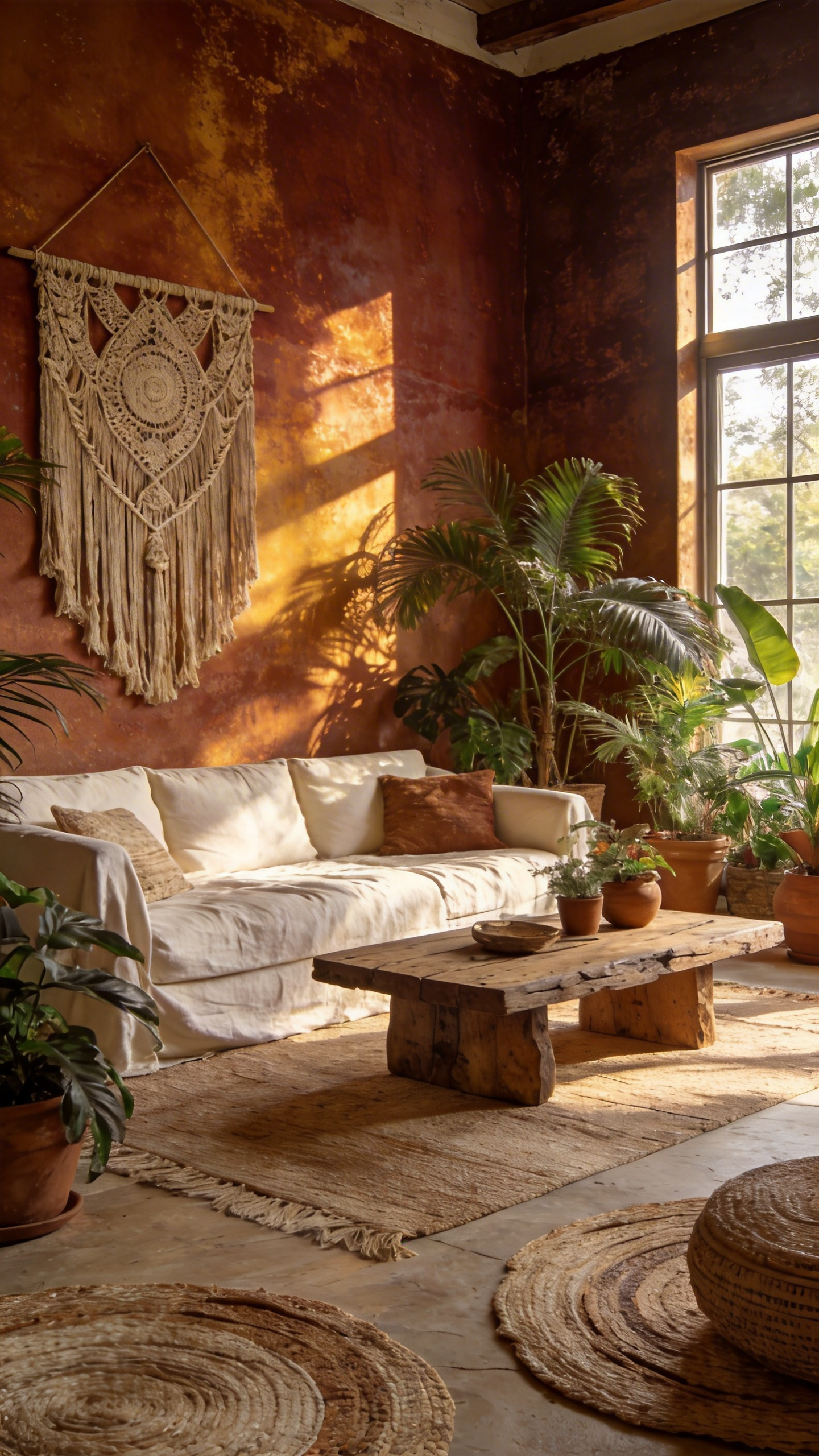
This earthy canvas is actually rooted in evolutionary psychology. In fact, muted greens and warm natural tones actively lower cortisol levels. Therefore, heavy colors like deep ochre act as psychological anchors. They signal your nervous system to relax. Ultimately, they make the space feel like a safe refuge.
Next, select a distinct warmth direction to avoid visual clutter. You might choose a sun-baked palette with rich terracotta and creamy textiles. Alternatively, a stone-cool direction uses calming sage green and muddy blues.
Textural depth acts as a distinct color value in this spectrum. For example, a matte wall and a rough jute rug hold shadows differently. Therefore, darker walls allow the eye to focus purely on tactile fabrics. You will quickly notice the rich weave of a nubby bouclé cushion. Proper window treatments are also essential for this foundational canvas. Specifically, pure linen curtains filter harsh sunlight into a painterly glow. This textile filter softens earthy tones so they feel airy and light.
3. The Foundation of Boho: Mastering the Art of Layered Vintage Rugs
Layering rugs forms the true heartbeat of a boho living room. Historically, this practice began as a nomadic survival tactic. Later, the Bloomsbury Group turned it into a design rebellion. Therefore, overlapping mismatched textiles became a statement against Victorian restriction. Today, mastering this foundation requires understanding both texture and intent. I often rely on the technical 70/30 foundation rule. Specifically, a large natural-fiber rug should cover roughly 70 percent of the floor. Next, place a softer, authentic vintage rug over this jute base. This tactile friction creates a lived-in, cozy luxury.
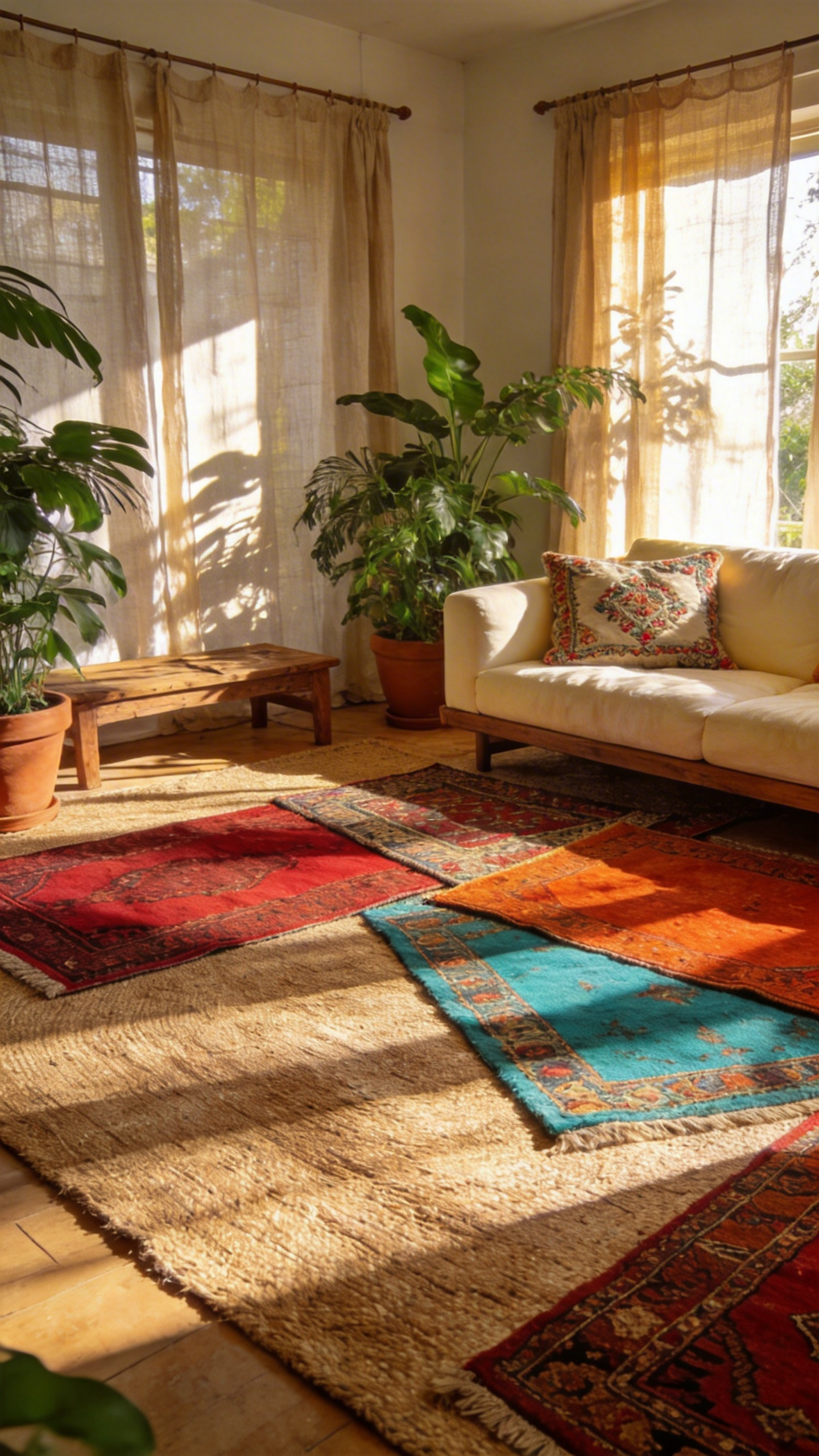
Layering multiple textures also works as a superior sound-dampening system. This acoustic softening reduces room echo and builds an intimate atmosphere. In fact, thick layers create a psychological cradle effect for your feet. Sinking into these varied piles signals your nervous system to rest. These carefully chosen vintage rugs also add a deep narrative. For instance, an Anatolian Elibelinde motif symbolizes the heart of the home. Conversely, a woven scorpion pattern acts as a protective visual shield.
Choosing authentic, hand-knotted pieces over plastic reproductions is crucial here. Indeed, natural vegetable dyes and slight imperfections give spaces their soul. Therefore, these heirloom textiles anchor your room in genuine, storied comfort.
4. Introducing Globally-Sourced Heritage Textiles to Tell a Story
Introducing heritage textiles brings global human history into your living room. Therefore, avoiding generic big-box prints is absolutely essential. Authentic pieces cultivate a profound sense of soulful maximalism. Specifically, Malian mudcloth grounds a cozy space perfectly. This heavy, nubby fabric offers a distinct tactile experience. Historically, artisans fermented river mud to dye this thick cotton. The resulting deep black pigment lacks any harsh chemical scent. Instead, it carries a faint, earthy aroma of sun-dried fabric.
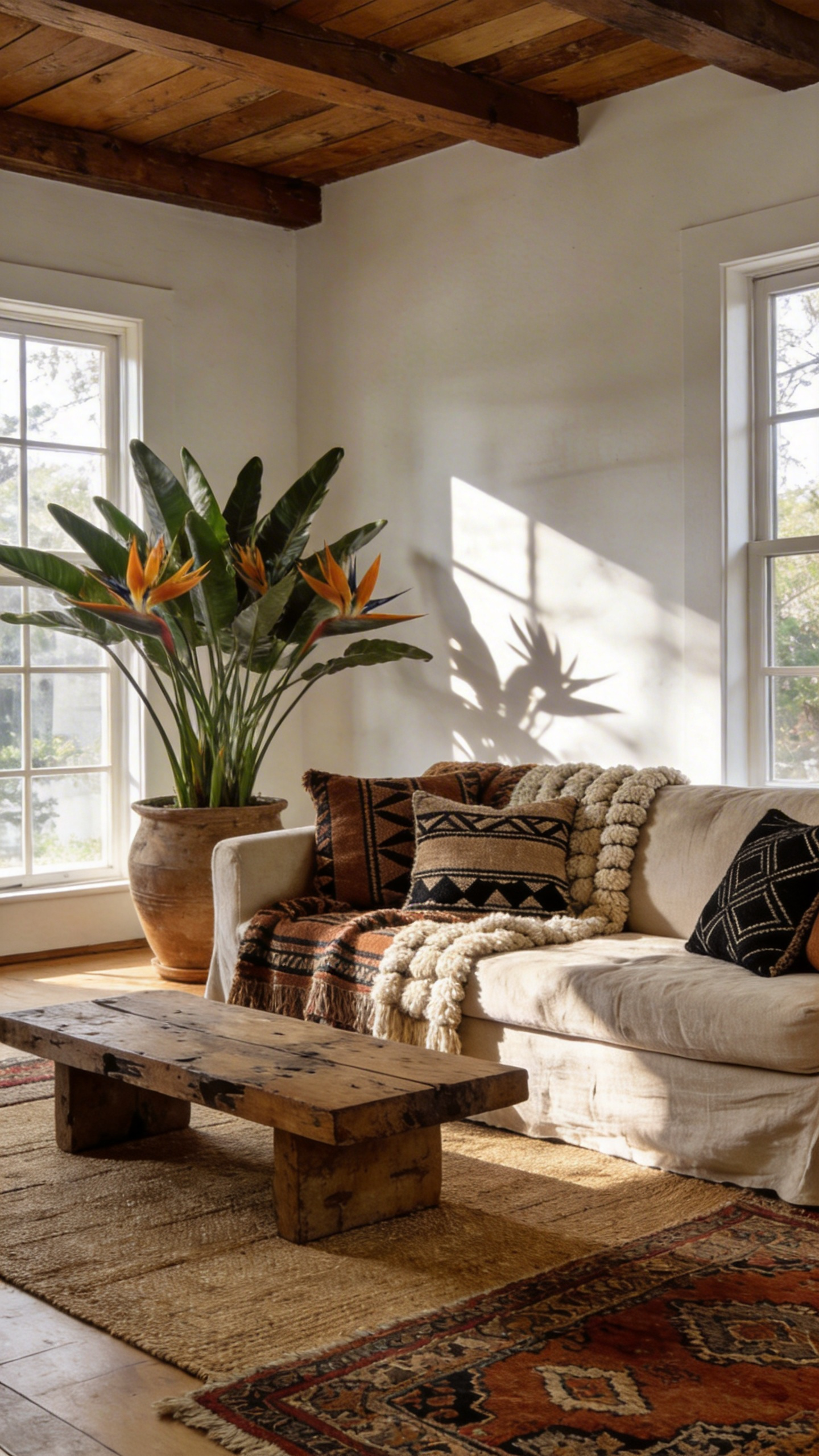
Next, consider using Central Asian Suzanis as brilliant narrative centerpieces. These jewel-toned tapestries originally began as collaborative family dowries. In fact, their stitched pomegranate motifs symbolize fertility and cosmic order. Authentic Suzanis usually feature slightly mismatched panel seams. This charming imperfection highlights the valuable touch of human hands.
Hmong story cloths also add a layer of profound resilience. Artisans use precise reverse appliqué to document complex migration journeys. Therefore, these pictorial manuscripts work beautifully as framed gallery art. Styling these globally sourced textiles requires true appreciation rather than cultural appropriation. By thoughtfully layering authentic pieces, you honor deep ancestral knowledge.
5. Mixing Natural Fibers: Rattan, Jute, and Woven Seagrass Accents
Mixing natural fibers requires a careful balance of visual weight. Specifically, jute acts as a heavy visual anchor. Its highly porous, matte texture absorbs light beautifully. Next, rattan introduces the structural middle ground. Its dense core easily bends into curvaceous furniture silhouettes. Seagrass, on the other hand, features a waxy sheen that reflects ambient light. Therefore, adding seagrass baskets prevents the space from feeling overly heavy.
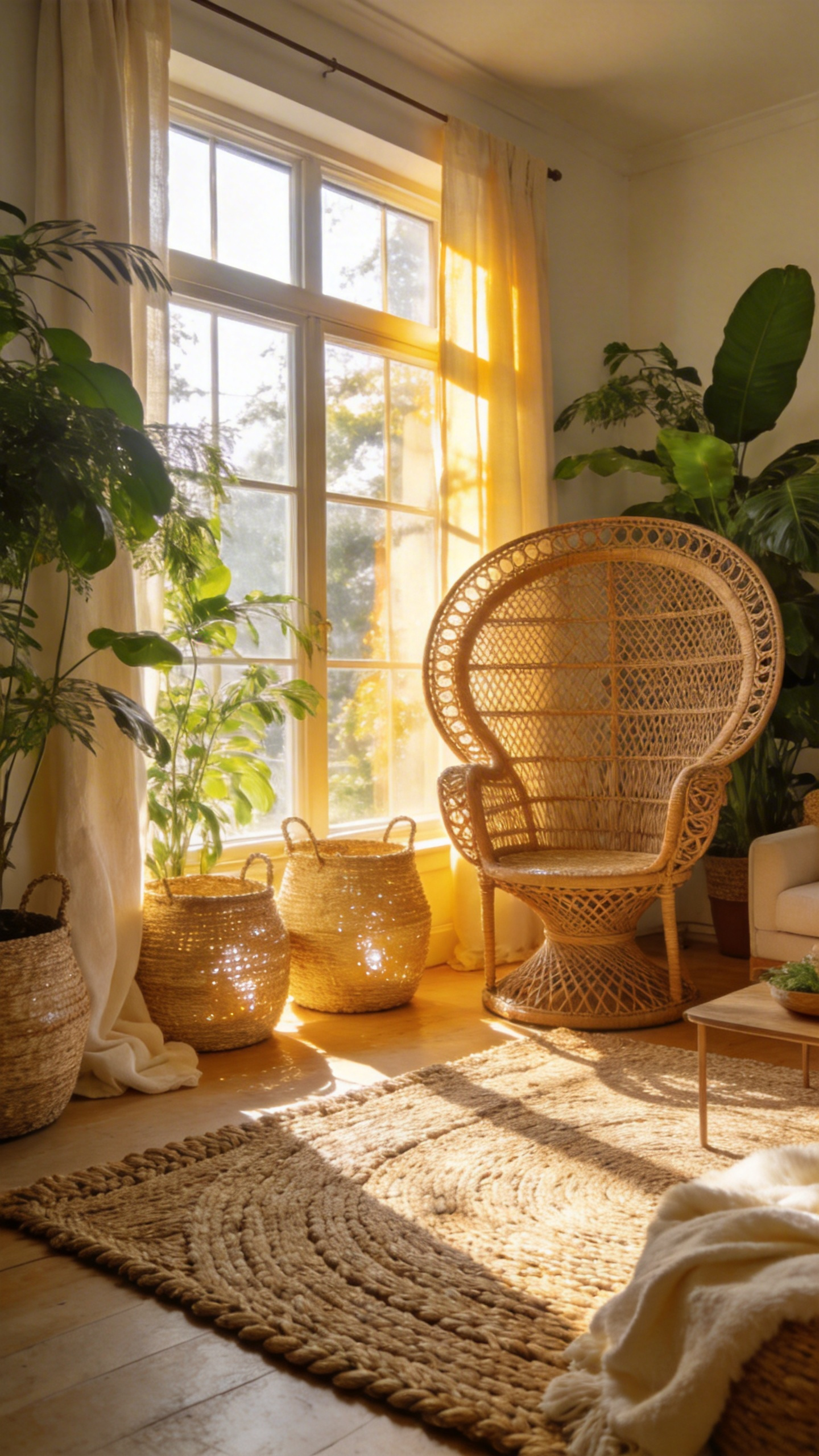
This dynamic trio actively engages the senses. Indeed, thick jute and seagrass weaves act as natural acoustic traps. They eliminate harsh echoes to create a hushed sanctuary. Open-weave rattan pendants also cast rhythmic, moving shadows across the room. Furthermore, these materials offer calming, earth-driven scent profiles.
Balancing technical durability with tactile comfort is essential. For instance, seagrass is highly stain-resistant but incredibly stiff. Alternatively, jute feels comfortable under bare feet but sheds easily. Therefore, I always recommend a deliberate layered approach. First, lay down a durable seagrass rug in high-traffic zones. Next, layer a plush jute rug over the immediate seating area. Finally, introduce vertical rattan elements to complete the textural theme. This makes your living room practically indestructible and exceptionally cozy.
6. Curating Throw Pillows: The Formula for Mixing Mudcloth, Velvet, and Kilim
Curating throw pillows requires managing a conversation between different textiles. You must balance raw, rugged, and refined elements. Specifically, mixing mudcloth, velvet, and kilim creates a beautiful narrative.
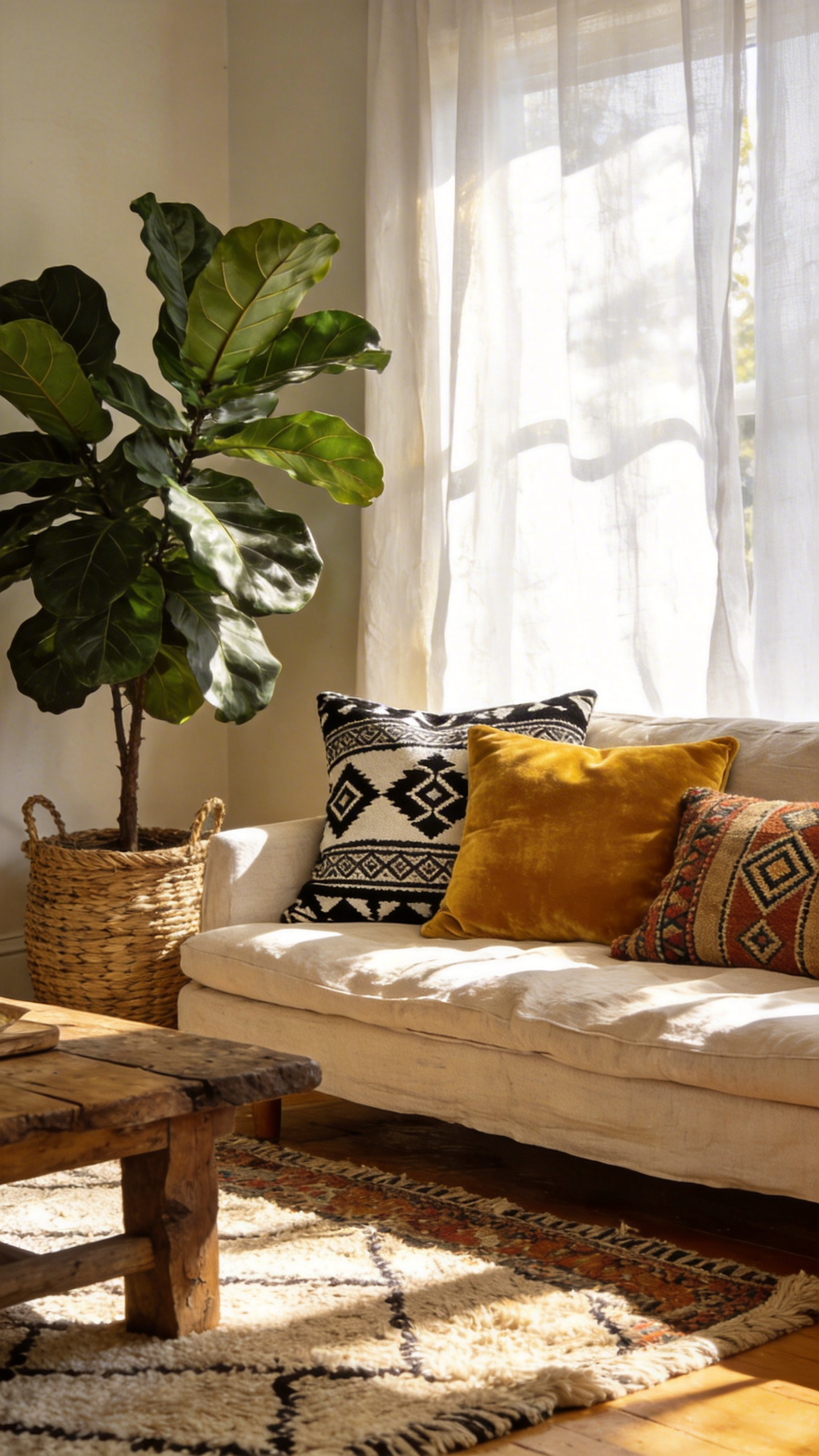
First, consider the symbolic dialogue of your chosen fabrics. Mudcloth often features heritage motifs representing the cycle of life. Conversely, Anatolian kilims utilize protective symbols like the scorpion. Together, these textiles act as silent guardians of your space.
The sensory architecture also matters deeply in boho design. Mudcloth provides a grainy, organic, and beautifully dry feel. Kilim offers a durable, slightly abrasive, and sturdy flat-weave. Therefore, velvet must act as your crucial pivot point. This plush fabric prevents the arrangement from feeling overly rustic. Its luminous sheen easily breaks up the matte tribal cottons.
Next, you must establish a clear geometric hierarchy. Mixing patterns of the exact same scale creates visual noise. Instead, use mudcloth for your largest background pillow layers. These bold, spaced-out graphics provide a perfect foundation. Then, layer medium-sized kilim square pillows in the front. Kilim weaving creates rhythmic, repeating geometric pattern abstractions naturally. Finally, complete the vignette with a solid velvet lumbar pillow. Choose a rich jewel tone pulled directly from the kilim’s weave.
Functionally, this curated trio offers perfect structural weight distribution. Stiff kilim easily holds its rigid shape over time. Thick mudcloth acts as a sturdy backdrop for layering. High-grade velvet adds essential sink-in comfort to the arrangement. Authentic tribal fabrics fade beautifully with natural daily wear. Fortunately, the consistent color of velvet acts as a baseline. Therefore, your aged textiles look chic rather than simply old.
7. Elevating Walls with Authentic Macramé and Hand-Woven Tapestries
Authentic wall hangings provide the tactile soul of a bohemian living room. Specifically, they bridge the gap between cold architecture and lived-in warmth. Historically, the word macramé stems from an Arabic term for decorative fringe. Later, seafaring sailors traded these knotted textiles at ports worldwide. Therefore, these pieces inject a distinct energy of global travel into your space.
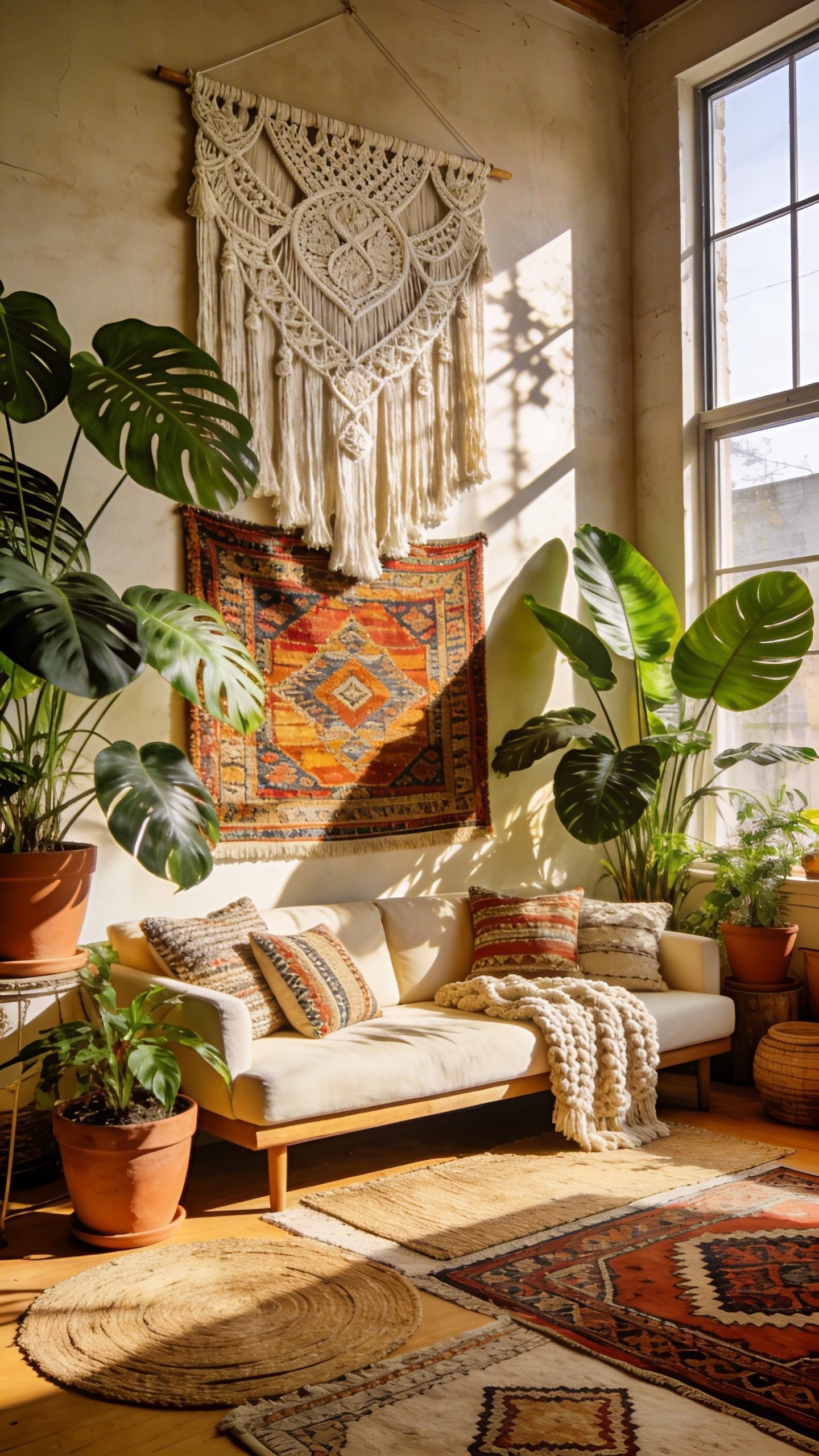
Modern living rooms are often dominated by hard surfaces like plaster and glass. Fortunately, a hand-woven tapestry gracefully breaks these rigid architectural lines. In fact, tactile environments are proven to lower human cortisol levels. Deep knots create dynamic shadow play that flat prints simply cannot replicate.
True authenticity relies heavily on your choice of bespoke elements. For instance, luxury boho pieces utilize unspun wool roving or twisted cotton cord. Natural slubs in these fibers highlight the true beauty of imperfection. Similarly, mounting these textiles on reclaimed driftwood brings a necessary organic element inside.
Beyond aesthetics, large wall hangings serve highly practical everyday purposes. Namely, porous cotton and wool fibers act as natural acoustic bass traps. They effectively absorb echoing sound waves to create a quiet, intimate atmosphere. A dense weave also provides helpful thermal insulation against chilly exterior walls. Ultimately, selecting a customized tapestry represents a meaningful commitment to slow decor.
8. Designing Low-Level Seating Arrangements for Intimate Gatherings
Designing low-level seating transforms how we interact within a room. Specifically, this approach draws heavily from Middle Eastern Majlis traditions. These communal spaces prioritize true intimacy over rigid formality. Therefore, modern boho layouts often replace standard chairs with circular arrangements. To anchor this soft stage, you need the right textiles. For example, a thick Moroccan Beni Ourain rug grounds the space beautifully. Its deep pile provides a necessary tactile safety net. As a result, guests feel physically secure and significantly more relaxed.
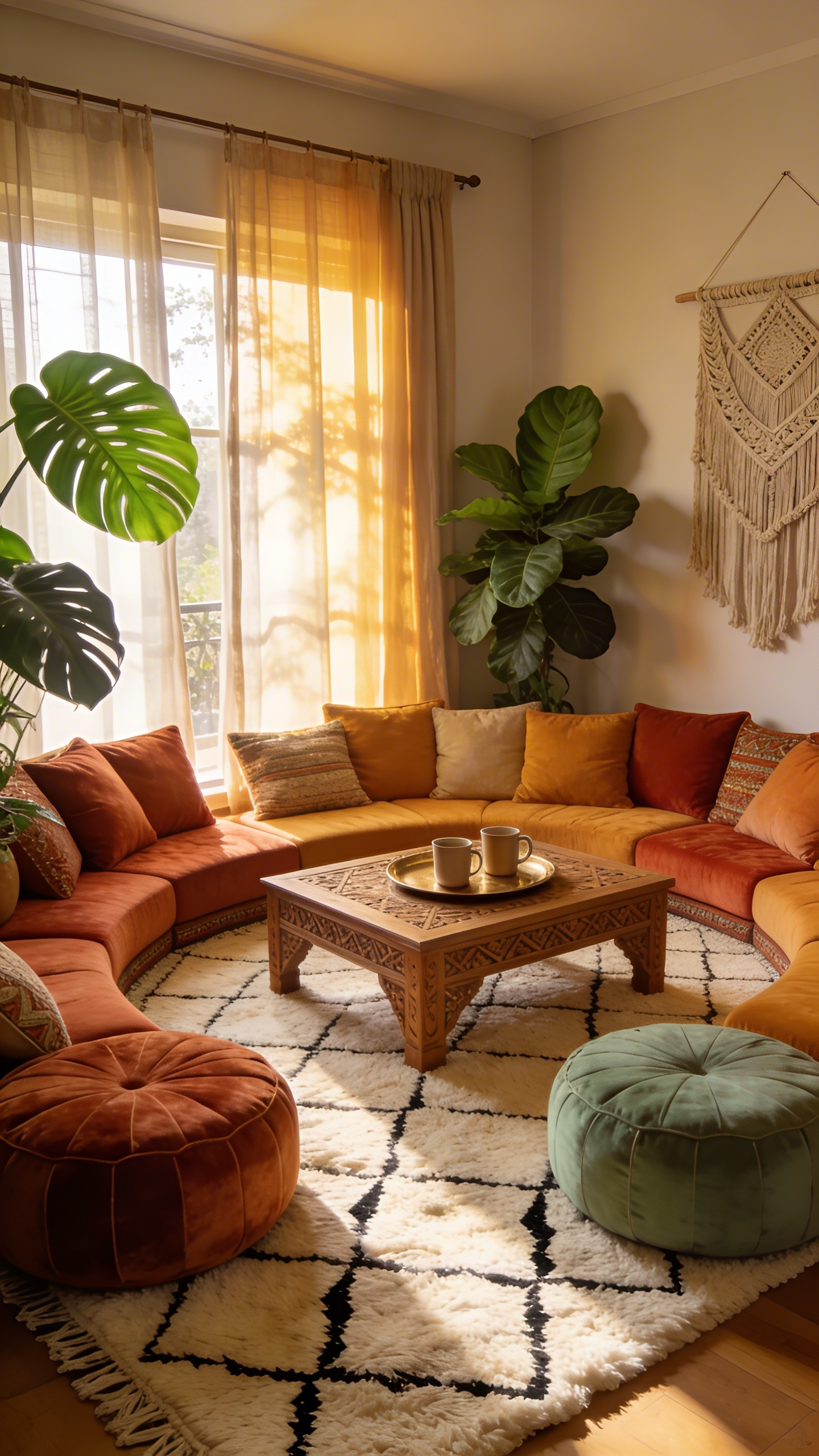
However, creating this grounded feeling requires careful cushion selection. Floor seating naturally encourages frequent shifting and informal postures. Cushions between five and eight centimeters thick are usually optimal. Thinner pads inevitably lead to discomfort against hard floors. Conversely, excessively thick cushions often cause unwanted spinal instability. I always recommend layering different upholstery textures for comfort. Start with a firm, Japanese-style zabuton base layer. Next, top it with a plush velvet Moroccan cushion.
Inclusivity remains a crucial consideration for any host. Not every guest enjoys sitting directly on the floor. Therefore, expert designers utilize a highly effective tiered approach. Try combining an eighteen-inch standard sofa with fourteen-inch leather poufs. Finally, place everything around a low fourteen-inch coffee table. This hybrid setup ensures everyone comfortably shares the conversation.
9. Draping Oversized Tufted and Bouclé Throws for Tactile Warmth
Mastering the bohemian aesthetic requires embracing tactile warmth. Our digital lives actually create a biological craving for physical textures. Therefore, oversized tufted and bouclé throws act as perfect sensory anchors. In fact, these soft materials beautifully balance harder elements like rattan or wood. Bouclé features looped yarns that trap air and absorb light. This matte visual instantly signals relaxation to the brain.
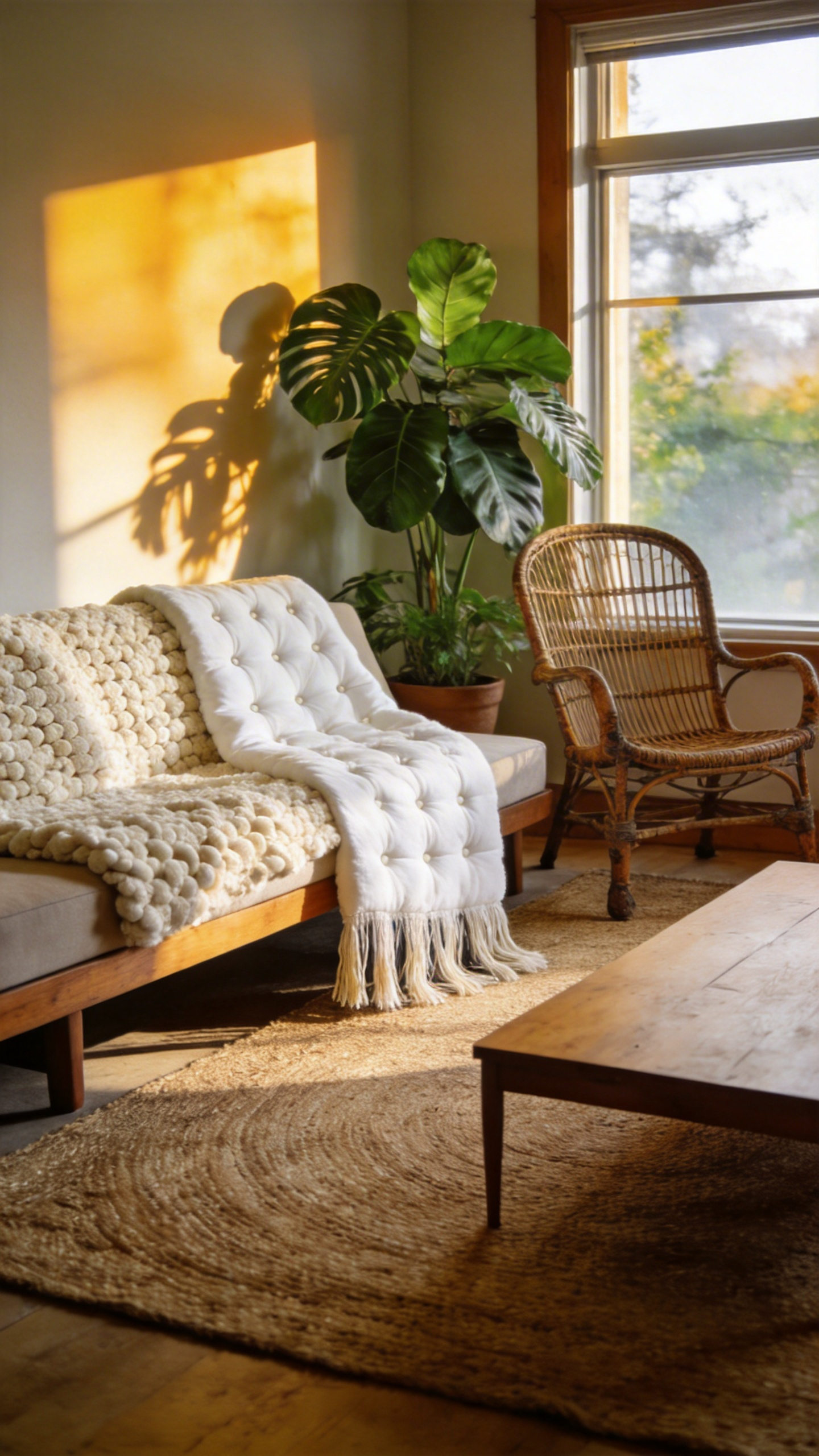
The visual weight of these heavy pieces is absolutely essential. An oversized throw easily grounds leggy mid-century furniture. Choosing a blanket thirty percent larger than standard prevents an accidental, messy look. Furthermore, a heavy blanket cascading onto the floor forms a stabilizing visual puddle.
Next, you must master the artless drape to achieve this effortless look. For example, the waterfall method involves folding the throw into thirds. Then, simply let it spill over the sofa back to soften rigid lines. Alternatively, pinch the fabric directly in the center and flop it over a chair. This creates a gorgeous starburst of texture from every angle.
These heavy fabrics also offer genuine weighted wellness. Indeed, thick bouclé wool acts like a natural weighted blanket. This deep pressure stimulation naturally increases serotonin and decreases stress. Ultimately, these thoughtful choices transform your living room into a therapeutic sanctuary.
10. Hanging Soft, Light-Filtering Linen Window Treatments
Achieving a perfectly imperfect aesthetic starts with selecting the right fabric finish. Specifically, designers highly recommend stonewashed linen over stiff raw linen. This pre-shrinking process breaks down flax fibers to yield a buttery drape. These textiles act as a natural diffuser for harsh incoming sunlight. The fabric’s irregular weave and natural slubs scatter light beautifully. Therefore, this creates a perpetual golden hour glow in your living space. This diffused illumination stops earthy terracotta walls from appearing heavy or muddy.
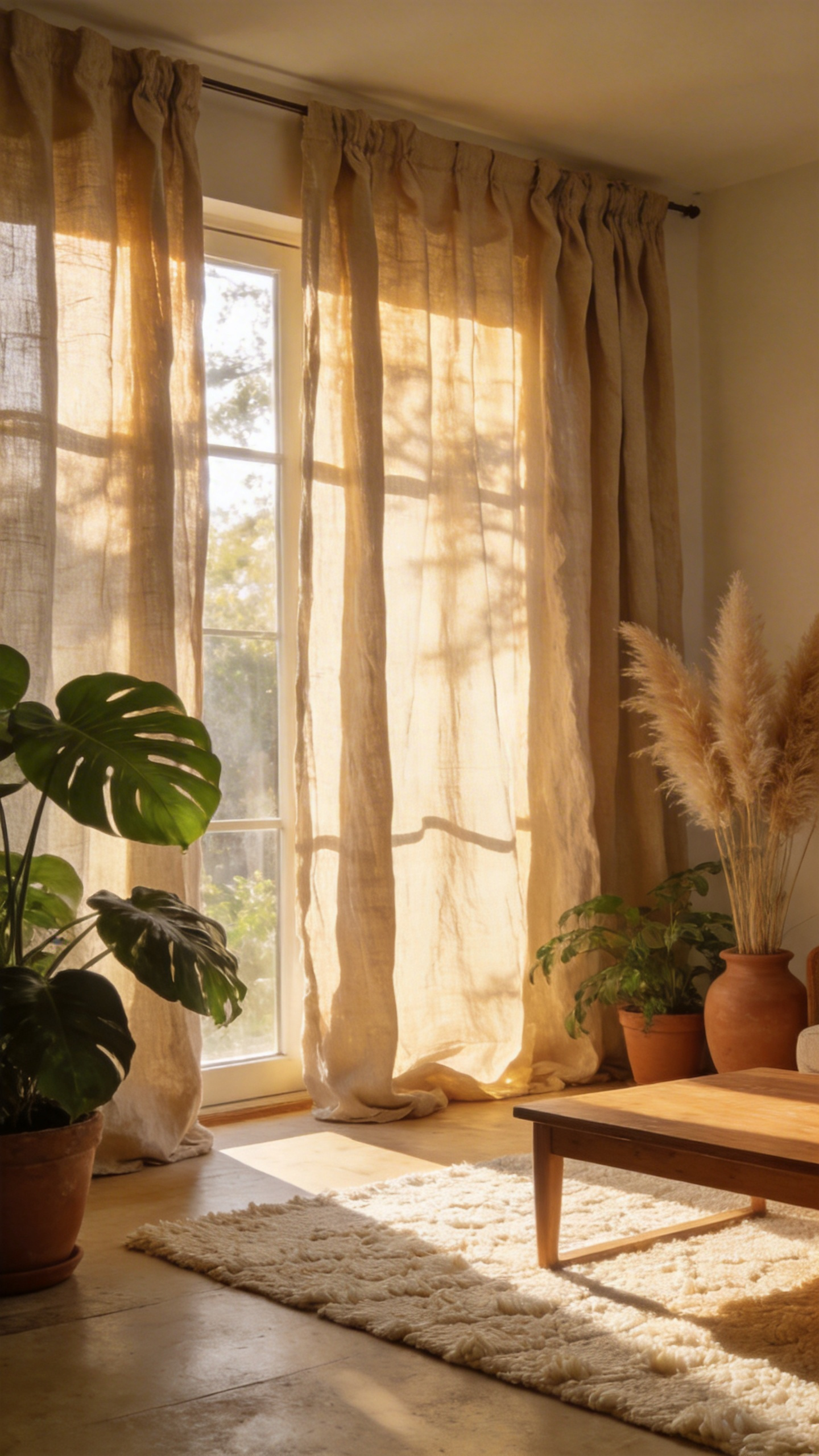
Next, consider the header style to elevate the room’s narrative. For instance, tie-top curtains use matching ribbons to add a handcrafted artisanal detail. Alternatively, back-tab headers hide the hardware to create an ethereal floating illusion. The hemline length requires another deliberate styling choice below the window frame. Traditionally, letting a medium-weight linen puddle adds romantic weight to the floor. Conversely, modern setups prefer a gentle kiss where fabric barely touches down. This tailored approach remains practical while preserving vertical visual height.
Authoritative boho styling rarely relies on a single curtain panel. Instead, textural layering creates essential visual depth within the space. Try pairing flowing sheer panels with structured woven bamboo shades underneath. Indeed, this structural-meets-soft contrast perfectly captures the nomadic essence of layered design.
11. Selecting Distressed and Raw Wood Furniture to Anchor the Room
In interior design, visual weight acts as a room’s anchor. Specifically, large raw wood pieces provide a necessary gravitational pull. Therefore, a chunky mango wood sideboard perfectly grounds airy boho textiles. Without this dense baseline, spaces filled with floating macramé feel completely unmoored.
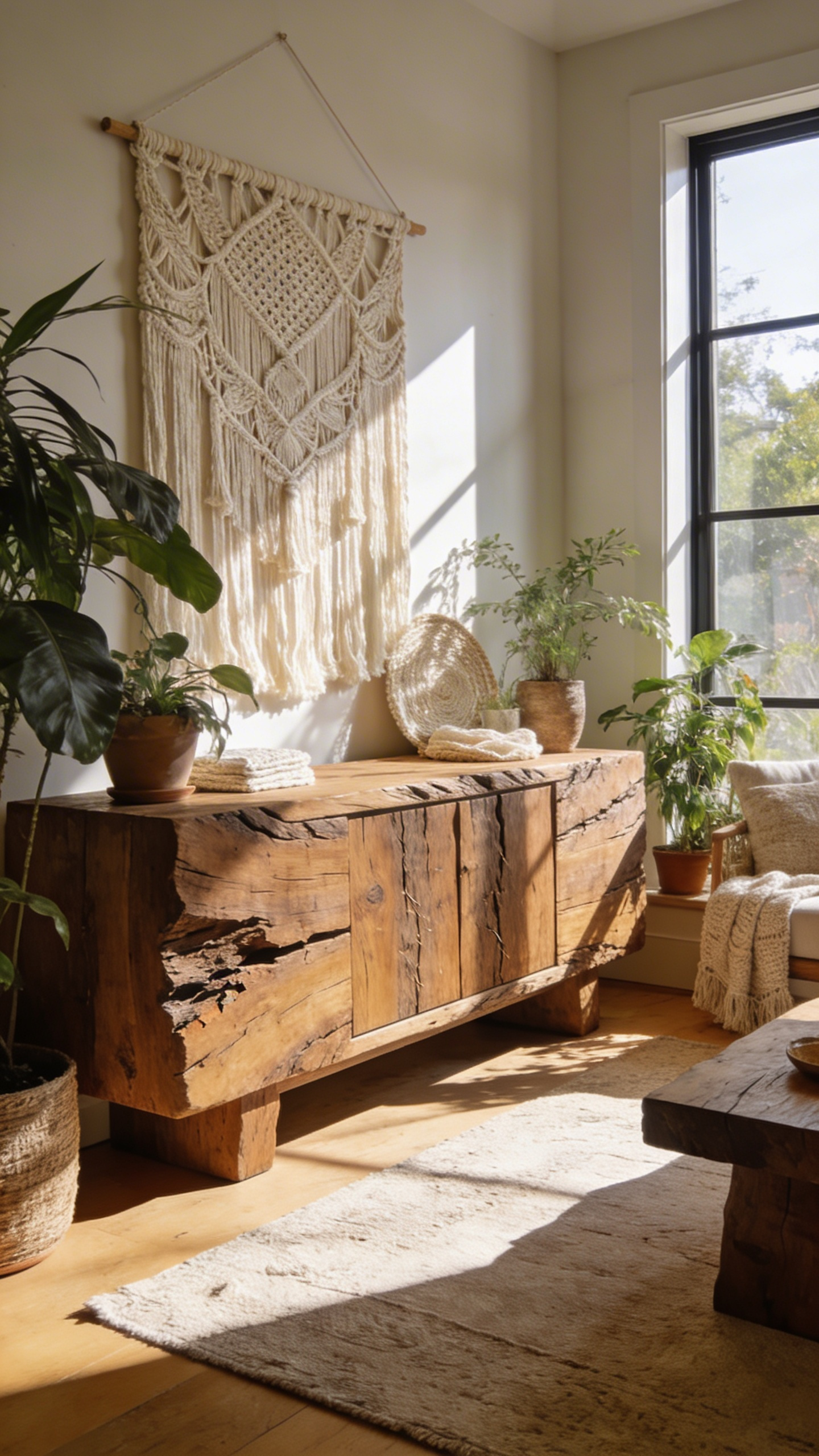
The method of wood distress also dictates the room’s narrative. Traditionally, hand-scraped surfaces leave uneven ridges that mimic nomadic history. Conversely, wire-brushed finishes expose the heartwood for a refined, modern feel. Authentic reclaimed wood carries a beautifully oxidized, natural patina. Therefore, these tactile, open-pore surfaces invite touch and actively soothe the nervous system.
However, leaning too heavily into raw timber creates a rustic cabin vibe. To prevent this, you must apply strategic design friction. For instance, pairing rough, live-edge tables with high-sheen velvet is essential. Ultimately, this friction between rough grain and smooth fabric defines sophisticated eclectic living room design.
Selecting the right wood species heavily influences the room’s visual temperature. Mango wood features wild grain that beautifully complements vibrant bohemian rugs. Alternatively, acacia provides a darker, moisture-resistant option for busy, lived-in spaces. Finally, oiled teak delivers a highly curated, mid-century aesthetic with warm golden-amber tones.
12. Incorporating Biophilic Design: Layering Trailing and Oversized Houseplants
Integrating trailing and oversized houseplants goes beyond simple styling. Specifically, it applies biophilic design to create a cozy refuge. As a textile designer, I treat foliage as living fabrics. Layering these natural textures completely transforms a flat boho space. Oversized plants like Fiddle Leaf Figs act as structural anchors. They define room boundaries and offer deep psychological security.
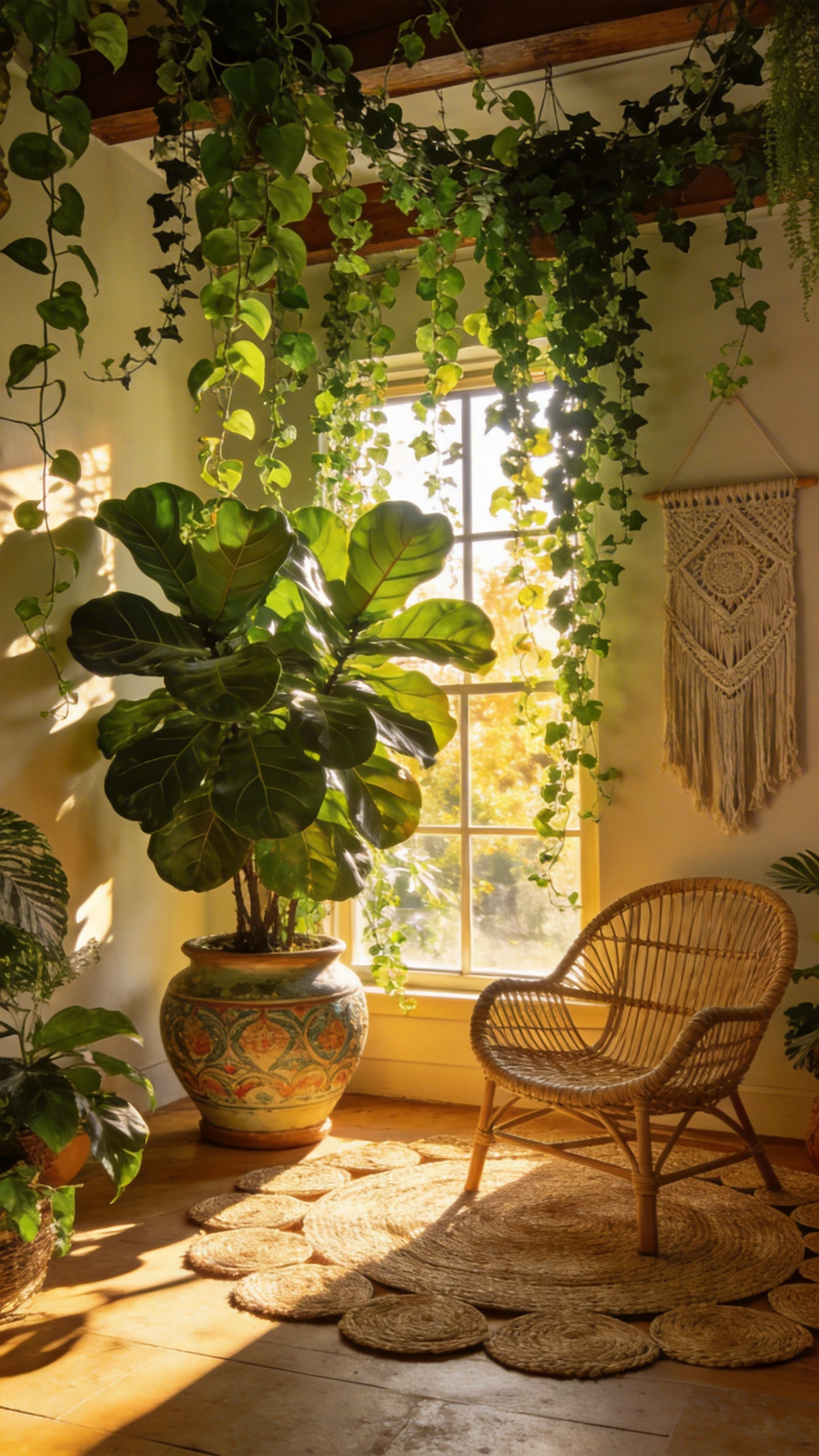
Conversely, trailing vines hung from ceilings provide a lush canopy. This green ceiling mimics a protective forest edge beautifully. Therefore, draping a pothos over a velvet sofa feels incredibly safe. This varied texture creates a state of soft fascination. Broad architectural leaves contrast perfectly with intricate, cascading vines.
This dense botanical layering also serves as vital acoustic treatment. Indeed, large flat leaves scatter sound to reduce harsh room echoes. Grouping these plants significantly raises the room’s ambient humidity. Next, use three distinct vertical heights to achieve this woven aesthetic. First, place a massive specimen plant directly on the floor. Elevate leafy ferns on vintage trunks or low stands. Finally, let a delicate veil of vines cascade from above. Ultimately, these living layers beautifully replace traditional room dividers.
13. Utilizing Woven Poufs and Floor Cushions for Flexible, Casual Flow
Traditional boho living rooms rely heavily on woven floor cushions. Specifically, this seating concept stems from the traditional Middle Eastern Majlis. In these cultural spaces, low seating creates an egalitarian atmosphere. Therefore, formal design barriers dissolve into intimate circular storytelling. Standard living rooms often feature rigid, elevated furniture layouts. Woven poufs, however, establish a flexible, nomadic lower seating tier.
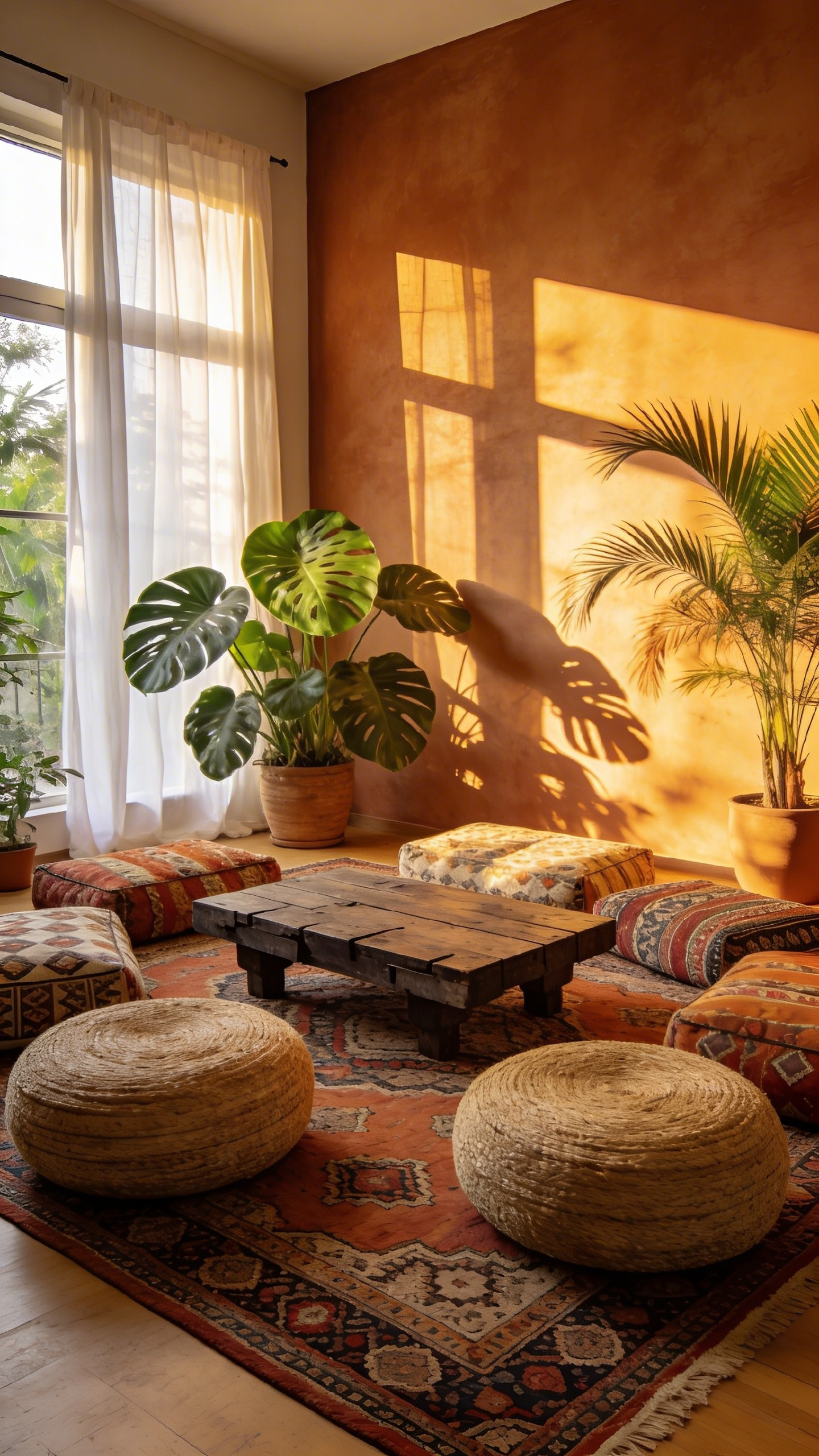
Guests gain the environmental agency to naturally move their seats. This dynamic mobility allows social energy to flow organically. These textile pieces also visually break up heavy horizontal room planes. For example, coarse natural fibers like jute add necessary friction. This cleverly prevents heavy cushions from sliding across bare hardwood floors. Additionally, dense wool and seagrass act as natural acoustic baffles. They absorb harsh room echoes to create a hushed lounge.
However, a common styling failure is a collapsed, flat floor cushion. The structural secret lies within the mindful internal filling ritual. Historically, Moroccan leather poufs are firmly stuffed with recycled heavy textiles. This dense filling creates a highly durable tension shell. Alternatively, modern sustainable floor pieces utilize buckwheat hulls or kapok fiber. Buckwheat hulls interlock smoothly to provide a supportive, custom-molded seat. Meanwhile, natural kapok offers a buoyant, moisture-resistant fabric softness. Ultimately, these rich textiles transform mere extra seats into defining architectural anchors.
14. Styling Open Shelving with Eclectic Pottery, Ceramics, and Woven Baskets
Open shelving in a bohemian space is an exercise in curated storytelling. Historically, bohemian design reclaimed the open pantry concept. Today, these shelves act as a dynamic autobiography of your travels. Authoritative styling requires a mastery of sensory contrast. I always appreciate the tension between diverse, tactile materials. For example, pairing rigid clay with flexible woven fibers creates instant intrigue. An unglazed terracotta vase offers a toothy, gritty texture. Conversely, a hand-woven seagrass basket introduces a rhythmic, fibrous pattern. Therefore, placing smooth, high-glaze ceramics near rough baskets sparks material tension. This juxtaposition prevents the display from looking like a pre-packaged set.
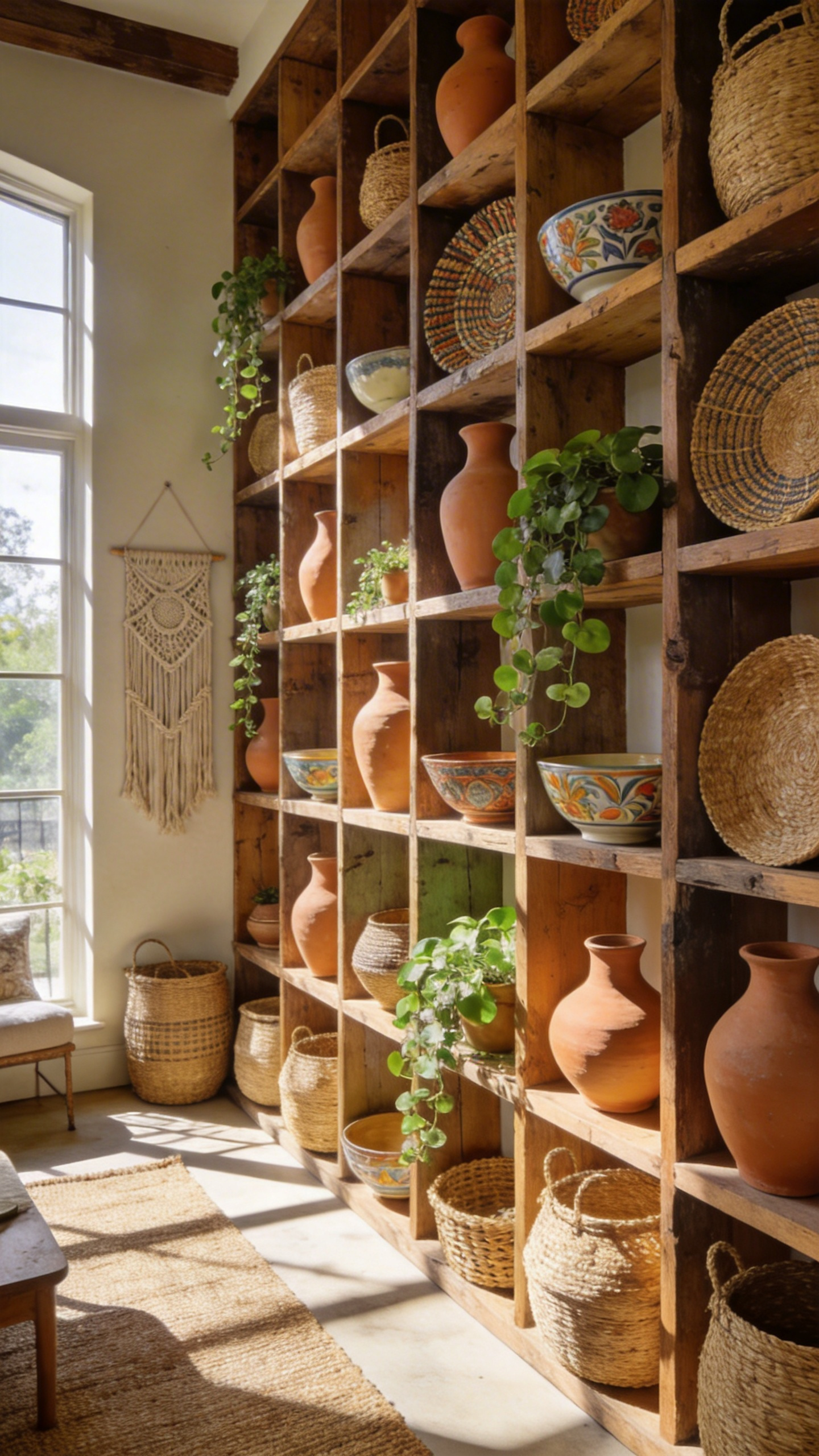
You can incorporate cultural geometry to enhance the global narrative. Mesob or Zulu baskets often feature complex, symbolic woven patterns. Similarly, Raku-fired pottery displays unpredictable, smoky crackle glazes. Together, these eclectic artifacts spark a rich global conversation.
However, mastering this curated chaos requires intentional asymmetry. First, group your items in odd numbers to form visual triangles. Next, you must leave at least thirty percent of the shelf empty. Ultimately, this negative space gives the eye necessary breathing room. Otherwise, the diverse textures will become a muddy visual blur. Finally, arrange weighty items in a zig-zag flow across the shelves. This directs the eye in a rhythmic sweep through your collection.
15. Curating an Asymmetrical, Meaningful Gallery Wall of Mixed Mediums
Historically, the bohemian gallery wall rebelled against rigid bourgeois displays. Instead, it embraced maximalist storytelling. Curating a mixed-medium wall involves deeply thoughtful sensescaping. Therefore, incorporating woven textiles is absolutely essential. For instance, hanging a vintage macramé piece adds vital tactile warmth. These soft fabrics also act as natural acoustic dampeners. They soften harsh room echoes to make minimalist spaces feel like a curated sanctuary.
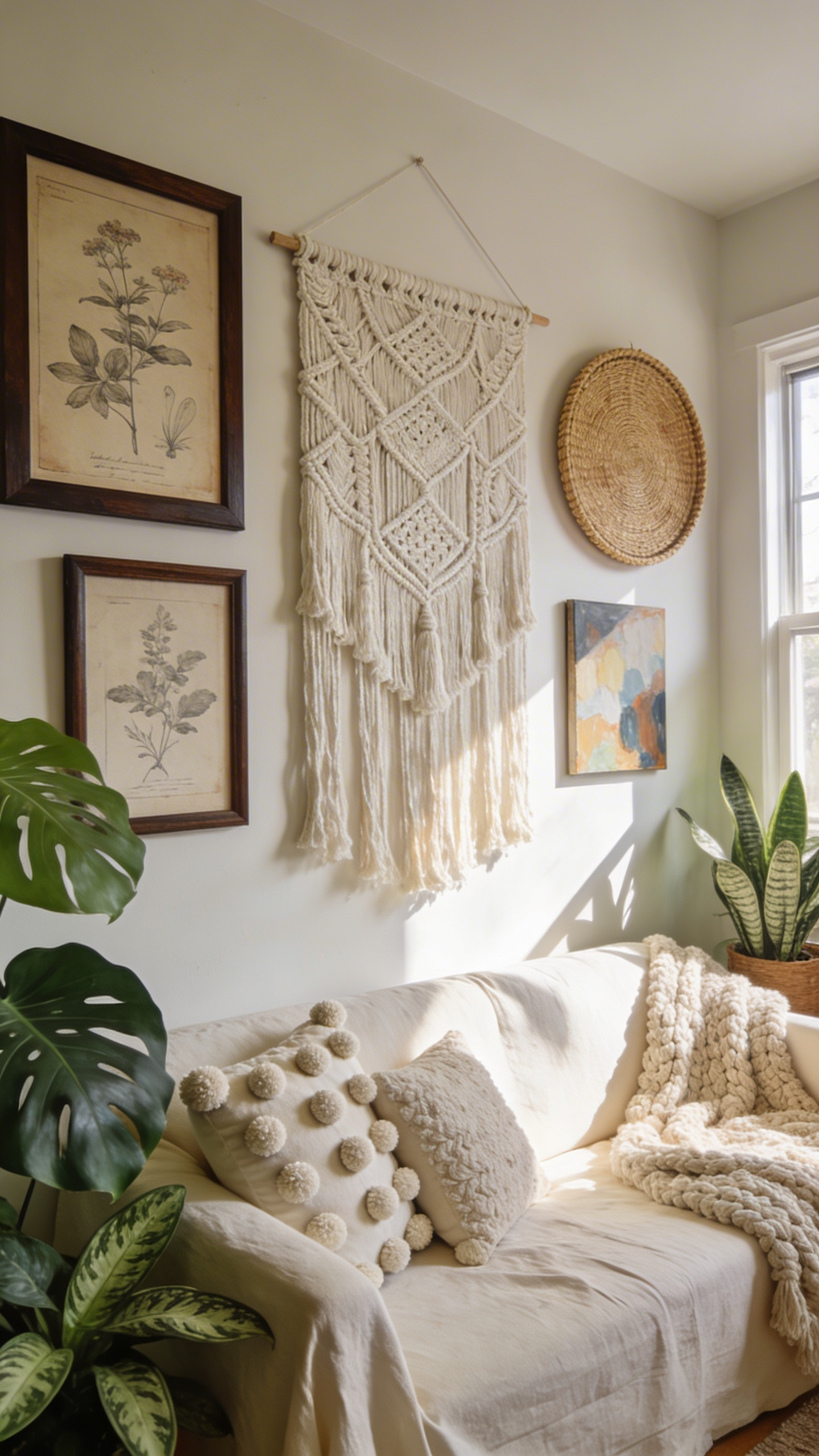
Technically, you must start with one large anchor piece. However, place this woven or framed statement item slightly off-center. This placement maintains an organic, asymmetrical flow. Position your second-largest piece diagonally from the anchor. Thus, you create a dynamic yet balanced visual harmony. Additionally, maintain a breathability gap of three inches between smaller items.
You should prioritize personal meaning over perfectly matching frames. In fact, true bohemian design thrives on shared color saturation. Naturally, a patinated antique mirror pairs beautifully with bright pressed botanicals. Adding three-dimensional objects like clay masks breaks up visual flatness. Finally, remember that your layered wall is a living timeline. Therefore, allow your cozy sanctuary to organically evolve alongside your personal journey.
16. Layering Warm, Diffused Lighting with Rattan Pendants and Floor Lanterns
Layering warm light with woven materials transforms a basic room into a cozy sanctuary. Specifically, rattan acts as a beautiful biological filter. Its open cane structure easily breaks up harsh illumination. As a result, it creates a dappled shadow effect called Komorebi. These shifting light patterns mimic a gentle forest canopy. Therefore, this visual texture lowers stress levels instantly.
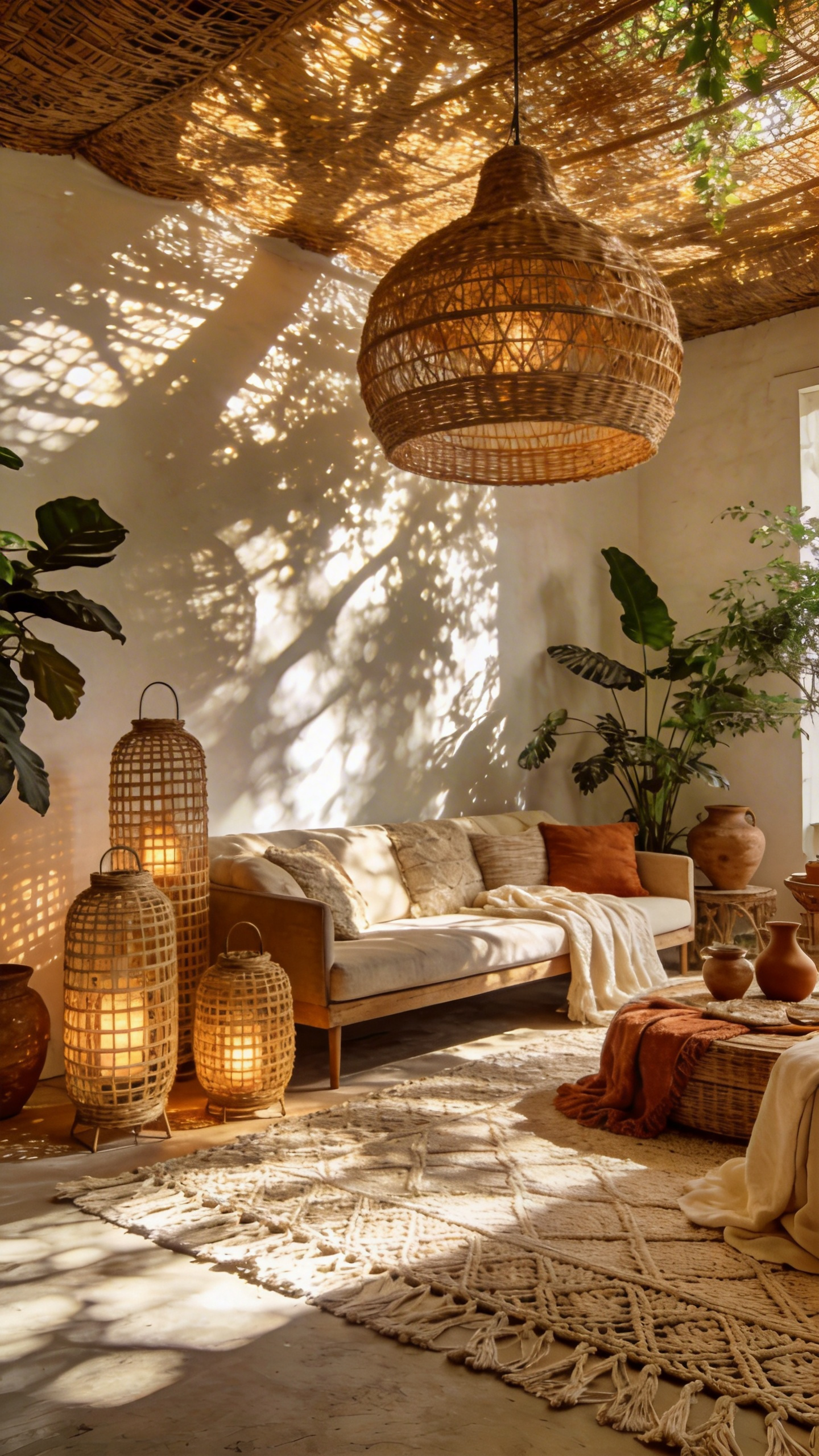
Hanging a rattan pendant creates a brilliant ambient anchor. Ideally, you should suspend it 28 to 34 inches above your coffee table. This low placement defines the lounge zone without casting harsh glare. Importantly, the open weave provides visual weight without feeling architecturally heavy. Next, introduce a ground-level floor lantern to eliminate dark corners. Historically, these lower lights symbolized warmth and home hospitality. Placing them near textured rugs or plants adds beautiful depth. The cast shadows will dance slightly with the room’s air currents naturally. Ultimately, these woven shadows act as a dynamic, shifting wallpaper across your floors.
Always select bulbs in the 2200K to 2700K range to maximize sensory coziness. Indeed, this amber color temperature perfectly mimics soothing firelight. Surprisingly, the subtle bulb heat releases a faint, earthy scent from natural rattan. Together, these layered sensory details craft a deeply inviting bohemian escape.
17. Catching the Light: Adding Warmth with Hammered Brass and Copper Accents
Introducing hammered metals in boho spaces goes beyond a simple metallic sheen. Specifically, these dimpled surfaces utilize diffuse scattering to soften harsh room lighting. Harsh afternoon glare transforms into a warm, liquid glow. This gentle radiance pairs beautifully with soft fabrics like wool and jute. Furthermore, placing a hammered tray near a candle captures its kinetic movement. The rhythmic twinkle mimics sunlight dappling through leaves perfectly.
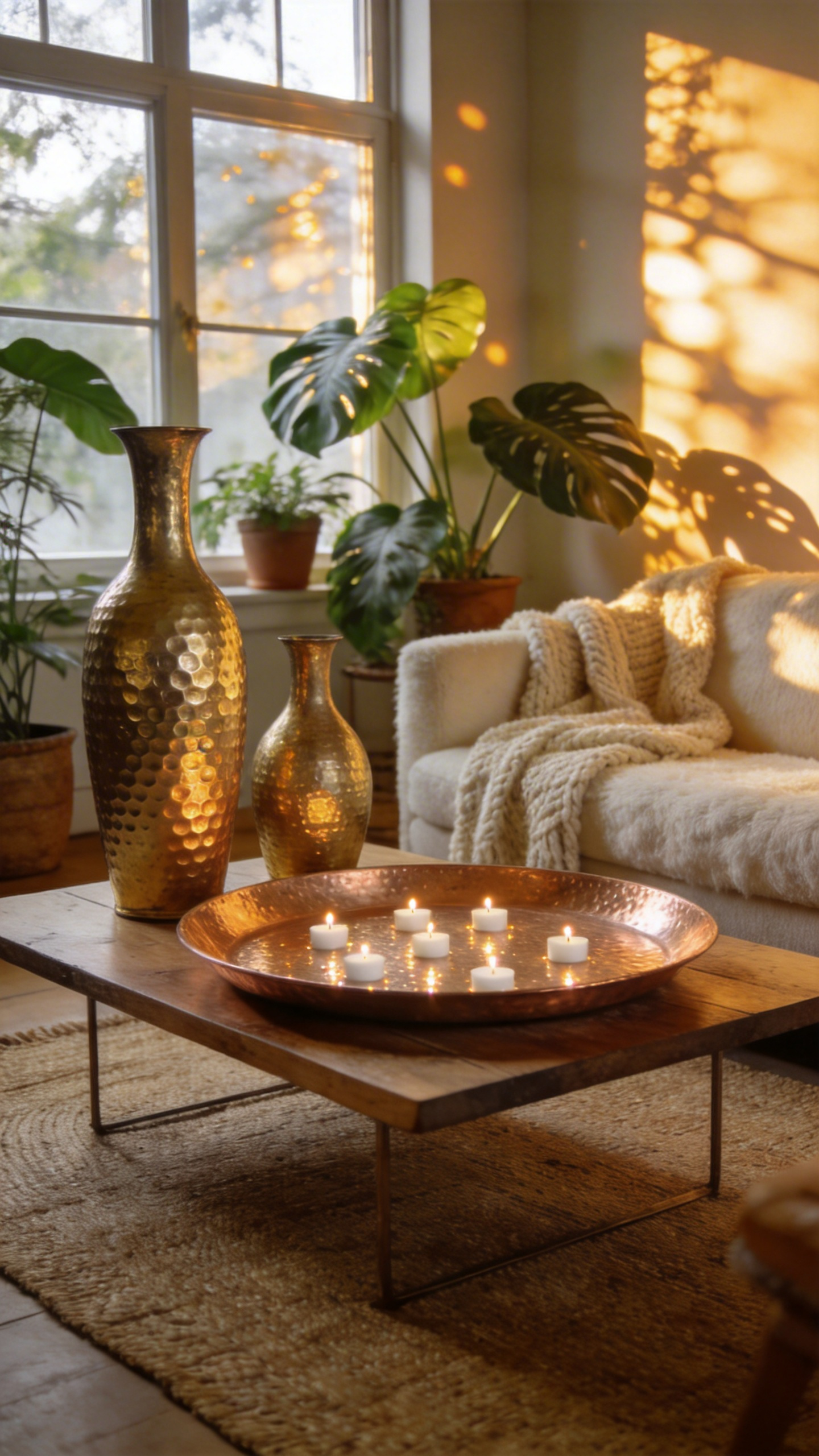
The physical creation of these pieces adds to their grounding energy. Traditionally, artisans use ancient repoussé and chasing techniques to shape the metal. The material becomes compressed, durable, and deeply tactile. Unlike cold industrial steel, copper and brass possess high thermal conductivity. Therefore, they physically warm up to match your cozy, layered living space. I always recommend choosing unlacquered, living finishes for authentic boho designs. These surfaces embrace the wabi-sabi philosophy of beautiful imperfection naturally. Over time, brass greens and copper darkens into a rich umber patina.
Designers apply the 60-30-10 metal ratio to prevent visual overwhelm. First, designate brass as your dominant metal for large accent pieces. Next, introduce copper in smaller quantities to create a curated duotone warmth. Finally, ground the arrangement with a touch of blackened iron. This dark contrast makes those warm, hammered textures truly pop.
18. The Final Layer: Integrating Personal Travel Artifacts and Vintage Finds
In the evolution of a boho living room, the final layer is critical. Plush rugs and textured upholstery provide the room’s essential skeleton and living room furniture ideas. However, personal travel artifacts and authentic vintage finds offer the actual soul. This styling stage creates a psychological bridge to your adventurous self. As a textile designer, I use these collected pieces as emotional anchors. For instance, a Peruvian woven basket triggers very specific sensory memories. Therefore, this narrative design approach lowers cortisol and creates a true sanctuary.
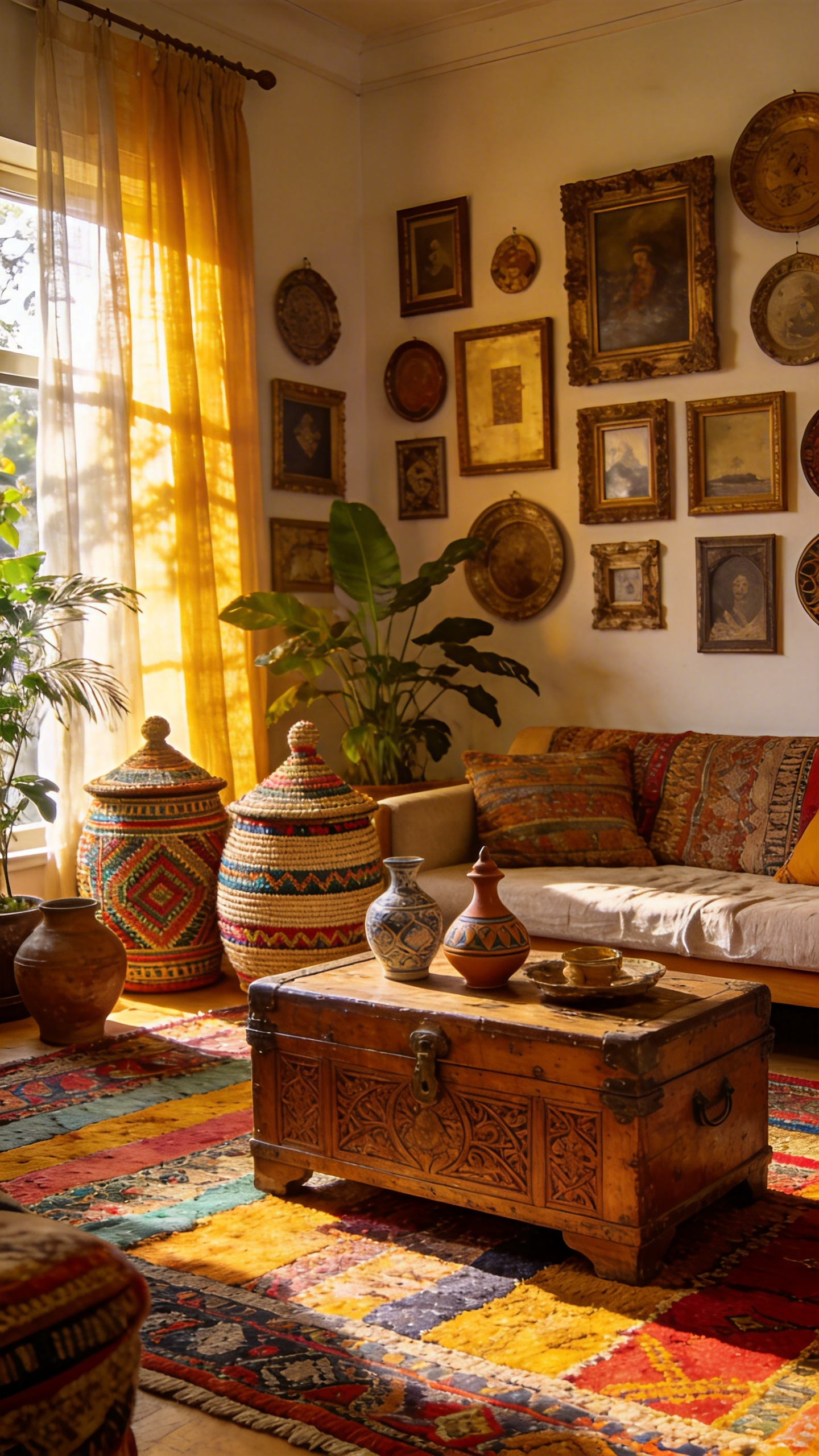
To avoid visual clutter, authoritative styling relies heavily on intentional curation. Apply the storytelling rule by asking why each object is present. Next, arrange your travel finds using the popular “A” formation technique. Placing your tallest anchor item in the back gently guides the eye. Additionally, grouping these items in odd numbers feels much more organic. For example, pair a heavy vintage brass tray with a soft silk ikat pillow.
Indeed, true bohemian style completely rejects mass-produced decor for authentic grit. Fortunately, you can verify solid vintage brass using a simple magnet test. Real brass is completely non-magnetic and produces a clear musical ring when flicked. Ultimately, successful boho living room decoration is a reflection of a life well-traveled.
Expert curators always look for living finishes and rich historic patina. Similarly, faded vegetable-dyed wool or chipped ceramics display a beautiful provenance. Historically, this rich global mix directly echoes the famous 18th-century Grand Tour. Finally, this deep sensory layering makes spaces feel expensive and comfortably lived-in.
Frequently Asked Questions
What is the difference between boho and eclectic decor?
While both styles embrace a mix of items, boho decor specifically emphasizes organic materials, global textiles, and a nomadic, earthy vibe. Eclectic decor is a broader category that can mix any style (like mid-century and industrial) without necessarily focusing on the “earthy” or “natural” elements central to bohemian design.
How do I make a boho living room look expensive?
To elevate the look, focus on high-quality natural materials and artisanal craftsmanship. Avoid mass-produced “boho” items from big-box retailers. Instead, invest in authentic hand-knotted rugs, solid raw wood furniture, and unlacquered metal accents that develop a natural patina over time.
What are the best plants for a bohemian style room?
For a true boho aesthetic, look for plants with varied heights and textures. Fiddle Leaf Figs and Monsteras provide architectural structure, while trailing Pothos or Heartleaf Philodendrons add a lush, cascading feel. Incorporating dried elements like pampas grass can also add textural depth without the maintenance.