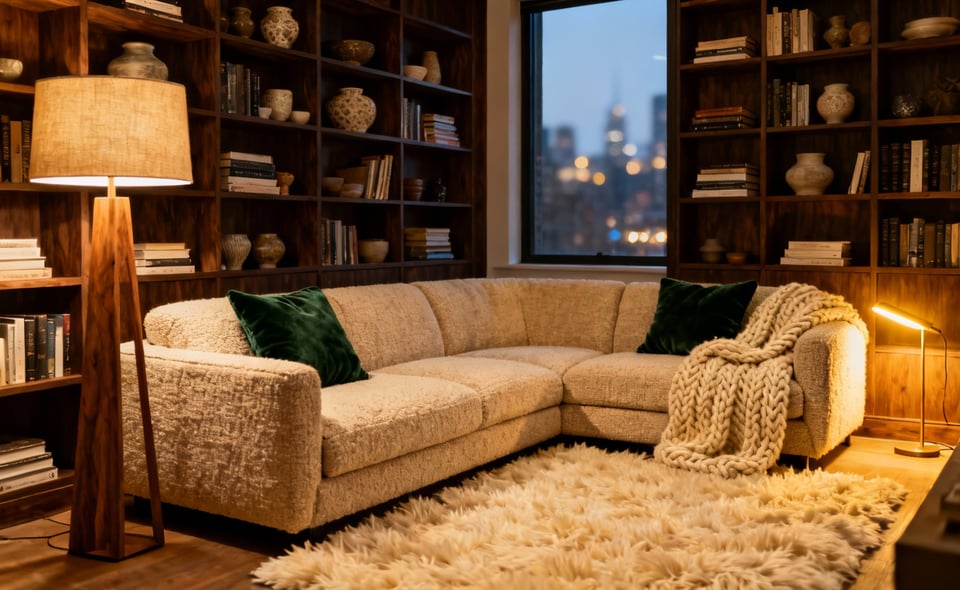
Many view interior design as a purely aesthetic pursuit. However, creating a true sanctuary requires a deliberate multisensory approach. Imagine the steady rhythm of rain against glass. Specifically, this sound acts as natural “pink noise.” It actively regulates the nervous system. Indeed, it masks the chaotic sounds of the city outside. To achieve the perfect environment, you must understand how to craft truly cozy living room apartments. Next, consider the grounding weight of a chunky knit throw. This textile does more than look cozy. In fact, it applies Deep Pressure Stimulation to the body. Consequently, your heart rate slows down. Thus, the physiological transition from “fight or flight” to “rest” begins.
However, the absence of noise is equally critical for restoration. Often, apartment living involves high degrees of unwanted auditory clutter. Therefore, we must engineer silence through careful material selection. Heavy, lined curtains and plush rugs effectively absorb bouncing sound waves. Instead of reflecting noise, these soft furnishings dampen it. As a result, the room feels acoustically softer. This intentional quiet creates a necessary psychological boundary. It separates your private retreat from the external world. Indeed, this balance is essential for maintaining mental clarity.
This guide reveals the science behind designing a restorative entrance. We will explore how to select textiles for tactile grounding. Additionally, we discuss arranging furniture to maximize acoustic dampening. You will learn to layer fabrics for both warmth and weight. Finally, we provide strategies to mask intrusive urban noise effectively. Ultimately, you will create a space that restores your well-being. For even more inspiration, explore our collection of cozy and creative apartment living room ideas.
Section 1: The Philosophy of Softness (Foundational Elements)
Creating a truly cozy living room requires more than buying plush pillows. In fact, the philosophy of softness taps into a primal psychological need for security. Specifically, environmental psychology suggests that humans crave a “sense of enclosure.” Therefore, a well-designed living room should feel like it is holding you. In dense urban living, this sanctuary actively counters external chaos. Consequently, the brain interprets this enclosed space as secure. This effectively reduces daily stress.
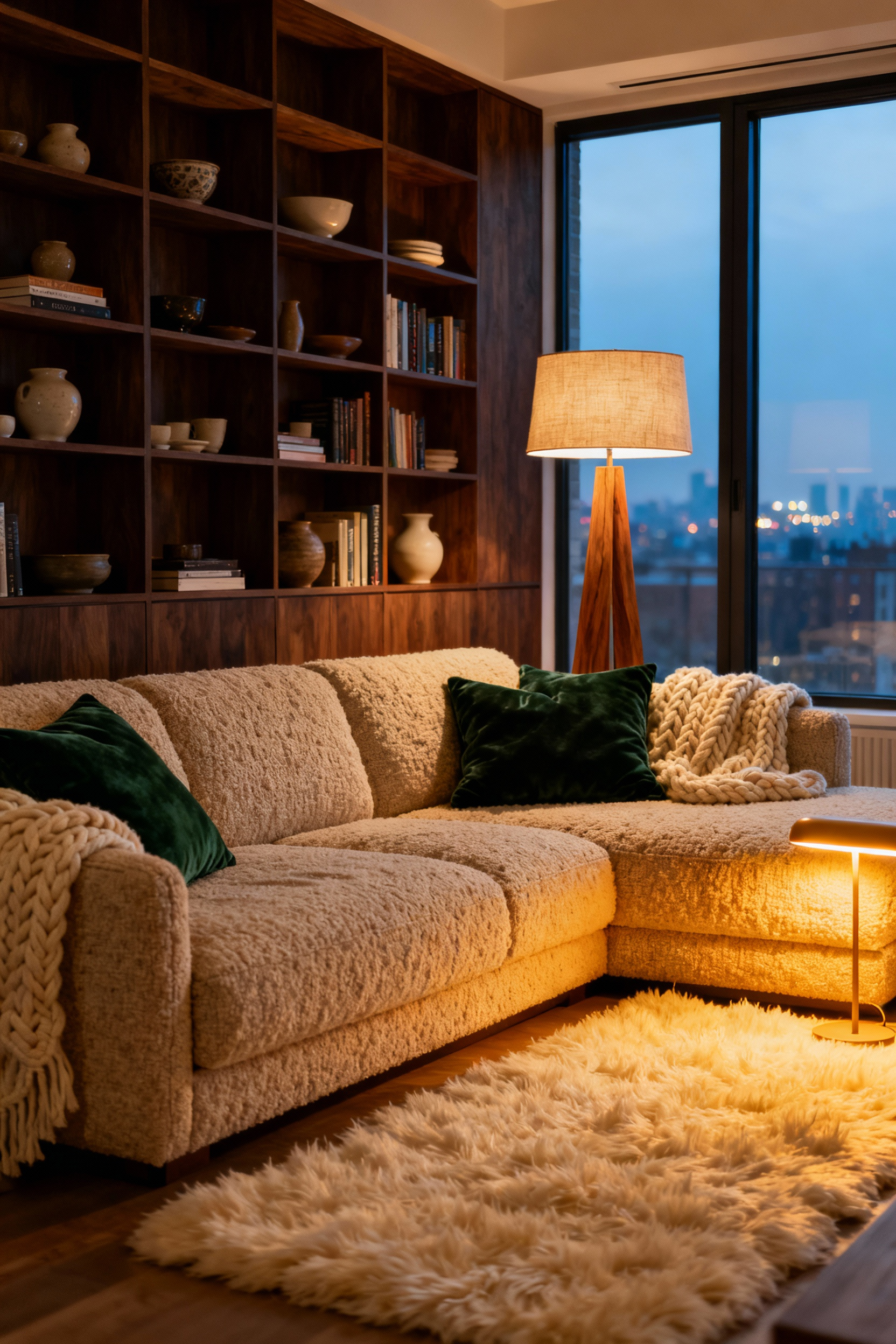
However, softness is not purely tactile. Surprisingly, it is a multi-sensory experience involving both sight and sound. First, you must consider visual softness through lighting. Therefore, move away from harsh overhead fixtures. Instead, embrace layered, warm-toned lighting. This mimics a sunset or a glowing hearth. Specifically, this soft diffusion signals the body to rest. Additionally, acoustic softness is critical in shared apartment buildings. Fortunately, porous textiles like heavy velvet curtains act as sound absorbers. Thus, they dampen the noise pollution typical of apartment life.
Finally, this approach mirrors the ethics of Hygge. This concept values material authenticity over fleeting trends. Specifically, choose natural fibers like linen, wool, or boucle. This creates a biophilic connection. When you pair these soft textures with warm woods, the space feels historically grounded. Ultimately, these elements turn a temporary rental into a stable anchor.
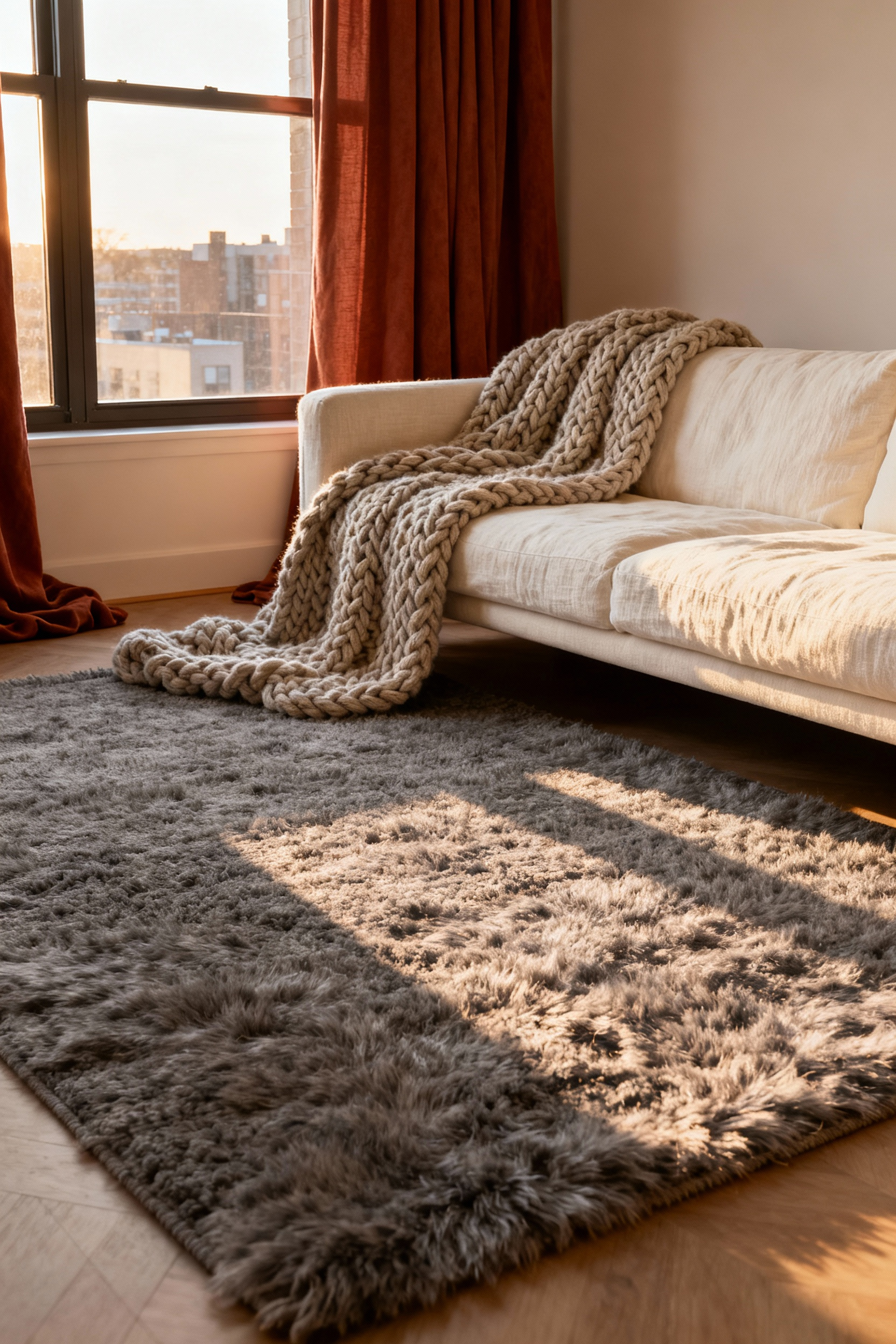
1. Grounding the Space: Why a high-pile Moroccan or wool rug is non-negotiable for acoustic dampening in apartments.
In modern apartments, hard surfaces often create harsh environments. Therefore, a high-pile wool rug serves as a non-negotiable architectural tool. Specifically, Moroccan styles like the Beni Ourain were originally woven for survival. Historically, nomads in the Atlas Mountains required this dense pile for insulation. However, this design inadvertently created the perfect acoustic dampener.
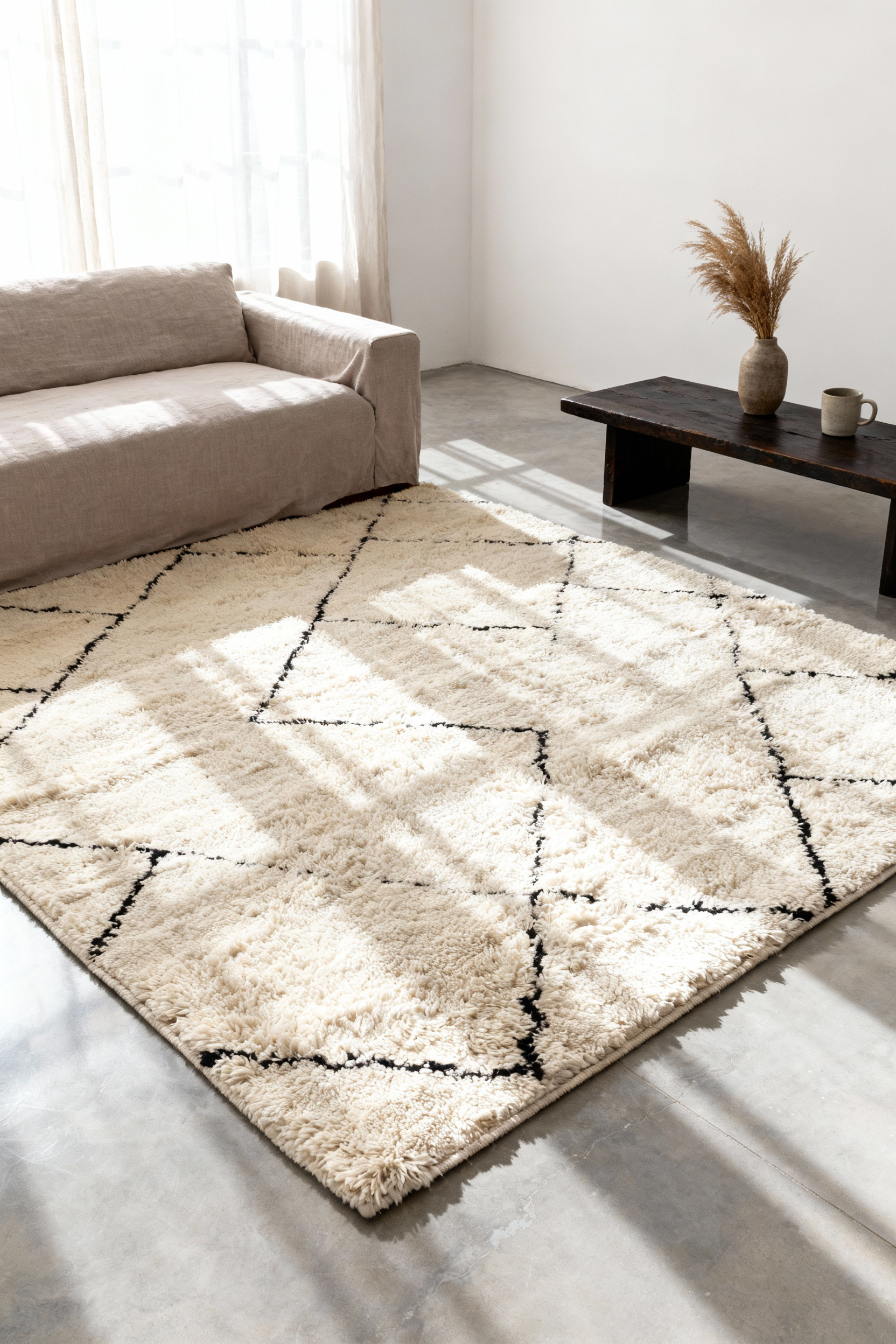
High-crimp wool fibers naturally trap millions of tiny air pockets. In fact, these pockets absorb sound energy just as they block cold. Consequently, a thick rug addresses the two main auditory problems in shared spaces. First, the porous structure interrupts airborne reverberation. This effectively prevents “empty” room echoes. Second, the thick material dampens impact noise. This silences heavy footsteps for your neighbors below.
For optimal results, prioritize a cut pile height between 10mm and 18mm. Ideally, this depth provides enough material for sound waves to dissipate. Without this soft anchor, a room remains acoustically “live.” Ultimately, a plush wool rug transforms a noisy box into a serene sanctuary.
2. The Architectural Softener: Installing floor-to-ceiling linen drapery to blur sharp apartment corners and diffuse urban light.
Modern apartment architecture frequently relies on sharp, cold angles. Consequently, rooms can often feel boxy. To counteract this, designers employ floor-to-ceiling drapery as a structural modifier. Specifically, installing a track from wall-to-wall creates a seamless “soft wall” effect. This technique effectively de-frames the window. Instead of a distinct boundary, you see a continuous flow of texture. Furthermore, extending the fabric hides structural corners. Thus, the eye follows gentle vertical folds rather than hard intersections. Visually, this makes low ceilings feel significantly grander.
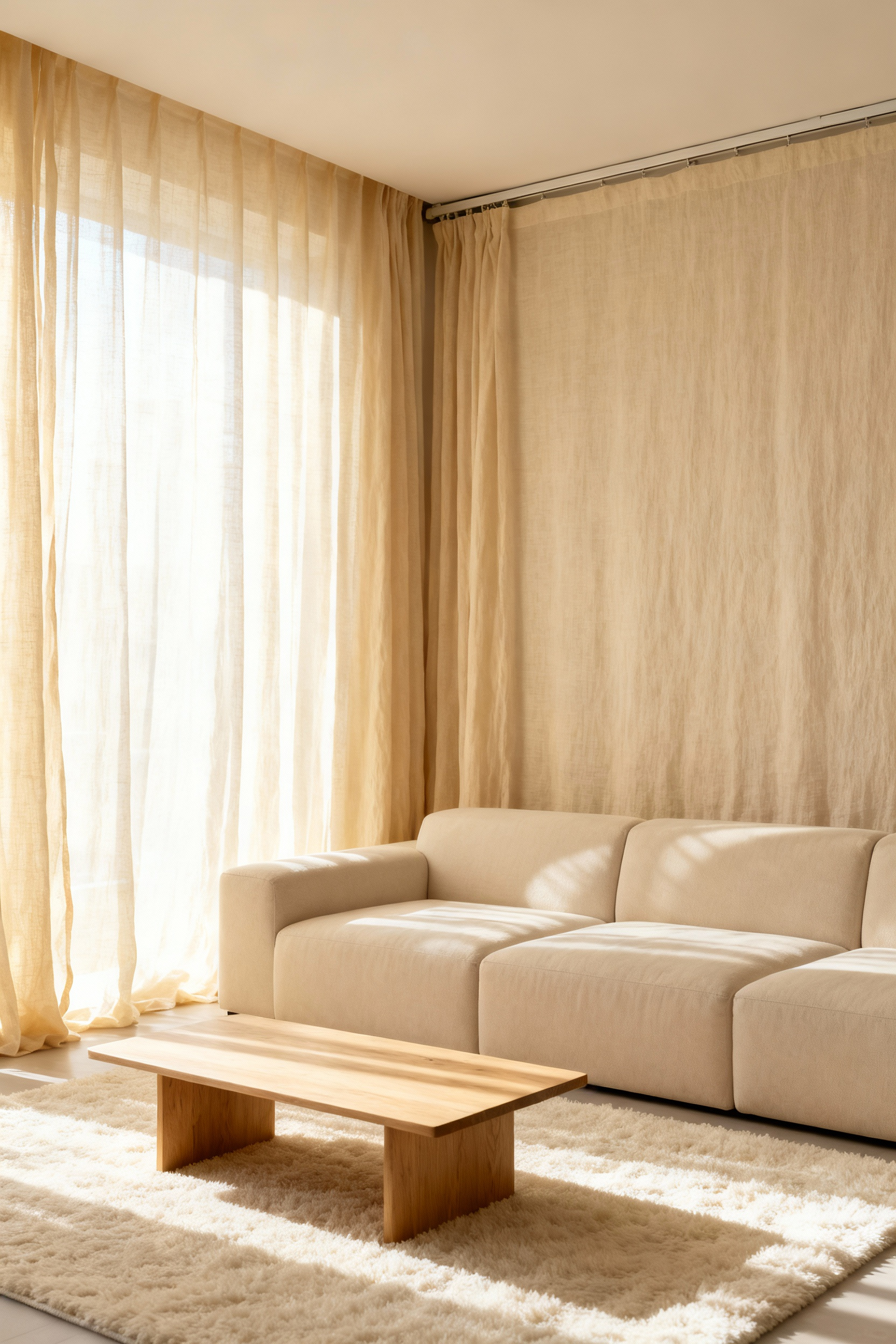
Next, the fabric choice determines the room’s atmosphere. Synthetic sheers often look clinical. In contrast, natural linen introduces an organic “slubby” texture. This irregularity adds necessary warmth to neutral palettes. Moreover, linen acts as a superior light diffuser. It transforms harsh urban glare into a “golden glow.” Therefore, the apartment feels like a sanctuary. Additionally, linen’s breathable weave regulates temperature effectively.
Finally, textiles significantly improve the home’s acoustics. Large glass windows bounce sound, creating hollow echoes. However, heavy drapery creates an “acoustic cocoon.” It absorbs sound waves, making conversations feel warmer. For maximum quiet, layer sheer linen over a denser thermal fabric. Consequently, this dampens external city noise like traffic. Ultimately, this creates a calm retreat within a bustling environment.
3. The Psychology of the ‘Sink-In’ Sofa: Prioritizing deep-seated upholstery with down-wrapped cushions over rigid mid-century forms.
Ideally, a living room should function as an antidote to sensory overload. Specifically, the preference for deep-seated upholstery stems from a psychological need for “cocooning.” Unlike rigid forms that enforce “perching,” generous depths encourage full-body “lounging.” Consequently, you can physically exhale. This creates a secure experience known as “nesting.” Visually, these soft edges signal warmth. Therefore, the ambiance shifts immediately from formal to welcoming.
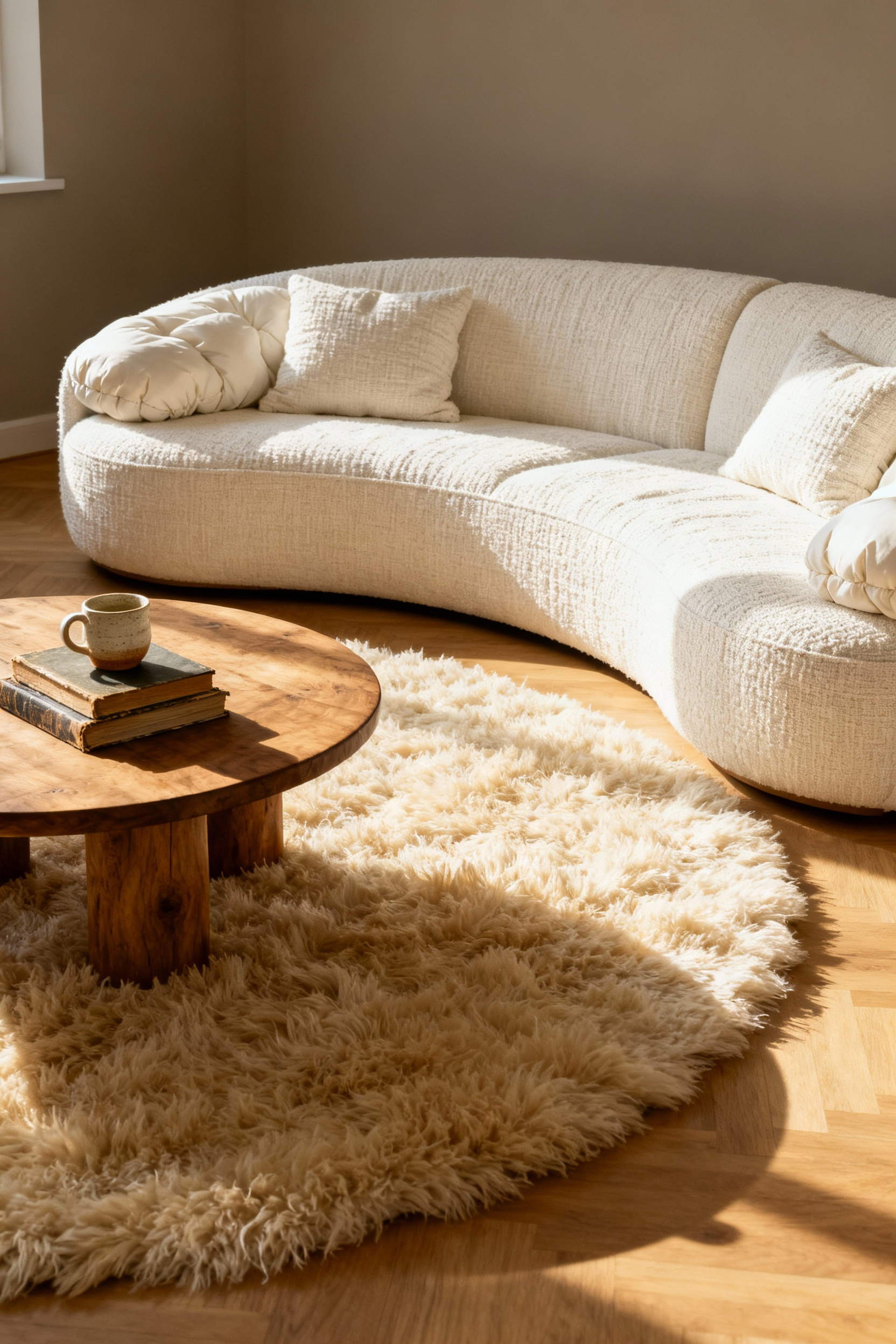
Achieving this “sink-in” feel requires technical ingenuity. In fact, relying on down alone would cause the seat to collapse. Instead, manufacturers utilize a hybrid construction. At the core, high-resilience foam provides stability. Subsequently, this structured heart is encased in a plush down wrap. As a result, you experience a cloud-like surface without sacrificing durability. Furthermore, natural down offers superior insulation, adding literal warmth.
However, this luxury requires commitment. Unlike the taut lines of a structured sofa, down-wrapped pieces demand attention. Specifically, daily fluffing is essential to redistribute feathers. Without this effort, the upholstery can appear deflated. Thus, the aesthetic is inherently “slouchy.” Ultimately, this style prioritizes restorative comfort over pristine geometry.
4. Organic Wood Tones: Introducing raw oak or walnut nesting tables to warm up standard apartment white-box finishes.
Standard rentals often suffer from the “white-box” effect. Consequently, flat white walls can feel sterile. To combat this, introducing organic wood tones acts as a visual anchor. In fact, biophilia suggests that natural wood grain actively lowers stress levels. Therefore, adding raw wood transforms a cold space into a calming sanctuary.
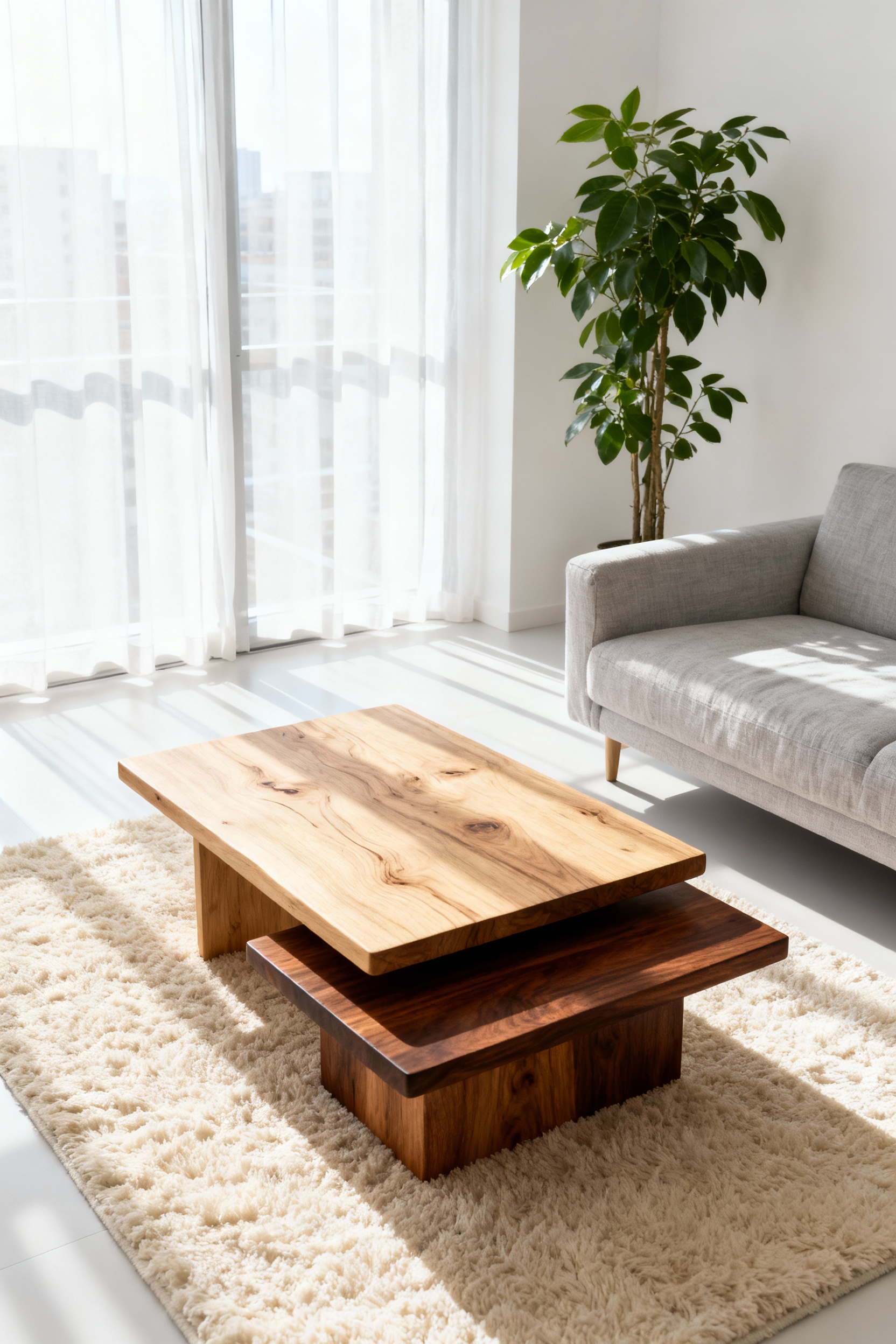
Specifically, the choice of wood species alters the atmosphere. For example, raw white oak features a golden-beige tone. This texture keeps the visual weight light. Conversely, walnut introduces a rich, dark chocolate hue. As a result, it creates a high-contrast focal point. This feels deeply luxurious against pale finishes.
Furthermore, the furniture’s form enhances this warming effect. Nesting tables typically feature curved edges. This softens the sharp geometry of modern apartments. Additionally, they provide essential flexibility for small footprints. You can expand them for guests or tuck them away. Ultimately, these tactile surfaces layer warmth into the room.
Section 2: The Art of Textile Layering (Tactile Complexity)
Strategic textile layering transforms a sterile apartment into a sanctuary. Specifically, this practice creates a “lived-in” atmosphere. In professional practice, we apply a functional three-layer system to build depth. First, the base layer anchors the room through heavy rugs. Next, the mid layer manages light through drapes and throws. Finally, the top layer introduces spontaneity with accent pillows. If you want more targeted approaches, read our guide on 7 ways to cozy up your living room with texture.
- Beyond visual hierarchy, this approach relies on tactile contrast. For instance, pairing nubby bouclé with smooth silk creates a dynamic experience. Consequently, these combinations act as emotional conductors. Soft materials promote “cocooning.” This satisfies a deep human need for shelter. Furthermore, this technique addresses practical architectural challenges. Historically, heavy tapestries provided insulation. Today’s textiles similarly offer thermal regulation.
- Additionally, dense fabrics absorb sound. Therefore, a room feels quieter and more tranquil. Ultimately, this strategy results in “tactile minimalism.” You achieve richness through woven texture rather than clutter. Thus, the home feels polished yet profoundly cozy.
5. The Fabric Trinity: Mixing velvet (sheen), linen (matte), and bouclé (texture) to create visual depth without clutter.
In limited square footage, neutral palettes often look flat. Therefore, creating depth requires strategic manipulation of light. Specifically, the “Fabric Trinity” works by contrasting sheen with matte finishes. Velvet serves as the primary reflector. Its dense pile catches the sunlight. Conversely, linen acts as the optical anchor. Its breathable, matte surface absorbs light. This provides a calm backdrop.
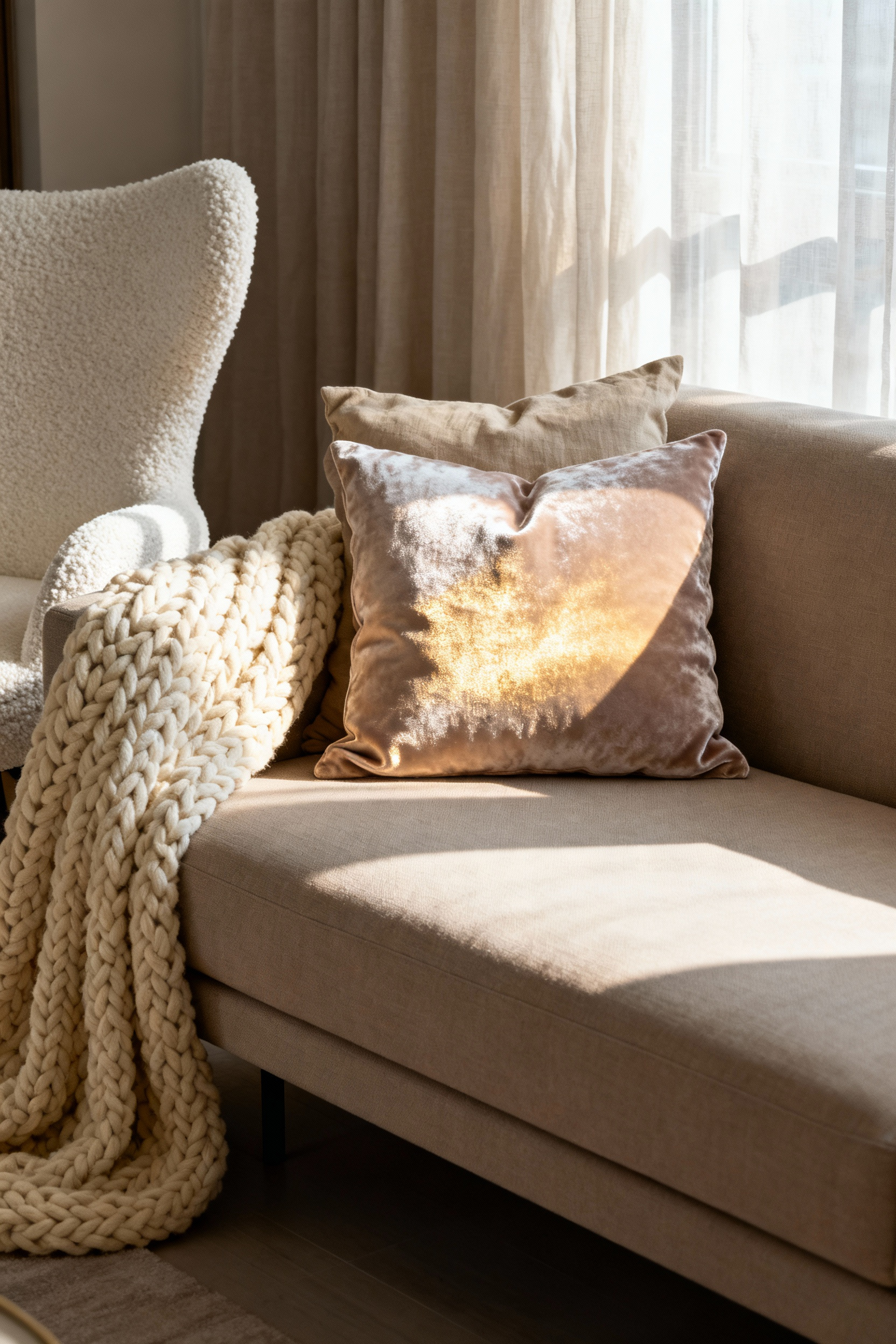
- Subsequently, bouclé adds structural complexity. With its nubby surface, it diffuses light further. In fact, this texture bridges the gap between linen and velvet. Consequently, the room gains visual richness without clutter.
- Moreover, this combination creates a multi-sensory experience. Velvet offers indulgent refinement. Simultaneously, bouclé provides blanket-like warmth. Meanwhile, linen keeps the aesthetic grounded. Ultimately, balancing these three finishes builds a space that feels curated and cozy.
6. Pillow Scaping 101: Moving beyond matching sets to curated combinations of sizes and varying weave densities.
Moving beyond matching sets requires a shift in perspective. Specifically, pillow scaping involves an architectural approach to soft furnishings. It creates an emotional refuge within limited footage. The foundation of this method is weave density. In fact, texture influences the sensory perception of a room significantly. For example, coarse textures like bouclé absorb light. Consequently, this visual weight pulls the walls in. Conversely, plush velvet adds refinement. Therefore, mixing densities prevents the arrangement from feeling too rustic.
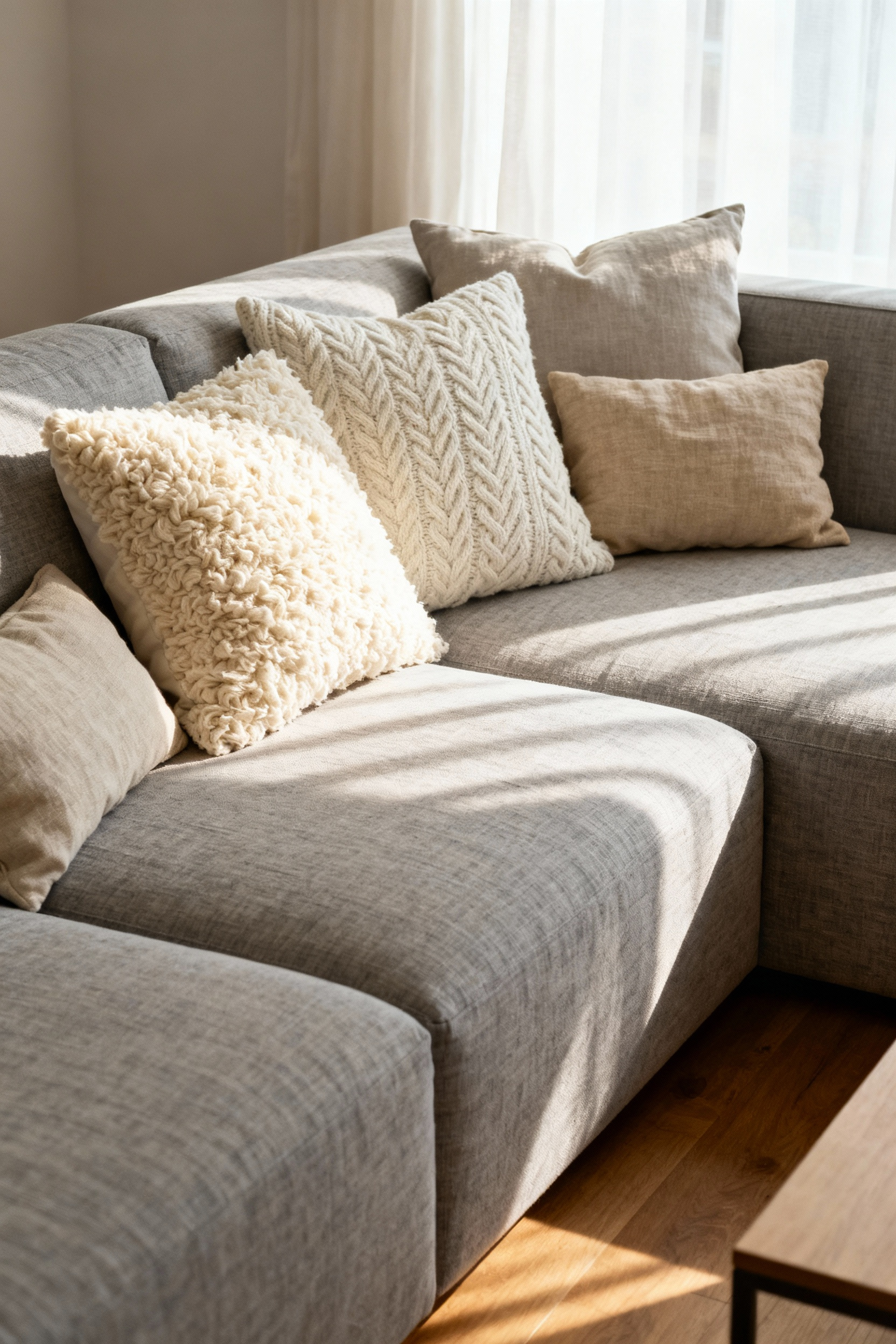
Next, you must address scale. Ideally, employ a back-to-front layering system. Designers often rely on the 24-20-Lumbar triad. First, place a large 24-inch anchor pillow in the back. Then, layer a mid-size 20-inch square in front. Finally, finish with a rectangular lumbar pillow. This odd-numbered arrangement feels artfully nonchalant.
To truly curate the look, balance your prints. Start with a solid texture. Subsequently, introduce a small-scale graphic print. Lastly, contrast this with a large-scale statement motif. Ultimately, this formula transforms a flat sofa into a landscape.
7. The ‘Casual Drape’ Technique: How to style chunky knit throws to look invitingly messy rather than staged.
Creating a cozy atmosphere requires “intentional imperfection.” A crisply folded throw often feels stiff. In contrast, the “Casual Drape” signals that a space is lived-in. In fact, this visual cue lowers the barrier to comfort. It invites you to relax immediately. However, the material choice is critical. Specifically, chunky knits possess the necessary weight. Thinner fabrics may simply look sloppy.
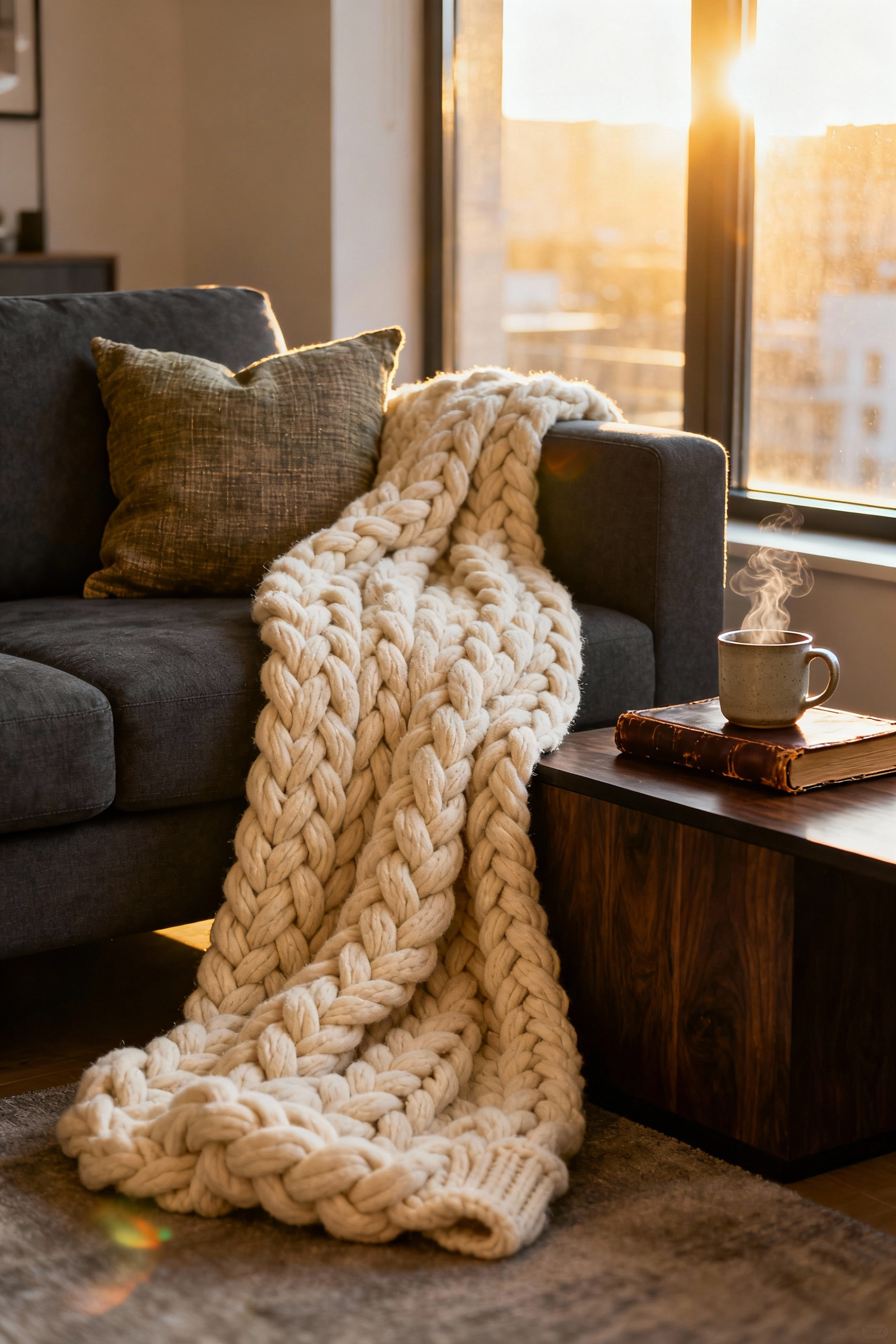
In contrast, heavy gauges create deep folds. These shapes maintain structure even when messy. To execute this, avoid placing the throw in the center. Instead, rely on a diagonal line. Simply hold the throw near its center. Next, let it drape naturally over a single corner. Subsequently, gently adjust the top folds. Furthermore, allow the ends to pool softly. This “soft cascade” connects the furniture to the room. Ultimately, this creates a look of artful gravity.
8. Seasonal Slipcovers: Utilizing performance fabrics that can change from cool cottons in summer to heavy wools in winter.
Seasonal slipcovers offer a high-impact strategy for comfort. Historically, homeowners used this method for temperature control. Specifically, the sofa serves as the thermal anchor. During summer, lightweight cotton slipcovers function best. Because cotton allows air to pass, it regulates body heat. Additionally, the fabric absorbs moisture effectively.
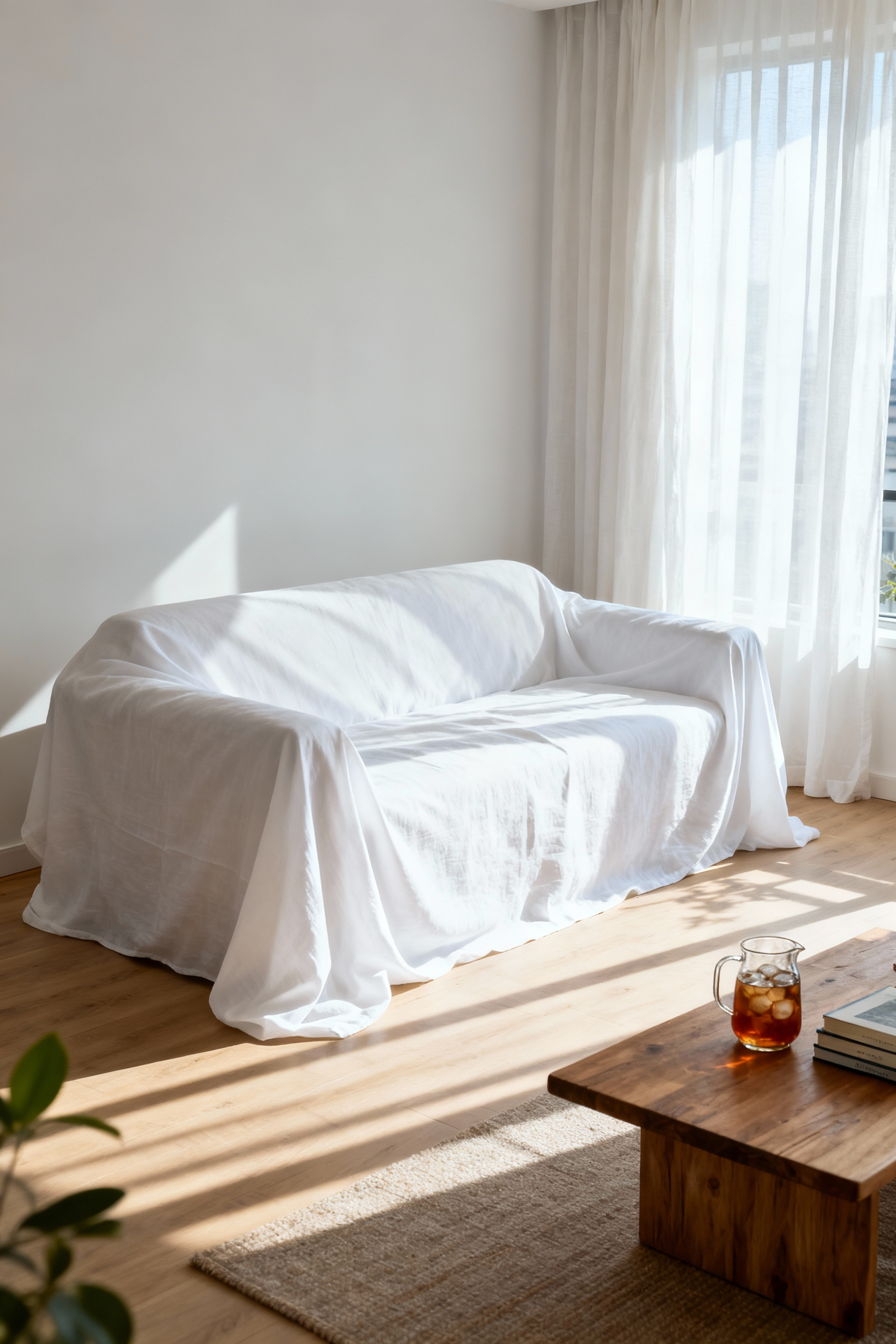
However, winter demands a shift toward insulation. Psychologically, humans gravitate toward texture during darker months. Therefore, transitioning to a heavy wool creates a sense of “cocooning.” Functionally, crimped fibers trap air to retain warmth. However, pure wool is difficult to clean. As a solution, performance blends mimic this texture. These fabrics offer haptic luxury but remain cleanable.
Furthermore, heavier weaves improve acoustics. In hard-surfaced apartments, the fabric absorbs noise. Finally, changing the textile weight visually grounds the space. By absorbing light, the room feels intentionally enclosed. Ultimately, this creates a deeply intimate environment.
9. Ottoman Over Coffee Table: Swapping hard surfaces for upholstered ottomans with trays to maximize foot-up comfort.
Swapping a rigid table for an upholstered ottoman shifts a room’s atmosphere. Specifically, it transitions the space to a tactile refuge. Traditional tables often feature sharp corners. Conversely, an ottoman signals immediate relaxation. Textiles like dense bouclé add softness that invites touch. Moreover, this plush texture contributes to a sense of safety.
Beyond aesthetics, this choice is a functional imperative. The ottoman serves as a “triple-duty” solution: footrest, seating, and storage. Consequently, it reduces visual chaos. Additionally, its lower profile keeps sightlines open. Therefore, it solves space constraints while enhancing livability.
However, a soft surface requires a stabilizing element. A sturdy tray acts as the necessary anchor. In fact, this addition offers an opportunity for layering. Placing a wooden tray against plush fabric creates visual contrast. Ultimately, this pairing balances utility with comfort.
Section 3: Spatial Intimacy & Ambiance (Application)
Creating intimacy involves engineering a “sensory cocoon.” Therefore, the most impactful tool is the deliberate layering of materials. In fact, architectural studies suggest softness impacts spatial intimacy. Specifically, designers combine contrasting materials to add depth. For instance, pairing a sleek velvet sofa with a chunky knit throw creates appeal. Consequently, this signals comfort and counters sterile construction.
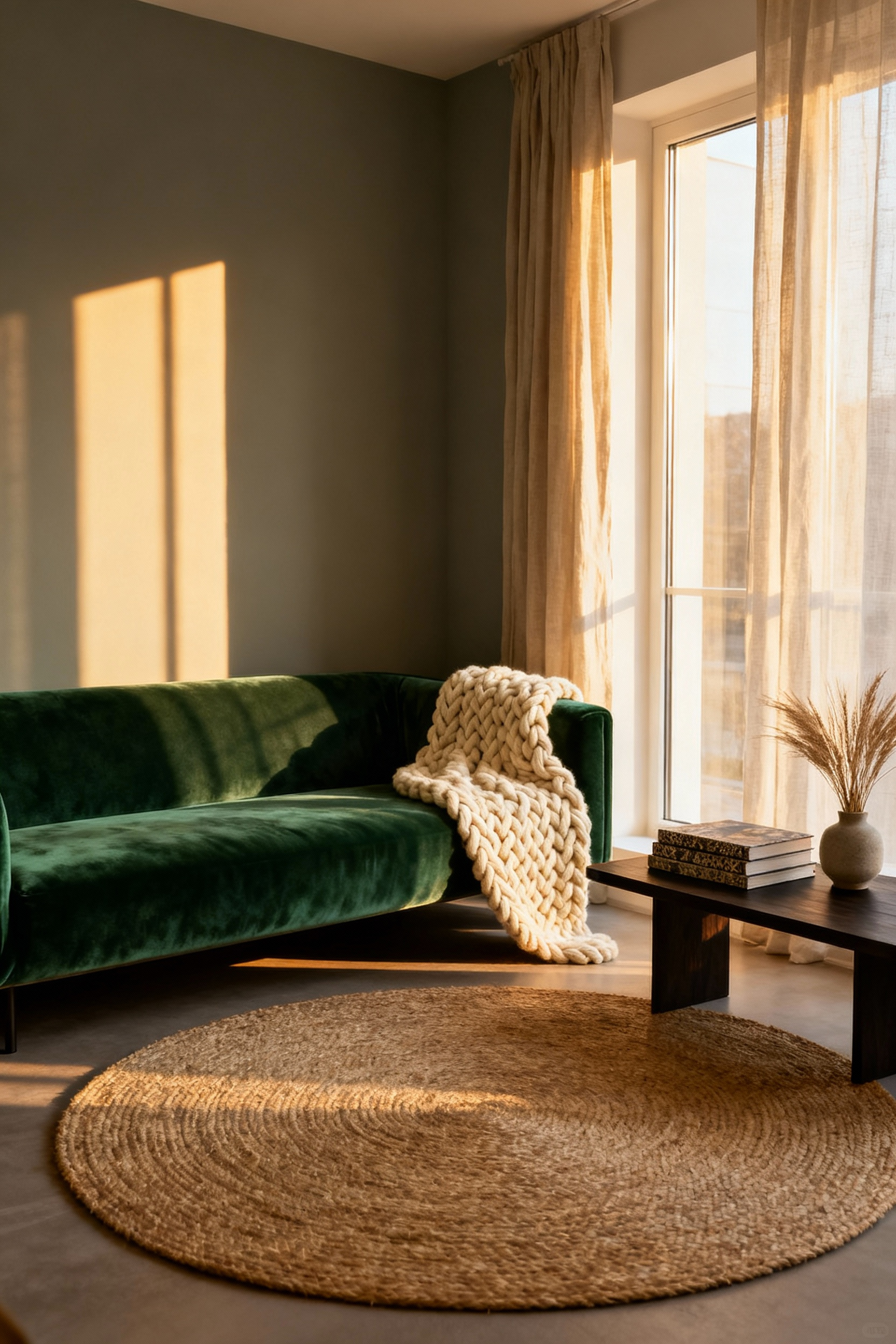
Next, consider the physical arrangement. Surprisingly, pushing furniture against walls reduces intimacy. Instead, employ a “floating furniture” layout. By pulling seating inward, you create a defined nook. Thus, the space feels like a purposeful sanctuary. For help defining your space, check out these Smart Living Room Layout Ideas. Additionally, use an area rug to anchor this zone.
Furthermore, lighting acts as the soul of the space. Harsh overhead lights destroy coziness. Alternatively, prioritize layered lighting with warm-spectrum bulbs. Specifically, use floor lamps to mimic a sunset glow. Finally, do not fear dark colors. Rich tones like deep green create a sophisticated enclosure. Ultimately, these choices encourage users to sink into the room.
10. Creating ‘Micro-Zones’: Carving out a dedicated reading nook with a shearling accent chair and dedicated task lighting.
In compact apartments, areas often blur together. Therefore, creating a “micro-zone” establishes boundaries without walls. Specifically, a sculptural shearling accent chair acts as an architectural anchor. Its visual weight separates the nook from the main area. Furthermore, shearling appeals to a need for tactile grounding. Indeed, sinking into the soft fabric offers immediate warmth.
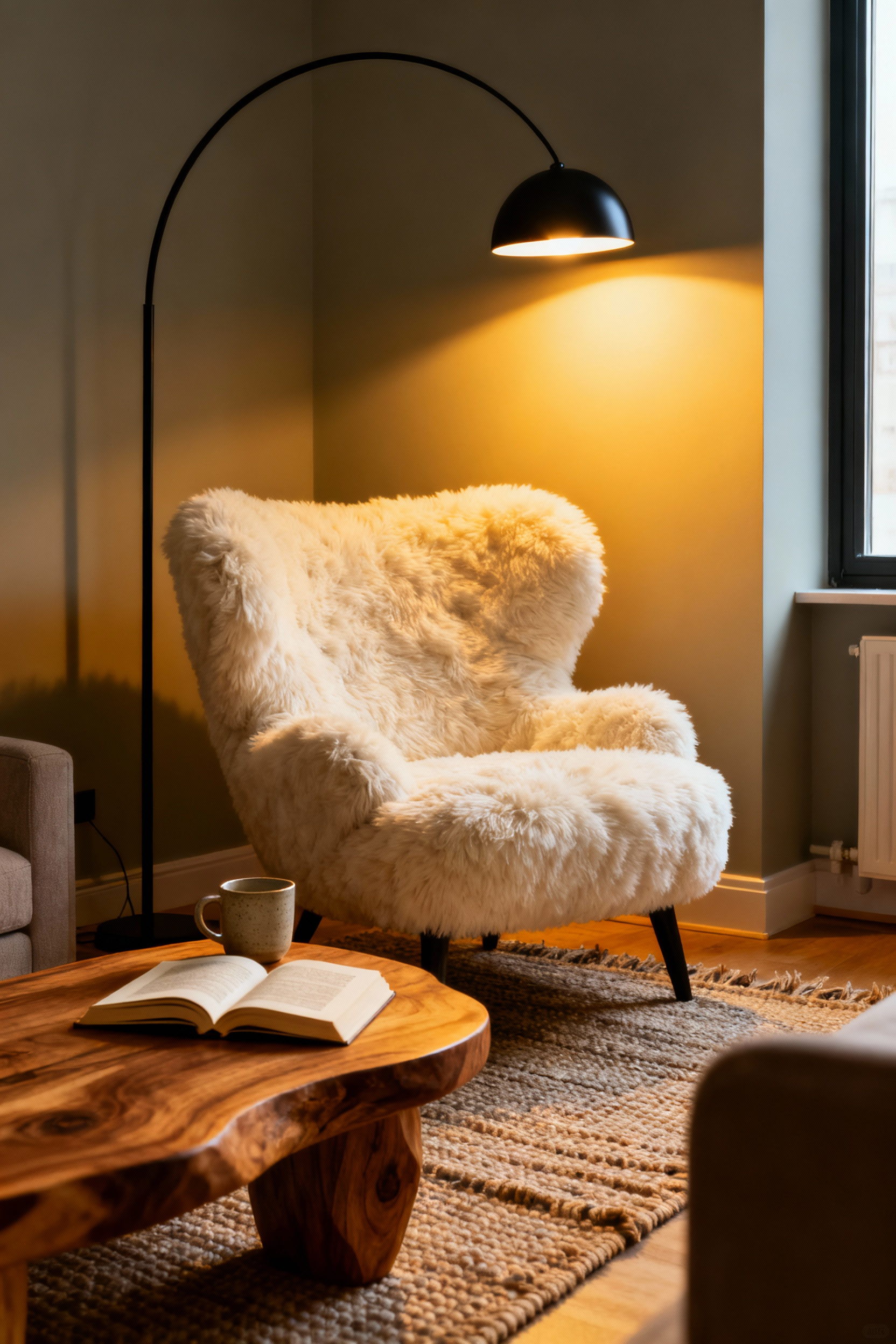
Historically, these pieces are rooted in Scandinavian design. Consequently, they prioritize functional warmth. However, a cozy chair creates only half of the experience. Dedicated task lighting transforms the corner into a workspace. Ideally, select a bulb color temperature between 2700K and 3000K. This warm white range reduces eye strain significantly.
Additionally, position the light fixture slightly behind your shoulder. This specific directional approach minimizes glare. Ultimately, this combination creates a mental “threshold moment.” You transition effectively from the busy room into a state of rest.
11. Visual Warmth Through Palette: shifting from sterile greys to ‘greige,’ terracotta, and warm oatmeal tones.
Modern living rooms are shifting away from sterile greys. Consequently, the emergence of “greige” represents a necessary compromise. Technically, this color is a blend of grey and beige. It retains the diplomacy of grey; however, it adds a brown undertone for security. Therefore, the space feels nurturing. As a “chameleon” shade, it accommodates accents easily.
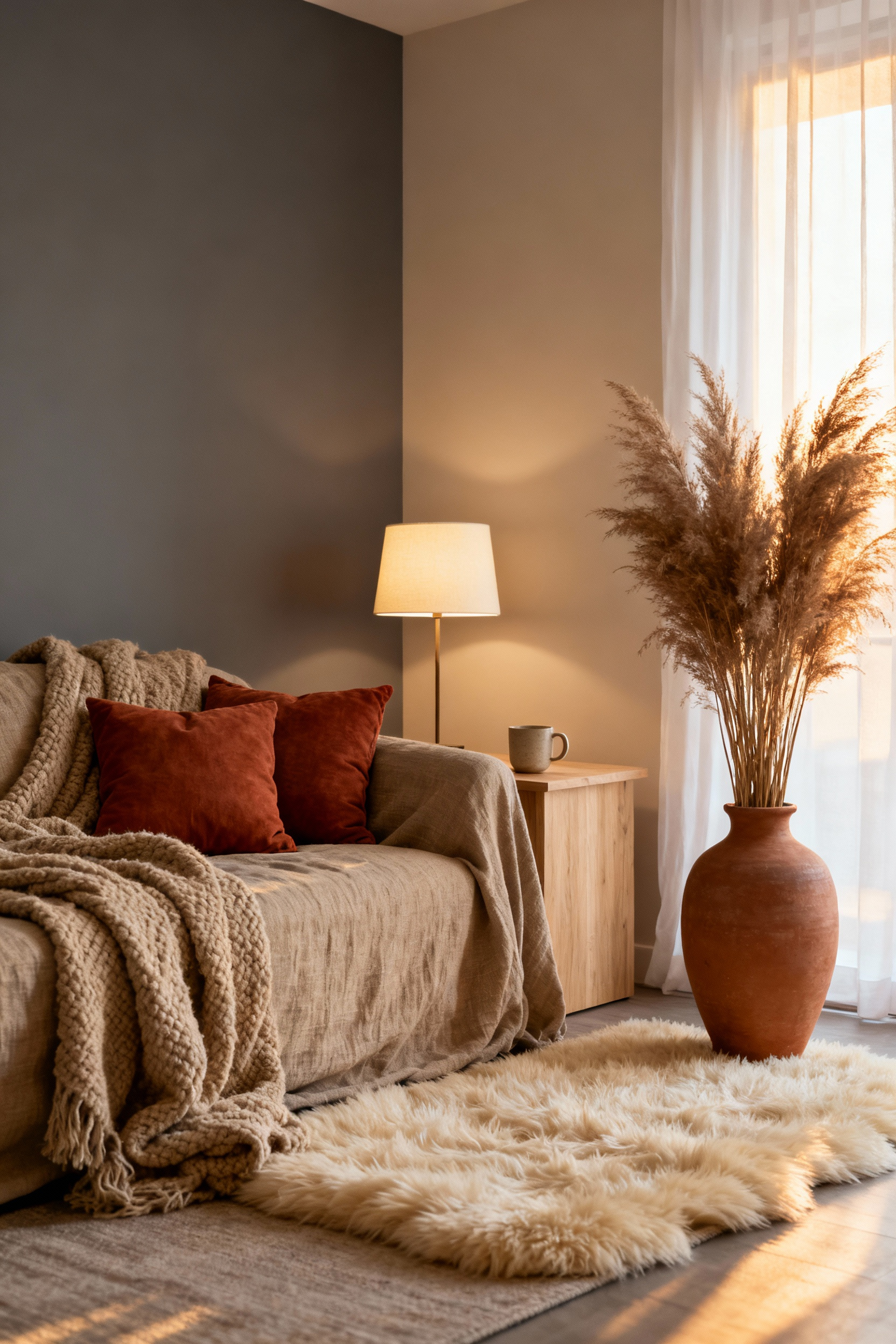
Beyond soft neutrals, terracotta serves as a grounding element. Literally meaning “baked earth,” it provides deep warmth. Psychologically, it acts as a “mood enhancer.” Furthermore, its presence is best expressed through raw textures. This tactile quality prevents the color from appearing flat.
To achieve a “cocoon of light,” designers utilize oatmeal tones. Unlike flat beige, this strategy relies on layering. Specifically, shades like almond and ecru are mixed for depth. Because these colors are subtle, material choice becomes critical. For instance, chunky wool weaves provide definition. Finally, proper lighting activates this palette. Ideally, warm bulbs allow these undertones to glow.
12. The Lighting Layer Cake: Eliminating the overhead light in favor of floor lamps with fabric shades that cast a warm glow.
Overhead lighting often feels sterile. Consequently, it flattens the visual depth of your space. To combat this, adopt the “Lighting Layer Cake” philosophy. Specifically, this method prioritizes floor lamps over ceiling fixtures. Ideally, select bulbs in the 2700K to 3000K range. In fact, this spectrum mimics natural sunset. Physiologically, it signals the body to relax.
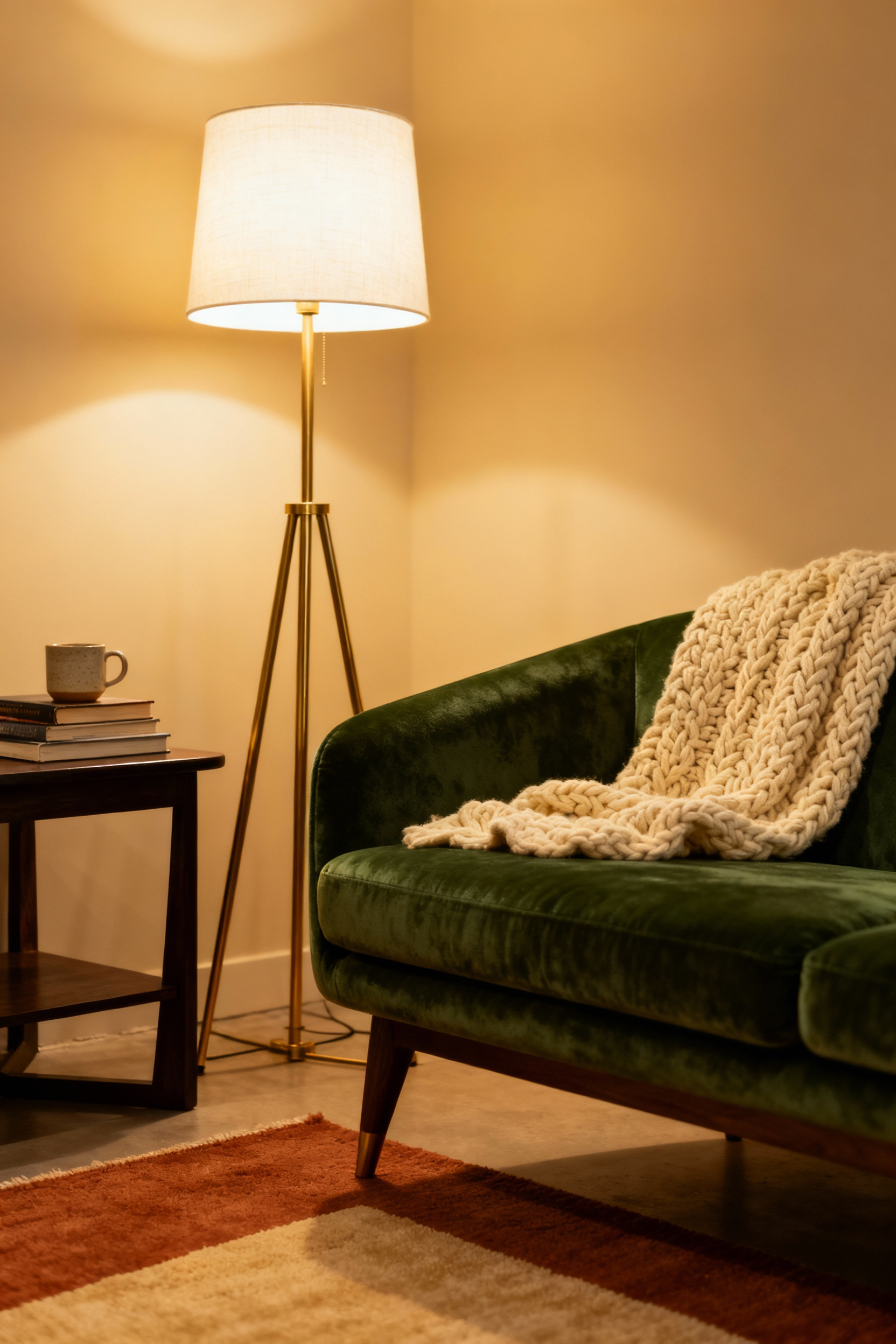
Furthermore, the vessel for this light matters. Therefore, opt for lampshades crafted from natural fabrics. These materials diffuse light waves to eliminate “hot spots.” As a result, the room glows softly. This diffusion renders wood grains with a flattering touch. Additionally, positioning lamps at eye level grounds the space. Unlike overheads, these lights create intentional shadows. Ultimately, this transforms an apartment into an intimate retreat.
13. Wall Texture: Using textile art or tapestry wall hangings instead of glass-framed prints to reduce reflectivity and echo.
Modern apartments often suffer from harsh acoustics. Consequently, hanging textile art offers a solution. Unlike glass frames that reflect sound, woven fibers create a porous surface. Specifically, these irregular textures scatter sound waves. As a result, a heavy wool piece effectively reduces echo. Historically, this technique muffled noise in grand halls.
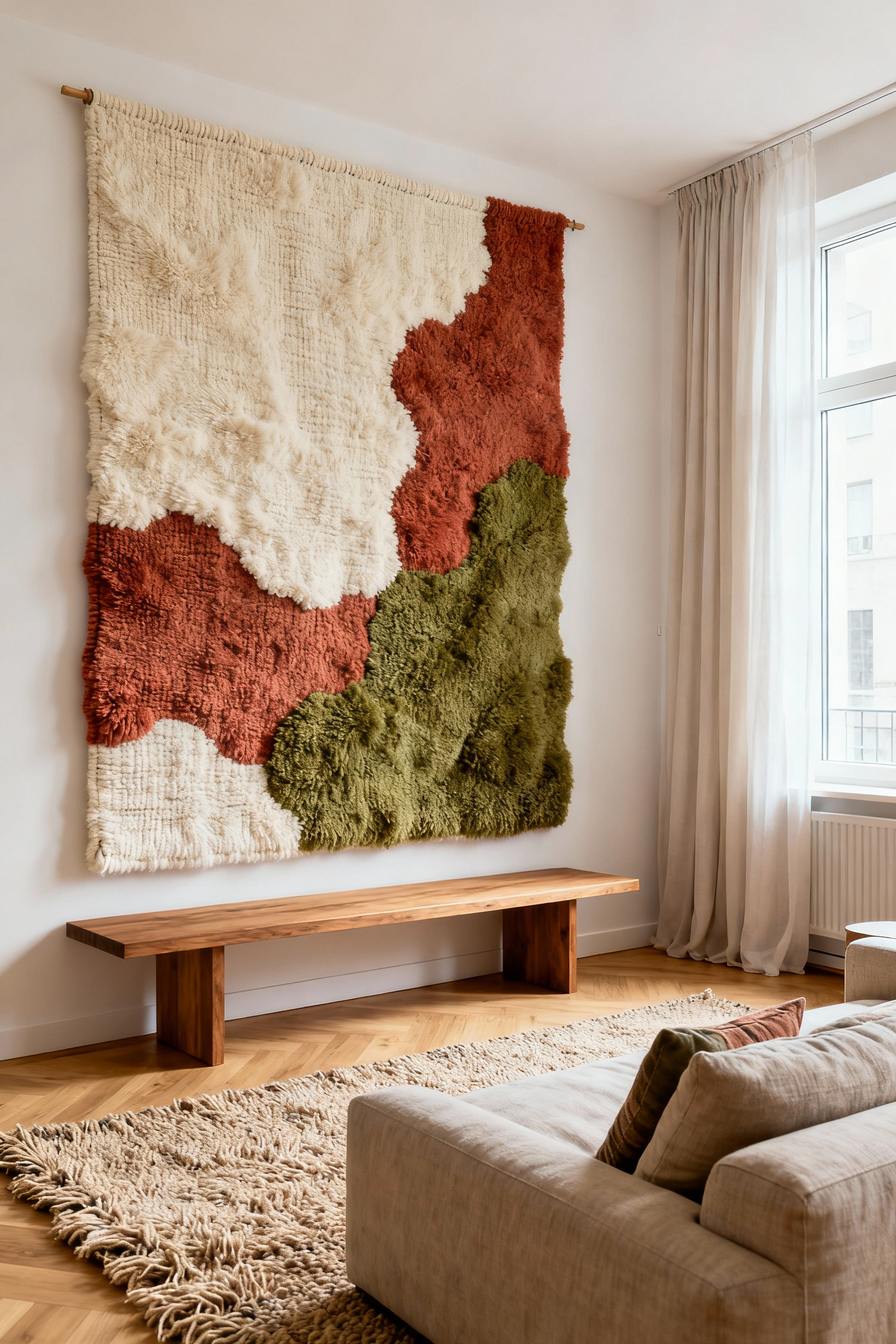
Beyond acoustics, choosing matte textiles significantly mitigates glare. Glass prints often create distracting reflections. In contrast, fiber art diffuses light. This eliminates “visual noise” for a calmer atmosphere. Furthermore, this matte finish allows colors to appear richer.
Finally, textile art introduces a tactile quality. This adds physical depth to a room. Therefore, incorporating elements like macrame enhances the sensory experience. Ultimately, these soft textures transform a sterile unit into a sanctuary.
14. Biophilic Softness: Integrating ferns and trailing pothos to introduce living, organic shapes that break up rigid lines.
Modern apartment architecture often relies on rigid lines. Consequently, our eyes constantly process hard forms. To counter this, integrating plants serves a vital function. Specifically, the irregular shapes of ferns act as an antidote to urban edges. This approach echoes the Victorian era’s obsession with foliage. Today, these plants still provide “soft fascination.”
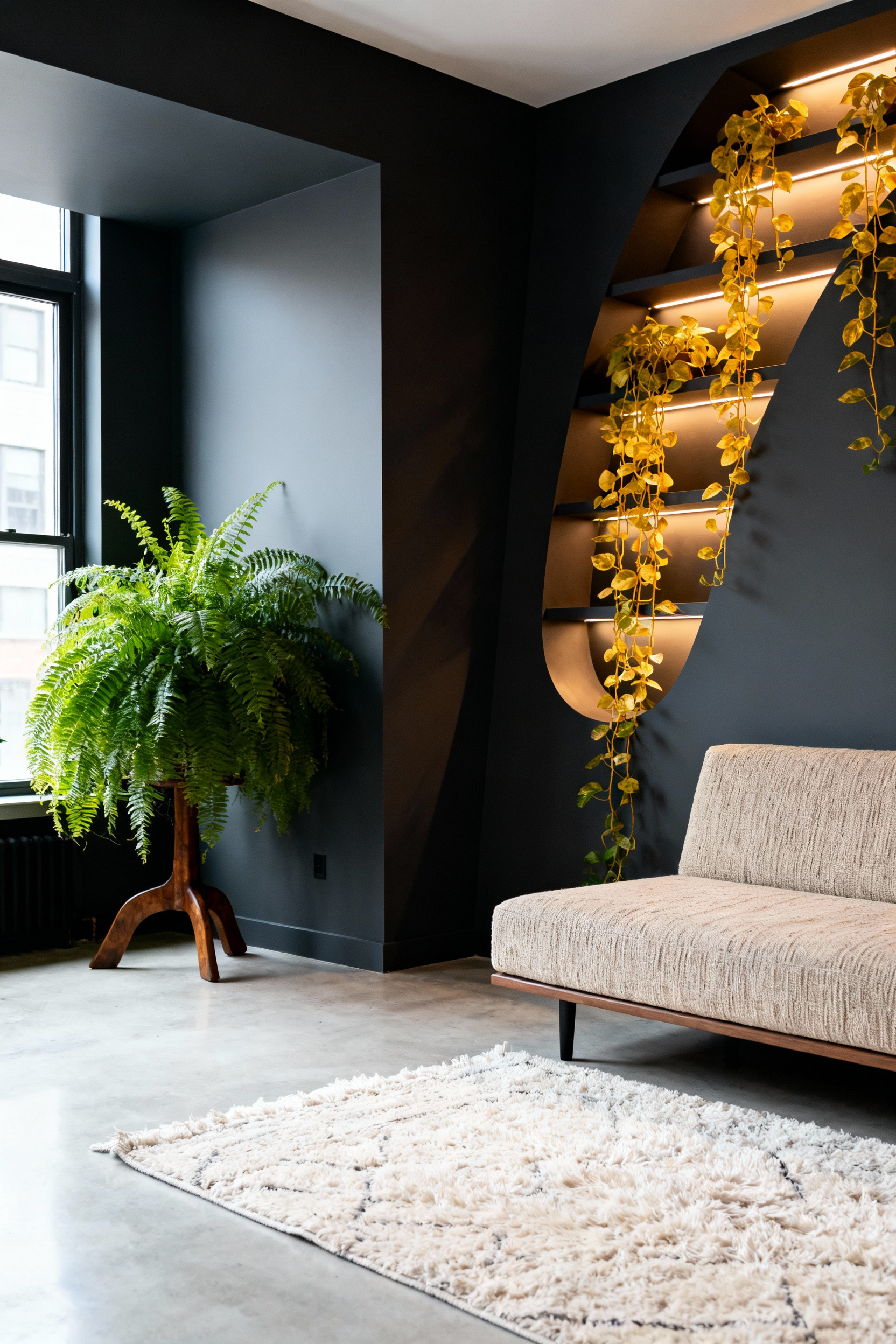
Furthermore, ferns introduce complex geometry. These repeating patterns reduce stress subconsciously. In fact, the delicate texture of the fronds signals safety. This adds a layer of visual richness.
Conversely, trailing pothos introduce movement. Often called “Devil’s Ivy,” these plants break vertical planes. Therefore, placing them on high shelves allows vines to cascade. This dynamic growth softens the static lines of bookcases. Ultimately, these living layers add organic depth.
15. Sentimental Anchors: Incorporating vintage quilts or heirloom textiles to ground a rental space with personal history.
Rentals often suffer from a lack of history. Therefore, introducing vintage quilts provides a remedy. These pieces serve as “sentimental anchors.” Specifically, they ground a transient space with personal narrative. Instead of feeling temporary, your apartment becomes a “memory book.”
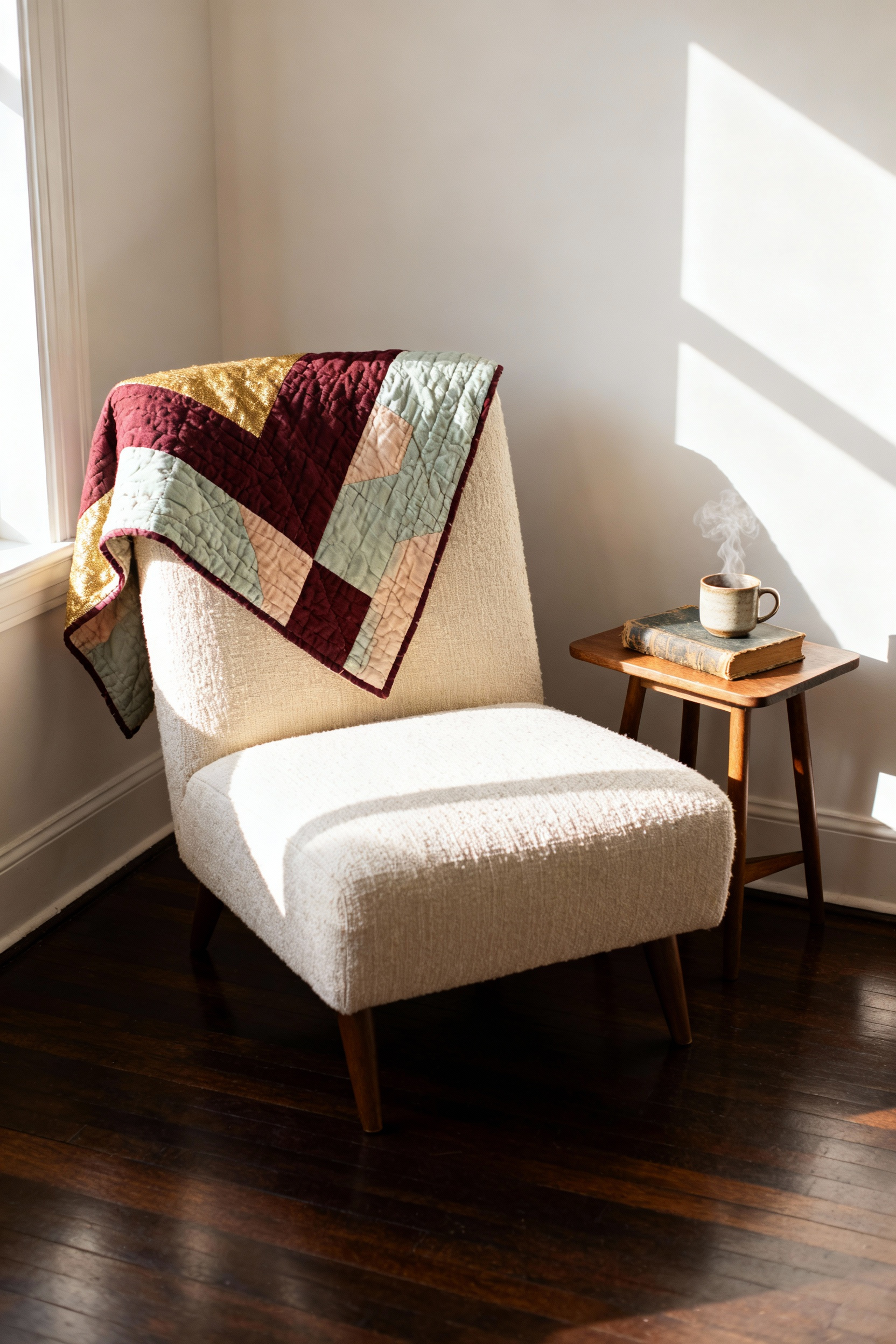
Furthermore, these textiles offer unmatched depth. Mass-produced decor cannot replicate the warmth of a worn quilt. In fact, the “hand of the maker” is visible. Consequently, slight fading adds rustic charm. This patina contrasts beautifully against hard rental surfaces. Thus, the space feels lived-in.
Practically, these items function as art. For instance, a quilt hung creates a graphic focal point. This method protects the fabric. Alternatively, simply drape a quilt over a sofa. This instantly softens the silhouette. Ultimately, these layers transform an anonymous box into a secure retreat.
Conclusion: Transitioning from a ‘rented unit’ to a restorative home—how tactile choices ultimately dictate emotional well-being.
Transforming a temporary unit requires more than visual updates. Fundamentally, this shift relies on moving from sensory monotony to rich engagement. Standard rental finishes often feel cold. Conversely, introducing authentic textures effectively grounds us. Soft fabrics offer essential cocooning comfort. Meanwhile, aged materials provide emotional stability. Ultimately, these tactile choices regulate stress actively.
Looking ahead, your home should evolve. Consequently, the living space becomes a restorative anchor. Therefore, prioritize materials that age gracefully. To begin, audit your current textile collection. Identify surfaces that feel artificial. Then, slowly replace them with honest natural fibers. In doing so, you curate a space that nurtures you. By following these methodical strategies, you can transform your residence into one of the most cozy living room apartments imaginable.
Frequently Asked Questions
H3: What is the single most important factor for making a small apartment living room cozy?
The most critical factor is prioritizing acoustic and visual dampening. This starts with a massive, high-pile area rug (preferably wool) to absorb sound, paired with layered, floor-to-ceiling drapery to soften harsh architectural lines and diffuse urban light. These foundational elements create the psychological “sense of enclosure” necessary for true coziness in a small footprint.
H3: Which color palette works best to make an apartment feel warm and intimate?
The modern trend is shifting away from cool grey tones toward a warm, nurturing palette. Designers recommend utilizing “greige” (a blend of grey and beige) for walls, paired with warm, layered neutrals like oatmeal, ecru, and almond for textiles. Introduce deep, saturated accents like terracotta or rich olive green to provide grounding contrast and visual security.
H3: How can I reduce exterior noise in my apartment living room?
Reducing noise requires layered material selection. Heavy, dense fabrics are key: use thermal-lined, full-height curtains (linen or velvet) and ensure your area rug extends beyond the primary furniture area. Additionally, consider introducing background white or pink noise (such as a subtle water fountain or high-quality sound machine) to mask intrusive, chaotic city sounds.