Many homeowners believe that designing a bedroom sanctuary is primarily a visual task. We often prioritize trending color palettes and symmetrical furniture arrangements above physical comfort. However, finding the right cozy bedroom inspiration involves looking beyond surface-level aesthetics. Indeed, the “Architecture of Sunday Morning” relies heavily on the subtle science of sensation. Specifically, haptic storytelling and acoustic softness define the ultimate sensory sanctuary. Research indicates that touch communicates safety to the brain significantly faster than sight. Therefore, “tactile grounding” through heavy knits becomes a structural necessity rather than just decor.
Additionally, the acoustic profile of a room shapes our ability to truly rest. Soft furnishings must act as “acoustic clouds” to effectively reduce noise reverberation. Consider the friction of stone-washed linen against the silence of a wool rug. Even the design concept of “Prospect-Refuge” suggests we need a compressed, nest-like environment to feel secure. This guide reveals how to construct a holistic sanctuary through texture and sound. We will examine the critical roles of tactile contrast and proprioceptive input. You will explore how sound absorption creates a restorative “pink noise” environment. Ultimately, you will learn to layer materials for a profound sense of calm.
Foundation Level: The tactile difference between washed linen and high-GSM percale
To truly understand comfort, we must look at the tactile architecture of the fiber. Specifically, linen is derived from the flax stalk, featuring naturally hollow fibers. These microscopic straws absorb significant moisture before ever feeling damp. Percale is different. It utilizes long-staple cotton consisting of flat, ribbon-like tubes. Therefore, a high-GSM percale creates a structured barrier rather than draping heavily against the body.
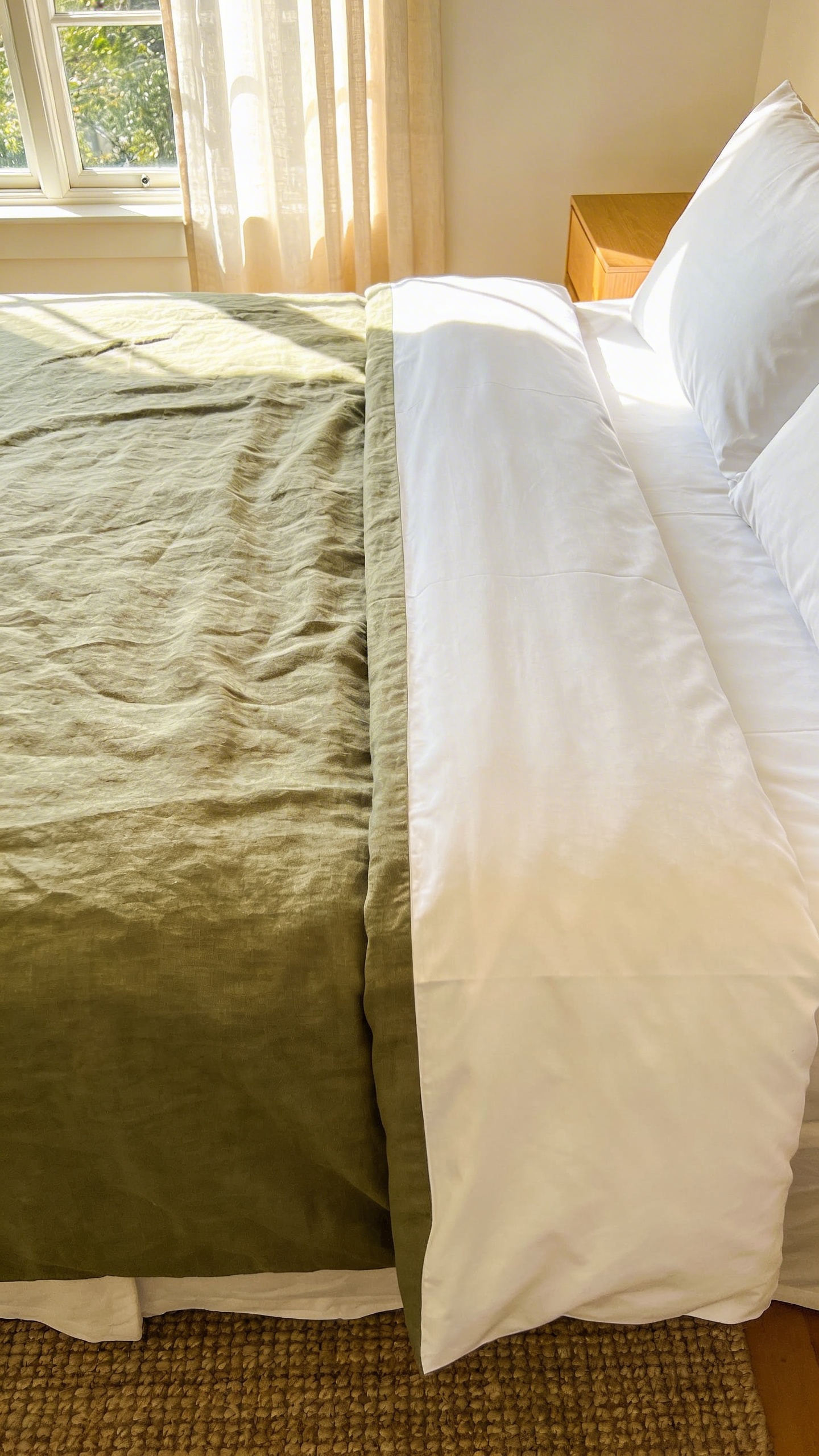
Beyond structure, weight determines how the sheet interacts with body heat. Usually, washed linen sits around 160–185 GSM, offering a unique “breathable density.” As a result, it provides the security of a weighted blanket without trapping heat. Conversely, heavy percale feels architectural and consistently cool. Because of its dense one-over, one-under weave, it offers a distinct “paper-like snap.” It creates a crisp micro-climate of air between the fabric and your skin.
Finally, the finishing process defines the atmosphere of your bedroom. For instance, stone-washing mechanically breaks down linen’s rigid fibers. This immediately produces a “buttery heft” suitable for a relaxed, lived-in aesthetic. Alternatively, high-GSM percale often undergoes mercerization to swell the cotton fibers. This treatment creates a matte-slick finish that feels tailored and precise. Your choice lies between organic, multidimensional texture or smooth, cool-to-the-touch freshness.
The Loft Factor: Choosing duvet inserts one size larger than your cover for ‘cloud-like’ volume
The “Loft Factor” is more than a simple hack; it is a calculated design technique used to manipulate volume. Specifically, this method involves placing a King-sized insert inside a standard Queen duvet cover. The extra 16 inches of width are forced to compress rather than spread out. Instead of settling flat, the fill clusters push upward. This creates a vertical “crown” or arch in the center of the bed.
This technique relies heavily on the quality of the materials used. For example, a high-quality insert with 700+ fill power provides a distinct tactile experience. Because of the compression, the down clusters’ natural resilience creates a “spring-loaded” feel that pushes back against the hand. A Cambric cotton shell adds a crisp, paper-like “crinkle,” signaling hygiene and luxury.
However, aspiring for this “cloud-like” aesthetic comes with specific thermal risks. Denser packing increases the bedding’s R-value, effectively trapping more body heat by reducing breathable air gaps. This approach is one of several cozy bedroom ideas used by top designers to elevate standard rooms. Experts suggest pairing this sizing-up method with a lightweight or summer-weight insert. This strategic compromise maintains the visual drama of the “messy luxe” trend without overheating the sleeper. Ideally, this transforms the bed from a flat surface into an inviting, architectural sculpture.
Headboard Softness: Why upholstered channels and velvet tufting anchor the room
The bed acts as the room’s psychological center. Specifically, the headboard determines how secure that space feels. Unlike rigid metal frames, upholstered designs trigger a primitive “nesting instinct.” In fact, interior designers often refer to this as the “cocoon effect.” The soft padding offers a tactile promise of safety. This creates a sense of containment that signals the brain to rest. For those seeking more luxury bedroom style ideas, the emphasis is always on this psychological grounding.
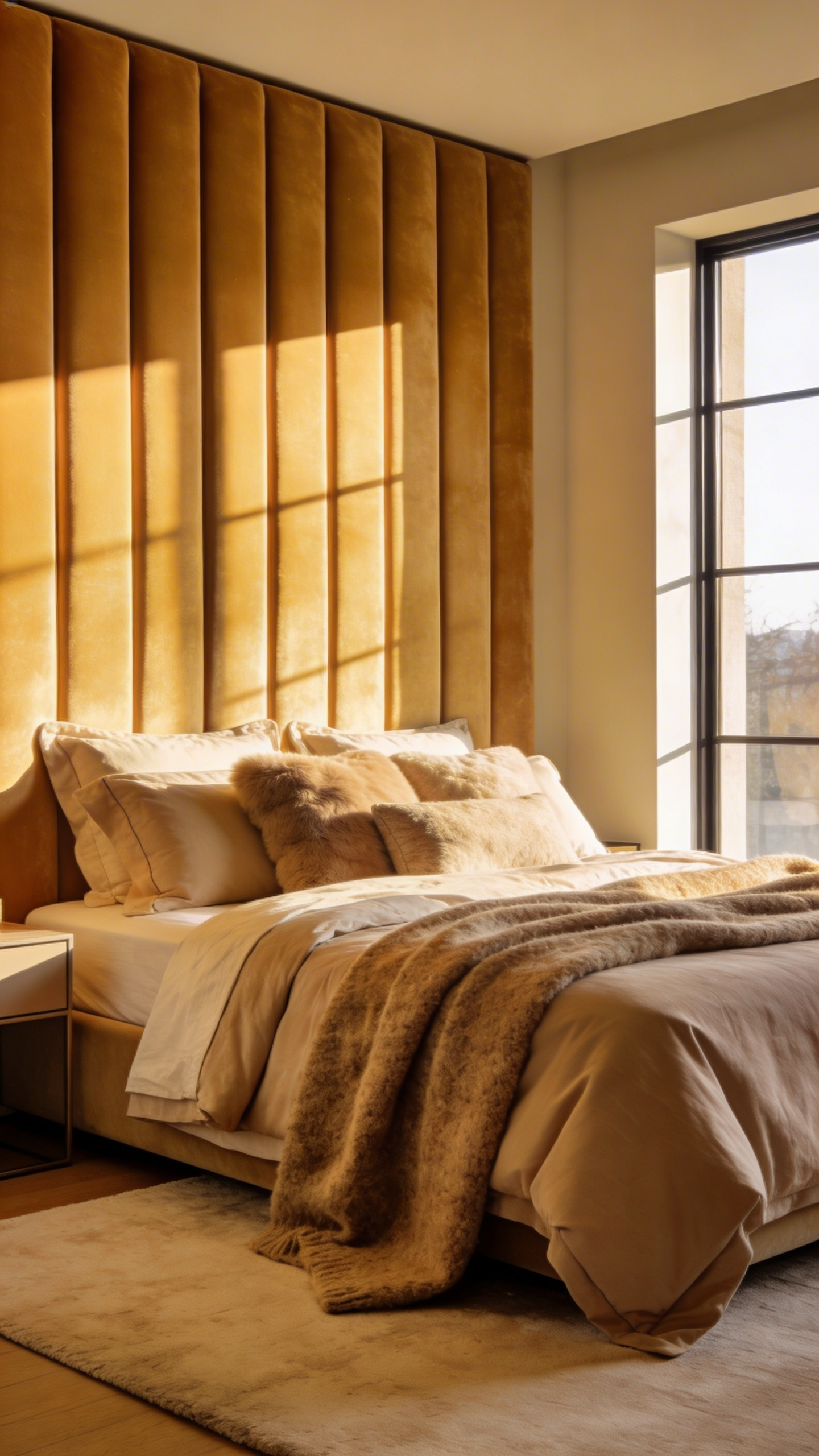
These textiles serve a hidden functional purpose. Specifically, velvet is a powerful acoustic tool. Its dense, porous pile traps sound waves effectively. As a result, the fabric absorbs the “noise floor,” such as heater hums or distant traffic. The room becomes hushed and physically grounded.
Similarly, the stitching pattern alters architectural perception. Vertical channeling, for instance, draws the eye upward. Historically, this style links back to Art Deco streamlining. It creates a visual rhythm that makes standard ceilings appear higher. Conversely, deep-button tufting adds weight through shadow. Essentially, every dimple creates a pocket of darkness. Ultimately, this dimensionality makes the bed feel like a permanent, immovable anchor.
Rug Placement: Engineering the ‘First Step’ experience for morning warmth
The “First Step” out of bed is a neurological transition, not just a physical movement. When you wake, your brain often lingers in the drowsy, creative Theta state. However, stepping onto a cold surface triggers an immediate “thermal shock.” This constricts blood vessels and spikes cortisol, jolting you awake too harshly. Therefore, we must engineer a “slow-thaw” experience through precise textile placement.
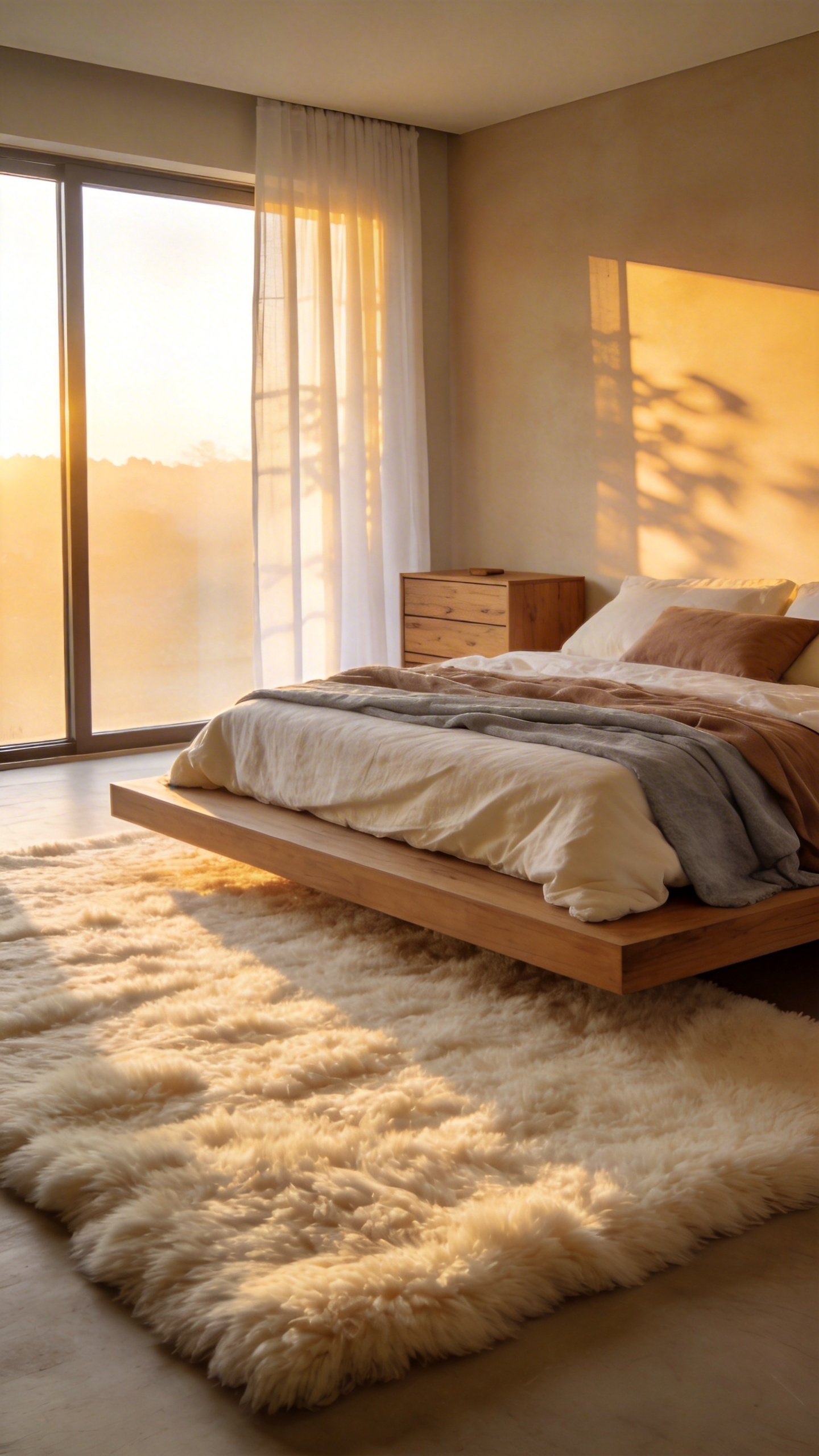
Specifically, this requires understanding the ergonomics of your morning pivot. Research suggests that heels land approximately 12 to 18 inches from the bed frame. Your rug must extend at least 24 inches beyond the mattress edge to ensure a warm landing. Avoid the common mistake of using small, isolated runners. Instead, anchor the room with a large area rug starting one-third down from the headboard. This creates a monolithic thermal zone that supports a graceful transition from sleep.
Beyond geometry, the fiber itself dictates the quality of warmth. Ideally, select wool for its superior thermal effusivity. Unlike synthetics, wool’s natural crimp traps ambient air, reflecting body heat back to the sole. For true luxury, you might even employ “tactile mapping.” Historically similar to the French *Tapis de Lit*, this involves layering a high-pile sheepskin over your base rug. This creates a plush visual target, reducing the subconscious anxiety of leaving your warm duvet.
Intermediate Layering: The ‘Rule of Three’ for mixing fabric weights on the bed
The “Rule of Three” is not merely an aesthetic choice; specifically, it is rooted in thermal dynamics. In technical bedding design, we must manage the “micro-climate” between the sleeper and the mattress. A single heavy comforter provides insulation, but it often lacks necessary breathability. Conversely, utilizing three distinct weights—Light, Medium, and Heavy—creates stagnant air pockets. These trapped layers allow the bed to act as a breathable, multi-stage thermos. This ensures the sleeper maintains a consistent core temperature without overheating.
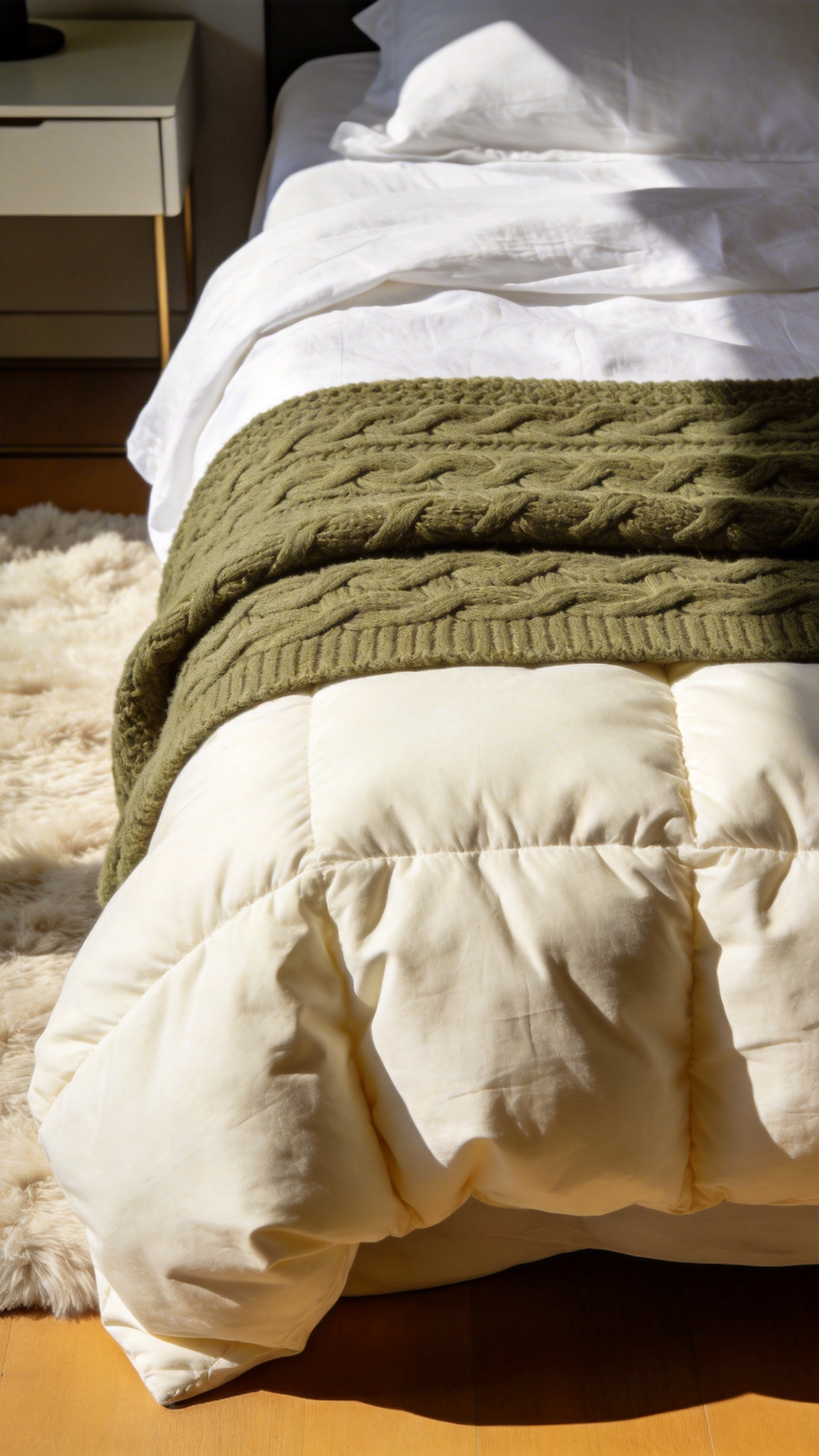
Beyond thermal comfort, professional styling relies heavily on “tactile friction.” For those designing with a neutral palette, you can find white bedroom inspiration that uses these layers to prevent a room from looking sterile. Therefore, you must successfully mix three specific textile behaviors: smooth, relief, and organic. First, a crisp percale sheet provides a cool, smooth entry point. Next, the intermediate layer—perhaps a waffle weave or matelassé—adds structural relief. Indeed, this stiff-weave middle layer acts as a “plumping” agent, preventing the top layer from looking deflated. Finally, the anchor layer, such as a heavy linen or velvet, provides a grounded, matte finish.
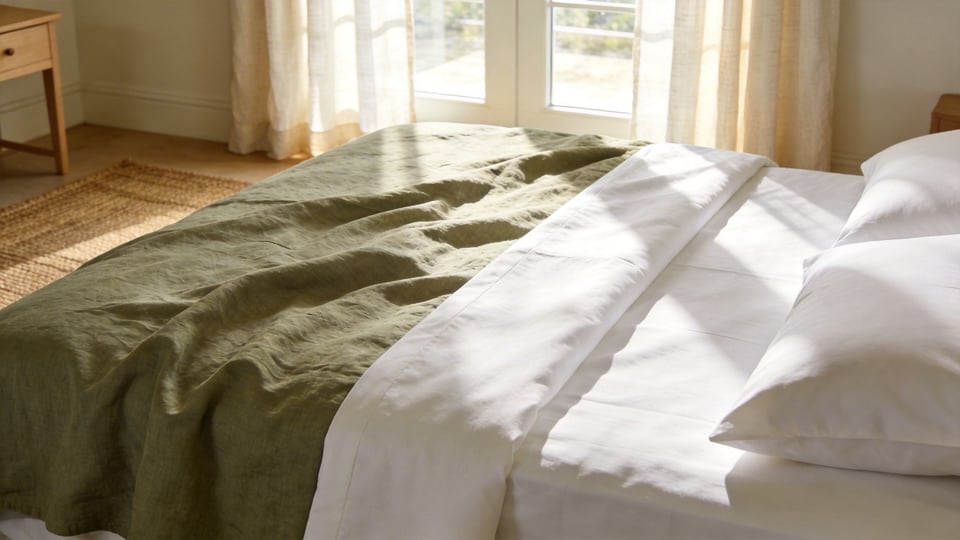
To master this look, you must also balance “visual weight.” Typically, this weight should increase as you move toward the foot of the bed. For instance, utilize a “split-tog” approach by pairing a light quilt with a heavy-gauge knit throw. To showcase this hierarchy, utilize the “Double Fold-Back” technique. Simply fold the sheet over the intermediate quilt, then fold the duvet back to expose its loft. Seeing these distinct thicknesses triggers a psychological sense of abundance and preparedness.
Texture Tension: Pairing rough bouclé with smooth silk for sensory depth
“Texture tension” elevates a bedroom by contrasting tactile sensations to create sophisticated sensory depth. Specifically, pairing rough bouclé with smooth silk is a masterclass in this design principle. The magic lies in how these fabrics interact with light. Technically, bouclé features thousands of irregular loops that create micro-shadows. Consequently, it absorbs and diffuses light to create a soft, matte halo.
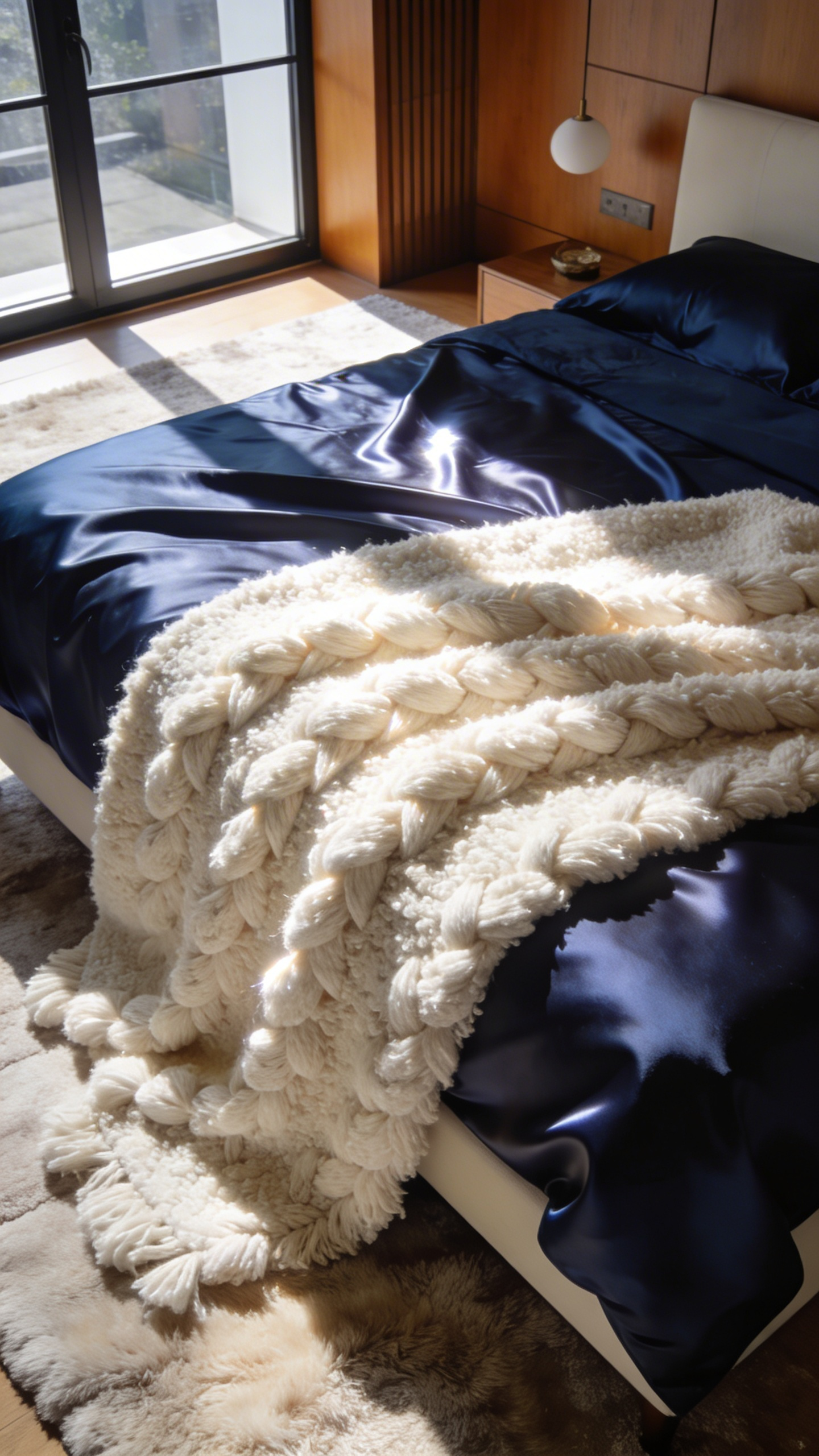
In contrast, silk fibers possess a unique triangular structure. Therefore, they act like prisms, refracting light to produce a signature shimmer. When placed together, silk becomes a “light catcher” against bouclé’s quiet, dark background. Neutral bedrooms avoid looking flat or clinical. Beyond aesthetics, this duo satisfies a psychological need for safety and stimulation. Bouclé feels sturdy, offering a sense of grounding “containment.” Conversely, silk offers a frictionless glide associated with cooling luxury.
Practically, this combination balances durability with delicacy. For instance, use sturdy bouclé for high-friction zones like headboards or benches. Then, reserve delicate silk for low-friction accents like top-layer pillows. This tactile journey creates a space that is approachable yet opulent.
The Art of the ‘Unmade’ Bed: Styling throws and pillows for approachable elegance
The “unmade bed” aesthetic, often called relaxed layering, creates a visual invitation to rest. Historically, a rumpled bed signaled domestic neglect. However, modern design embraces this style as a form of “emotional honesty.” It prioritizes authentic comfort over performative perfection. Specifically, this approach relies on “tactile honesty” to lower the viewer’s heart rate. Interior designers often cite the “Prospect and Refuge” theory to explain this effect. Tight sheets can feel hard, while billowy layers mimic a safe “nest.”
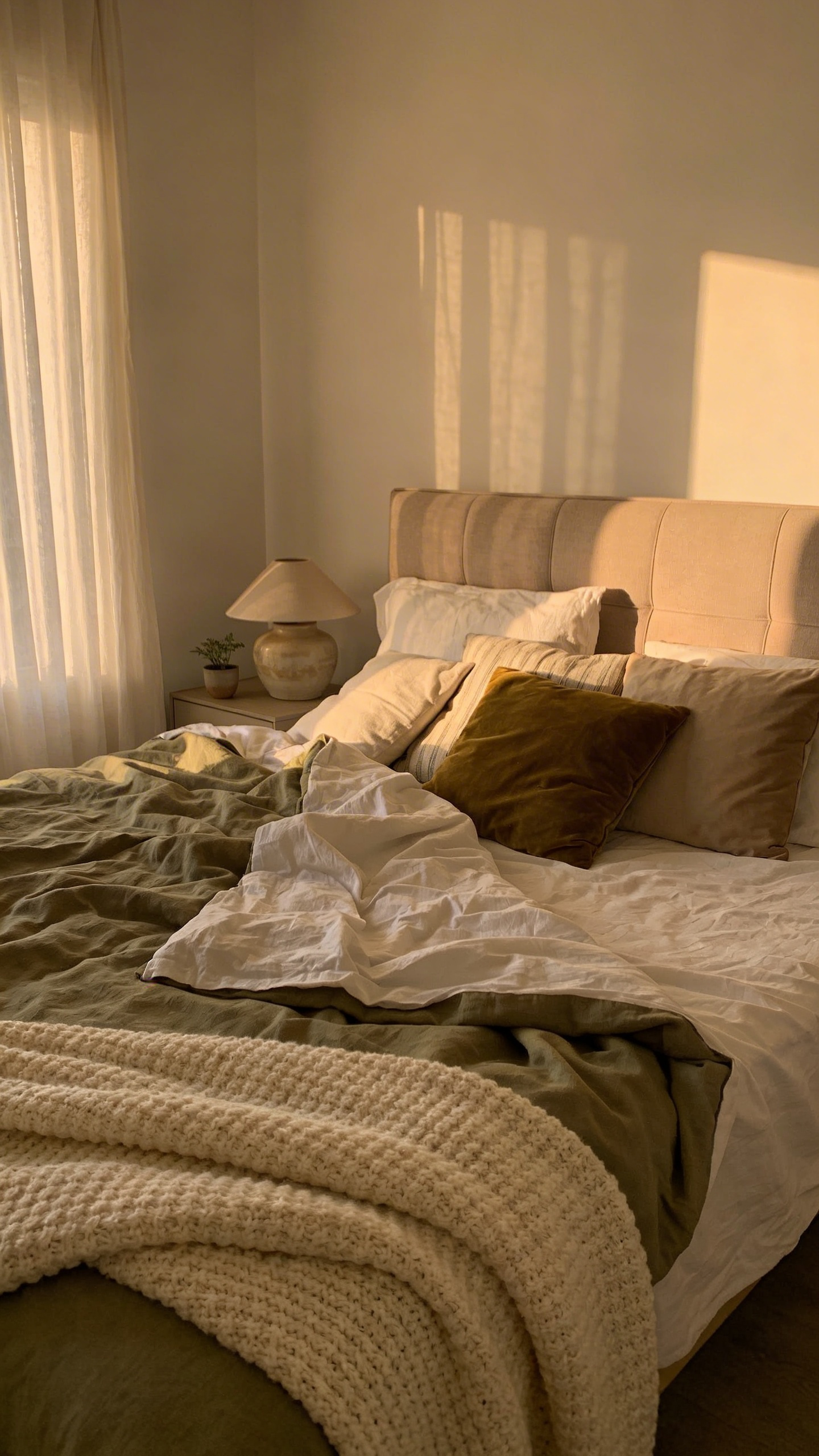
Consequently, the success of this look depends entirely on structural integrity. High-sheen cottons simply look wrinkled. In contrast, stonewashed linen offers a heavy, matte drape that holds a rumpled shape without looking flimsy. To achieve this, focus on volume. Use a duvet insert one size larger than the cover to create a luxurious, overstuffed appearance.
Next, master the art of the “throw toss.” Instead of folding blankets, drop them from a height to drape naturally across a corner. This technique reveals the fabric’s underside and adds necessary depth. Finally, maintain balance with the “Rule of Three.” Place Euro shams against the headboard, followed by sleeping pillows and a single textured accent. Furthermore, stick to tonal palettes to prevent visual clutter. By mixing textures rather than patterns, the bed feels curated rather than chaotic.
Window Dressing: Layering blackout drapes with heavy textural weaves for acoustic dampening
Creating a silent sanctuary requires more than just hanging thick fabric. Specifically, true acoustic comfort relies on the interplay between blocking and absorbing sound. To achieve this, designers employ a dual-layer strategy that acts as a “Silent Shield.”
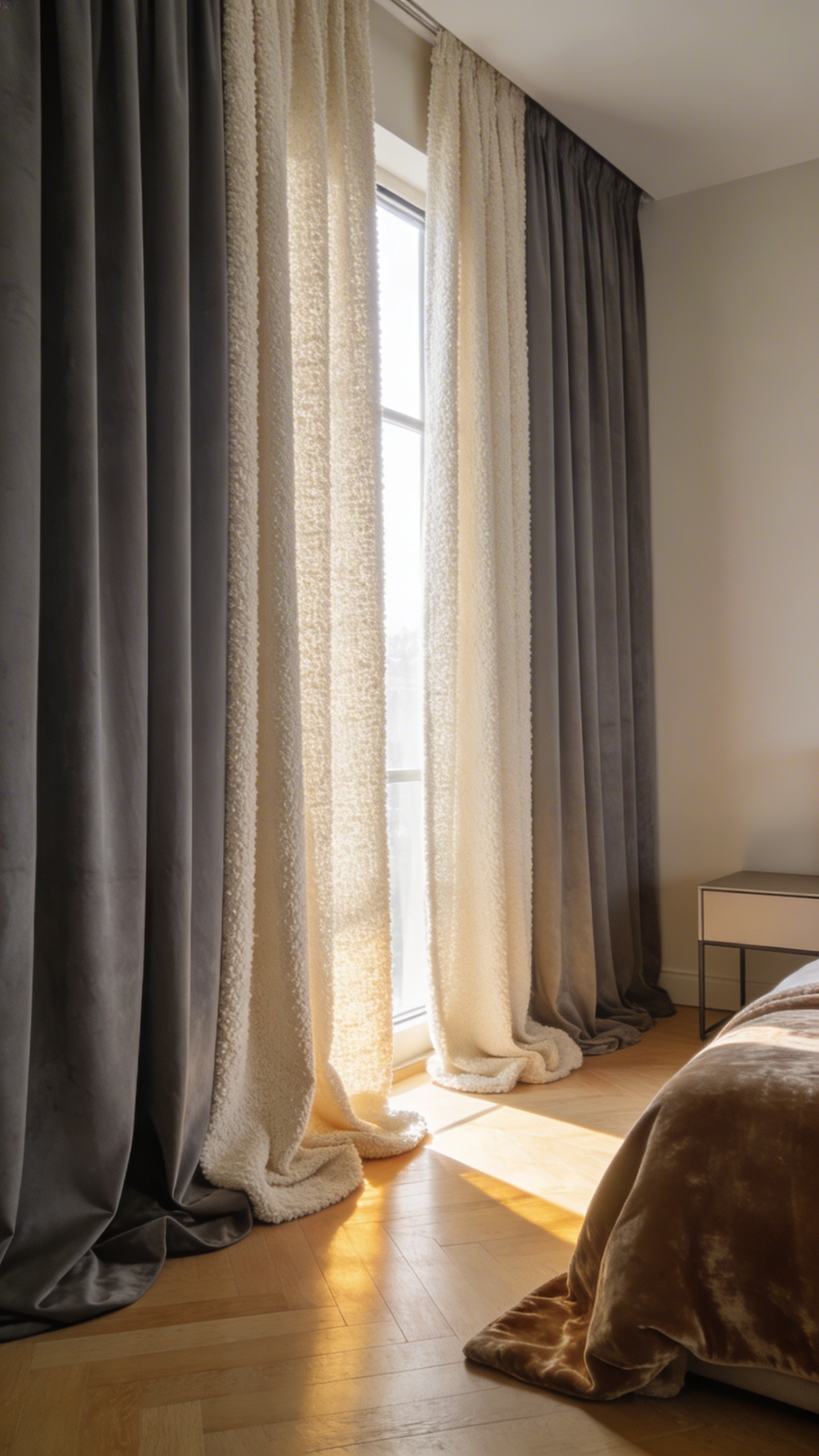
First, high-density blackout drapes serve as the primary barrier against outside noise. Because they possess significant mass, typically weighing over 200 g/m², they prevent sound waves from penetrating. Incoming noise effectively drops by 8 to 12 decibels. Therefore, the room feels approximately half as loud.
Next, a heavy textural face fabric addresses the room’s internal acoustics. Irregular weaves like bouclé or chenille act as a “sponge” for noise. Their looped surfaces trap sound waves within microscopic air pockets. As a result, the room loses its hollow echo and gains a sense of grounded warmth.
Material selection is only half the battle. To maximize dampening, professionals utilize a specific “fullness factor.” Typically, this means using fabric measuring 2.5 to 3 times the window’s width. These deep folds create resonance chambers that further deaden sound before it touches the surface. Crucially, an “Acoustic Return” seals lateral gaps by curving the curtain rod back to the wall. This combination creates a profound “visual hush.”
Advanced Application: Upholstered walls and fabric wallpapers to silence the outside world
To truly silence the outside world, we must look beyond visual softness. Standard drywall reflects nearly 95% of sound waves, creating subtle echoes. However, an upholstered wall functions as a powerful mechanical filter. By absorbing energy, it transforms a “live” space into a “dead” room. Consequently, ambient noise drops significantly, creating a physical sensation of compressed silence.
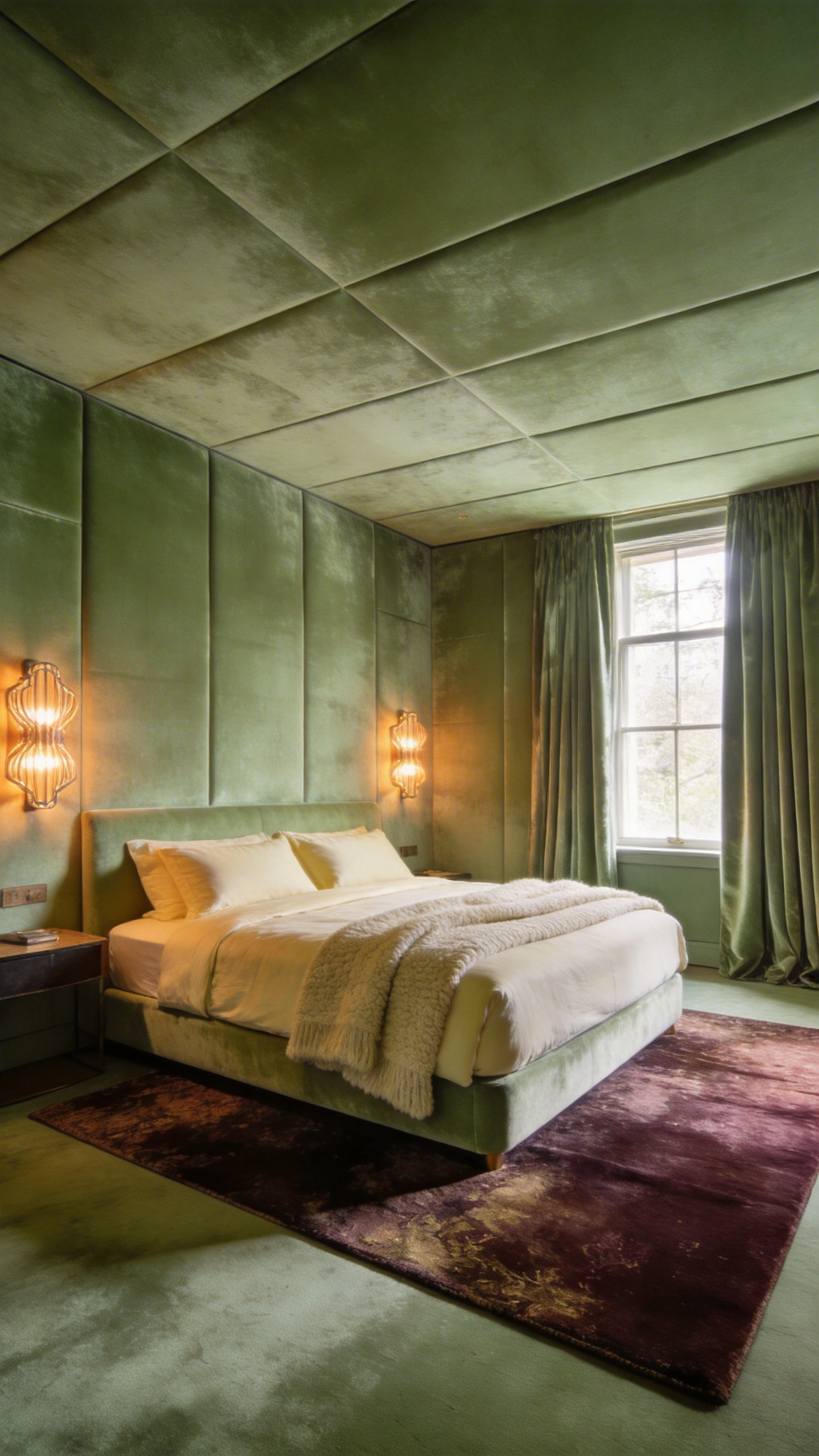
This technique is actually rooted in functional history. Originally, French aristocracy used stretched fabrics to insulate drafty stone chateaus. Therefore, distinguishing between fabric wallpaper and true upholstery is critical. Fabric wallpaper provides a beautiful, textured surface. Yet, it offers minimal acoustic benefit because it is glued directly to the wall.
Conversely, true upholstery relies on a “dead air space.” Installers place acoustic batting between a wooden perimeter frame and the face fabric. This method creates a barrier that functions much like noise-canceling headphones. Utilizing natural fibers helps the walls breathe, regulating the room’s micro-climate.
Beyond acoustics, this application fundamentally alters how light behaves. Flat paint reflects light in harsh, predictable angles. In contrast, heavy linens or velvets diffuse light in thousands of directions. Shadows soften and hard architectural edges blur. Ultimately, this “soft architecture” signals the brain to enter a deep state of rest. It creates a tactile sanctuary safely removed from the hard-edged world outside.
Lighting Textiles: Selecting pleated silk or linen shades to diffuse light warmly
The transformative power of a bedroom lamp lies primarily in its textile shade. Specifically, pleated shades offer a unique advantage over flat surfaces through the geometry of their folds. These rhythmic peaks and valleys create “micro-shadows” that naturally break up harsh light intensity. This diffusion prevents the glare associated with naked bulbs, creating a softer, more inviting atmosphere.
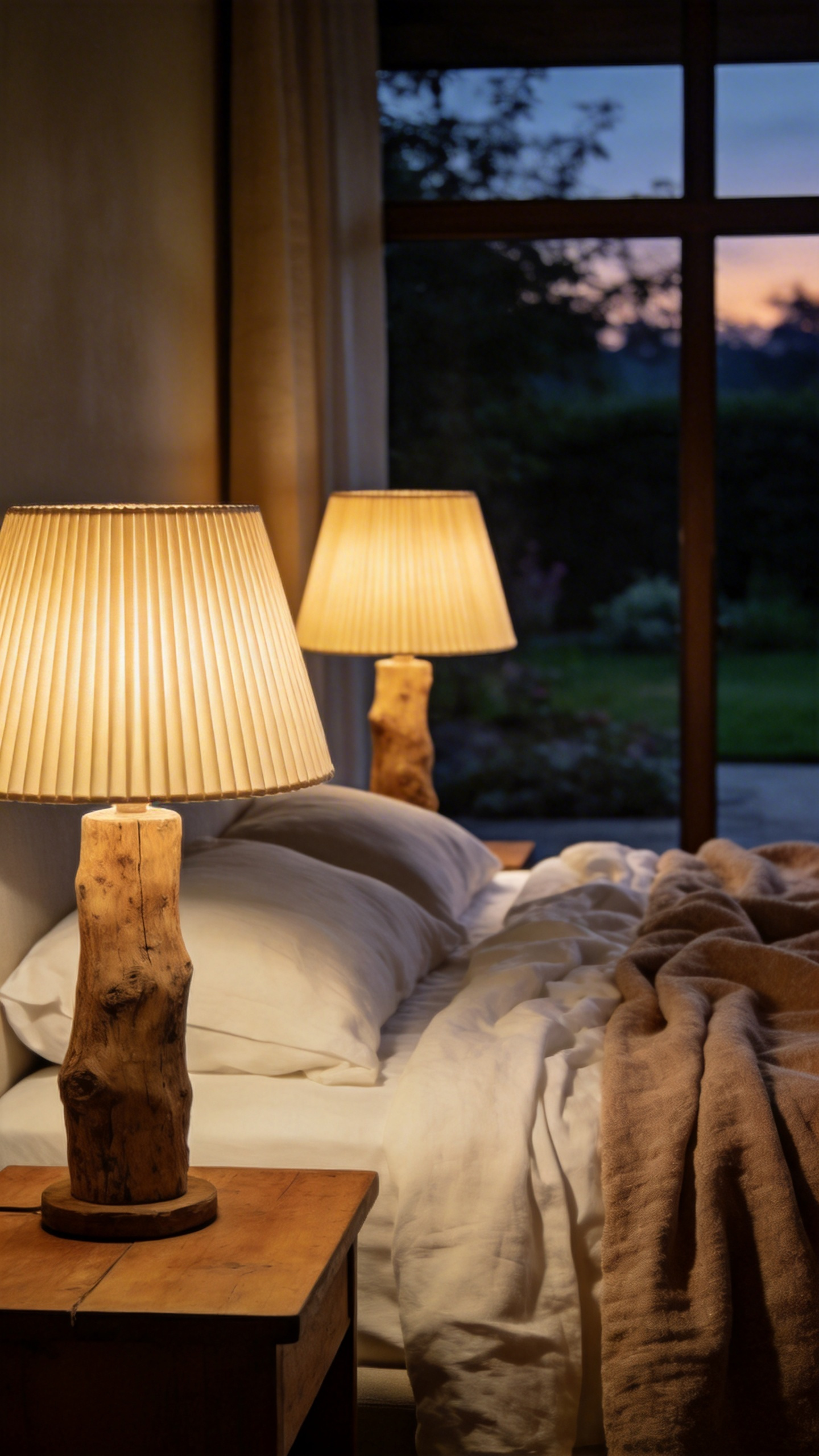
When selecting materials, consider the distinct behavior of silk versus linen. For instance, naturally triangular silk fibers act like tiny prisms, trapping light to create a sophisticated inner luminosity. In contrast, linen features natural irregularities known as slubs. Therefore, light filters through linen with a dappled, organic quality reminiscent of sunlight filtering through leaves.
Beyond the outer fabric, the internal lining dictates the actual warmth of the glow. These “soft lenses” ensure your space feels as tranquil as it looks. Complement this with broader luxury bedroom lighting inspiration to ensure every corner of the room promotes deep sleep. Standard white plastic linings often produce a cool, clinical cast regardless of the exterior fabric. Instead, expert designers prioritize champagne or gold-tinted silk linings to act as a permanent “Golden Hour” filter. Effectively, this lowers the light’s temperature, mimicking the comforting amber flicker of candlelight.
The Reading Nook: Carving out a ‘room within a room’ using overstuffed armchairs
Creating a sanctuary within your bedroom begins with understanding environmental psychology. Specifically, the “prospect-refuge” theory explains our instinctual desire for cozy corners. Ideally, we crave a protected back with a clear view of the room. An overstuffed armchair acts as essential “mini-architecture.” Its physical bulk provides a psychological shield against modern household distractions.
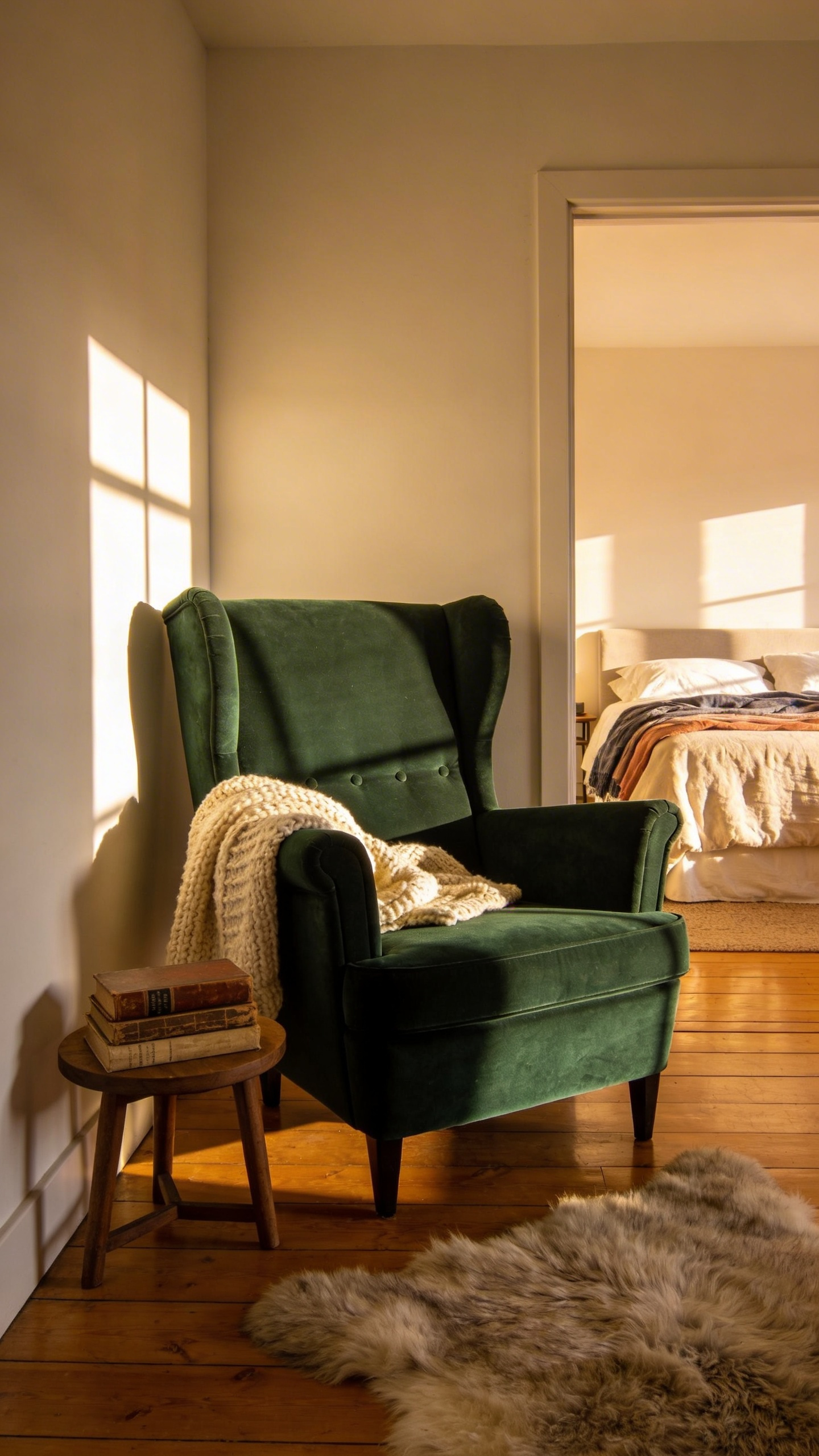
Historically, this design logic mirrors 17th-century fireside chairs. Originally, the distinctive wings served to trap heat and block drafts. Today, this translates into a thermal microclimate within your bedroom. Consequently, a high-backed chair becomes a warm cocoon, retaining body heat better than an open bed.
Surprisingly, size matters in counterintuitive ways. In fact, the “paradox of scale” suggests using one massive piece in small rooms. Rather than creating visual clutter with small furniture, a large chair anchors the space. It asserts itself as an intentional “room within a room.”
Finally, fabric selection defines the sensory boundaries. Dense, high-pile textiles like bouclé or velvet act as natural sound baffles. Specifically, these materials absorb noise, creating a distinct “hush” inside the nook. Wide-wale corduroy offers structural ribs that feel permanent. This “tactile architecture” transforms a simple corner into a dedicated private library.
Color Psychology: Wrapping the space in ‘Warm Envelope’ tones (Terracotta, Sage, and Greige)
Creating a “Warm Envelope” in the bedroom serves as a psychological strategy for sensory regulation. Specifically, this approach layers Terracotta, Sage, and Greige to deeply ground the emotions. Terracotta anchors this palette with “grounded heat.” Historically, this earth-adjacent hue signals shelter and primitive safety. Walls painted in matte terracotta seem to advance toward the viewer, offering a protective “hug.”
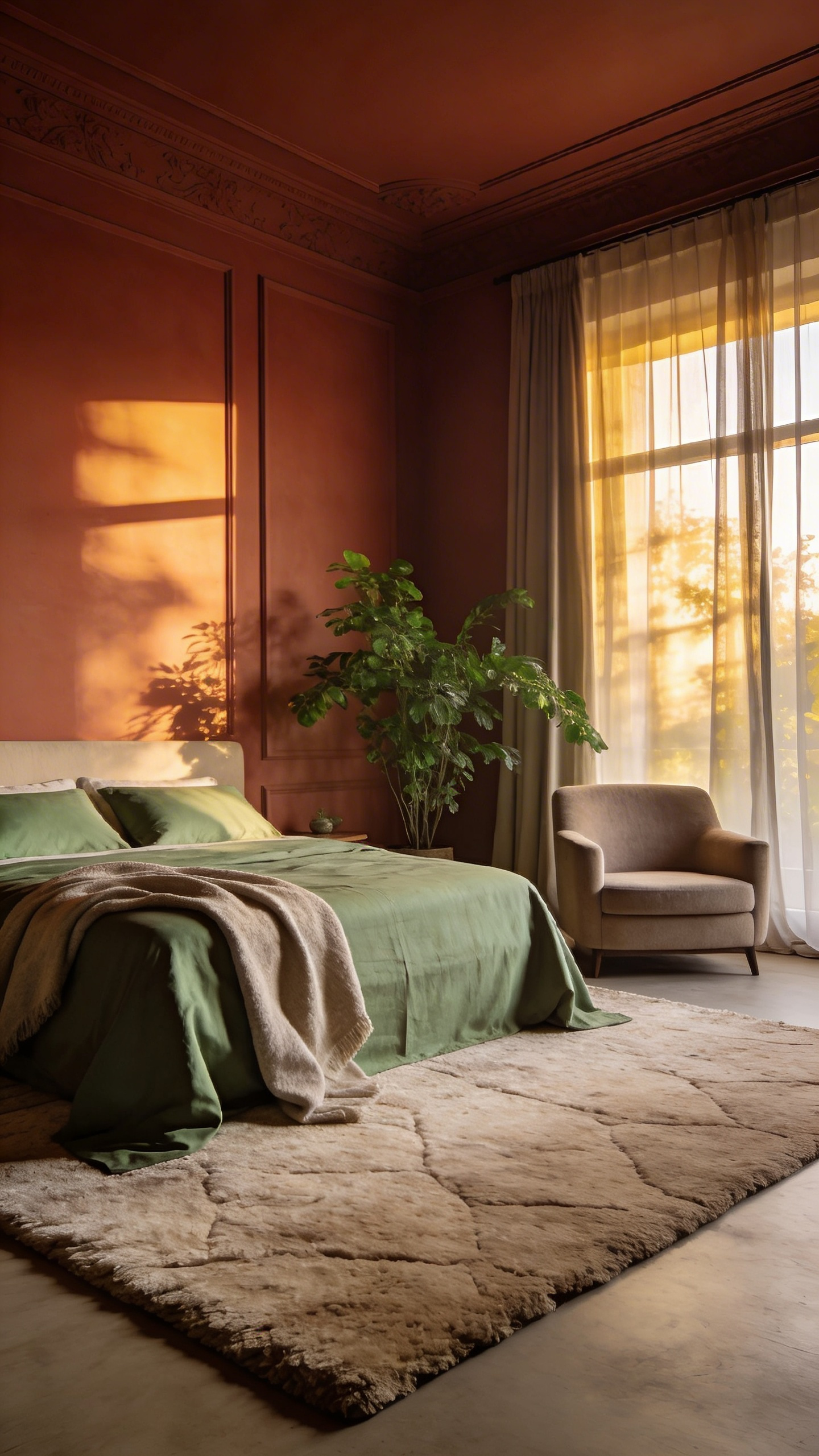
Sage Green acts as a restorative bridge within the space. It mimics the silvery underside of leaves, requiring minimal ocular adjustment from the eye. Viewing these specific mid-spectrum wavelengths acts as a biological reset, helping to lower the heart rate. To balance these organic tones, Greige provides “atmospheric silence.” Functionally, this sophisticated blend of gray and beige removes the clinical coldness of pure gray. It serves as a quiet canvas that effectively reduces decision fatigue.
However, the application technique is just as critical as the color selection itself. Designers often utilize “Color Drenching” to fully wrap the room. For instance, painting the ceiling eliminates sharp white lines that traditionally distract the brain. Layering monochromatic textures, such as heavy knits against limestone-washed walls, creates essential depth. This trio creates a sanctuary that prioritizes the nervous system over fleeting aesthetic trends.
Pattern Coordination: Mixing heritage florals with structured plaids for nostalgic comfort
Mixing heritage florals with structured plaids creates a deeply nostalgic sense of comfort. Historically, this pairing stems from the English Country House aesthetic, suggesting a room layered over generations. Consequently, the look implies “inherited” ease rather than a forced, matching set. Psychologically, this combination works by balancing organic movement with geometric stability. Specifically, fluid floral fractals offer biophilic softness, while rigid plaids provide a necessary visual anchor. Imagine the tactile tension between a crisp, glazed chintz and a heavy, woven wool tartan. The plaid acts as a sturdy boundary for the floral’s dreamy energy.
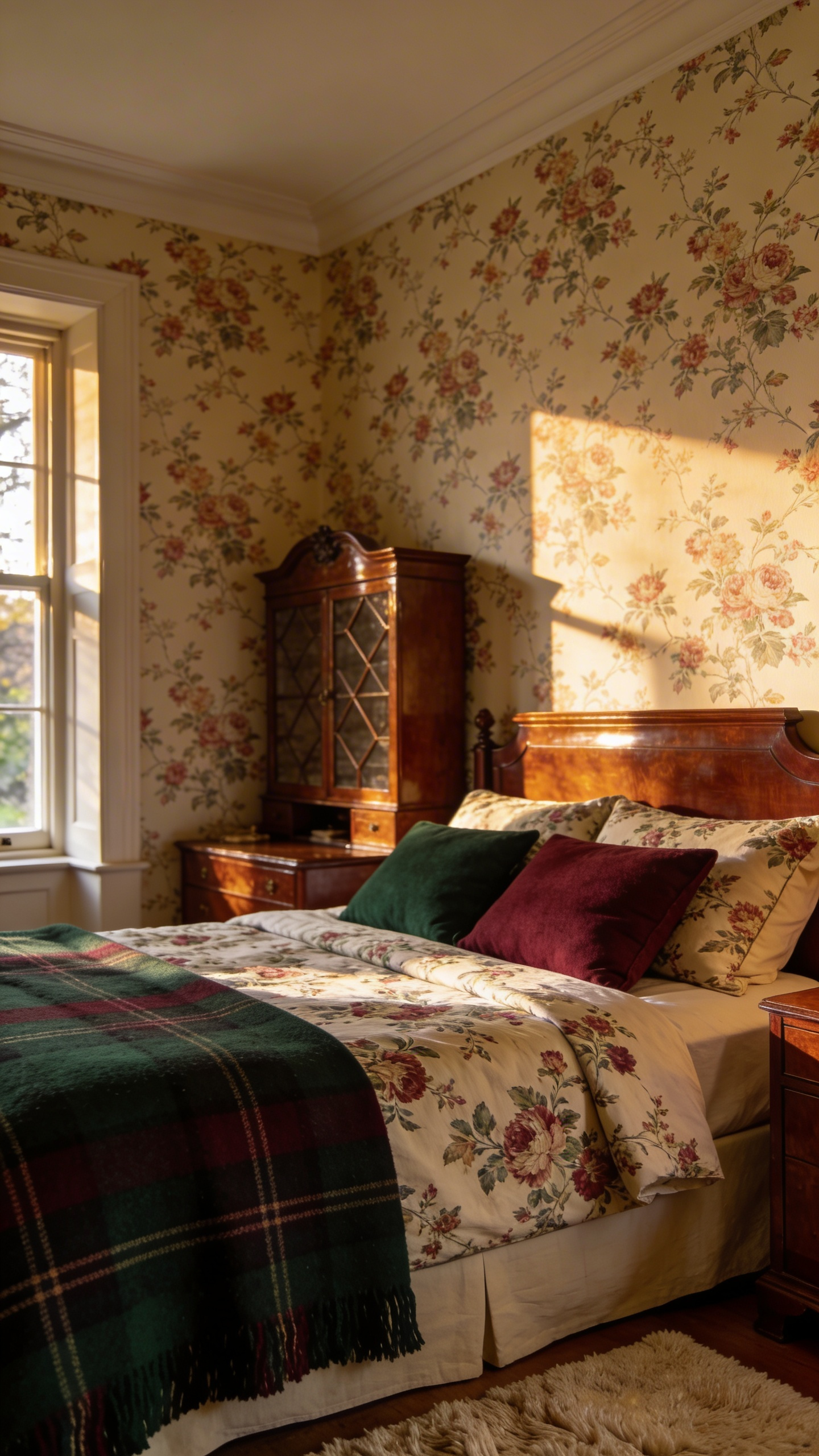
To execute this successfully, you must manage scale carefully to avoid visual clutter. Ideally, follow the “60-30-10” rule for pattern distribution. First, let a large-scale heritage floral dominate sixty percent of the space, allowing the complex design to breathe. Next, introduce a medium-scale check as the thirty-percent support element. Ensure both fabrics share a common “ground color,” such as a specific cream or linen tone. In doing so, you connect disparate designs into a unified visual landscape. These heavy, layered textures effectively dampen sound, creating a hushed, protective sensory cocoon.
Seasonal Swaps: Transitioning textiles from breathable summer voiles to winter wools
Transitioning your bedroom textiles is a ritualistic “wintering of the home.” Interestingly, the best time to swap isn’t determined by temperature, but by humidity. As autumn rain increases, standard cotton begins to feel clammy. Therefore, you should switch to wool to combat dampness. Specifically, wool utilizes a chemical phenomenon called the “heat of sorption.” Unlike cotton, which cools when damp, wool absorbs moisture vapor and releases heat. This maintains a stable, warm microclimate under your covers.
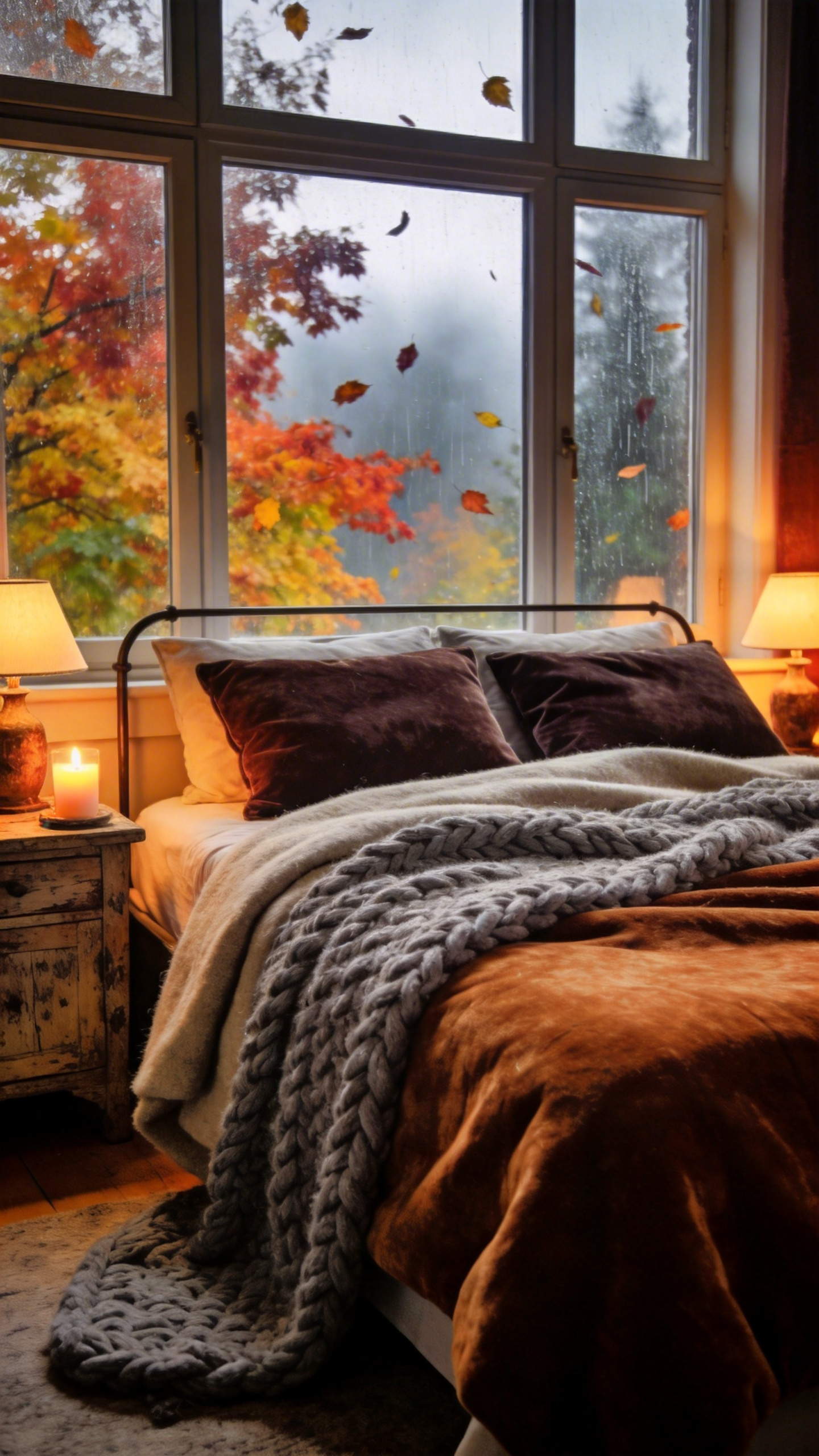
Beyond physics, this shift alters the room’s sensory architecture and improves thermal comfort. Summer voile offers a crisp, airy rustle. Conversely, heavy wools act as acoustic dampeners, creating a “grounded hush.” This silence satisfies our natural “cocooning instinct,” making the space feel safer.
To achieve this look, designers recommend the “Comfort Anchor” strategy to avoid flatness. First, replace smooth sheets with brushed cotton to trap warmth. Next, layer a mid-weight alpaca blanket between the sheet and duvet for thermoregulation. Finally, place an oversized, chunky wool throw at the foot of the bed. This visual weight signals the brain to wind down immediately. Ultimately, these layers mimic historical tapestries, turning your bed into a warm, insulated sanctuary.
Maintenance: Practical care tips to keep performance fabrics and natural fibers soft over time
True coziness relies on the tactile experience of your bedding, not just the visual aesthetic. Therefore, maintaining softness requires understanding textile biology. Specifically, natural fibers like linen contain plant resins called pectins, which cause initial stiffness. However, regular washing slowly dissolves these resins, allowing fibers to “bloom” and relax. To encourage this safely, avoid high-alkaline detergents that strip away natural oils. Instead, choose pH-neutral options to preserve the fabric’s inherent lubricity. You can also mimic traditional fiber-beating techniques by adding wool dryer balls to the cycle.
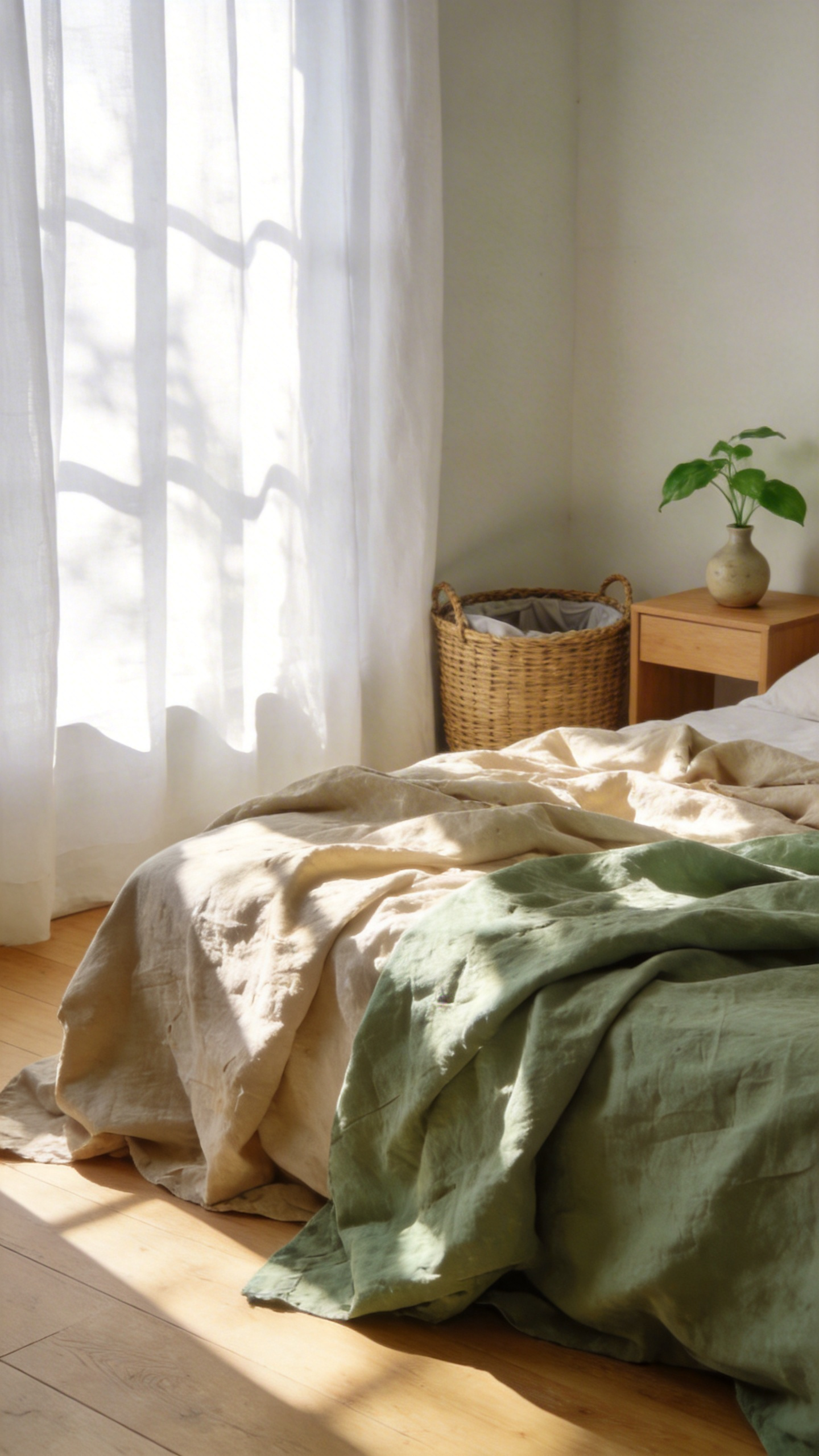
Conversely, performance fabrics require a different chemical approach. Standard fabric softeners coat fibers in wax, effectively clogging the moisture-wicking channels. Consequently, sheets feel brittle, heavy, and trap oils. As a solution, use distilled white vinegar in the rinse cycle. This acetic acid acts as a chelating agent, stripping mineral deposits and restoring breathability. Additionally, washing sheets in singular loads prevents friction-based pilling caused by heavy towels.
Most importantly, you must avoid thermal fatigue to prevent brittleness. High heat permanently melts synthetic fibers and damages natural ones. Thus, adopt the “90% Rule” favored by luxury hotels. Remove linens while they are still slightly damp and cool to the touch. Then, let them air-dry to preserve the “loft” between threads. Finally, rotate your bedding using the “Rule of Three.” Fibers need a week of rest in a cupboard to reabsorb ambient moisture. This recovery period allows threads to regain their natural elasticity and softness.
Frequently Asked Questions
How can I make my bedroom feel cozy without clutter?
Focus on tactile layering rather than visual objects. Using a mix of smooth and rough textures, such as a silk pillowcase against a chunky wool throw, creates depth and comfort without requiring extra decorative items that cause visual noise.
What is the best color palette for a relaxing bedroom?
Designers recommend a “Warm Envelope” palette including terracotta, sage green, and greige. These tones are biophilic and help lower the heart rate by mimicking natural environments, providing a sense of psychological safety.
How do you layer bedding like a professional?
Apply the “Rule of Three” by using distinct fabric weights: a light breathable sheet, a medium-weight coverlet, and a heavy-lofted duvet. Folding back each layer at the head of the bed showcases the various textures and signals abundance.
Conclusion: Moving from a decorated room to a restorative personal sanctuary
Ultimately, transforming a bedroom requires looking beyond mere aesthetics. A decorated room creates visual interest, yet a sanctuary supports biological restoration. Therefore, true design involves shifting from high-contrast visuals to soothing “soft fascination.” By prioritizing tactile feedback over trends, we signal safety to the nervous system. In fact, the most effective spaces function like a second skin. Thus, your environment actively helps lower cortisol levels and induce rest.
Consequently, the bedroom returns to its historical role as a private retreat. It stops being a digital backdrop and becomes a vessel for recovery. Looking ahead, view your textile choices as vital tools for well-being. Begin this transition by auditing your current bedding layers for breathability and weight. Specifically, replace synthetic, heat-trapping fibers with natural linens that regulate temperature. Finally, use this cozy bedroom inspiration to build a space where you perform your rest, not just store your things.