Many people seeking simple living room ideas view a streamlined space as merely a stylistic preference. Often, they mistake minimalism for a cold, empty design trend. However, a streamlined space offers much more than visual appeal. Instead, it functions as a deliberate psychological structure. In fact, research indicates that visual clutter aggressively competes for your attention. Consequently, this constant noise drains your limited working memory. The brain processes predictable patterns with far less effort. Therefore, reducing non-essential stimuli creates necessary “cognitive breathing room.” Indeed, true organization is about managing your mental resources efficiently.
To understand this dynamic, we apply the Intimate Authority Framework. Here, “Authority” signifies cognitive sovereignty over your own mental energy. Specifically, “Intimacy” reflects a curated connection to your authentic self. A simple room essentially acts as a strict boundary against external chaos. Thus, it allows you to reclaim control over your environment. Additionally, it forces a shift from mindless accumulation to intentionality. This guide reveals how to transform your space into a sanctuary of focus. We explore methods to establish authority through design boundaries. Next, we examine how to exercise a “curatorial veto” on possessions. Finally, you will learn to prioritize sensory depth over visual breadth.
Harnessing the Power of Negative Space: Why Empty Areas Matter
In spatial design, negative space is not merely an absence of decoration. Instead, it serves as an active, structural tool. Specifically, this “white space” is essential for mental well-being because it significantly reduces cognitive load. Our brains instinctively attempt to organize visual data into coherent patterns. However, too many competing elements disrupt this process. Consequently, a room packed to the brim feels chaotic, regardless of the decor’s quality. Therefore, strategic voids provide necessary “visual pauses,” allowing the eye to rest.
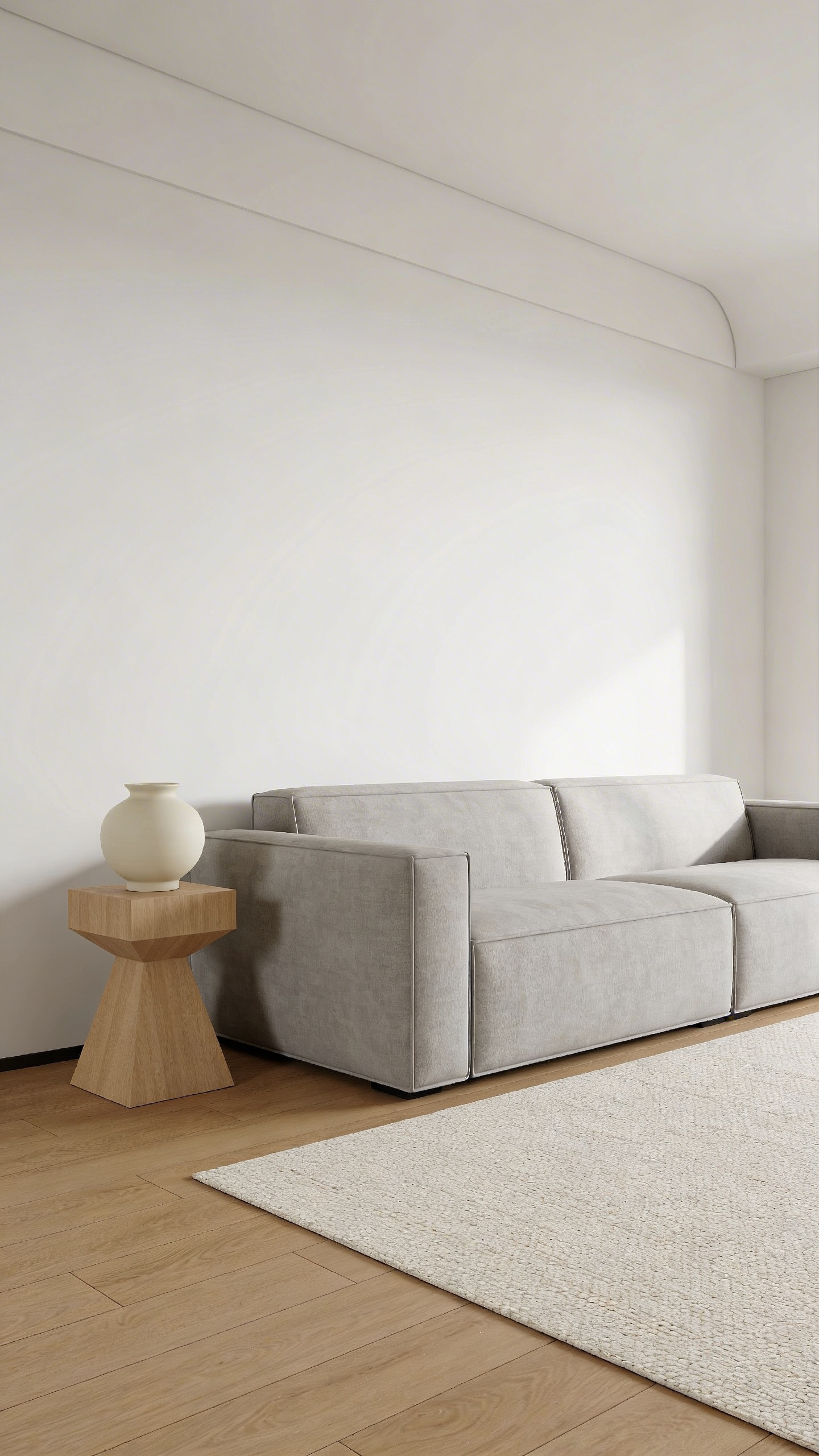
Indeed, these intentional empty areas communicate a sense of luxury. Drawing on the Japanese concept of *Ma*, the space between objects becomes part of the composition. In fact, high-end interiors often utilize quiet restraint to signal confidence. Thus, by giving furniture room to breathe, you elevate each piece. A single sculptural chair creates more impact when isolated than when lost in a crowd.
Finally, you can use negative space to control physical flow. For instance, try floating furniture away from walls rather than pushing it against the perimeter. This placement establishes clear pathways and directs focus toward specific focal points. Additionally, it highlights the room’s architectural bones, such as windows or millwork. Ultimately, effective spatial planning isn’t just about placing items; it is about preserving open space.
Foundation: Visual Simplification Techniques
Visual simplification goes beyond mere tidiness; it is a deliberate composition strategy. Fundamentally, it serves as a psychological tool used to reduce cognitive load. Specifically, a cluttered environment forces the brain to process excessive visual data, creating subconscious stress. Consequently, the design goal is eliminating “visual noise” to foster genuine calm.
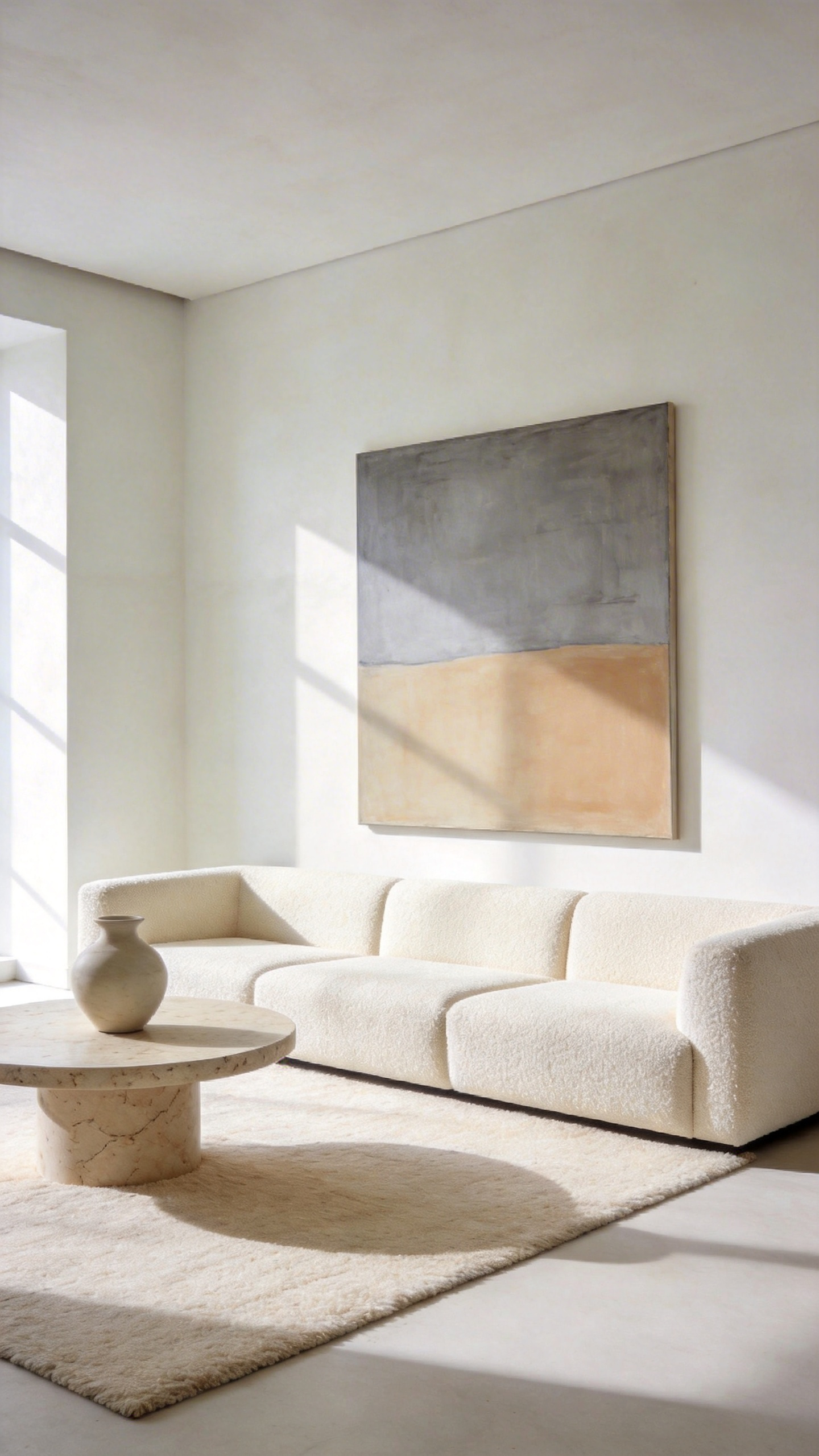
Historically, this approach is rooted in the Modernist principle that “less is more.” Architects like Mies van der Rohe championed stripping away decoration to reveal essential forms. Similarly, the Japanese concept of “Ma” emphasizes the intentional use of empty space. It suggests that the void between objects is as important as the objects themselves. Therefore, you must allow shelves and surfaces to “breathe” rather than filling every gap.
In practice, achieve this balance by prioritizing scale over quantity. Instead of displaying numerous small knick-knacks, select one large, impactful statement piece. Next, adopt a monochromatic color palette to unify the room. Shades of warm white or gray allow the eye to glide without jarring interruptions. However, avoid sterility by introducing rich textures like wool, wood, or linen. Finally, incorporate curved silhouettes to soften the rigid lines often found in modern architecture. These gentle forms lower visual tension, ensuring the space feels inviting rather than stark.
1. The ‘Floating Furniture’ Layout: Creating Airflow and Space
Most homeowners instinctively push sofas against walls to maximize center floor space. However, this common impulse often makes a room feel static and heavy. Instead, pulling pieces inward creates the “Open Perimeter Effect.” This specific layout trick enhances the psychological perception of expanded square footage. Consequently, the exposed flooring around the room’s edges allows the eye to travel freely. Indeed, this negative space signals intentionality, suggesting you have room to spare.
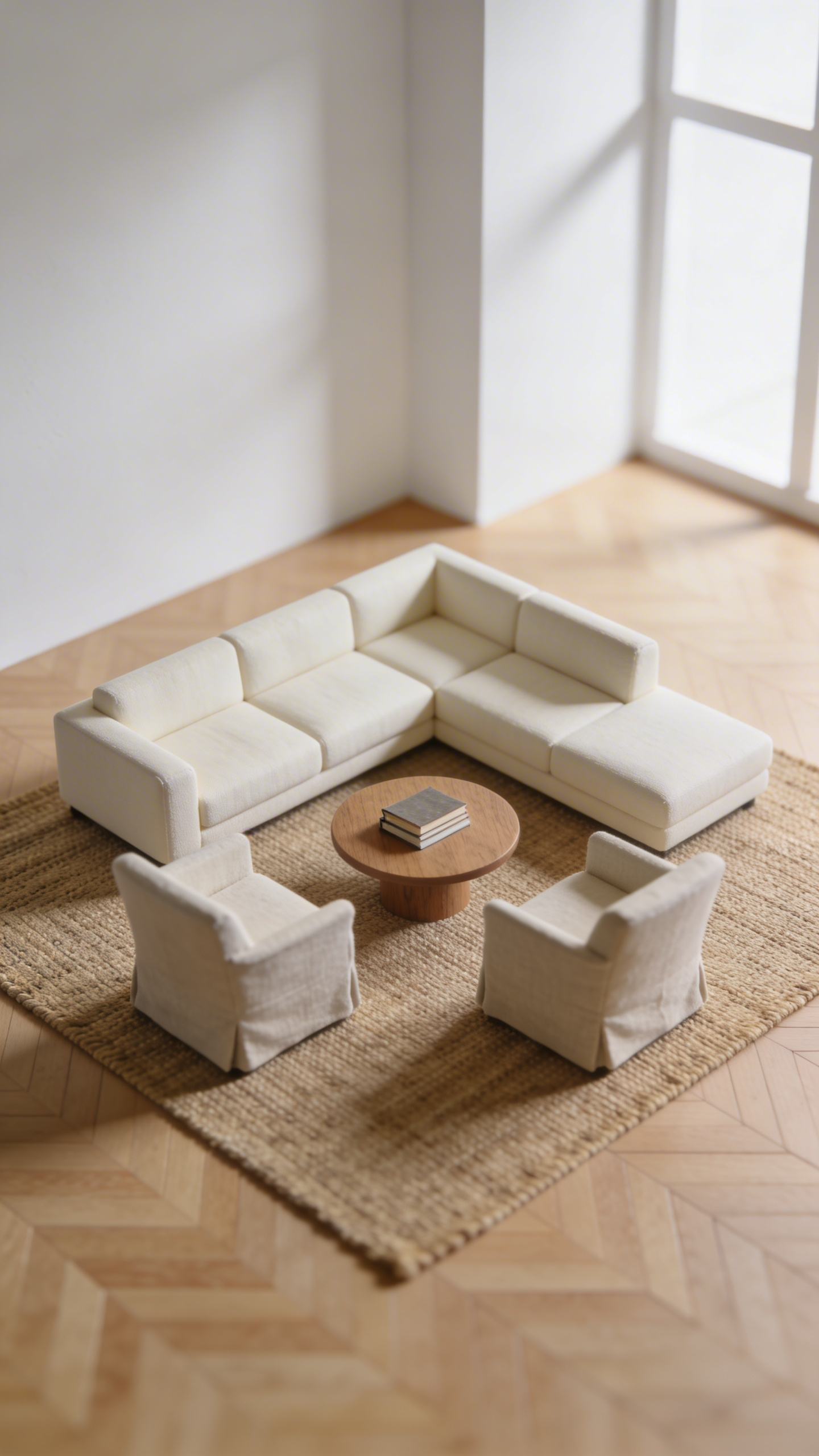
Beyond aesthetics, this approach relies on specific metrics to ensure functional traffic flow. For more structural inspiration, explore comprehensive living room layout ideas. Specifically, designers recommend leaving at least 12 inches of clearance behind floated pieces. For major walkways, such as the path to a kitchen, you should aim for 30 to 36 inches. Therefore, movement through the room becomes effortless and logical. Additionally, keeping primary seating within eight feet of each other fosters better conversation.
This layout also serves as an architectural tool for defining zones in open-plan spaces. In fact, a floating arrangement acts as an invisible wall between living and dining areas. To ground this setup, an area rug is essential for anchoring the “island” of furniture. Finally, selecting sofas with tapered legs allows light to stream underneath. Thus, the room maintains a sense of airflow and visual lightness.
2. High-Profile Sofas: Why Leg Visibility Increases Perceived Space
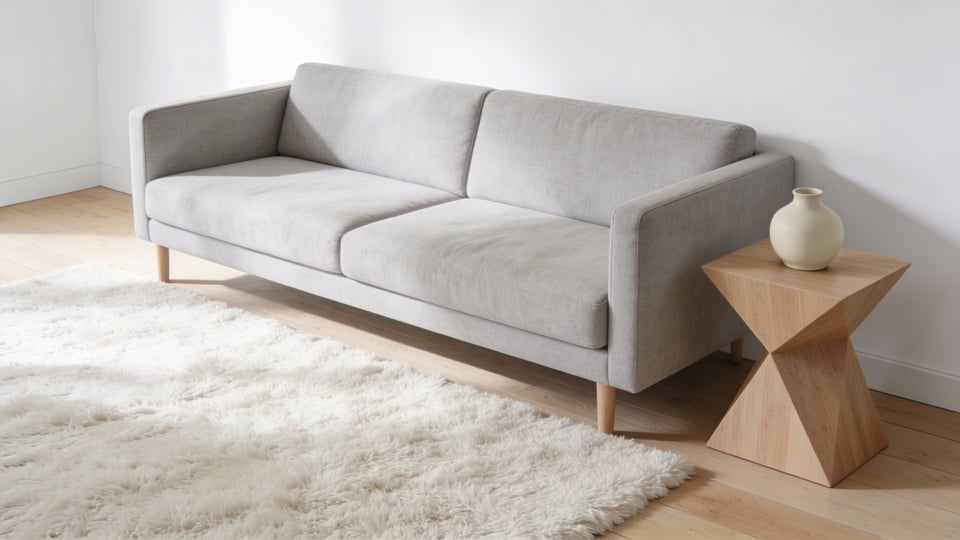
The perception of increased space relies heavily on what the eye can see at ground level. Specifically, exposing the floor beneath furniture creates a powerful visual trick known as floor continuity. When you choose a sofa with high legs, the flooring extends visually underneath the piece. Consequently, the brain interprets this uninterrupted plane as usable square footage rather than blocked space. This illusion effectively pushes the walls outward, lending the room a larger perceived footprint.
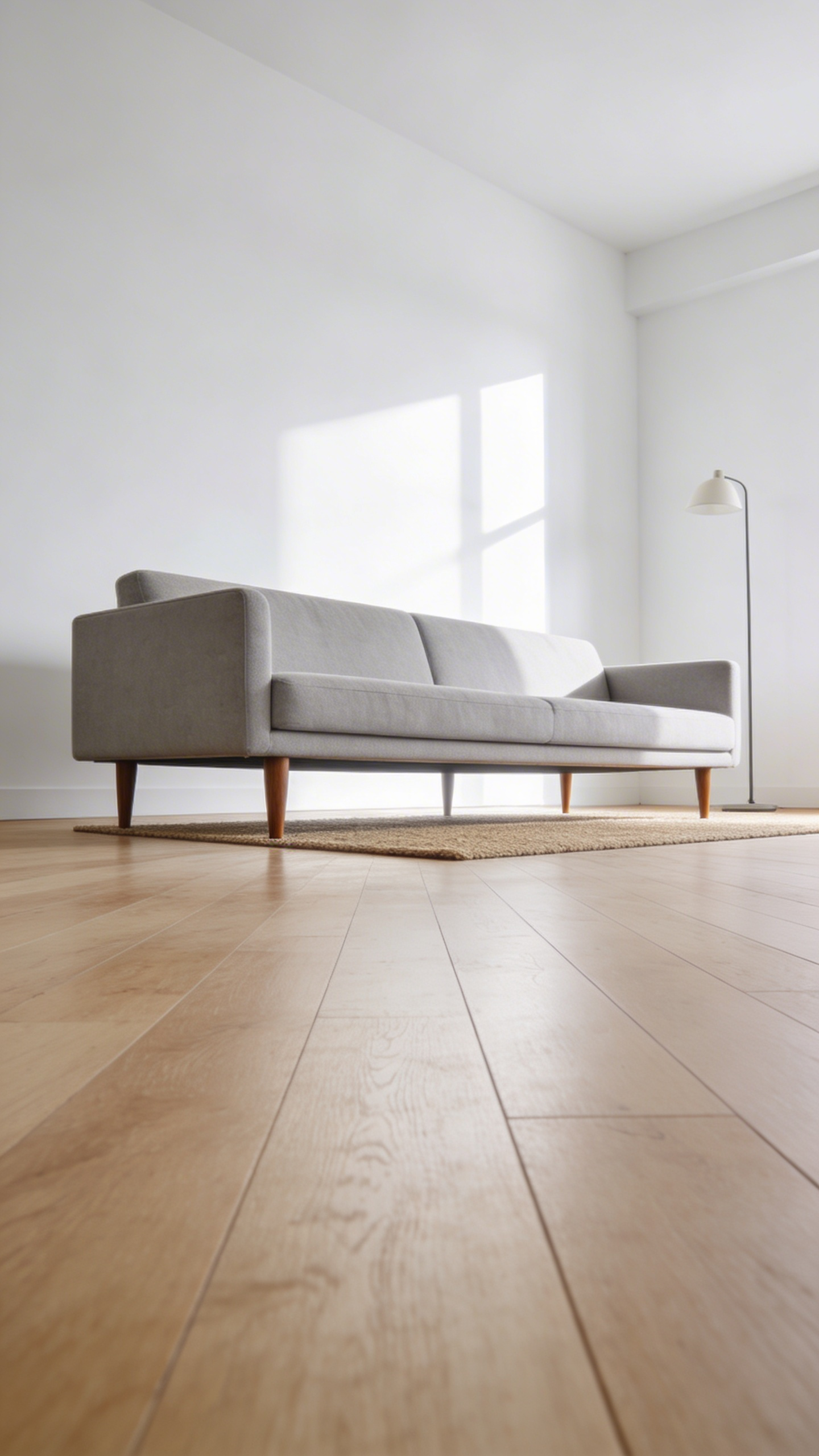
In contrast, “skirted” or solid-base furniture visually terminates the floor line abruptly. This creates a heavy, monolithic mass that can make a modest room feel denser. Therefore, selecting a sofa raised four to eight inches off the ground significantly reduces its visual weight. This simple elevation makes the piece appear lighter and airier, preventing small living areas from feeling overwhelmed.
Beyond mechanics, this design choice offers profound psychological benefits through the management of negative space. Environmental psychology suggests that “visual breathing room” around objects reduces cognitive load. As a result, the empty space beneath the sofa gives the eye a necessary place to rest. This fosters a sense of calmness and clarity essential for simple living environments.
Historically, this principle defined Mid-Century Modern and Scandinavian design movements. Designers utilized tapered legs to maximize light flow during dark Nordic winters. Ultimately, prioritizing leg visibility creates an unobstructed sightline that enhances both the flow and organization of your home.
3. The Three-Texture Rule: Limiting Complexity Without Sacrificing Warmth
Many homeowners worry that simplifying a living room effectively requires sacrificing coziness. However, the “Three-Texture Rule” provides a systematic guardrail against this common pitfall. Fundamentally, this concept creates a recognizable pattern that the human brain finds satisfying. Specifically, grouping elements in threes introduces calculated asymmetry, which prevents the space from feeling stagnant or staged. Consequently, you achieve necessary depth without the visual noise of clutter.
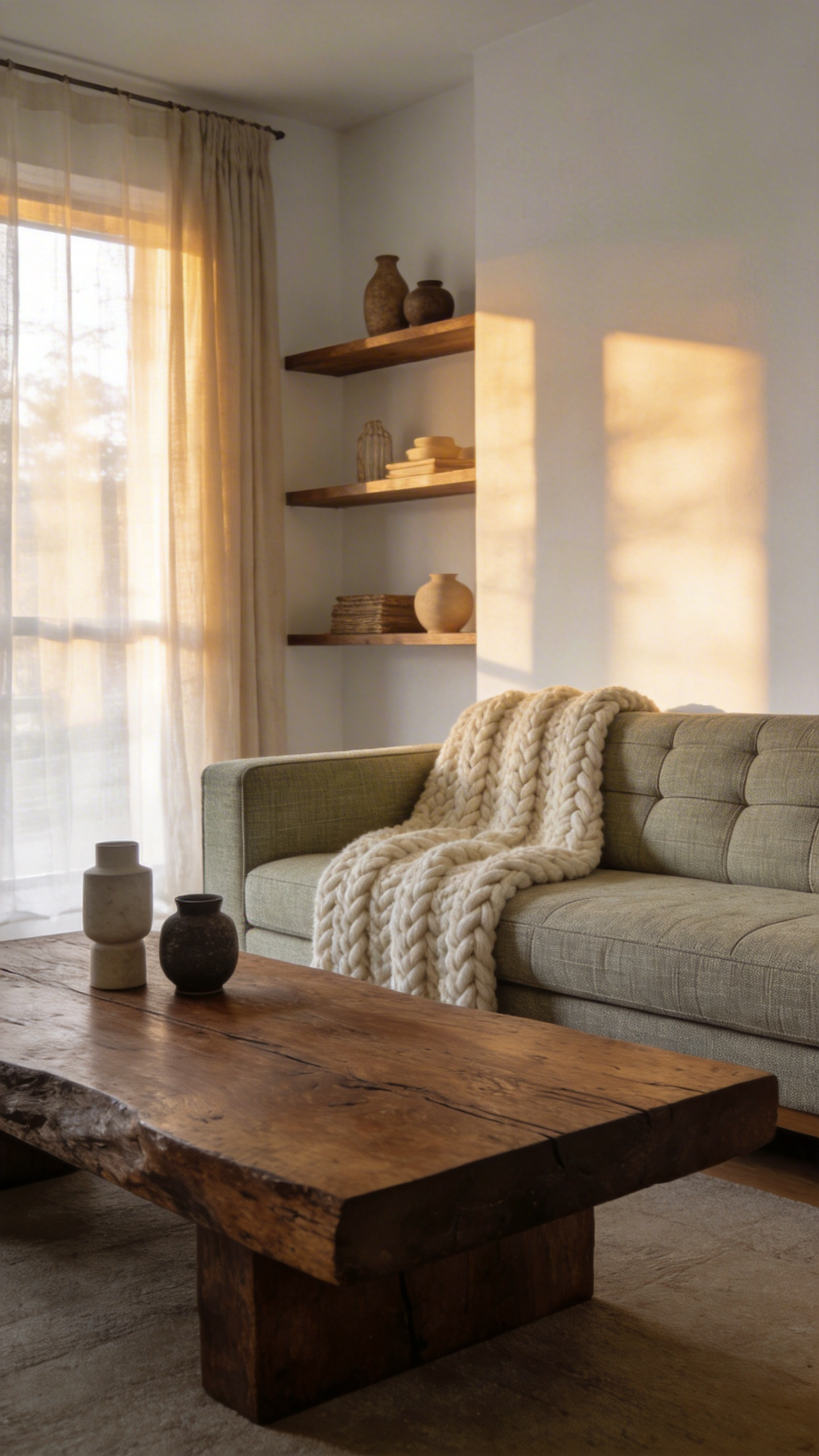
To execute this, successful designers often utilize a structured 70-20-10 ratio. First, dedicate 70% of the room to a matte foundation, such as smooth walls or linen upholstery. Next, layer in a plush, tactile texture for 20% of the space. For instance, a bouclé chair or thick wool rug invites touch and adds physical comfort. Finally, reserve the remaining 10% for hard accents, like a polished metal lamp or honed marble table.
This intentional layering serves a crucial physiological purpose. In fact, interacting with soft materials creates a neurochemical response, releasing oxytocin to induce calm. Furthermore, rougher textures absorb light, creating intimacy, while smooth accents reflect it to maintain brightness. Therefore, by strictly limiting complexity to these three tiers, you build a room that feels systematic yet undeniably warm.
4. Symmetrical Anchoring: Using Balance to Quiet the Visual Noise
Creating a simple living room requires more than just decluttering; it demands intentional structure. Fundamentally, your brain constantly scans environments for order. Therefore, symmetrical anchoring serves as a powerful psychological tool to quiet visual noise. Specifically, the human mind processes balanced arrangements with significantly less cognitive effort than chaotic ones. Consequently, a symmetrical space immediately feels safer, grounded, and serene.
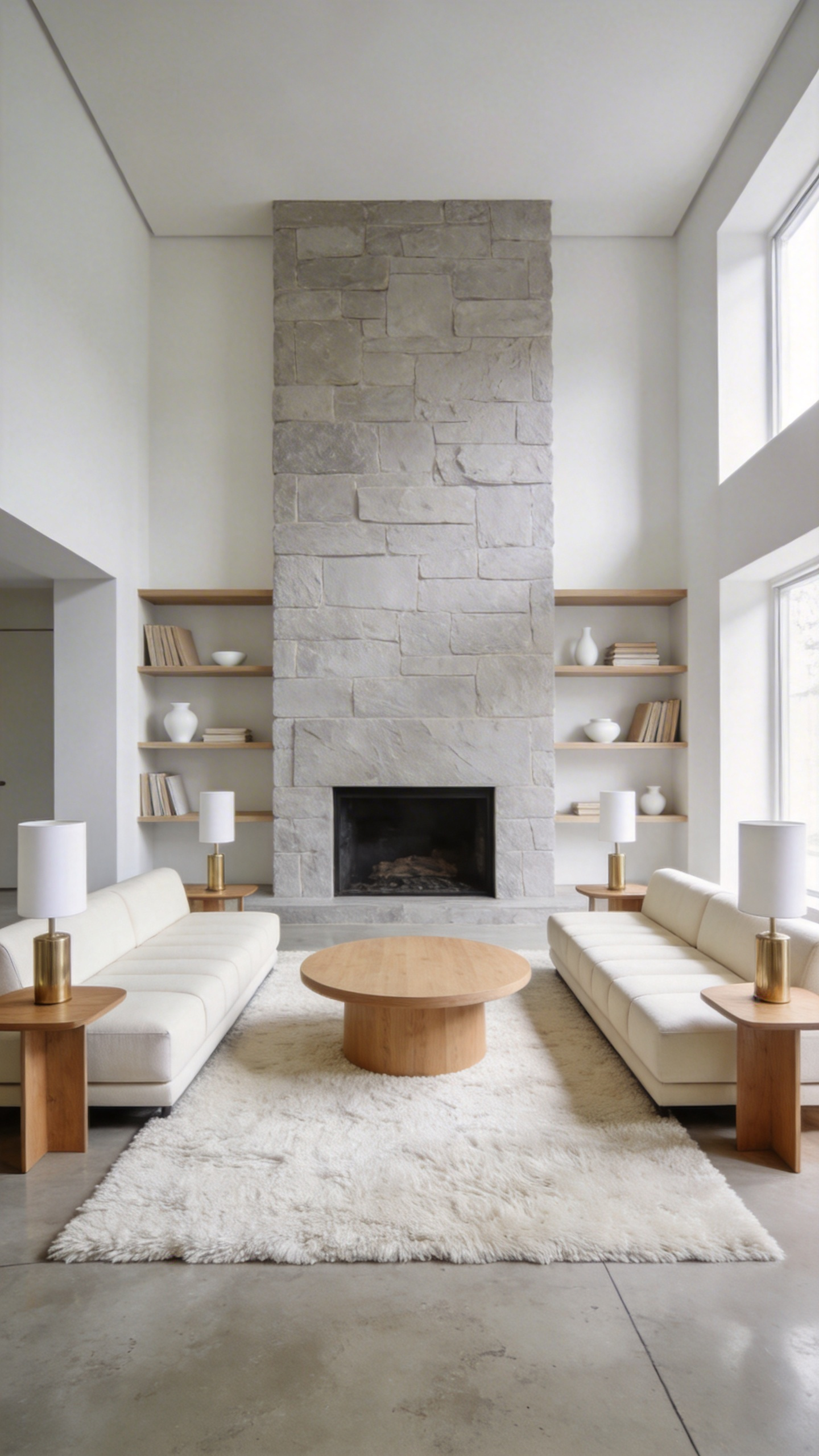
To implement this, you must first establish a “silent anchor.” Typically, this is a central architectural feature like a fireplace, a large window, or a media console. Once identified, treat this axis as the room’s non-negotiable spine. Next, apply bilateral symmetry by mirroring major elements on either side. For instance, flank a sofa with identical side tables. Similarly, place matching tall bookcases on either side of a television to downplay the screen’s dominance. This repetition creates a clear, predictable rhythm that allows the eye to rest.
However, absolute perfection can sometimes feel stale or staged. Thus, the most effective designs use symmetry only for the foundation. You should use matching furniture for the “heavy lifting” of the layout. Then, introduce asymmetry through smaller, expressive details to add warmth. For example, style a mantel with a sculptural object on one side and a trio of vases on the other. Ultimately, this formula provides the necessary structure for calm while maintaining a lived-in atmosphere.
5. Monochromatic Base Layers: Simplifying Your Color Story
Establishing a monochromatic base layer creates immediate, systematic visual order within a living space. Specifically, this approach relies on a single hue to effectively reduce “visual noise.” Consequently, the environment feels significantly more serene and balanced. However, this design strategy is not about applying flat, identical colors everywhere. Instead, success hinges on expertly layering various tints, shades, and tones within that spectrum. For instance, a unified green room might pair mint walls with deep forest green upholstery. This tonal gradient establishes a cohesive flow without causing cognitive friction or visual clutter.
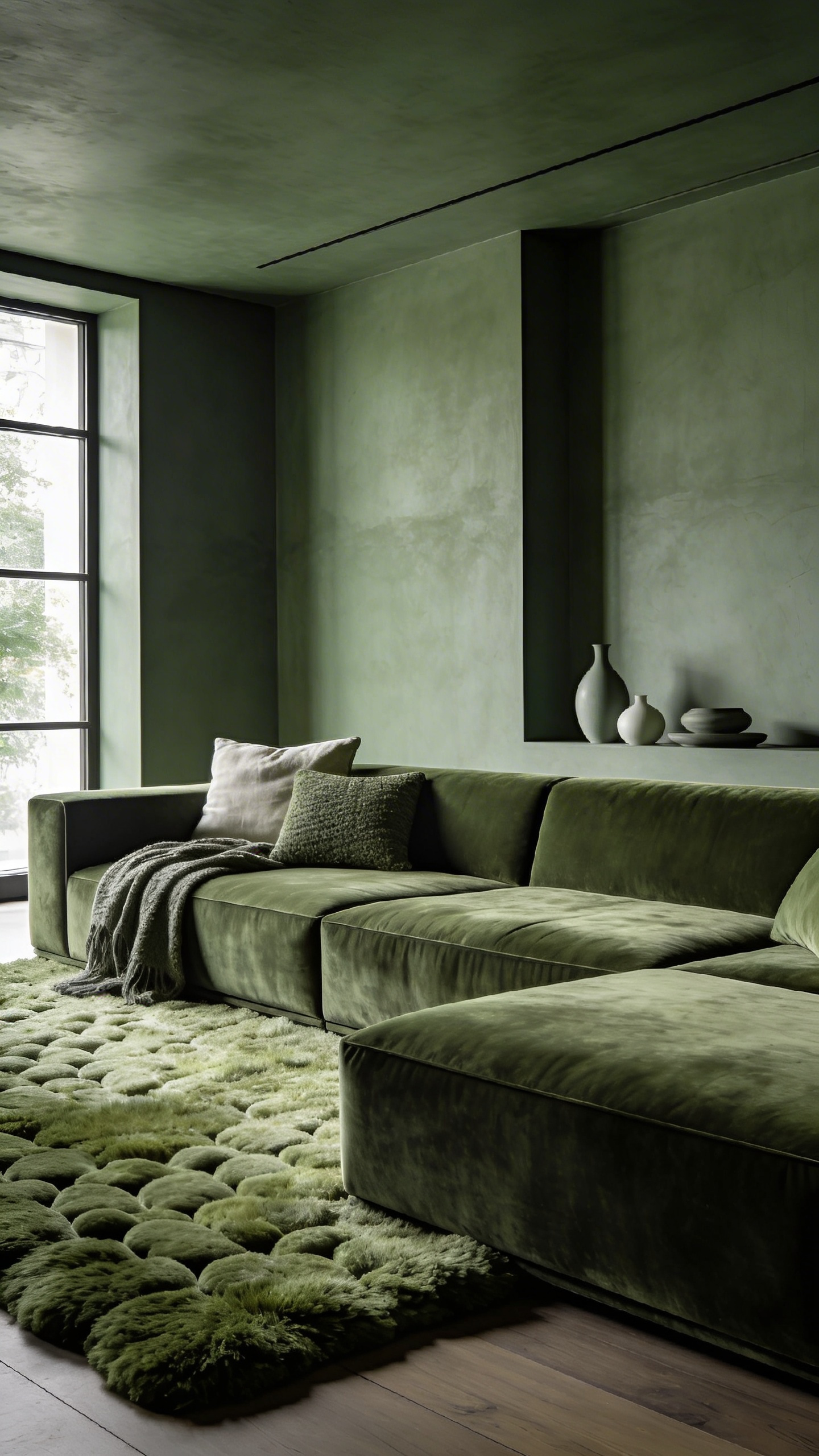
Furthermore, texture must replace color contrast to prevent a flat or boring appearance. You should place smooth, polished materials alongside rough, woven surfaces to create interest. Ultimately, this tactile variety adds necessary depth to the unified color scheme. Additionally, utilizing lighter base colors on walls and ceilings can visually expand the room’s footprint. Therefore, the space feels larger, reinforcing the overall sense of uncluttered simplicity. Thus, a monochromatic palette offers a sophisticated canvas for organized living.
Intermediate: Functional Systems and Hidden Storage
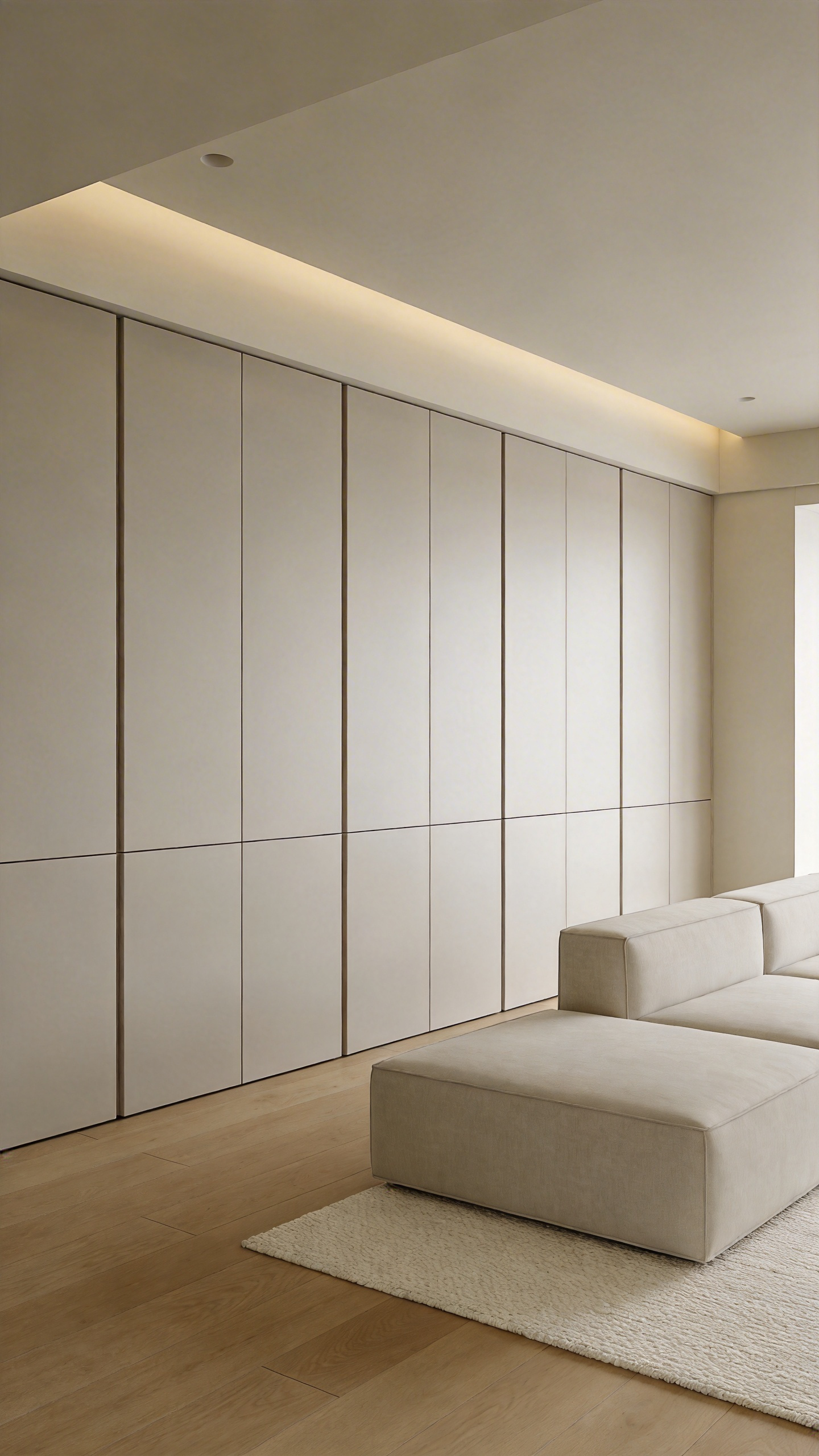
True organization goes beyond simple tidiness. Specifically, it cultivates “visual silence” within a room. In fact, exposed clutter forces your brain to process constant stimuli. Therefore, implementing hidden storage reduces this low-grade cognitive load. To achieve this, consider architectural integration. For instance, paint custom built-ins the exact color of your walls. Thus, the unit dissolves visually into the background. You are left with uninterrupted lines and smooth surfaces.
Historically, this concept echoes the 18th-century secretary desk. Initially, craftsmen designed these intricate pieces to conceal private documents. Today, however, we prioritize space efficiency over security. Consequently, modern mechanical systems play a crucial role. For example, pneumatic lift-top coffee tables smoothly transform into workspaces. Simultaneously, they expose hidden cavities for storing charging cables. Ultimately, this hardware hides the chaotic seams of daily life.
6. The ‘Closed-Storage’ Priority: Why Cabinet Doors Beat Open Shelving
Creating a truly restorative living room begins with effectively managing “visual noise.” In fact, environmental psychologists suggest that every visible object creates a subconscious mental task. Consequently, even familiar clutter adds to a cumulative cognitive load. Closed cabinetry addresses this issue by establishing a clear visual boundary. By introducing negative space, solid doors provide a necessary “rest point” for the eyes.
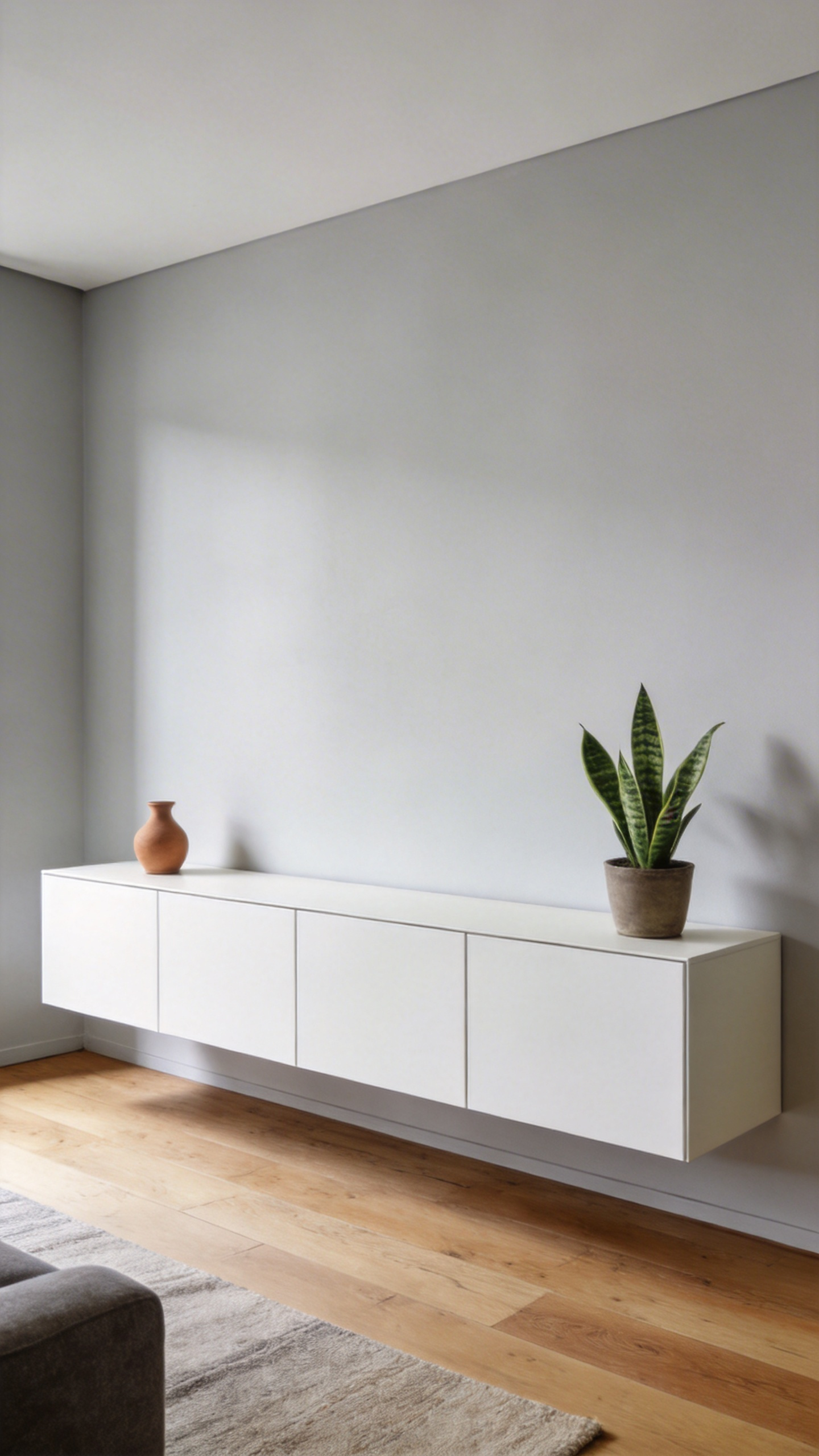
Moreover, modern living requires practical solutions for unsightly technology. Unlike open shelving, which demands constant aesthetic curation, closed storage prioritizes concealment. For instance, media consoles can house routers, consoles, and cables without exposing them. This allows you to integrate essential machinery while maintaining a serene facade. Specifically, features like built-in cable management systems keep the room functional yet visually quiet.
Additionally, this approach corrects the inherent challenges of open-plan layouts. Since clutter in an open concept is visible from adjacent rooms, containment becomes critical. Therefore, hybrid models using credenzas offer a necessary spatial edit. Furthermore, closed units significantly reduce daily maintenance requirements. Because doors block dust, your belongings remain clean with minimal effort. Ultimately, choosing cabinet doors over open shelves ensures your space remains a low-maintenance sanctuary.
7. Multifunctional Ottomans: The Secret to Rapid Decluttering
In compact living rooms, maximizing every square inch is essential. Consequently, the multifunctional ottoman serves as a systematic design powerhouse. It effectively collapses three distinct furniture pieces into a single footprint. Specifically, it acts as a comfortable footrest, extra guest seating, and a deep storage chest. Some modern versions even feature reversible tray tops, instantly transforming into stable coffee tables.
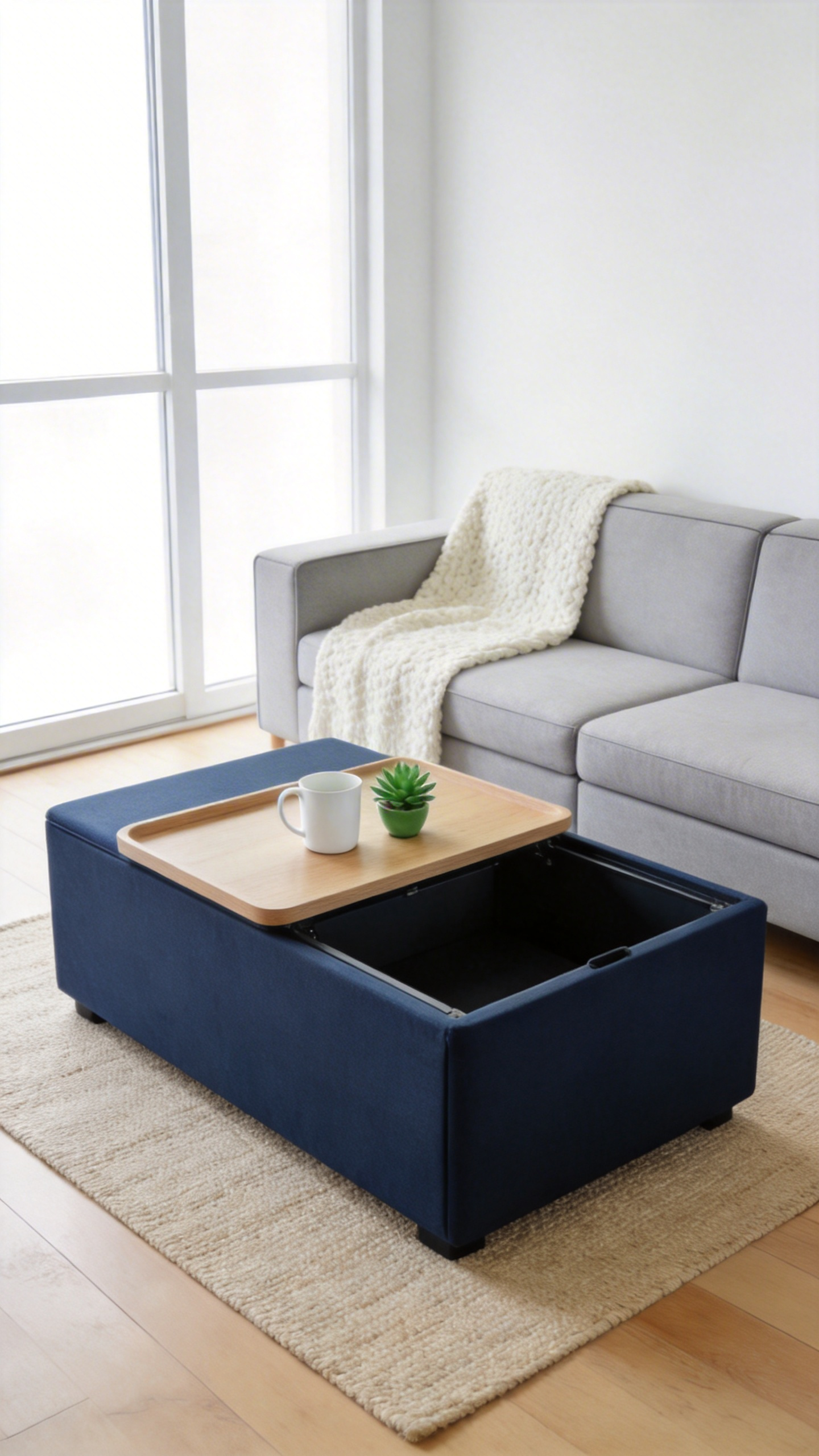
Furthermore, this piece offers a “hidden-in-plain-sight” solution for daily accumulation. You can rapidly stow high-volume items like throw blankets, magazines, or toys. Thus, visual clutter vanishes, maintaining the serene atmosphere essential to simple living. Interestingly, this utility traces back to a Victorian innovation. Designers combined upholstered seating with deep cedar chests to store seasonal textiles discreetly.
However, selecting the right shape is equally important for spatial perception. Ideally, choose round or curved silhouettes over sharp, rectangular options. Unlike harsh corners, soft contours promote smoother physical traffic flow. As a result, the eye perceives the room as larger and more open. Finally, prioritize technical quality for longevity. Therefore, inspect the hardware for soft-close safety hinges. These mechanisms prevent operational failures and ensure your storage solution remains safe and efficient.
8. Media Console Management: Eliminating the Black Hole Effect
Unfortunately, the “Black Hole Effect” threatens the tranquility of even the most curated living rooms. Specifically, this phenomenon is two-fold. First, the massive, dark rectangle of a powered-off screen dominates the visual field. Second, a chaotic tangle of wires lurks beneath, creating a visual “spaghetti monster.” Surprisingly, this clutter triggers a genuine physiological response. In fact, visual disorganization elevates cortisol levels, continually draining your cognitive resources.
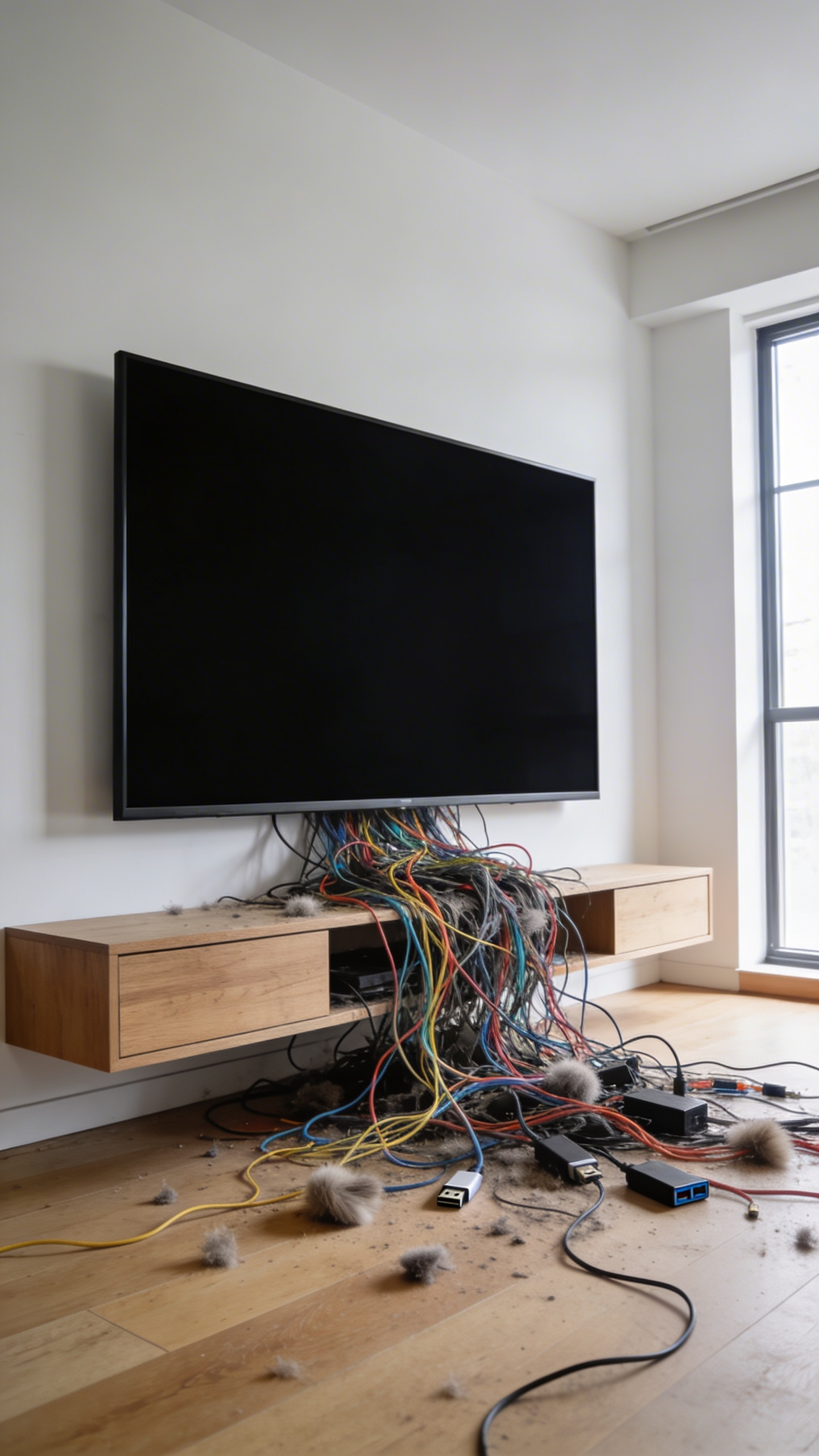
Historically, media setups were relatively simple. However, the modern explosion of streaming sticks, hubs, and bulky power bricks has created a dense layer of “tech-cess.” Therefore, we must adopt a “Shy Tech” design philosophy. Ideally, technology should be functional yet invisible. For instance, utilize in-wall conduits to completely hide HDMI and power runs. Alternatively, select floating consoles with recessed back panels to conceal the inevitable power brick cluster.
Furthermore, you must address the screen itself. To mitigate the stark black void, consider darker, textured wall treatments behind the unit. This layering effectively reduces the harsh visual contrast. Additionally, warm ambient backlighting creates a soft halo, softening the tech presence. Ultimately, systematic storage transforms a chaotic distraction into a seamless design element.
9. Tray Theory: Coralling Surface Items for Instant Order
“Tray Theory” transforms clutter into a curated vignette. Specifically, this design principle uses a simple vessel to define boundaries for small, disparate objects. Therefore, scattered items like remotes or keys instantly look purposeful rather than accidental. Moreover, organizational psychology suggests that established borders subtly guide user behavior. In fact, a tray acts as a visual prompt for residents and guests alike. Consequently, high-traffic areas often see a significant reduction in surface mess simply by adding this container.
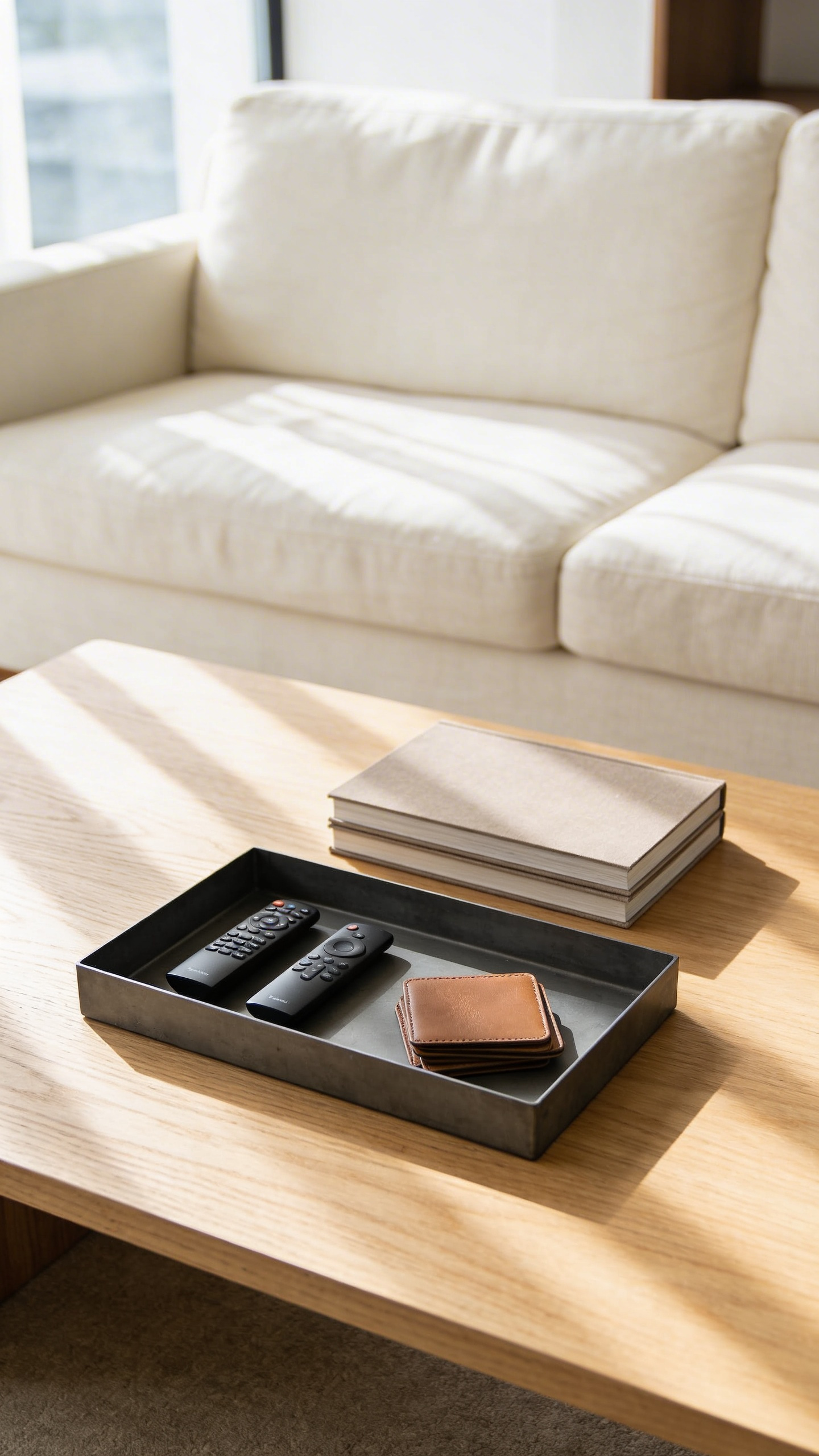
Functionally, this technique simplifies daily maintenance. Instead of lifting five separate objects to dust, you simply move one vessel. Historically, trays evolved from ancient symbols of status to anchors of modern functionalism. To maximize this aesthetic effect, focus on visual layering. For instance, ensure the tray’s material provides a strong contrast to the furniture beneath it. A dark wood tray effectively grounds a light marble table, preventing items from getting lost visually.
Furthermore, apply the “rule of three” when filling the tray. By varying heights and textures within the vessel, you create a dynamic focal point. Conversely, avoid filling the tray edge-to-edge. Ultimately, the goal is to create a moment of “invisible order” that balances efficiency with style.
10. Vertical Zoning: Utilizing Tall Bookcases to Draw the Eye Up
In the realm of custom storage, verticality is a powerful, often underutilized tool. Specifically, tall bookcases do much more than simply hold books; they actively manipulate visual perception. By drawing the viewer’s gaze upward, floor-to-ceiling units create an optical illusion of height. Consequently, this vertical movement balances the heavy horizontal lines of low sofas and tables. The result is a room that feels significantly grander and more airy.
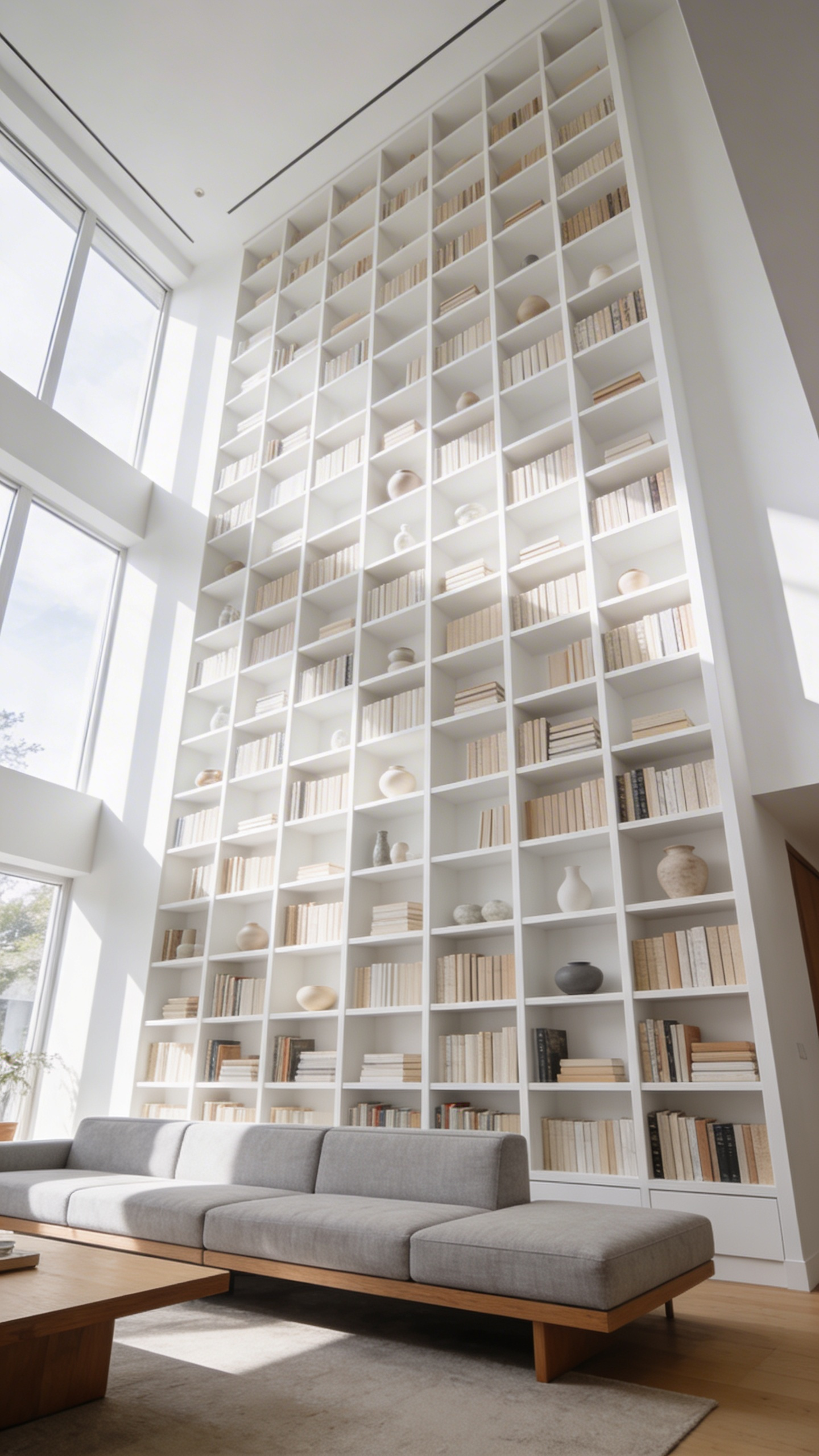
Beyond visual tricks, these structures function as effective “wall impersonators.” In open-concept spaces, placing a tall bookcase perpendicular to a wall instantly defines a zone. For instance, this placement can carve out a semi-private reading nook or home office. Furthermore, this method separates activities without blocking light or conversation. It offers the structure of a wall without the permanence of construction.
From a systematic organization perspective, utilizing height is essential for clutter control. Therefore, tall and narrow designs are superior to wide, sprawling units. They provide maximum storage volume while occupying a minimal footprint on the floor. Ideally, this efficiency preserves the flow of a simple living room. Ultimately, a vertical bookcase serves as a sophisticated focal point. It introduces texture and a cultured, library-style feel to the home. Thus, the wall becomes a curated narrative rather than just a flat surface.
11. Invisible Cable Management: Erasing Digital Clutter
True simplicity requires more than just surface tidiness. Specifically, visible cords create visual noise that significantly increases cognitive load. In fact, research links cluttered environments to higher cortisol levels. Therefore, a tangled nest of cables acts as a persistent sensory irritant. It signals a task left undone. Consequently, hiding them is a strategic move to reclaim mental space.
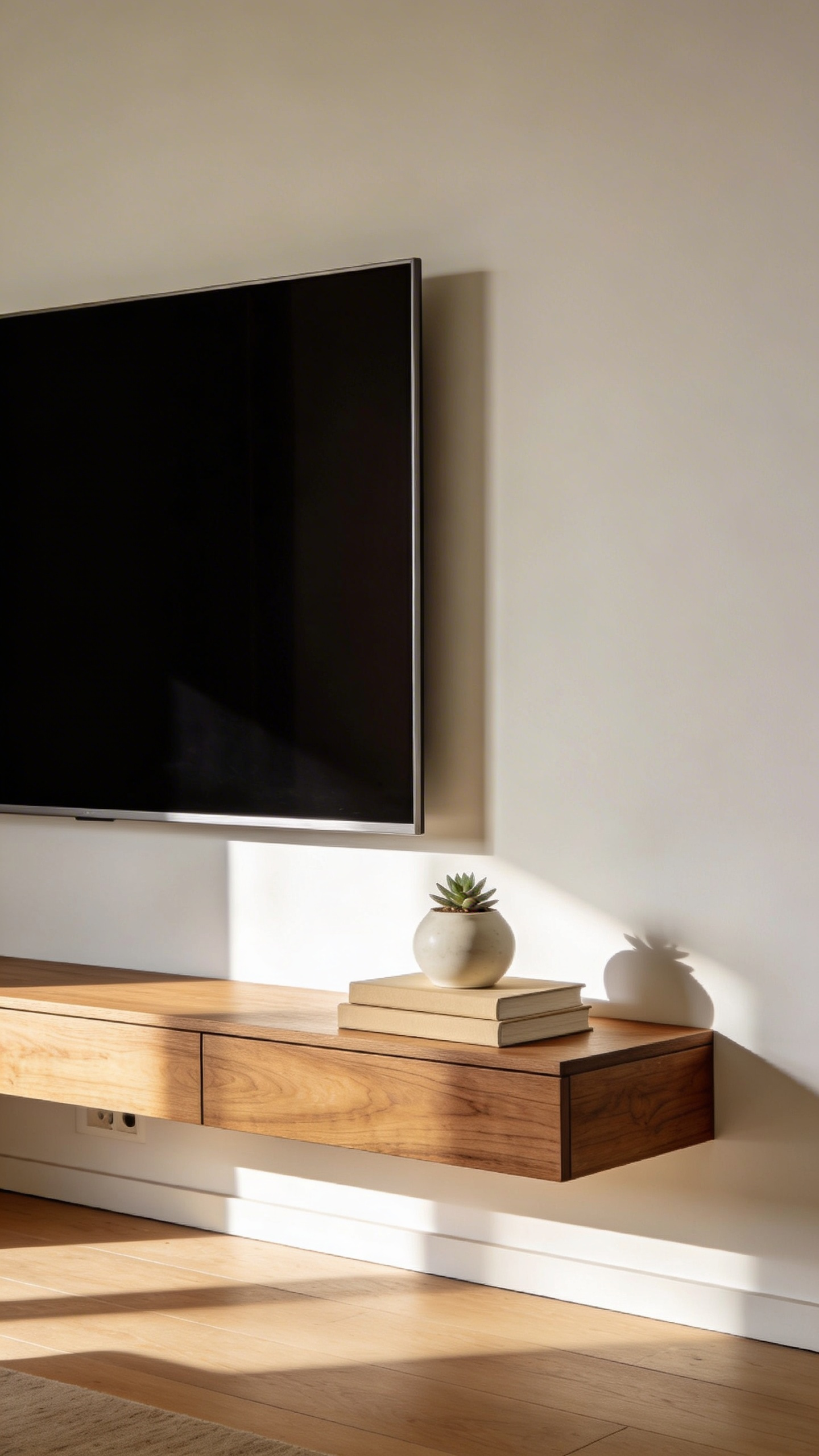
For complete erasure, in-wall concealment is the gold standard. However, safety is paramount here. Notably, running flexible power cords inside walls creates a serious fire hazard. Instead, use a UL-listed in-wall power kit or hire a licensed electrician. Alternatively, paintable raceways offer a simpler surface solution. These channels adhere to baseboards and blend seamlessly with your trim. Thus, they camouflage the mess without invasive construction.
Furthermore, modern design allows furniture to act as the central hub. Contemporary media consoles often feature internal pass-through cutouts. These openings allow you to feed cables directly into the cabinet’s interior. As a result, deep drawers become ventilated hiding spots for routers. Additionally, use decorative baskets to conceal power strips in plain sight. Finally, consider side tables with embedded charging ports. This eliminates the need for stray charging bricks loitering on the floor.
Advanced: Maintenance and Lifestyle Integration
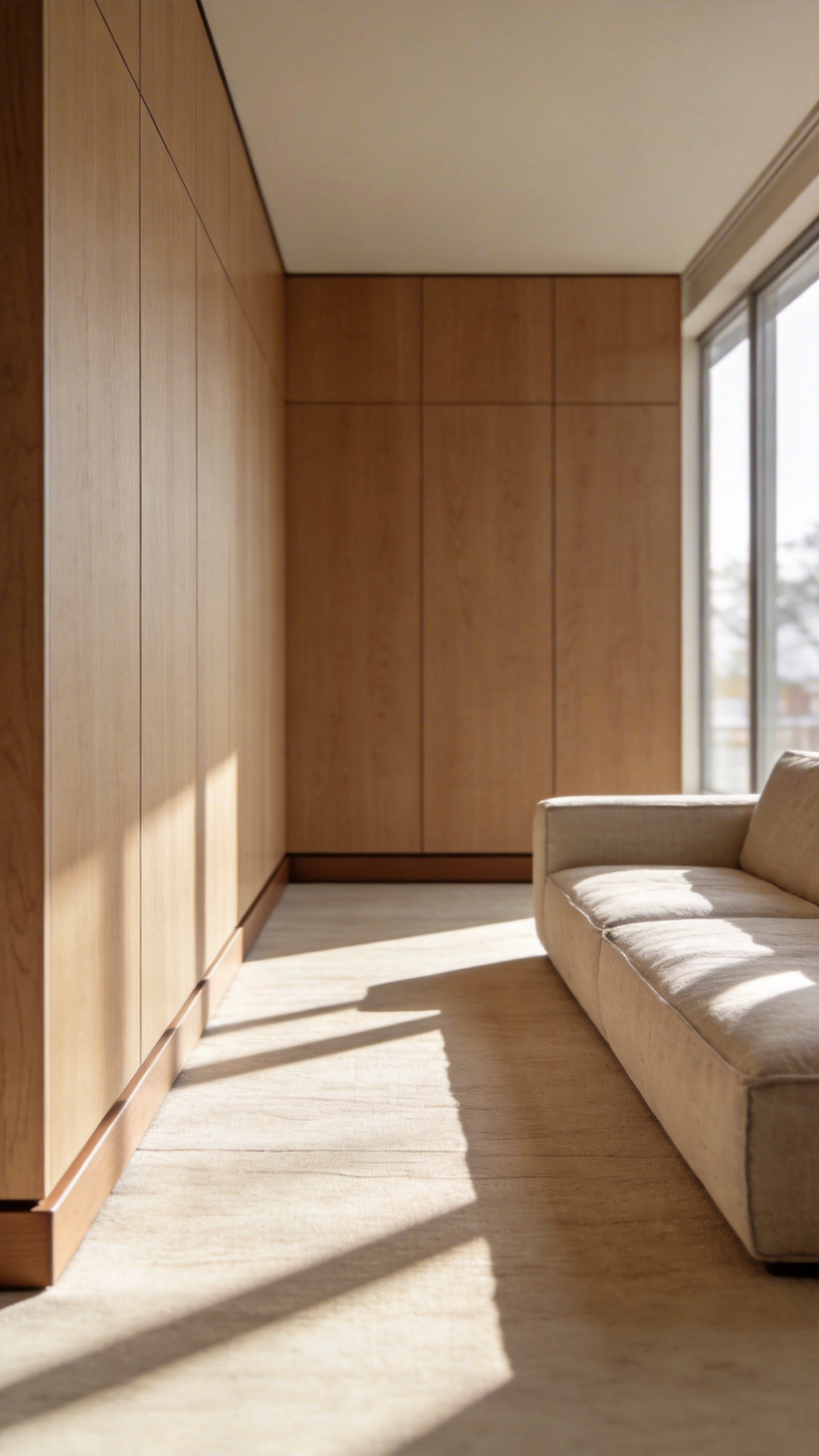
Advanced maintenance requires a shift from constant cleaning to strategic design. Therefore, effective systems start with “dirt-deflection” architecture. For instance, installing cabinetry that extends to the ceiling eliminates hard-to-reach dust traps. Similarly, selecting simple, flat moldings prevents vertical dust accumulation. Consequently, the physical environment inherently reduces the cleaning workload.
Material selection further streamlines this process. Specifically, performance fabrics like Crypton create molecular barriers against stains. Thus, addressing spills becomes a momentary wipe rather than a deep scrub. Furthermore, consider surface finishes carefully. Brushed metals or matte textures mask fingerprints effectively. Conversely, high-gloss fixtures highlight every imperfection. By choosing forgiving materials, you lower the perceived maintenance burden significantly.
However, design must function alongside habit. Ideally, adopt the *Kaizen* philosophy of continuous improvement. This approach relies on “micro-habits” rather than overwhelming deep cleans. For example, a nightly “put the house to bed” ritual resets the room in minutes. This consistency serves as a neurological anchor, reducing anxiety.
Finally, effective maintenance involves a philosophical adjustment. In reality, striving for showroom perfection is exhausting. Instead, embrace the concept of *Wabi-Sabi*. This perspective views wear as a natural, aesthetic evolution. A scratch on a table becomes a marker of life, not a failure. Ultimately, patina adds a layer of psychological comfort that sterile, pristine surfaces cannot provide.
12. The Seasonal Rotation System: Displaying 20% of Your Decor at a Time
Specifically, the “20% rule” serves as a bridge between minimalism and the desire to collect. By displaying only one-fifth of your decor at a time, you significantly reduce visual noise. Consequently, this quantitative limit lowers the cognitive load associated with cluttered spaces, allowing the mind to rest. To make this work, the room’s foundation—walls, sofas, and rugs—must remain neutral. Therefore, this eighty percent acts as a blank canvas for your rotating accents.
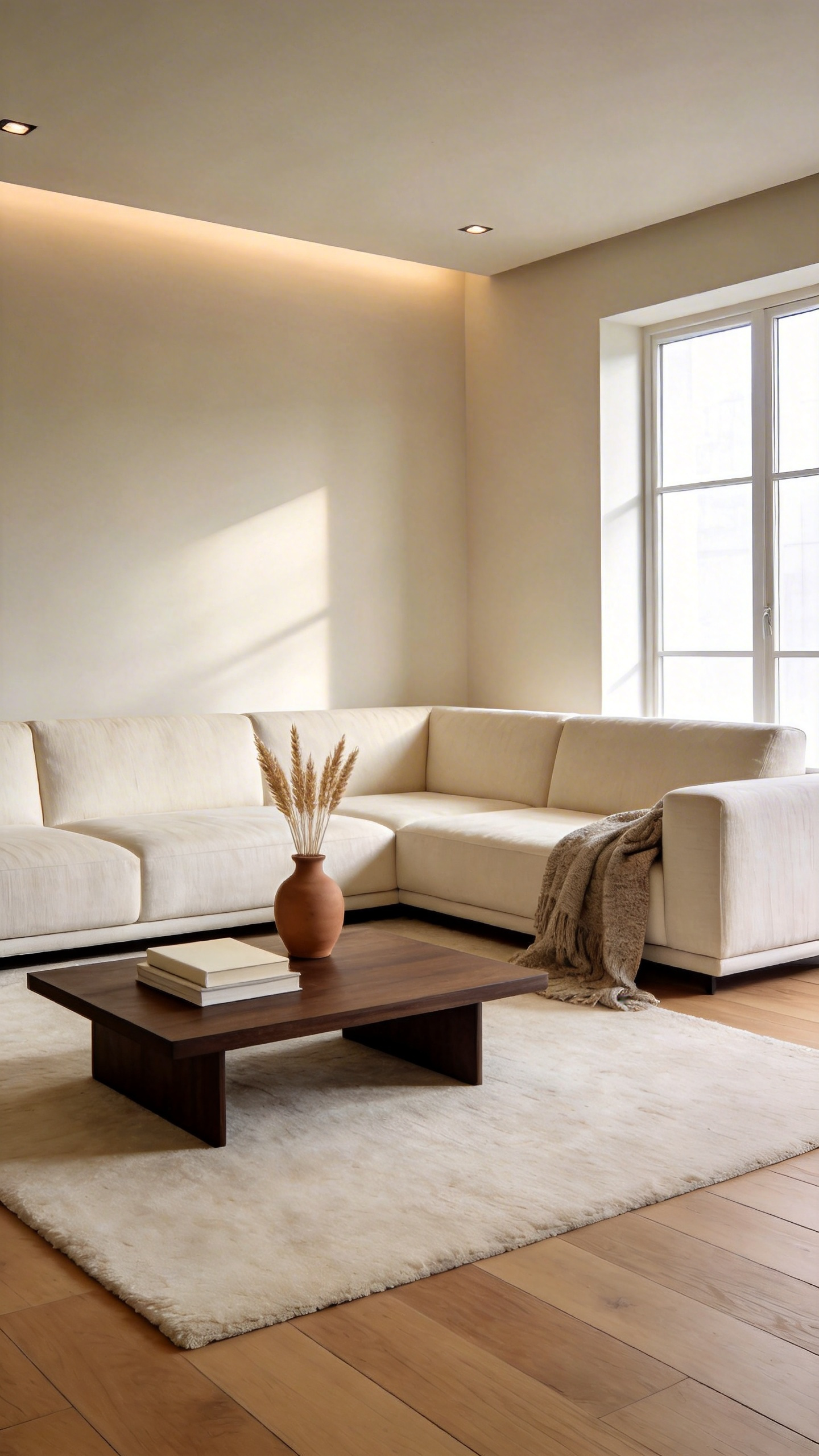
Furthermore, hiding items away combats “hedonic adaptation,” the tendency to stop noticing our surroundings. When you reintroduce stored pieces after a seasonal break, they feel entirely new again. Practically, this involves dividing your collection into distinct seasonal categories. For instance, swap summer’s lightweight linens and fresh flowers for winter’s heavy velvet cushions and pine scents. Ideally, this approach treats your living room like a curated sanctuary rather than a warehouse. Thus, your stored items are not clutter; they are simply waiting for their moment.
13. Entryway Integration: Protecting the Living Room from Migration
“Migration” describes the unwanted passage of dirt, noise, and clutter into your primary living space. Historically, architecture combated this with the *vestibulum* or “boot room.” Today, effective entryway design functions as this essential “decompression chamber.” Therefore, it acts as a strict gatekeeper for your home’s serenity.
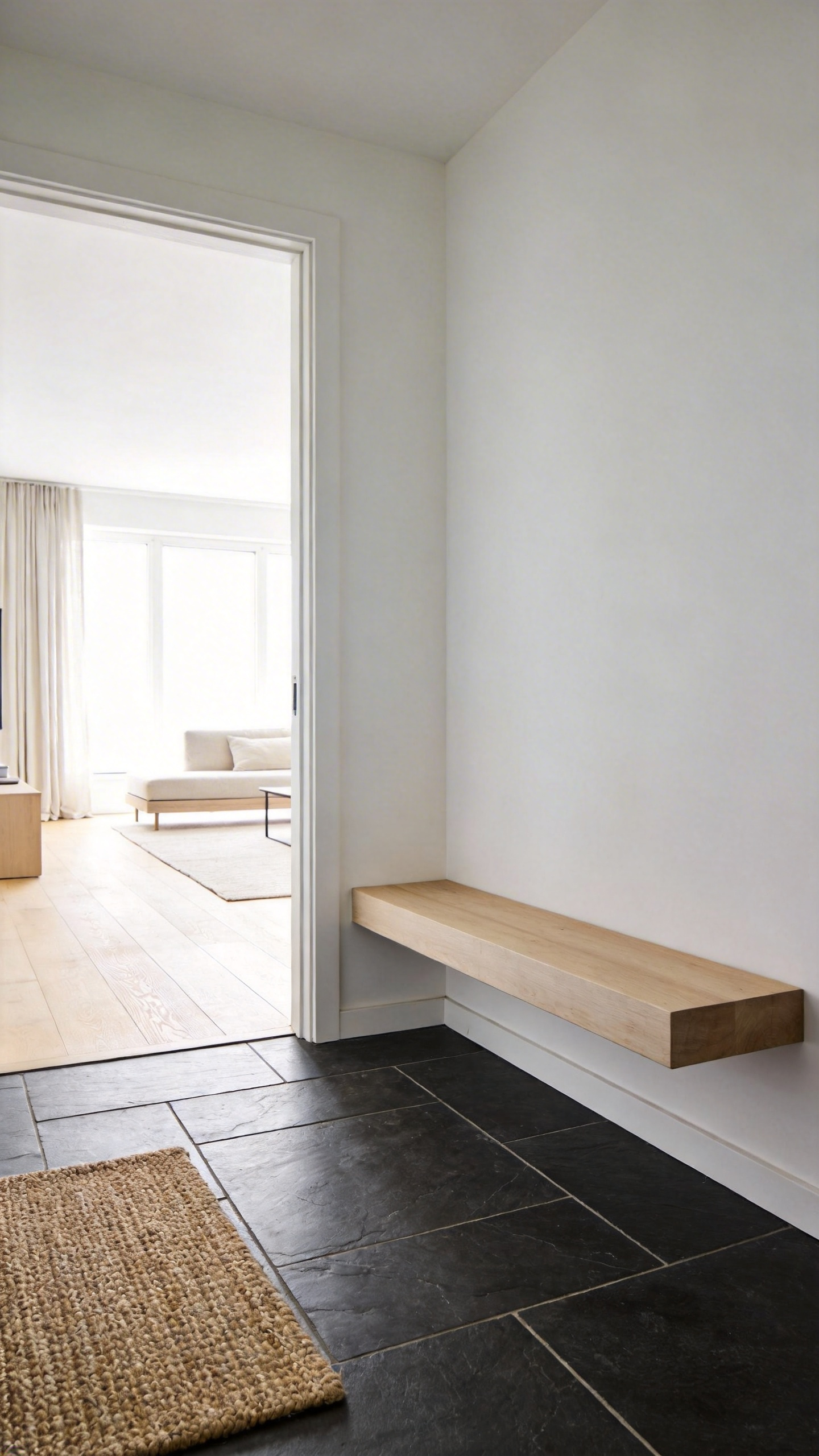
First, you must address physical contaminants. Specifically, microscopic toxins and heavy metals frequently enter on shoes. Consequently, a systematic barrier is required. Ideally, employ a three-layer defense system. Start with a coarse exterior scraper mat to remove heavy debris. Next, lay down a durable interior runner. In fact, commercial standards recommend six feet of walk-off matting to effectively trap fine particles. Thus, you significantly improve indoor air quality.
However, visual clutter is equally invasive, particularly in open-concept layouts. Therefore, you must create an “invisible” entryway using strategic furniture placement. For instance, position a sofa back or console table to visually separate the zone. Furthermore, prioritize closed storage cabinetry over open shelving. Simply put, hiding mail and keys prevents them from spilling onto living room surfaces. Ultimately, a well-integrated entryway stops the chaos of the outside world from disrupting your sanctuary.
14. Lighting Layers: Simplifying Ambience with Smart Dimming
Ideally, a well-designed living room requires three distinct lighting layers: ambient, task, and accent. For more specific visual techniques, consider these living room lighting ideas. However, manually adjusting multiple switches to coordinate these elements creates unnecessary friction in your daily routine. Consequently, smart dimming systems simplify this complexity through the use of intuitive “Scenes.” Specifically, a single voice command or button press transforms the room from bright functionality to a relaxing atmosphere. This consolidation effectively removes the cognitive burden of balancing various brightness levels yourself.
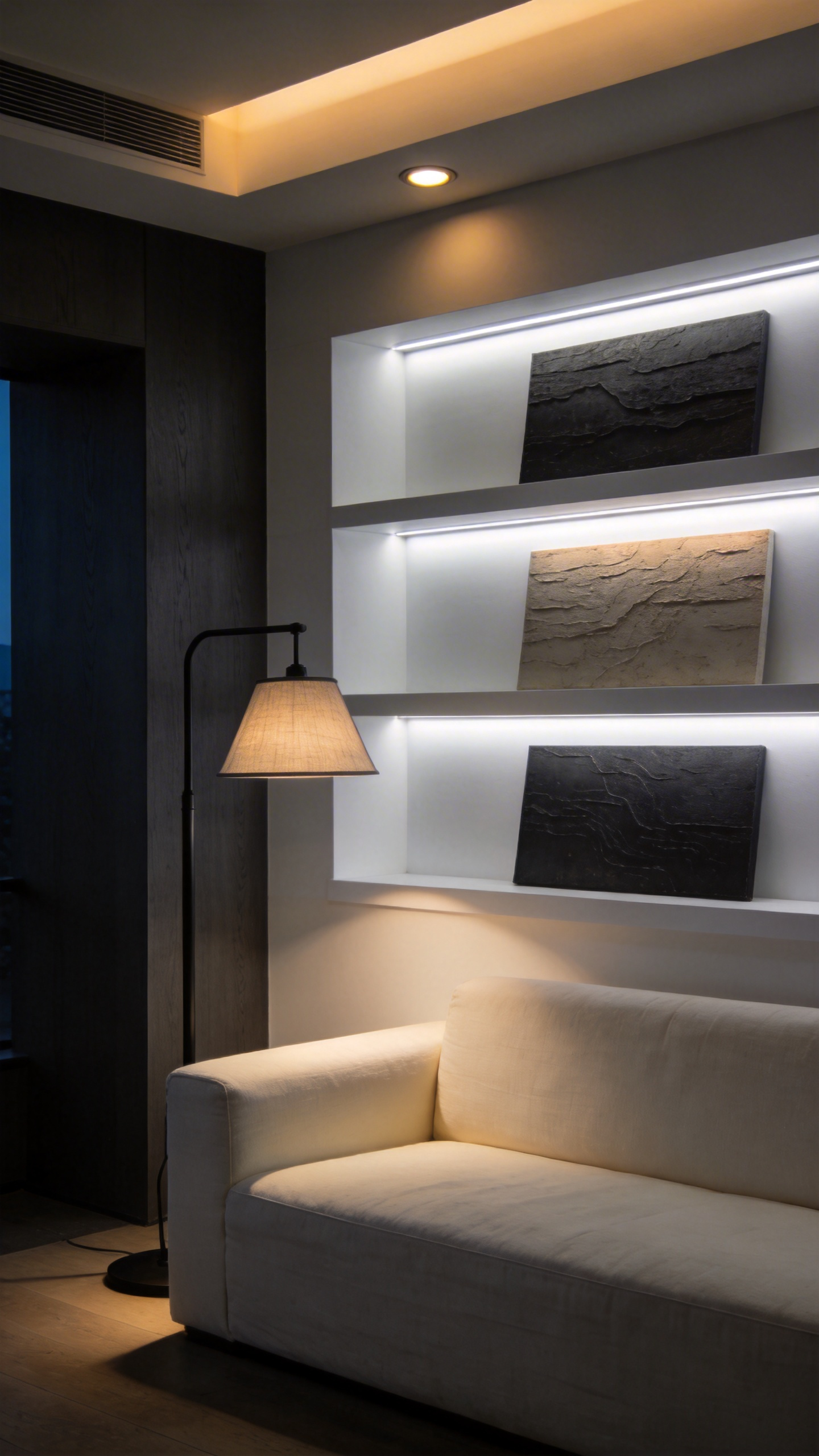
Furthermore, modern smart lighting offers critical benefits beyond simple intensity control. It creates a “tunable white” environment that directly impacts your physical well-being. For instance, warm-toned light around 2700 Kelvin signals your body to wind down effectively. Conversely, cooler light mimics the midday sun to promote alertness during active hours. Ultimately, the system passively adjusts these settings to support your natural circadian rhythm.
Aesthetically, smart dimming allows for visual depth without introducing physical clutter. Instead of relying on numerous floor lamps, you can utilize unobtrusive indirect sources like recessed LEDs. For example, dimmed LED strips behind a TV reduce eye strain significantly while anchoring the space. Therefore, you achieve a spacious, layered look without the bulk of extra fixtures.
15. The ‘One-In, One-Out’ Policy for Decorative Objects
Implementing a “one-in, one-out” policy serves as a powerful accountability partner for your living room. Fundamentally, this rule is about mindfulness rather than simple arithmetic. Instead of impulse buying, you must mentally appraise your current belongings before any acquisition. Consequently, this habit prevents the insidious “clutter creep” that often derails a simple aesthetic. Ideally, use this approach as a maintenance strategy following a deep declutter. Ultimately, this discipline preserves your home as a sanctuary of order and serenity.
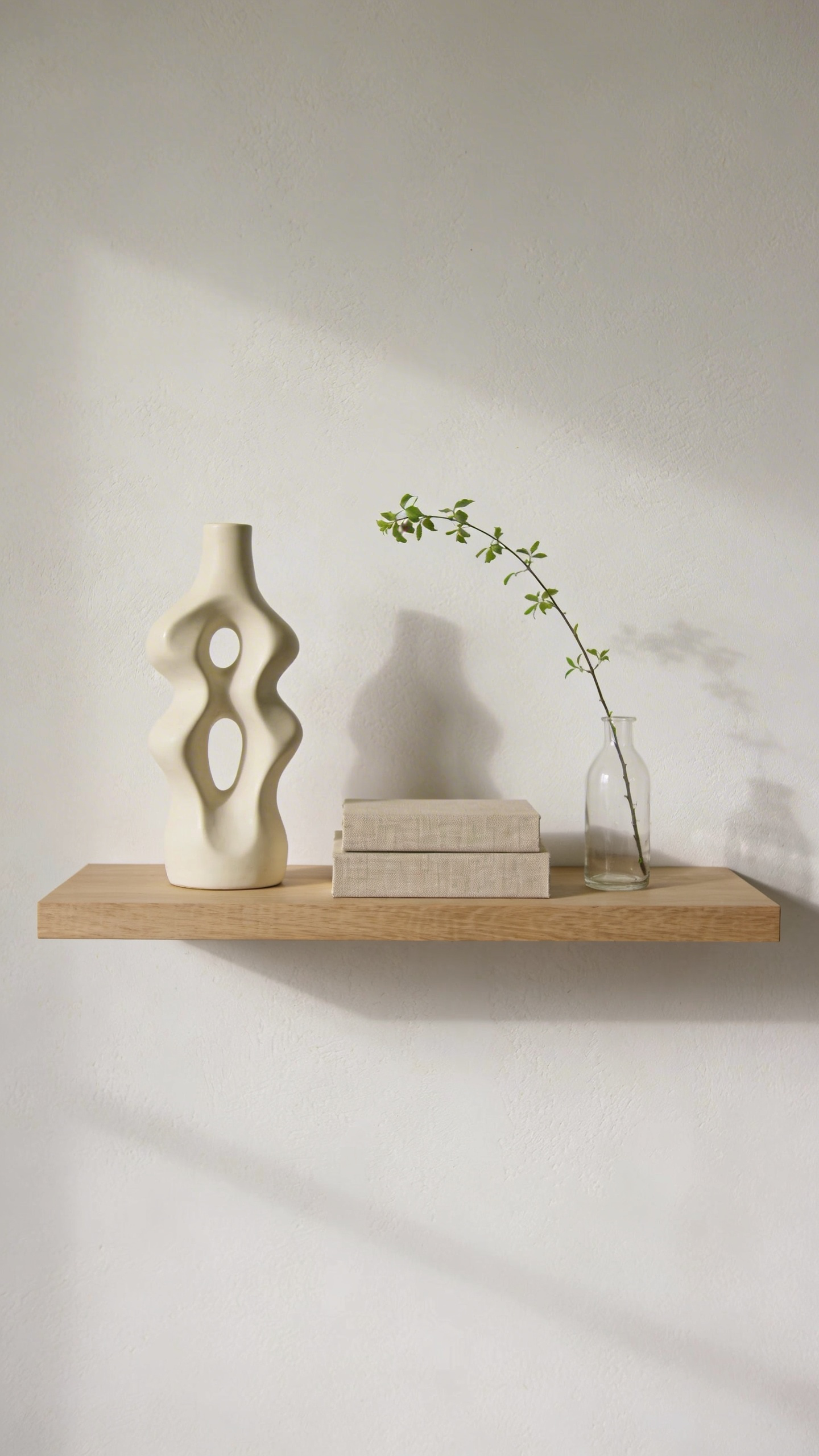
However, a literal interpretation of this rule often fails design standards. Specifically, you must apply the “Spatial Footprint” principle to maintain visual balance. If you introduce a large floor vase, removing a small coaster is inadequate. Therefore, you should aim for a “space-for-space” exchange. For instance, replace an old oversized throw pillow with a new one of equal size. This creates a stable volume of possessions, ensuring the room remains visually breathable.
Furthermore, this method effectively supports financial intentionality. By selling a high-value item first, you can self-finance your décor upgrades. In fact, this process transforms you into a careful curator. You shift focus from temporary trends to acquiring distinct, quality “forever” pieces. Thus, you limit décor to impactful items that truly serve the space.
16. Rug Sizing as a Boundary Marker: Defining Zones Clearly
Think of a rug as the foundation of your room’s organizational system. A space without one often feels like a sentence without punctuation. It might make sense, but it lacks essential rhythm. Therefore, using rug sizing as a boundary marker is crucial for visual clarity. It creates order by transforming ambiguous floor space into defined, cohesive zones.
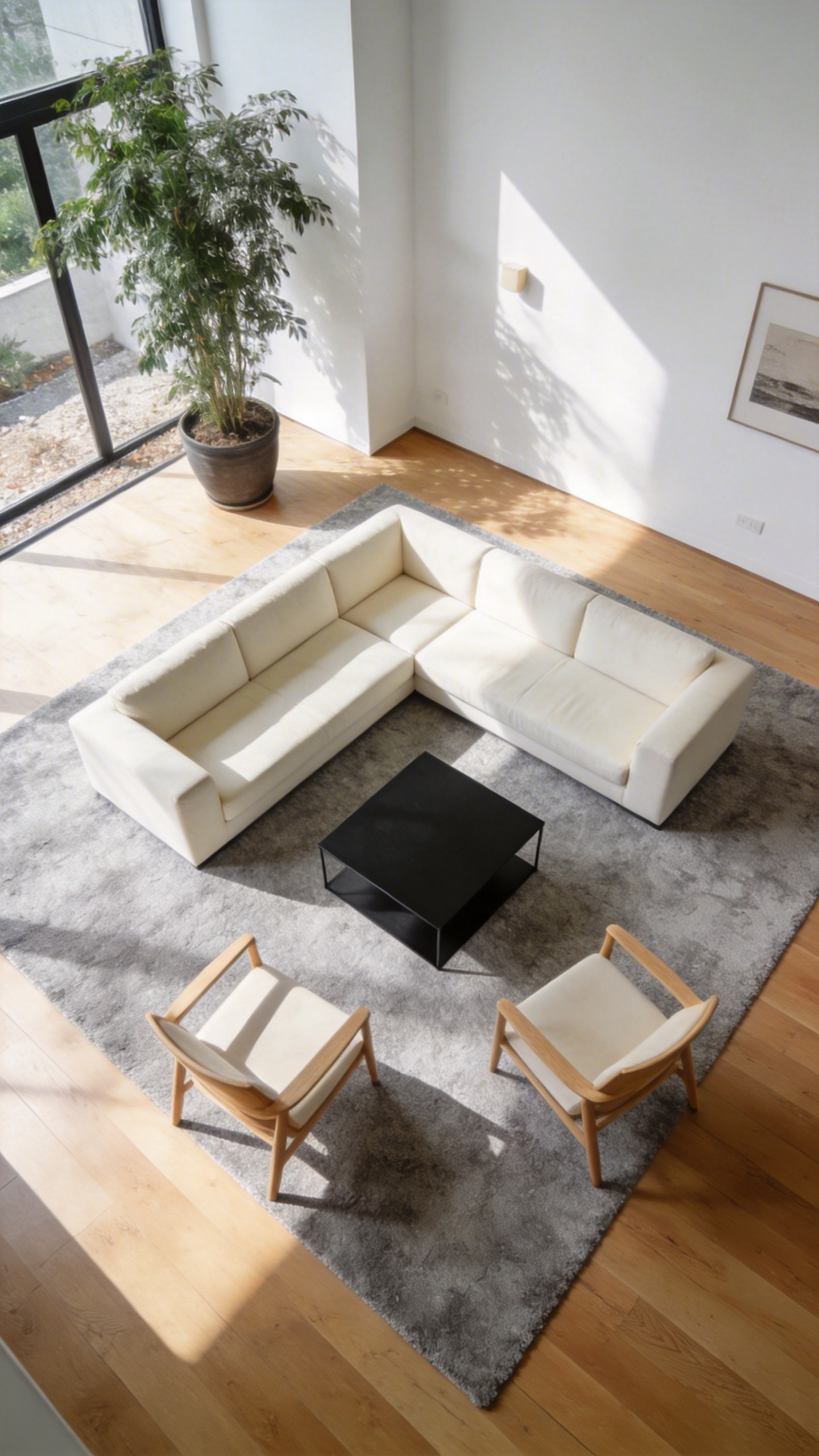
Specifically, you must decide how to anchor your primary furniture. The “All Furniture On” rule is ideal for large, open-concept areas. By placing all four legs on the rug, you ground the entire arrangement. Consequently, this unifies the space and prevents pieces from appearing to “float” aimlessly. Conversely, the “Front Legs On” technique works effectively in smaller living rooms. Here, placing only the front legs on the textile maintains an airy feel. As a result, the zone is visually tethered without overwhelming the limited square footage.
Ultimately, these physical boundaries dictate the room’s psychological impact. In fact, a grounded seating group instantly invites connection, creating an intimate conversation pit. Furthermore, rugs act as invisible dividers in open floor plans. They clearly distinguish a relaxed living area from a functional dining space without needing walls. Finally, for secondary spots like reading nooks, consider using smaller, round rugs. Thus, you create a distinct “room within a room” that softens angular lines and maximizes space efficiency.
17. The ‘Sunday Reset’ Ritual: Designing for Maintenance
The “Sunday Reset” ritual moves beyond simple housework. In fact, it evolves into a holistic maintenance system for your home and mind. To effectively integrate this, you must engineer a space that minimizes friction. Consequently, the core design strategy employs “Visual Quiet.” This principle reduces visual stimuli to calm the nervous system quickly. Specifically, rely on low-contrast palettes like warm neutrals layered with textures rather than bold accents. Furthermore, ensure furniture sits slightly off the ground to enhance openness and flow.
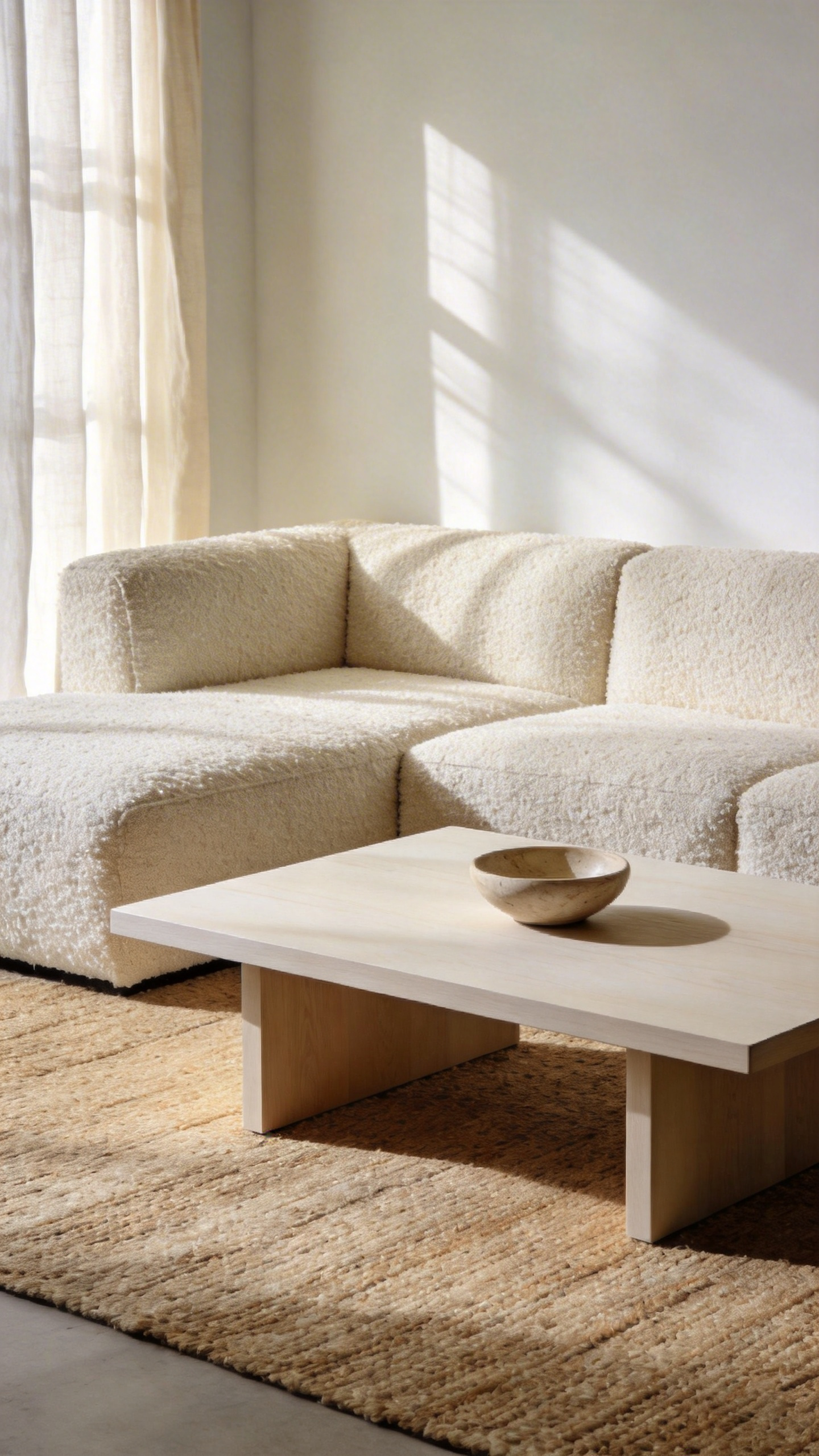
However, aesthetics alone cannot sustain a permanently tidy room. Therefore, the design must shift from simple decoration to operational lifespan. This means engineering storage to prevent clutter buildup before it begins. For instance, utilize multifunctional furniture like lift-top ottomans to instantly hide blankets or pillows. Additionally, conceal high-touch items like remotes and cables within console tables. Even in open plans, creating a specific “drop zone” allows you to contain daily detritus immediately.
Finally, the ritual connects physical order to mental rejuvenation. Thus, ambiance transforms the chore into an act of self-care. As evening approaches, replace harsh overheads with soft, warm-toned lamps. Simultaneously, incorporate scent cues like essential oils to signal the transition to rest. Ultimately, this turns a cleaning task into a mindful reset for the week ahead.
Conclusion: From Organized Space to Organized Mind
Ultimately, a streamlined living room offers far more than just aesthetic appeal. In fact, it acts as a crucial filter for your cognitive load. By systematically reducing visual noise, you effectively lower daily mental strain. Therefore, the room shifts from a source of hidden stress to a sanctuary for focus. Furthermore, embracing the concept of negative space creates room for true mental clarity. Consequently, your environment supports your executive functions instead of constantly draining them.
Additionally, establishing this order builds a powerful positive feedback loop. Specifically, resolving physical clutter triggers a neurological reward, fueling further motivation. As a result, you regain a vital sense of autonomy over your surroundings. Thus, simple living becomes a sustainable lifestyle rather than a temporary fix. To start, begin by auditing your current collection strictly for functionality and purpose. By applying these powerful simple living room ideas, you cultivate a lasting, organized mind.
- —
Frequently Asked Questions
H3: How do simple living room ideas differ from pure minimalism?
Simple living room ideas, particularly those favored by discerning homeowners, focus on visual quietness and high-quality intentionality, prioritizing function over stark emptiness. While pure minimalism often strips away almost all non-essential items, simple design uses rich textures, soft curves, and hidden storage (like built-in cabinetry) to create warmth and coziness without visual clutter. The goal is sensory depth, not necessarily material deprivation.
H3: Does simple design truly reduce stress and cognitive load?
Yes. Environmental psychology confirms that visual clutter aggressively competes for the brain’s attention, draining working memory and elevating stress hormones like cortisol. Simple design, by reducing competing stimuli and introducing negative space, provides the brain with “visual breathing room.” This lowers the constant low-grade cognitive load, fostering a profound sense of calm, focus, and mental clarity.
H3: What is the most effective way to start designing a simple living room?
The most effective starting point is implementing the “Closed-Storage Priority” and addressing cable management. By transferring all open-shelf clutter, remotes, routers, and visible wires into closed, architectural integration solutions (like handleless consoles or wall-matched built-ins), you eliminate the largest sources of visual noise immediately, making subsequent stylistic changes much easier.