Phase 1: The Philosophical Anchor (Harmony with the Elements)
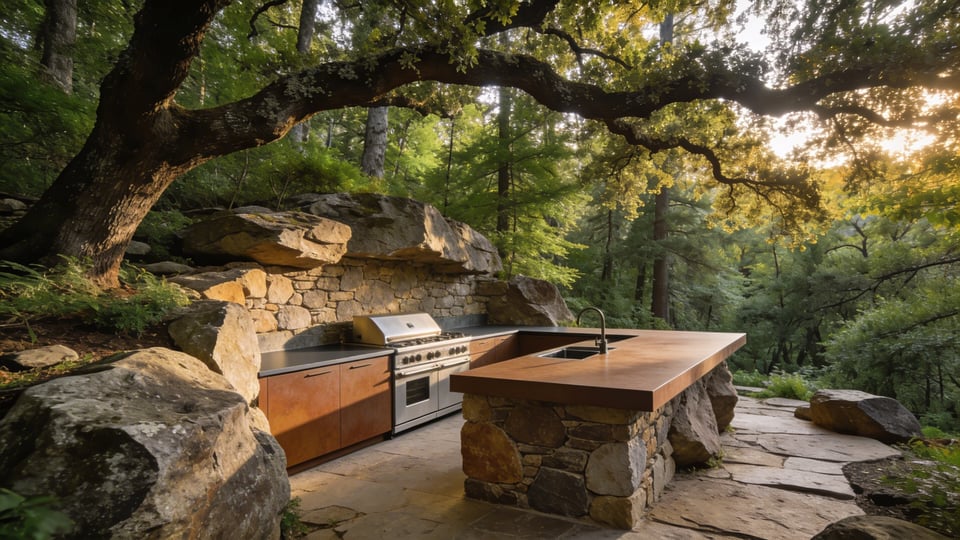
Good outdoor kitchen design starts with the landscape. It should feel like a natural extension of your yard, bridging the gap between your home and the outdoors. Naturally, this means minimizing the visual friction between built and wild environments. You can easily achieve this using materials like Dekton or rough natural stone.
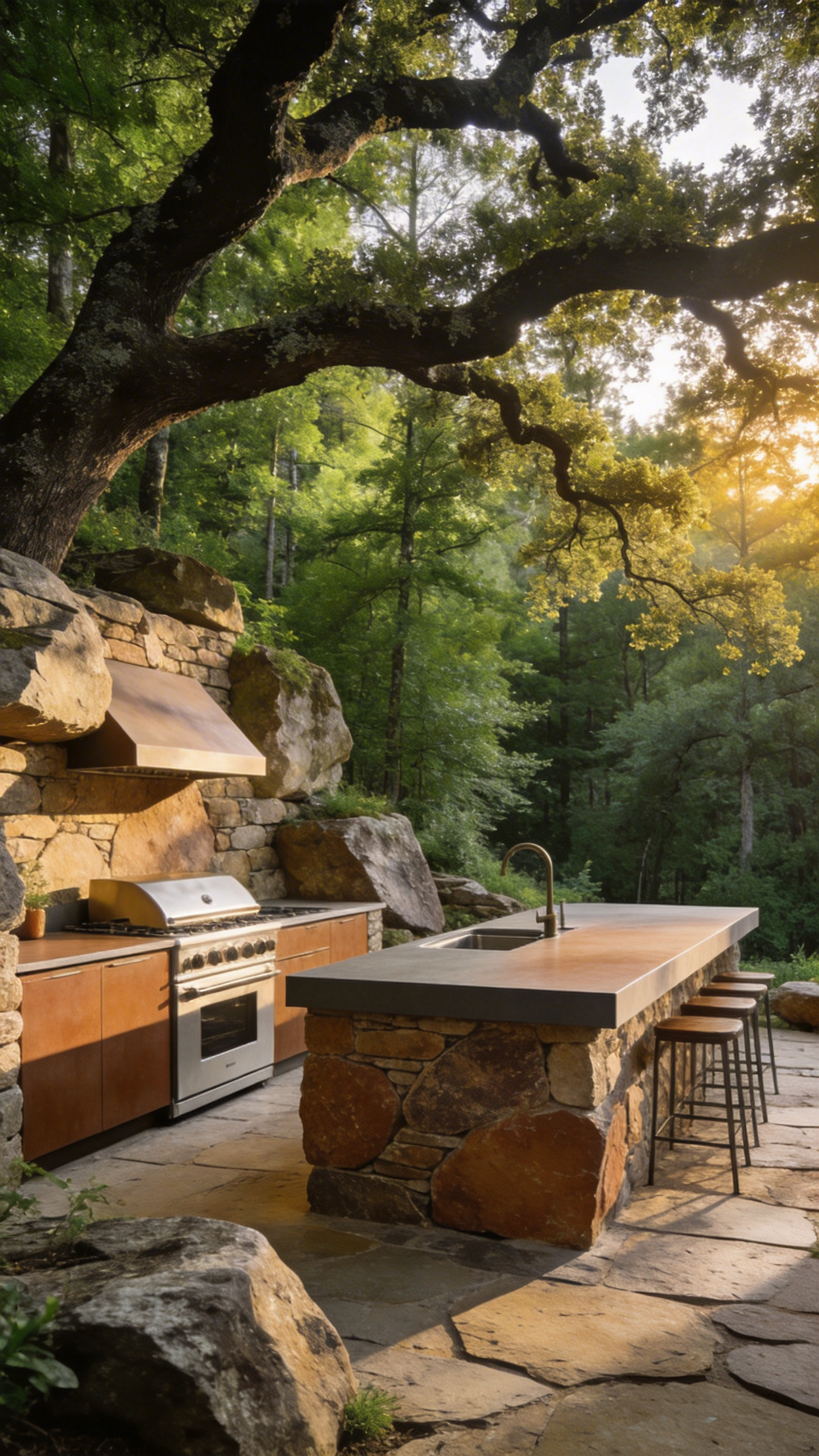
Recently, there is a push toward “quiet cooking.” This approach reduces mechanical noise to let natural sounds take over. Indeed, the sizzle of a hot grill pairs perfectly with rustling leaves. This subtle sensory layering actually lowers cortisol and keeps you relaxed while cooking.
Next, think about balancing the space. Heavy concrete countertops provide a grounded, permanent feel. Meanwhile, stainless steel adds a clean, precise edge. A live-fire grill naturally becomes the center of attention. Wood-burning elements release a distinct aroma that modern city life often lacks.
However, you still need modern convenience. Designers often adapt indoor kitchen remodel ideas for the open air. High-tech tools like hidden induction burners stay completely out of sight. Specifically, this approach highlights natural wood knots and stone veins instead of appliance dials. You get modern cooking power while staying fully immersed in your backyard.
1. The Dialogue Between Architecture and Nature: Designing with Environmental Context
Historically, summer kitchens were detached outposts meant to keep heat out of the main house. Today, we bring these spaces to life to enjoy the outdoors. Good design connects your home’s architecture with nature. Therefore, material selection matters immensely. High-density natural stone, for instance, acts as a thermal battery. A thick masonry counter absorbs daytime sun. Later, the stone slowly releases that warmth into the evening air. This heavy material naturally regulates the immediate microclimate around your patio.
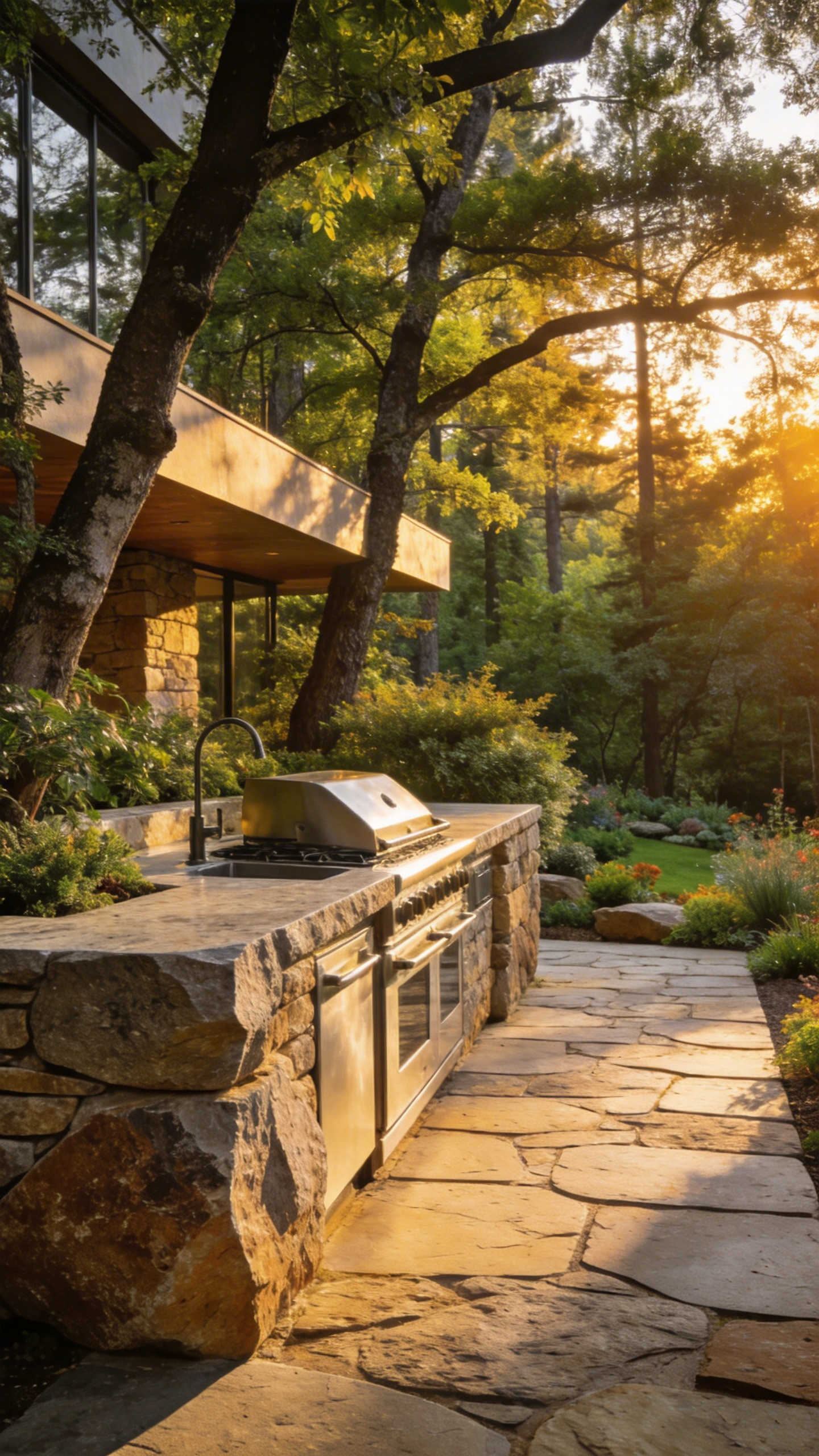
Cooking areas are inherently hard spaces full of steel and stone. However, you can soften these industrial elements with live plants. Try encouraging creeping rosemary to grow into rough stone crevices. The landscape’s natural scent then merges with your wood-fired cooking aromas. This deliberate sensory layering makes the space feel incredibly relaxing.
Builders often debate between blending in or creating visual contrast. Using local stone grounds the kitchen in its specific environment. Conversely, a minimalist steel frame stands out cleanly. Sleek metal highlights the yard’s wild, organic textures. Regardless of your preference, minimizing the visual footprint is usually the goal. Weathered steel cabinetry, for instance, helps structures fade into the background. Your patio then feels like a pure landscape, often acting as a focal point for sophisticated deck design concepts.
2. Defining Your Al Fresco Culinary Narrative Through Material Selection
Choosing materials is about finding what fits your daily life. Raw concrete and reclaimed teak offer a sense of rugged authenticity. Over time, these materials weather naturally in the elements. Copper, for example, develops a rich blue-green patina. Similarly, teak silvers into a soft driftwood grey. You trade flawless perfection for a space with actual character. Honed soapstone is another great option. In fact, its inevitable scratches just show that the kitchen is well-loved.
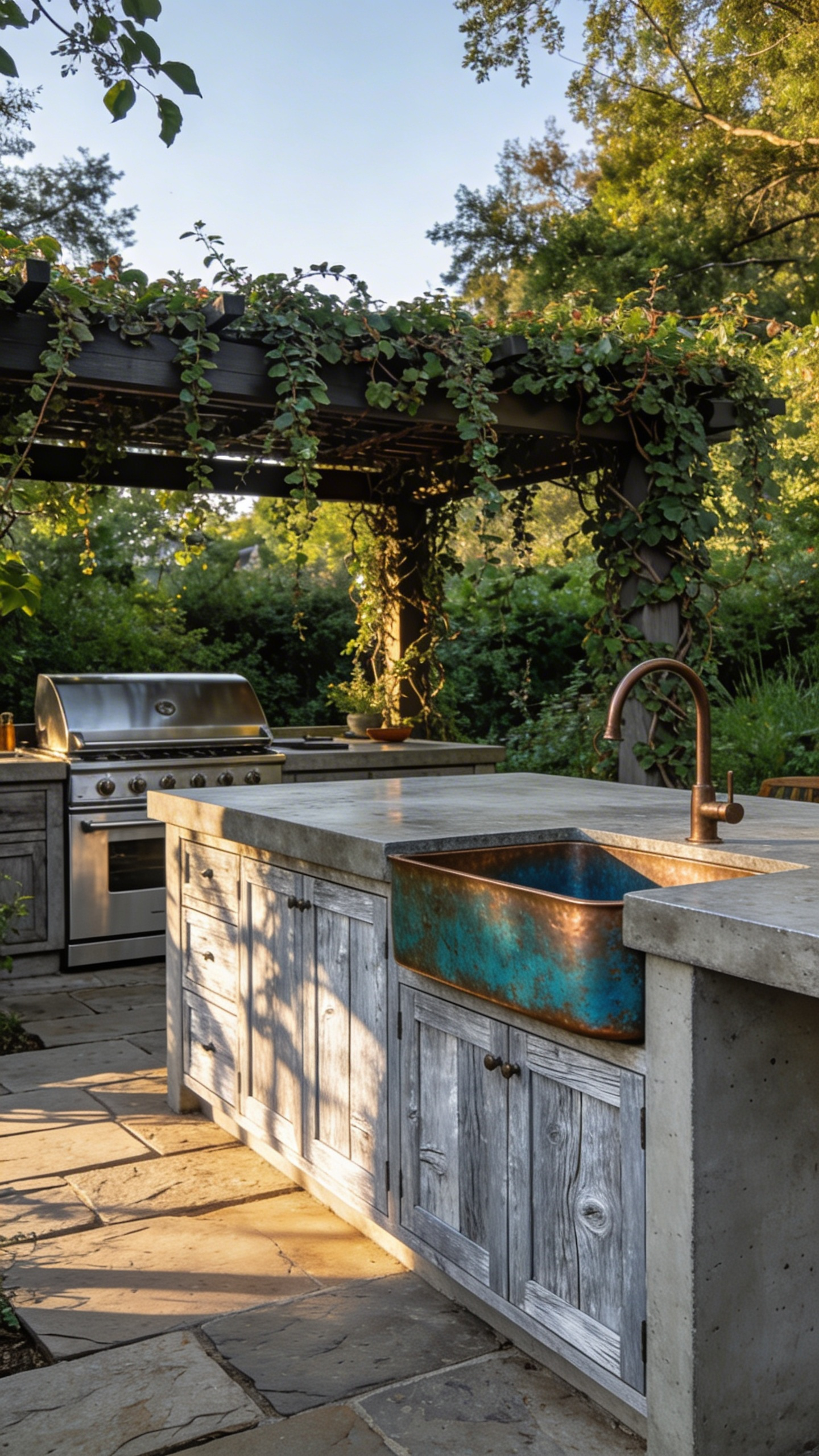
Your material choices also set the overall vibe. Terracotta and lime-washed brick evoke a classic Mediterranean hearth. This look practically begs for slow cooking and long dinners. Conversely, marine-grade stainless steel feels highly precise. It quickly transforms the patio into a serious outdoor cooking lab. Thermal details matter just as much as looks. Specifically, dark slate absorbs daytime sun to keep the area warm at night. Fragrant cedar wood introduces a fantastic, natural scent to the space.
However, you still need to understand how these materials perform. High-porosity materials like limestone quickly absorb grease and wine stains. Low-porosity sintered stones, on the other hand, stay pristine with almost no effort. Additionally, outdoor surfaces must survive extreme temperature swings. You absolutely must account for sudden thermal expansion during installation. Otherwise, unexpected cracking will ruin your countertops. Balancing aesthetics with basic durability is the key to a lasting space.
3. The Science of Climate-Responsive Design in Open-Air Spaces
Building outside means dealing with the wind. The science of air movement dictates exactly how your grill performs. Inside a high-end grill, hot air forms delicate layers. Sudden gusts can easily disrupt this heat distribution. Therefore, installing stainless steel wind buffers is highly recommended to protect the flames.
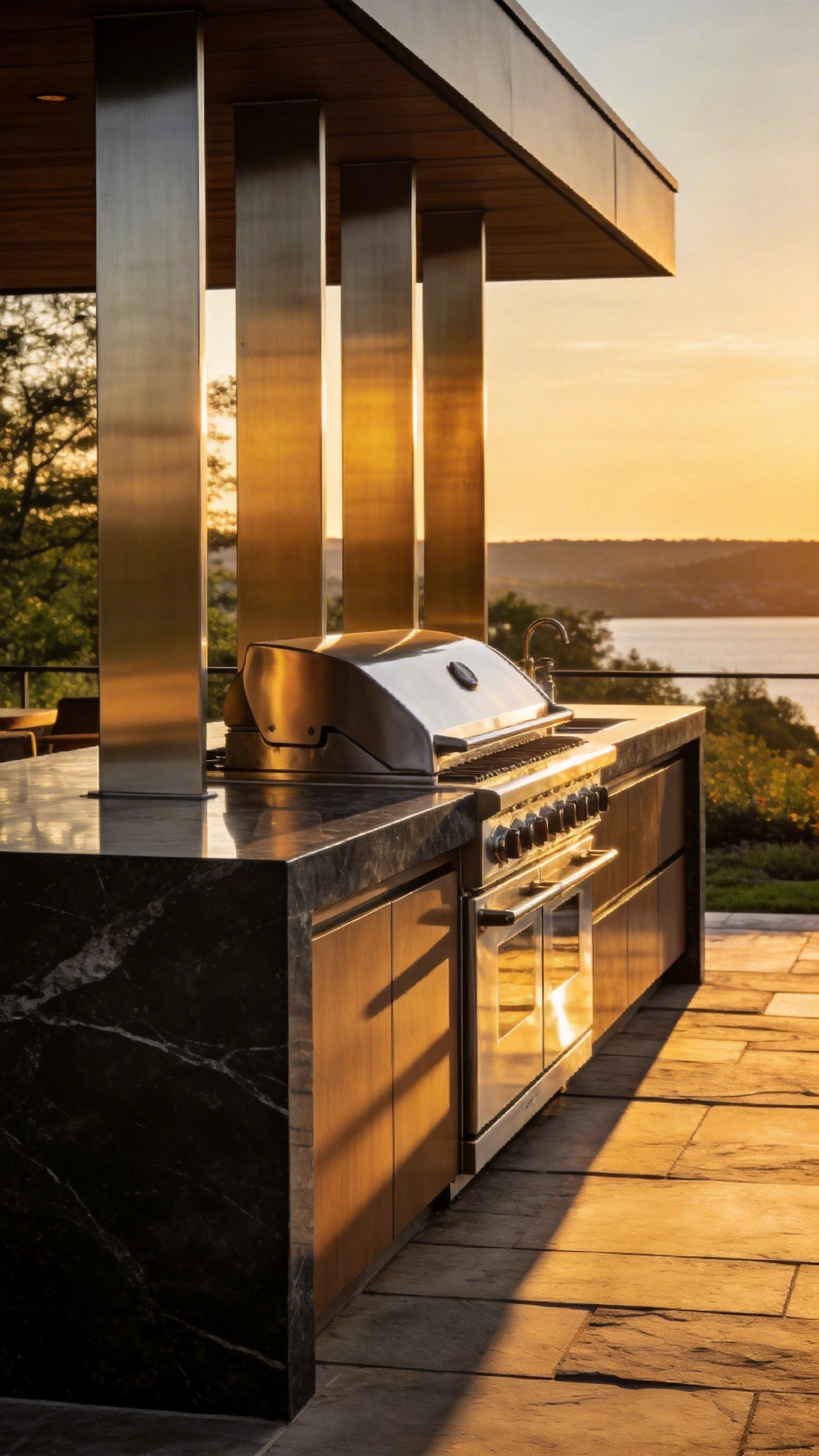
Climate-responsive design also comes down to smart material choices. High-density soapstone offers exceptional thermal lag. During the peak of summer, this stone stays surprisingly cool. Conversely, adding radiant heating coils underneath turns it into a winter warmer. The counter then radiates comfortable heat long after the sun goes down.
Ancient builders used wind catchers for passive cooling. Today, motorized pergolas do the exact same thing by siphoning hot air upward. Short-wave infrared heaters perfectly complement this setup. Much like the sun, they warm objects and people rather than the empty air. Meanwhile, the psychological effect of a real fire adds to the comfort. A visible amber glow genuinely makes the whole patio feel cozier.
The biggest challenge is using organic materials safely. People love the rich texture of reclaimed timber. Yet, placing combustible wood near a hot grill requires serious planning. We use zero-clearance insulated jackets made of ceramic fiber to solve this. These sleeves create a cold break against intense radiant heat. Therefore, raw timber can sit safely right next to hot steel.
4. Blurring the Boundary: Visual Continuity from Interior to Exterior
True visual continuity means dissolving the literal threshold between inside and out. Modern designs often eliminate bulky metal sliding door tracks. Instead, architects use flush threshold drainage systems. The interior floor flows outward without creating a tripping hazard. This clever system leaves only a tiny, subtle drainage slot visible.
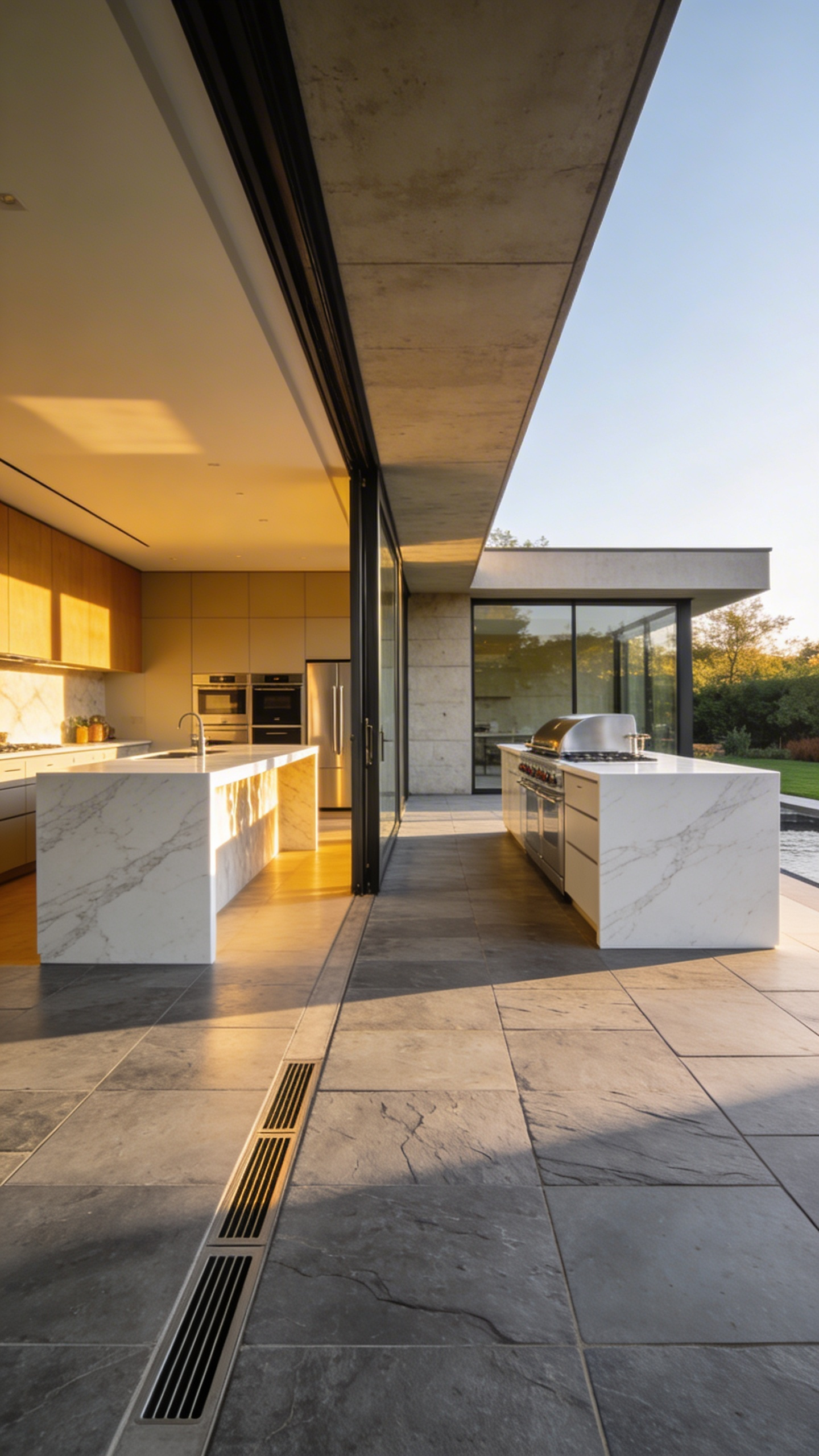
Next, think about alignment. An outdoor island can perfectly mirror the indoor kitchen layout. Waterfall edges create a continuous line from the house directly to the patio. Using UV-resistant sintered stone unifies the entire visual plane. Your brain naturally reads this transition as one massive, cohesive room.
However, material durability is always the catch. Traditional interior wood fails rapidly in harsh outdoor environments. High-Density Polyethylene provides a great alternative, offering rich wood-grain looks without the rot. Extending honed natural stone outside also ensures things feel the same. The smooth stone stays consistent under your hands. Borrowing the distant scenery pulls nature right into your prep space.
Phase 2: Material Exploration (Tactile and Resilient Surfaces)
Older outdoor kitchens relied heavily on high-gloss tiles. Today, modern design prioritizes texture. Designers are shifting toward leathered and honed finishes instead. These brushed textures create a slightly bumpy, organic surface. A rippled texture feels much more natural outdoors. Leathered stone also does a great job of dissipating heat. The countertop maintains a comfortable temperature, even in direct sun. As a bonus, forgiving matte finishes naturally hide dust and pollen.
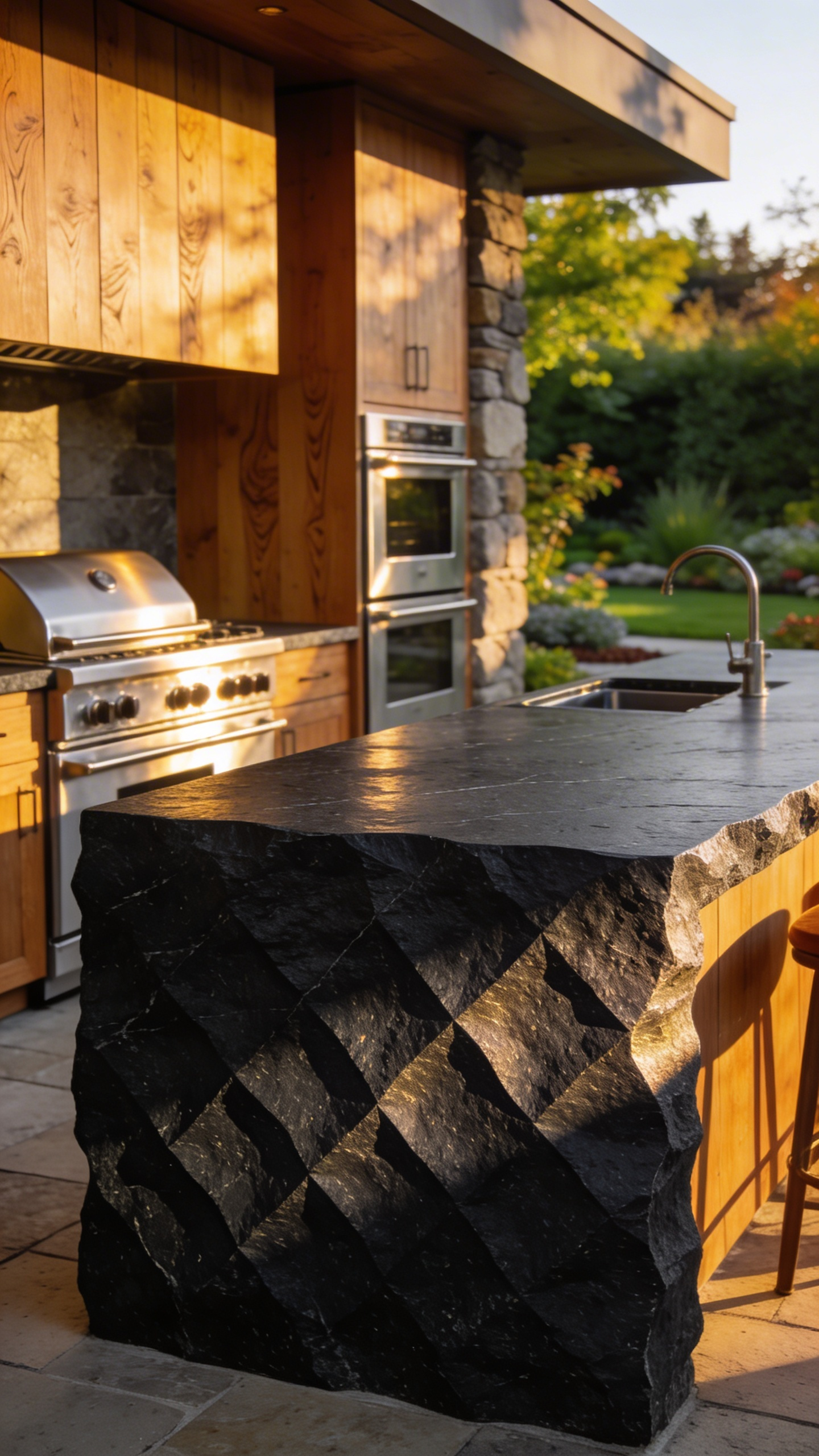
Material engineering has drastically improved countertop durability. Sintered stone is manufactured using extreme heat and pressure. This creates a brilliant, completely non-porous slab. Yet, this extreme density makes sharp edges prone to chipping. Experts often combine flat sintered prep areas with slightly rounded edge profiles to prevent this.
Meanwhile, lower cabinetry materials have evolved significantly. High-Density Polyethylene (HDPE) has largely replaced traditional wood. This marine-grade polymer actually feels solid and heavy. Its color goes all the way through the material, powerfully resisting UV fading.
This gives your kitchen a permanently resilient base. Builders often use a hybrid construction technique to pull it off. First, they build a traditional concrete masonry core. Then, they clad this heavy block in ultra-thin stone veneers. This method easily solves weight limits on modern wooden decks. You get the look of massive stone without collapsing your patio.
5. The Thermal Mass Advantage: Selecting Base Stones for Heat Fluctuation
Choosing base stones involves understanding how materials hold heat. A material’s thermal mass acts exactly like a battery. Dense stones absorb the scorching midday sun and release it slowly. This keeps the surrounding patio comfortable well into the evening. Architects call this the Flywheel Effect.
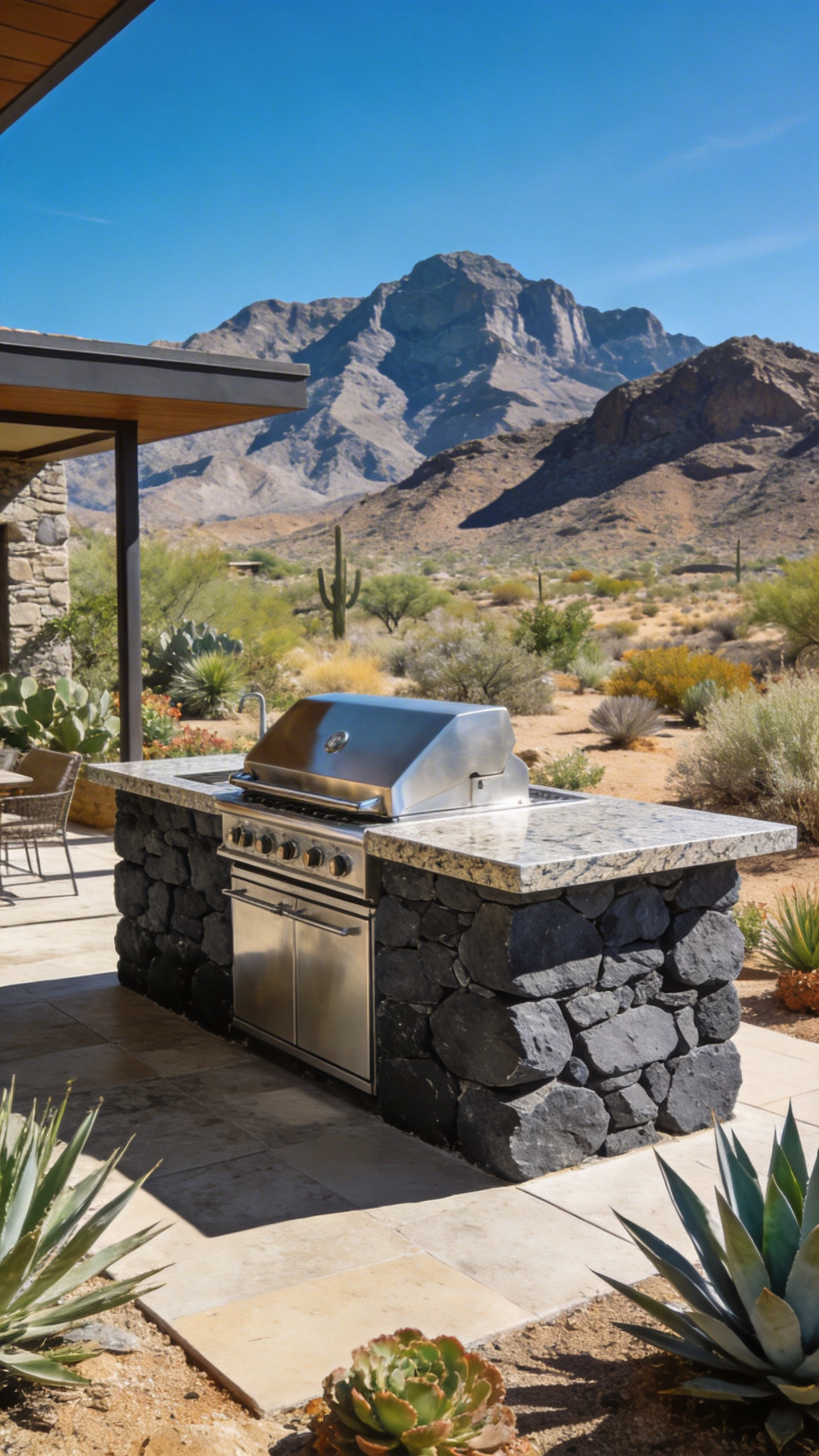
Heavy materials actively delay the transfer of heat. Imagine a desert kitchen baking at two in the afternoon. Stainless steel will burn your hand, but a dense stone base remains lukewarm. Indeed, dense rock absorbs massive heat loads without getting dangerously hot on the surface.
Soapstone remains a top-tier choice for extreme temperature swings. Its high talc content prevents damaging thermal shock. The stone barely expands when heated. You can literally drop a red-hot cast-iron pan right onto it. The surface won’t crack or scorch. However, soapstone requires properly built underlying framing. Metal studs under high-heat grills expand rapidly. This expansion frequently causes rigid stone veneers to pop right off.
Instead, builders prefer a standard concrete masonry block core. Filling this core with sand creates a safe moisture wick. This thermal break dissipates intense oven heat harmlessly. You also need to think about your local climate. In regions with freezing winters, rigid non-porous stones can snap. Masonry builds using irregular Fieldstone often fare much better. The softer mortar joints act as tiny expansion gaps. They absorb minor shifts rather than cracking the actual stone.
6. Forging Resilience: Integrating Marine-Grade Metals and Natural Patinas
Outdoor design is moving toward embracing natural aging. Marine-grade metals and natural patinas create finishes that look better over time. Grade 316L stainless steel, for example, is highly resistant to salty coastal air. The added molybdenum stops chloride-induced pitting before it starts. Its low-carbon makeup prevents ugly rust at the weld joints. Visually, this raw steel takes on a soft, matte frost near the ocean. Functionally, high-end double-wall cabinets close with a solid, satisfying thud.
Using living metals like copper introduces a constantly changing element. Fresh copper glows with a bright, pinkish-orange hue. Within months, moisture and air darken it to chocolate brown. Near the coast, salt eventually turns this brown into an iconic green verdigris. This green layer actually forms a highly durable, self-healing skin. It permanently seals the underlying metal, stopping corrosion entirely.
Designers often use hammered metal textures to speed up this aging. The small surface dimples catch morning dew and develop dark, shadowy crevices. Pairing cold stainless steel with warm bronze creates a fantastic visual contrast. Horizontal countertops experience more sitting water, so they patina much faster than vertical doors. This uneven aging makes the kitchen look like it naturally belongs in the yard.
7. Engineered vs. Natural: Solving the Outdoor Countertop Conundrum
Old outdoor kitchens were usually just basic brick islands. Now, people want the sophisticated look of their indoor spaces outside. However, using standard indoor quartz on a patio is a huge mistake. Direct sunlight quickly destroys the synthetic polyester resin inside the quartz. The stone will turn yellow and brittle within a year. Sintered stone offers a much better, resin-free solution. The intense manufacturing process creates a surface totally immune to UV rays.
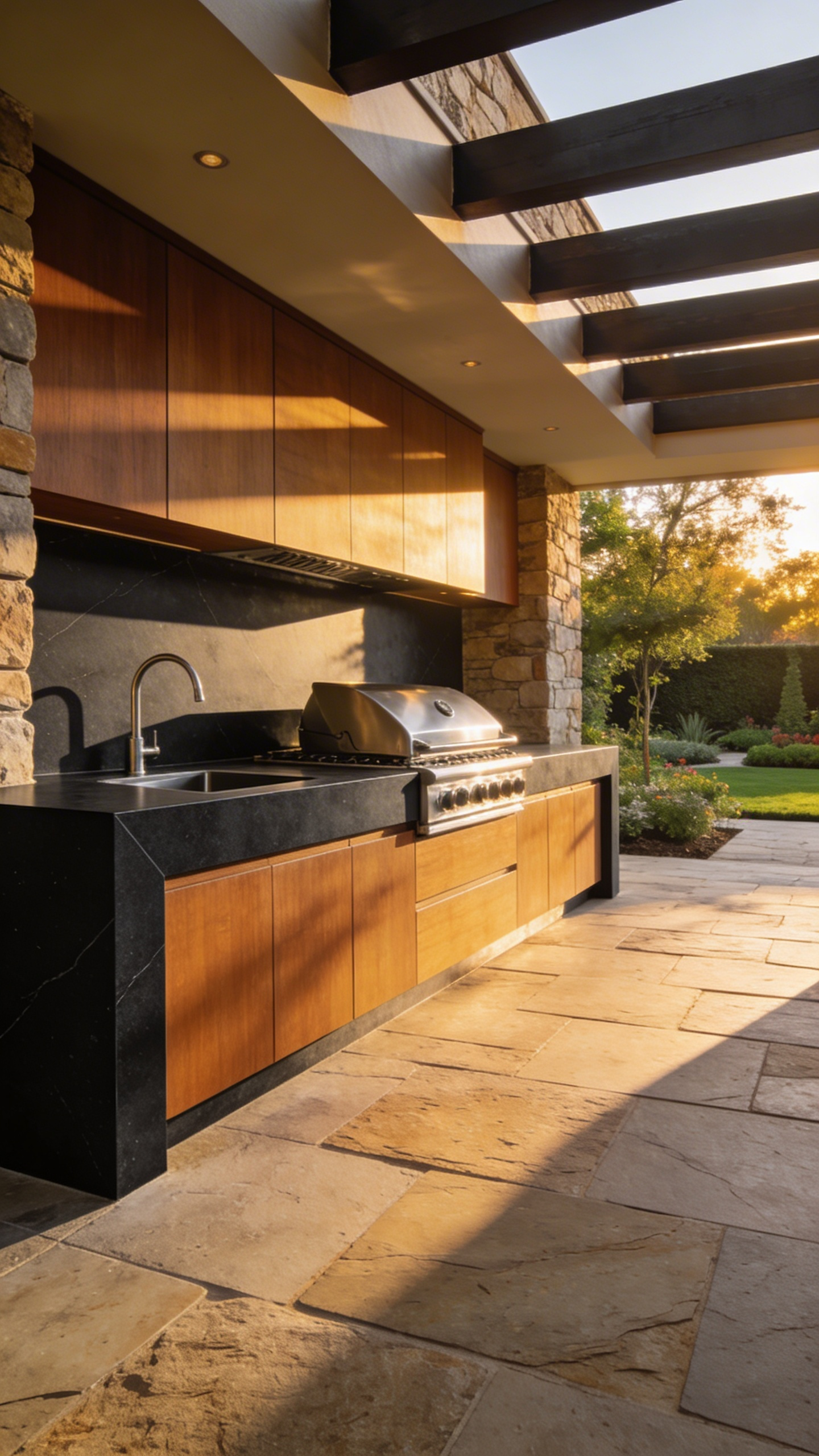
You also have to think about solar reflectance, or albedo. Mirror-polished dark granite absorbs massive amounts of heat. In direct sun, a black countertop can easily reach 150 degrees. Introducing texture offers a surprisingly effective cooling solution. Leathered or brushed finishes scatter the sunlight rather than absorbing it directly. These textured slabs feel cooler to the touch and eliminate blinding glare.
Cold climates introduce the risk of freeze-thaw damage. Porous stones absorb rain and humidity. When winter hits, that trapped water freezes, expands, and cracks the stone. High-density soapstone avoids this problem completely. It withstands the jump from a freezing night to a hot pizza oven without flinching. Your final material choice dictates the kitchen’s whole vibe. Natural stone develops character and shows its age. Engineered porcelain, on the other hand, looks flawlessly new forever.
8. Introducing Tactile Warmth with Thermally Modified Exterior Woods
Outdoor kitchens can feel a bit cold and industrial. Thermally modified wood is a great way to add visual warmth. The wood undergoes a specialized baking process before installation. Intense heat changes the cellular structure of the timber. Natural sugars caramelize inside an oxygen-free kiln. This bakes a rich, dark chocolate color right into the wood. The color penetrates all the way through the board. If you scratch it, you won’t see a bright pine color underneath.
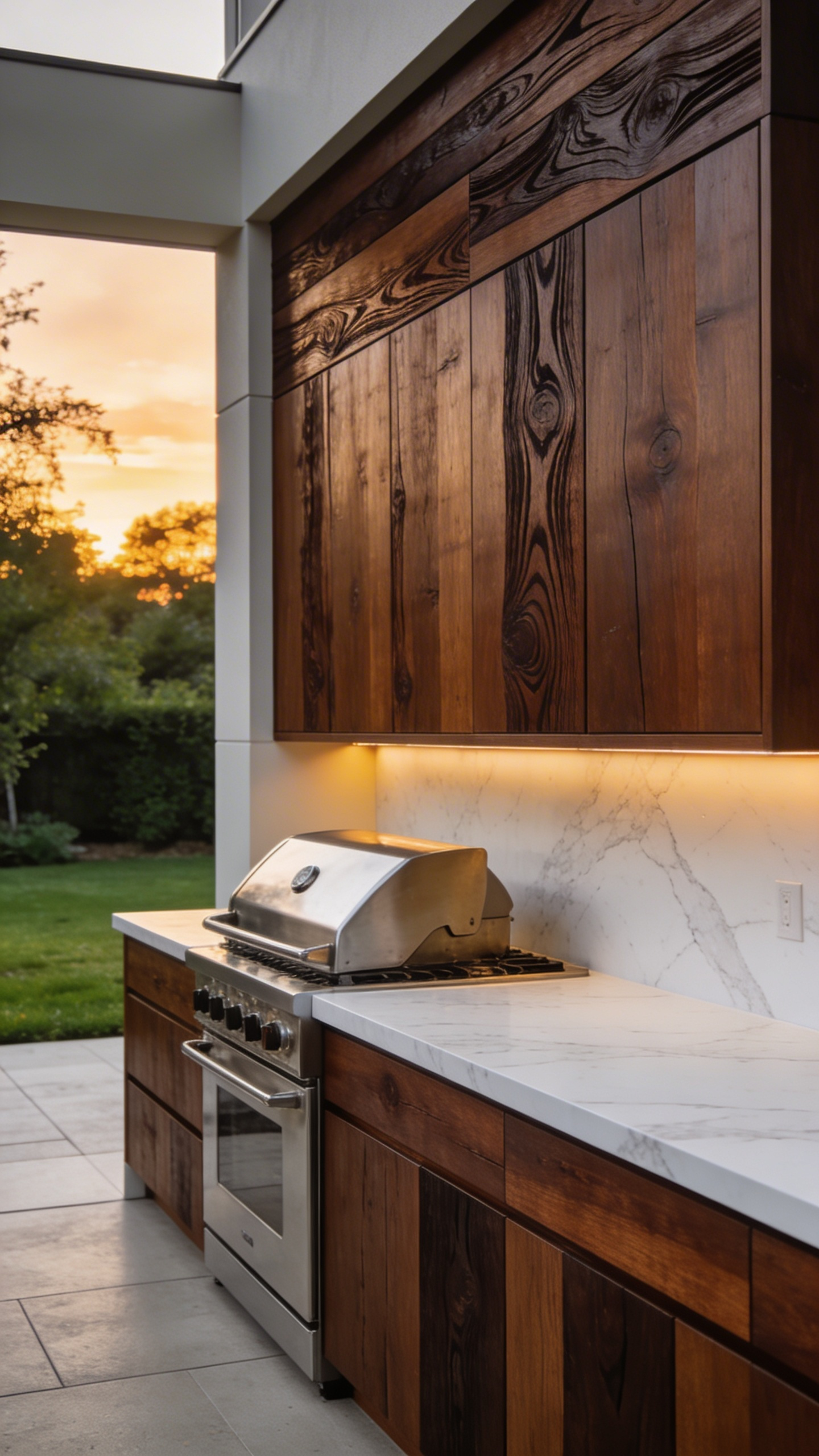
This wood also stays physically cooler in the sun. Standard composite decking gets dangerously hot. Thermally modified wood conducts about 30 percent less heat. The surfaces stay comfortable to lean against or walk on barefoot. It also offers significant noise reduction. Hard stone patios bounce sound around, creating loud echoes. Wood naturally absorbs these disruptive sound waves. A timber backsplash can actually quiet the clatter of pots and pans.
Builders love the dimensional stability of this product. Standard wood absorbs humidity, causing outdoor cabinet doors to stick or warp. Modified wood barely absorbs water at all. This lets cabinet makers use tight, precise gaps between doors. It also makes domestic wood like ash or pine highly durable. People used to rely on imported tropical hardwoods like Ipe. Now, local timber can easily last 25 years outside. Left un-oiled, it weathers to a beautiful silver grey.
9. Textural Grounding: Slip-Resistant Paving That Anchors the Space
Your patio floor has to be remarkably safe, especially near a grill. Slip-resistant paving is absolutely essential. Outdoor safety requires more than just picking a slightly rough tile. Professionals look for a high friction rating. Cooking zones also have to handle spilled grease and oils. Expert designers usually specify acid-washed or brushed stone for this reason. Deeply pitted stones trap grease, creating a nasty, slippery film over time. An acid-washed finish provides grip without trapping dirt.
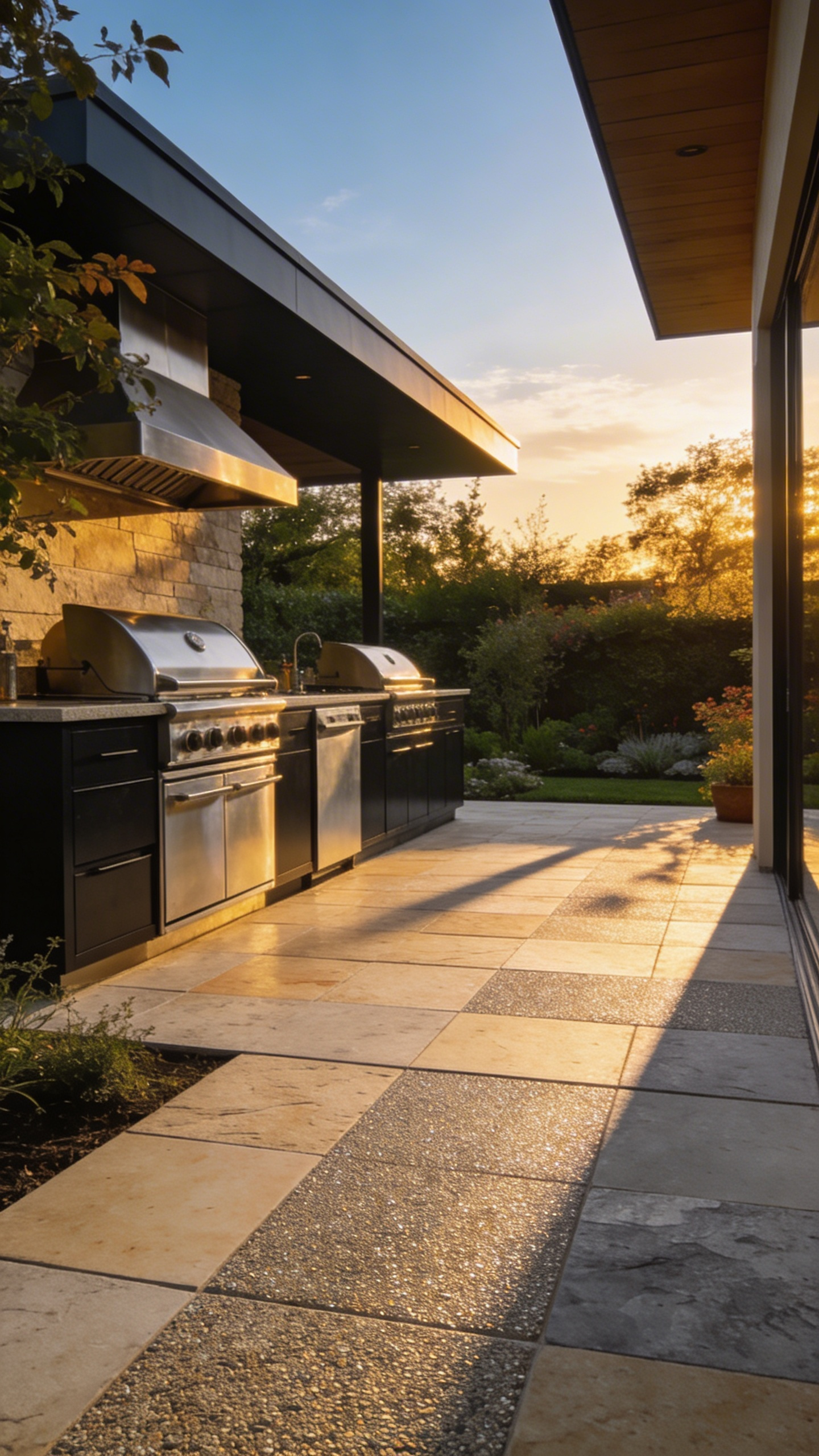
Thick paving also gives the kitchen a sense of permanence. Heavy appliances look like they belong there, rather than just resting on top. You can use contrasting stone borders to create a permanent “outdoor rug.” A tumbled travertine inlay, for instance, makes a dining area feel like a defined room.
You always have to balance slip resistance with barefoot comfort. Dark slate grips well but gets painfully hot in the sun. Smooth porcelain stays cool but turns into an ice rink after a rainstorm. Light-colored, leathered stones offer the best middle ground. Indeed, walking across brushed limestone feels great on bare feet while keeping you from slipping.
10. The Chemistry of Preservation: Advanced Sealants and Protective Finishes
Protecting your stone used to mean slapping a thick, glossy coat on top. Today, the industry relies on penetrating sealers. Topical sealers sit on the surface and frequently trap ground moisture underneath. When winter arrives, that trapped water freezes and shatters the top layer of stone. Modern sealers soak straight into the rock instead. They bond permanently within the pores of the material. This creates a breathable shield that lets trapped water vapor escape harmlessly.
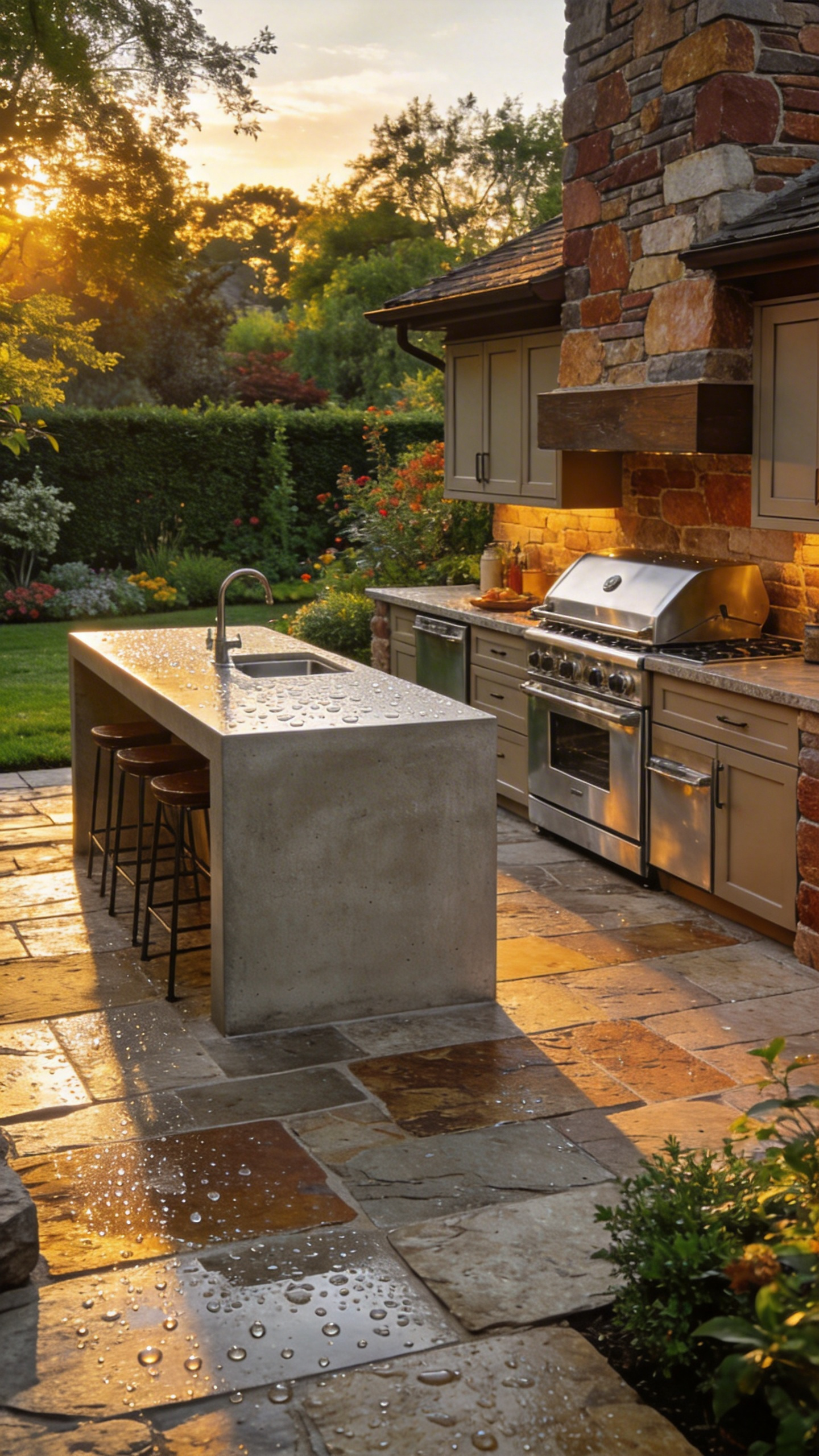
Outdoor kitchens also have to survive splattering cooking oils. Modern sealants need to repel both water and grease. Liquid glass coatings use silicon dioxide to create a microscopic shield. Water and wine bead up immediately, mimicking how water rolls off a lotus leaf. Best of all, these high-tech coatings are completely invisible. They don’t make the stone feel plastic or sticky. You still feel the actual cold marble or the gritty sandstone under your fingers.
High-heat zones require specialized protection. Specialized ceramic coatings can stop a stainless steel grill hood from turning brown from heat tint. They handle extreme temperatures up to 400 degrees Celsius without failing. Many modern finishes also include UV stabilizers. These compounds neutralize damaging sunlight before it fades your cabinetry. Because of this chemistry, dark materials can hold their rich color for decades.
Phase 3: Spatial Application (Layering Function and Form)
A good layout uses staggered heights to create invisible boundaries. A standard 36-inch prep counter often backs up to a 42-inch bar top. This small step hides your messy cutting boards from guests. It also keeps people at eye level while you cook. You remain part of the party without anyone getting too close to the hot grill. Changing the patio texture underfoot is another subtle trick. Smooth pavers in the workspace tell people this is a kitchen. Rugged stones in the lounge area tell them to sit and relax. Even countertop textures play a role. Cold, hard granite works perfectly for chopping veggies, while a reclaimed wood bar edge invites people to lean in.
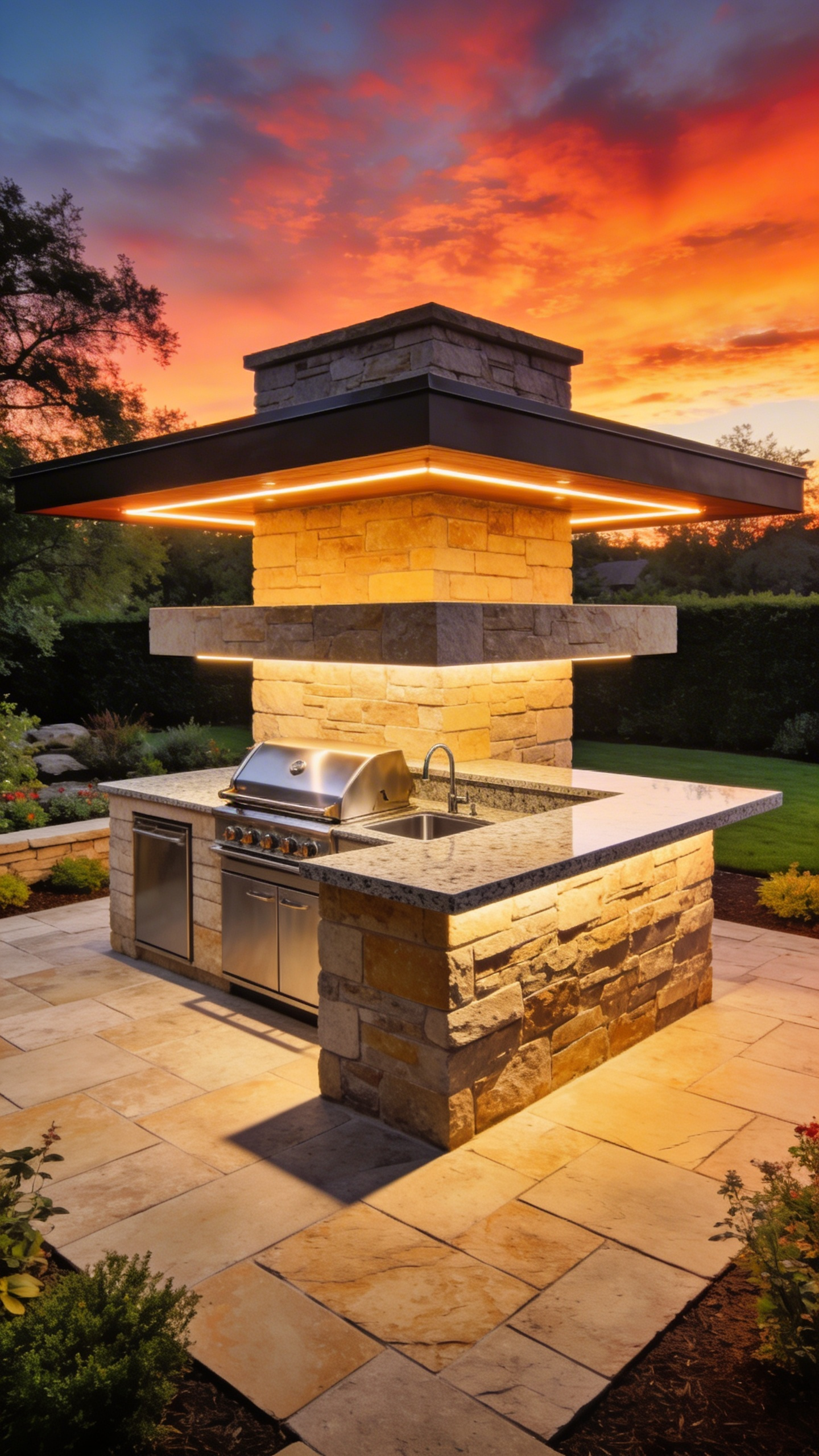
Lighting completely changes how the patio feels at night. A simple three-tier lighting approach works best. Bright task lights illuminate the grill grates. Softer ambient lights glow around the seating area. Toe-kick LED strips under the cabinets make heavy stone islands look like they are hovering. Integrating plants also softens harsh masonry lines. Rather than scattering random pots, try building stainless steel planter troughs into the counter. Fresh herbs can grow right next to your prep sink for easy garnishing.
You also have to plan for the inevitable crowd. Guests instinctively hover around the chef and the fire. Providing a wide countertop buffer zone next to the grill is mandatory. This gives people a safe place to set down their drinks. Proper spacing keeps everyone comfortable and prevents painful accidents.
11. Zoning the Elements: Creating Synergistic Fire, Water, and Prep Stations
The old kitchen “work triangle” doesn’t always apply outdoors. Expansive patios require a zone-based approach instead. You need dedicated hot, cold, wet, dry, and social zones. Breaking it down this way prevents you from running back and forth across a massive deck. In the social zone, a kitchen island with seating naturally becomes the main gathering point.
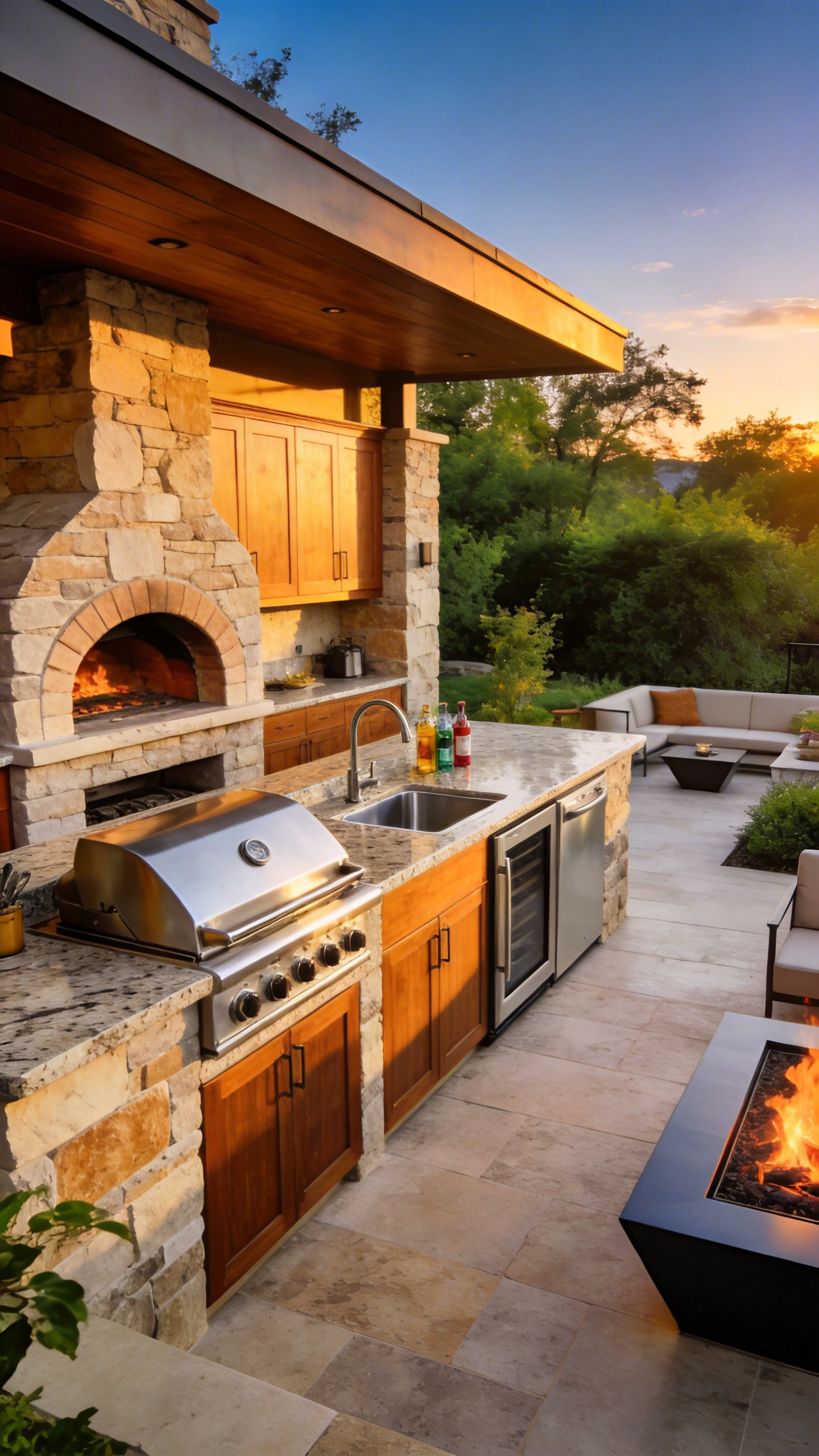
Combining fire and water features adds incredible atmosphere. A small fountain near the prep station acts as acoustic insulation. The trickling water masks distant traffic, creating a private sound bubble. Fire elements—like those seen in modern firepit ideas—keep the patio warm during fall evenings. Flames reflecting off a polished countertop even bounce extra light around the space. High-grade materials like Dekton or granite safely bridge these two extremes. They handle both splashing water and intense heat without flinching.
The dry prep station acts as the pivot point. You should be able to reach the hot grill and the sink without taking more than one step. This keeps you engaged with your guests the entire time. Maintaining a bit of distance between the extreme zones is still critical, though. Keep at least three feet of clearance between the hot grill and a cold sink. This breathing room prevents splashing water from hitting hot stone and causing thermal shock.
12. Vertical Materiality: Designing Weather-Proof Backsplashes and Feature Walls
Building an outdoor backsplash requires different techniques than an indoor kitchen. Sticking tile directly to an exterior wall is asking for trouble. Water eventually gets behind the grout and freezes, popping the tiles off. High-end builders now use ventilated facade systems instead. This creates a tiny air gap behind the stone wall. Moisture evaporates freely, and heat from the grill doesn’t transfer into the house siding.
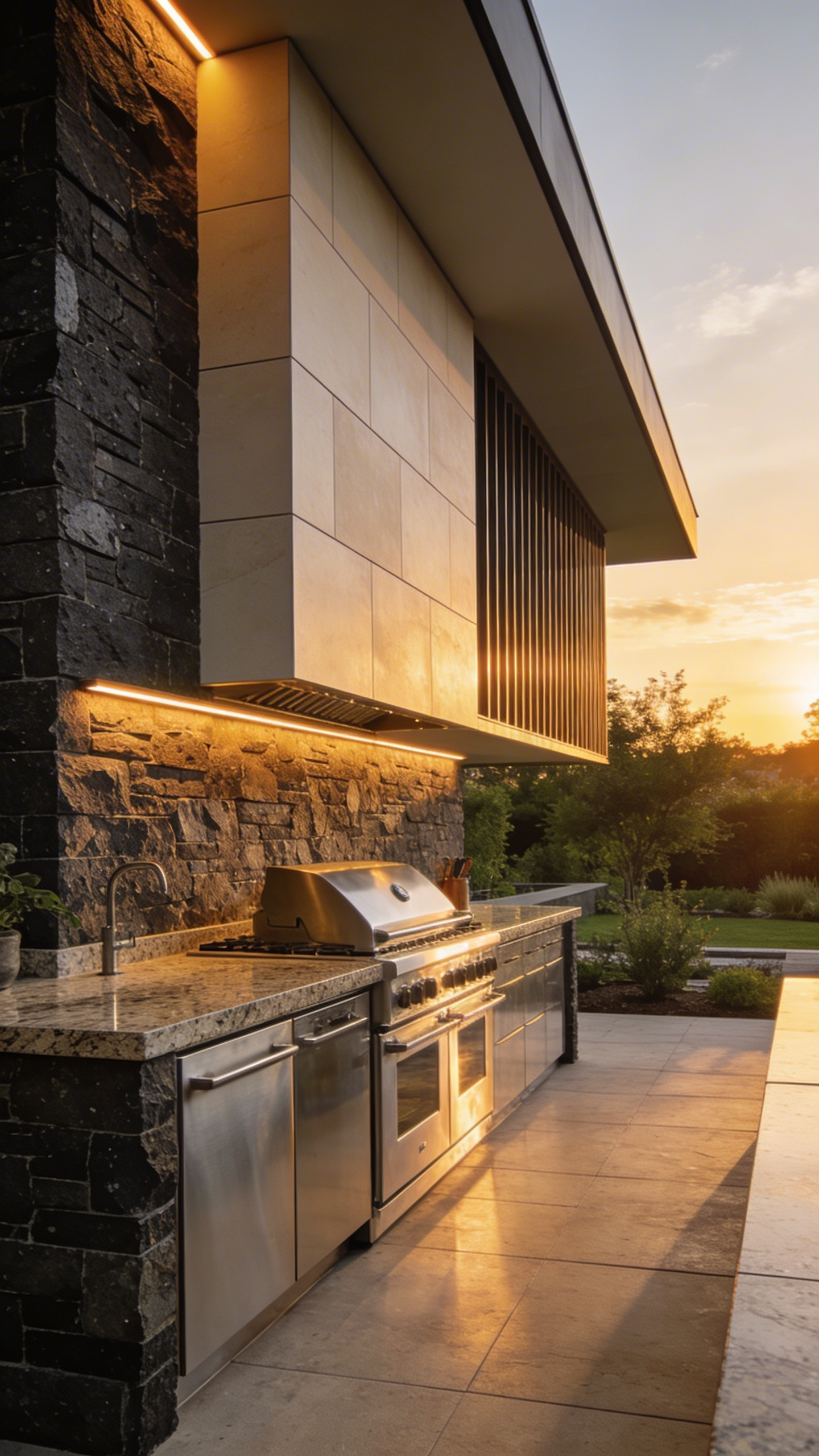
Choosing the right vertical material is a balancing act. Natural stone like soapstone feels fantastic to the touch. In the shade, a thick stone wall stays incredibly cool on a hot summer day. Sintered stone, on the other hand, is purely about bulletproof performance. It laughs at extreme thermal shock. Designers frequently mix the two. They will install an indestructible sintered slab directly behind the hot grill. Then, they use rugged natural stone for the rest of the wall.
Modern design leans heavily toward clean, seamless vertical surfaces. Installers hide the mounting hardware completely. Heavy stone slabs hang on hidden metal rails using undercut anchors. Therefore, the stone can expand in the summer heat without cracking. Lighting against these walls matters too. Polished finishes create blinding glares during the day. Leathered or matte stone finishes diffuse that sunlight into a soft, manageable glow. Some ultra-luxury setups even use motorized retractable backsplashes that slide away to reveal the yard.
13. Sophisticated Camouflage: Hiding Modern Appliances Behind Natural Facades
The giant, shiny stainless-steel island is starting to fade from popularity. Today, sophisticated camouflage is taking over. People want their yards to look like natural retreats, not commercial kitchens. Hiding bulky appliances behind stone or wood paneling solves this problem. It creates a cleaner, uninterrupted horizon line across your patio. This visual quiet makes the space feel much more relaxing.
Hiding appliances behind heavy stone veneers requires careful planning. You can’t just glue rocks to a refrigerator. Builders use lightweight aluminum frames covered in cement board. This securely holds heavy quartzite or slate without requiring a massive concrete footing. Grills get wrapped in insulated metal liners to stop heat from cracking the surrounding stone. Under-counter refrigerators must be specifically rated for front-venting so they don’t overheat in tight cabinets.
Some people even use living plant walls to hide their equipment. These vertical gardens look great and offer real evaporative cooling. A damp plant wall can lower the immediate air temperature significantly. This actually helps your outdoor fridge run more efficiently.
A camouflaged kitchen also sounds better. Hidden appliances are specifically chosen for their low decibel ratings. You want to hear the breeze, not the hum of a compressor. The physical interaction is also highly satisfying. You push on a rough, textured stone panel, and a magnetic latch pops open to reveal a glowing stainless steel drawer. That contrast between raw stone and precision engineering is incredibly sharp.
14. Structural Integrity: The Physics of Load-Bearing Substrates in Outdoor Cabinetry
Extreme temperature shifts will test how well your kitchen is built. Different materials expand at completely different rates. A long plastic polymer board can expand by half an inch in direct sun. If it’s screwed down too tightly, the cabinet will warp or snap. Installers use slotted screw holes to let the material slide and breathe safely. Stone countertops also add massive, crushing weight. A typical slab weighs up to 25 pounds per square foot. Adjustable leveling legs transfer that massive load straight down to the concrete footing.
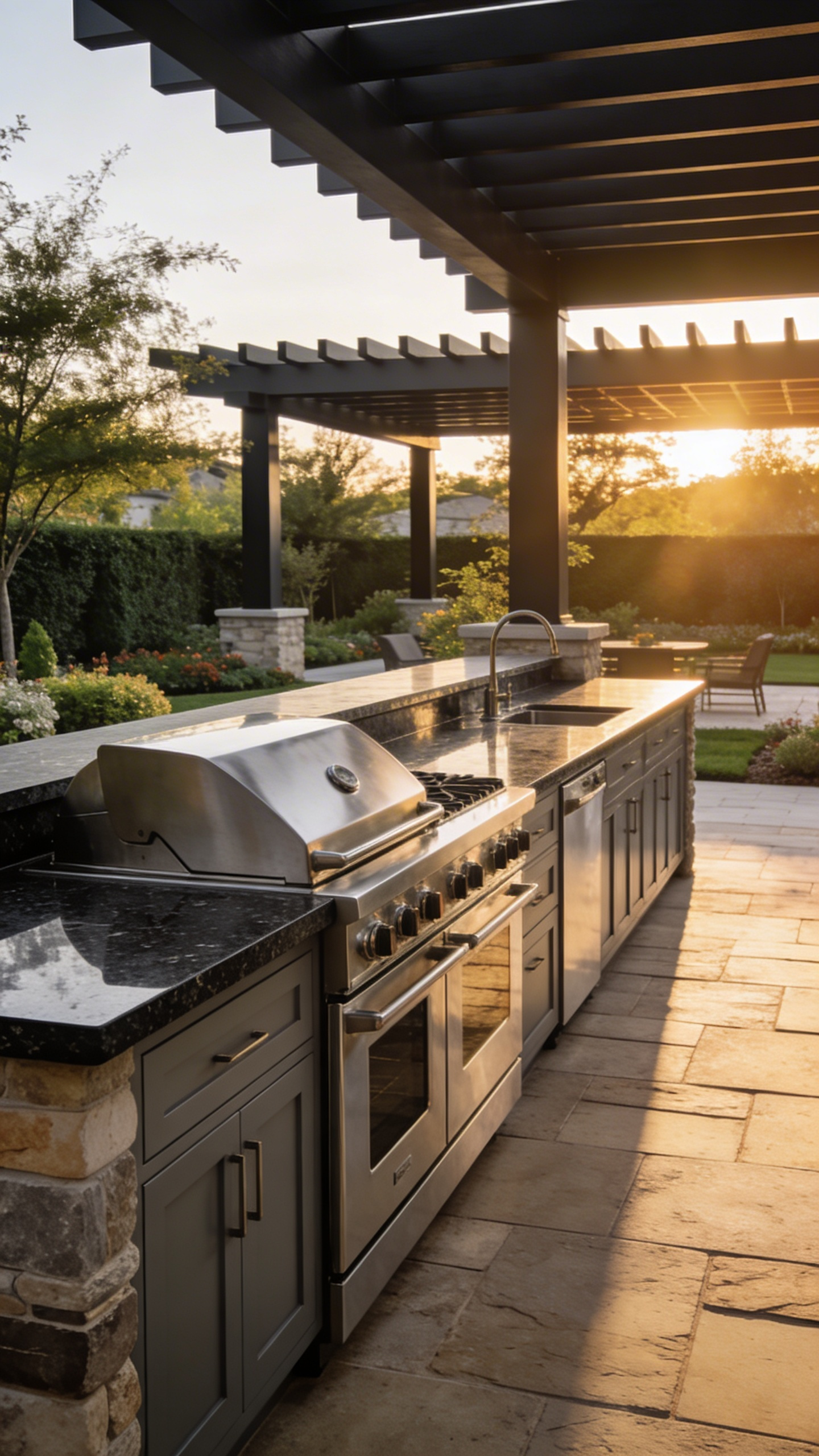
Freezing winters bring the threat of frost heave. Wet dirt freezes, expands, and literally lifts the patio upward. Builders use deep concrete piers or gravel drainage layers to stop this. Traditional cement backer boards also struggle in freezing rain. They slowly absorb water and crumble apart after a few harsh winters. Magnesium Oxide boards are becoming the new standard because they don’t hold water.
Stronger frames also make the kitchen feel higher quality. Bare metal cabinet doors often rattle with a cheap, tinny sound. Upgrading to doors with an internal honeycomb core deadens that vibration. The door closes with a heavy, muted thud instead of a metallic crash.
Phase 4: Lifestyle Integration (The Living Environment)
A great patio feels like an actual room, not just a grilling station. Blurring the line between inside and out makes the yard feel larger. Running your indoor tile pattern out onto the patio is a classic trick. You just have to make sure the exterior tiles have a gritty, slip-resistant finish.
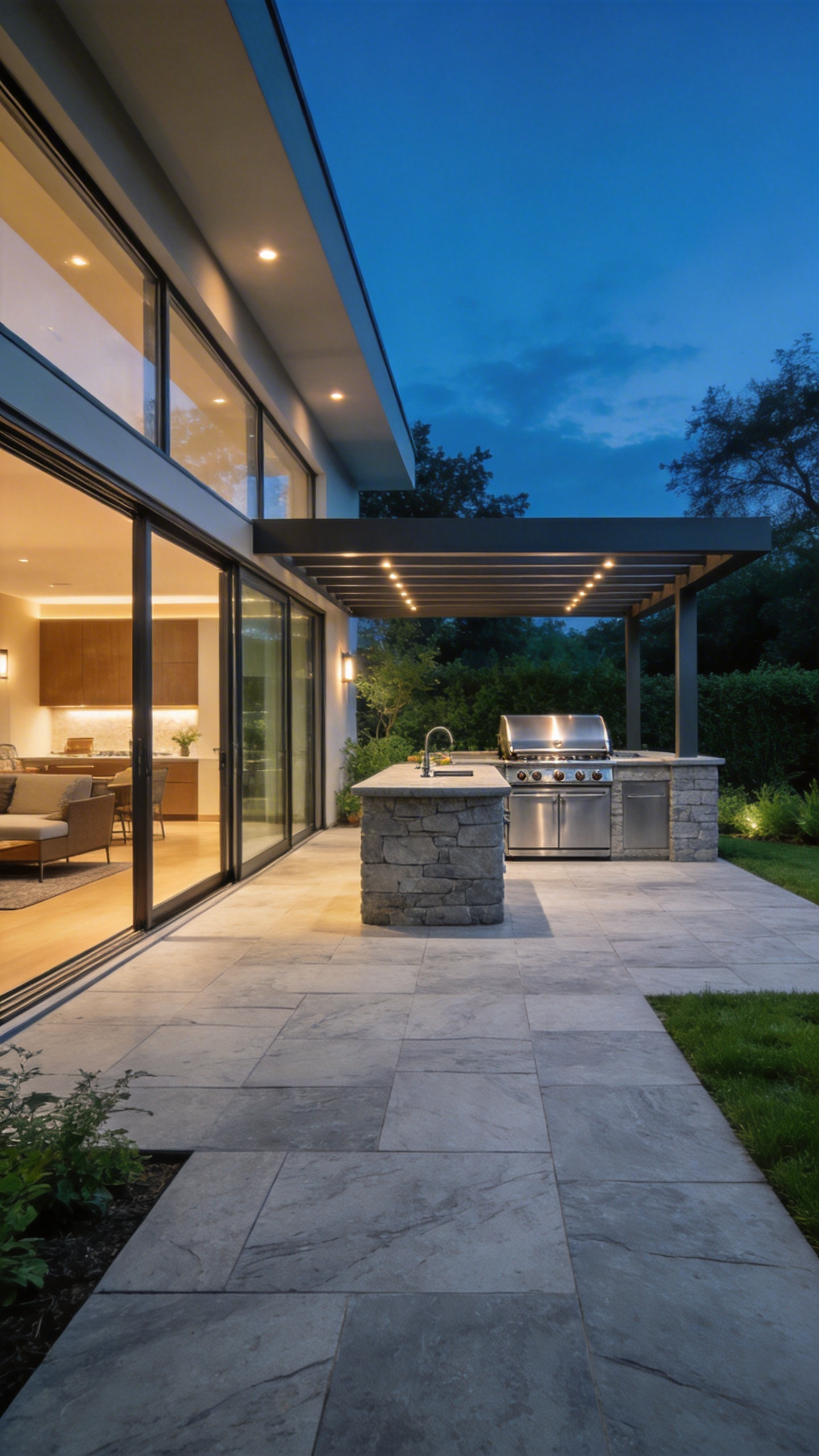
Sound management is incredibly important in tight neighborhoods. You don’t need to blast harsh overhead speakers to drown out street noise. Acoustic masking is a much better strategy. A cascading water fountain gently tunes out distant traffic while looking fantastic. Adding small, buried landscape speakers provides even, low-volume music across the whole patio.
Bringing plants directly into the workspace also helps. A small, built-in herb planter puts fresh greenery right at your fingertips. The smell of fresh basil or rosemary while you cook is instantly relaxing. Climate control extends how often you actually use the space. Short-wave infrared heaters and slow-moving overhead ceiling fans take the edge off bad weather. This combination keeps the patio comfortable through spring, summer, and fall.
Finally, think about future flexibility. Old outdoor kitchens were built from solid cinder blocks that could never be moved. Today, premium modular cabinets let you swap out appliances if your needs change. A hybrid layout merges a permanent stone bar with modular cooking units. You get the rugged look of masonry with the flexibility to upgrade your grill in ten years.
15. The Choreography of Entertaining: Orchestrating the Flow from Prep to Plating
Designing for entertaining is all about traffic flow. You want to keep people close without letting them crowd the grill. A raised stone peninsula is the easiest way to dictate this. Guests naturally walk up and lean against the higher bar top. They stay safely out of your way, but close enough to chat while you flip burgers.
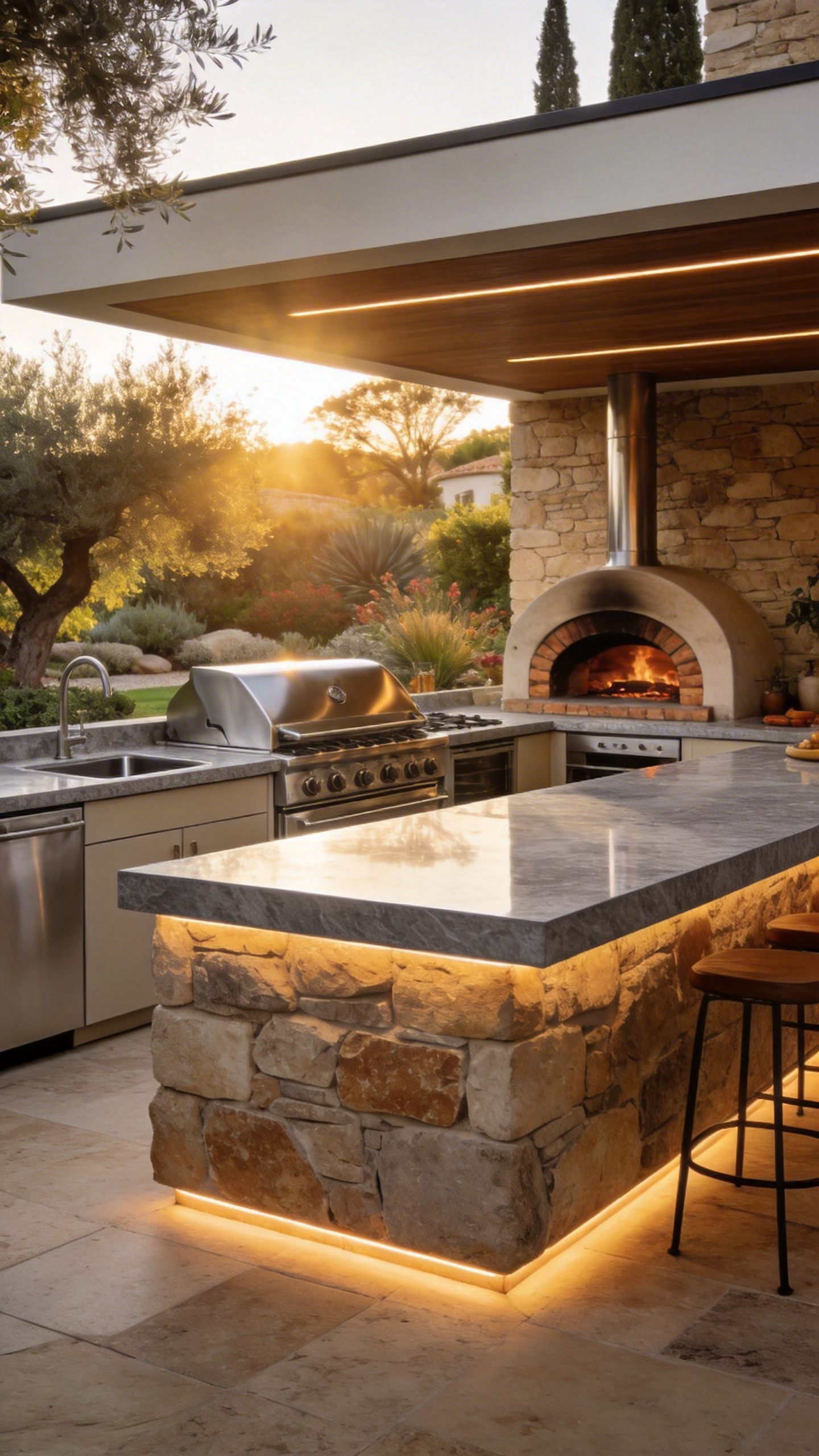
The cooking process itself should flow linearly. Ingredients come out of the fridge and go straight to the prep sink. From there, they move to the grill. Finally, the cooked food lands in a dedicated plating area. You need at least two feet of empty counter space for this landing zone. Without it, you end up awkwardly balancing hot platters over the sink.
Think about wind direction before you lock in your layout. Placing the grill upwind of the dining table means your guests will be eating smoke all night. Lighting can also subtly direct traffic after dark. Warm LED strips under the counters naturally guide people toward the seating area. You never have to stop cooking to point someone toward the lounge.
16. Four-Season Functionality: Adapting Surfaces for Year-Round Culinary Experiences
If you want to grill in January, you need tough materials. Extreme temperature swings will wreck poorly planned kitchens. Metal grill hoods expand under the hot sun much faster than stone. Installers use high-heat silicone gaps around the grill to handle this. The metal can expand and contract safely without putting pressure on the granite.
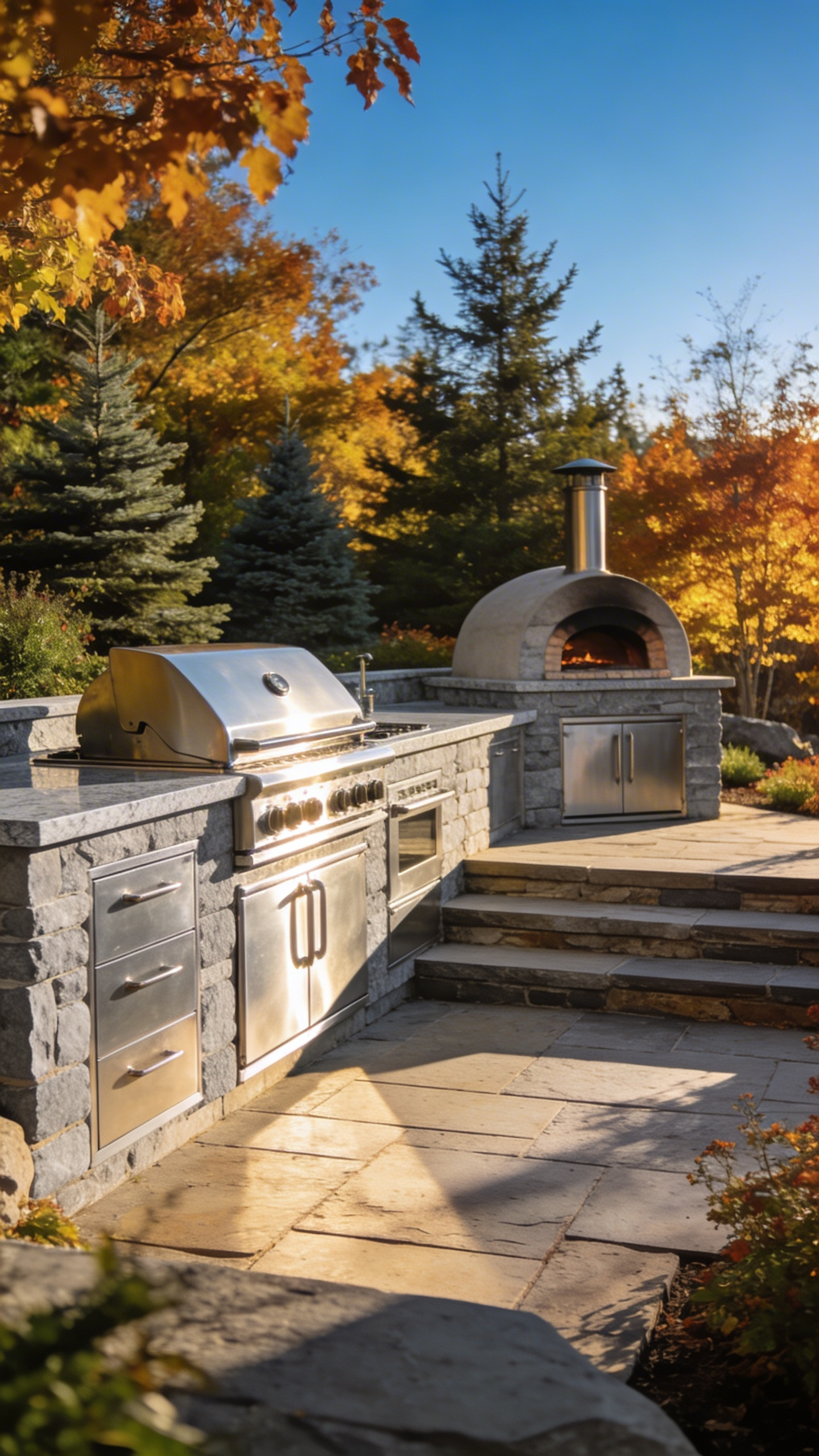
Sintered stone is amazing for freezing climates because it absorbs zero water. However, dense natural granite is highly resistant to thermal shock. It easily handles setting down a hot cast-iron skillet in the middle of winter. Granite also brings natural texture and character that manufactured stone just can’t match.
Think about how surfaces actually feel. Touching freezing stone in November is miserable. Radiant heating mats installed under the stone bar completely change the experience. On the flip side, light-colored stones stay comfortably cool during July heatwaves. Your flooring choice matters immensely for winter use. Highly textured porcelain gives you the grip needed to avoid slipping on frosty mornings. Ultimately, making the space physically comfortable guarantees you will actually use it.
17. The Art of the Wash-Down: Designing Maintenance-Friendly Drainage Systems
Cleaning up after a BBQ shouldn’t be a nightmare. You need a floor that is easy to wash but still safe to walk on. Porous stones absorb dropped grease and look permanently stained within weeks. Large-format porcelain panels are becoming the gold standard here. The massive tile size means almost zero grout lines to scrub. You can literally just hose the patio down when the party is over.
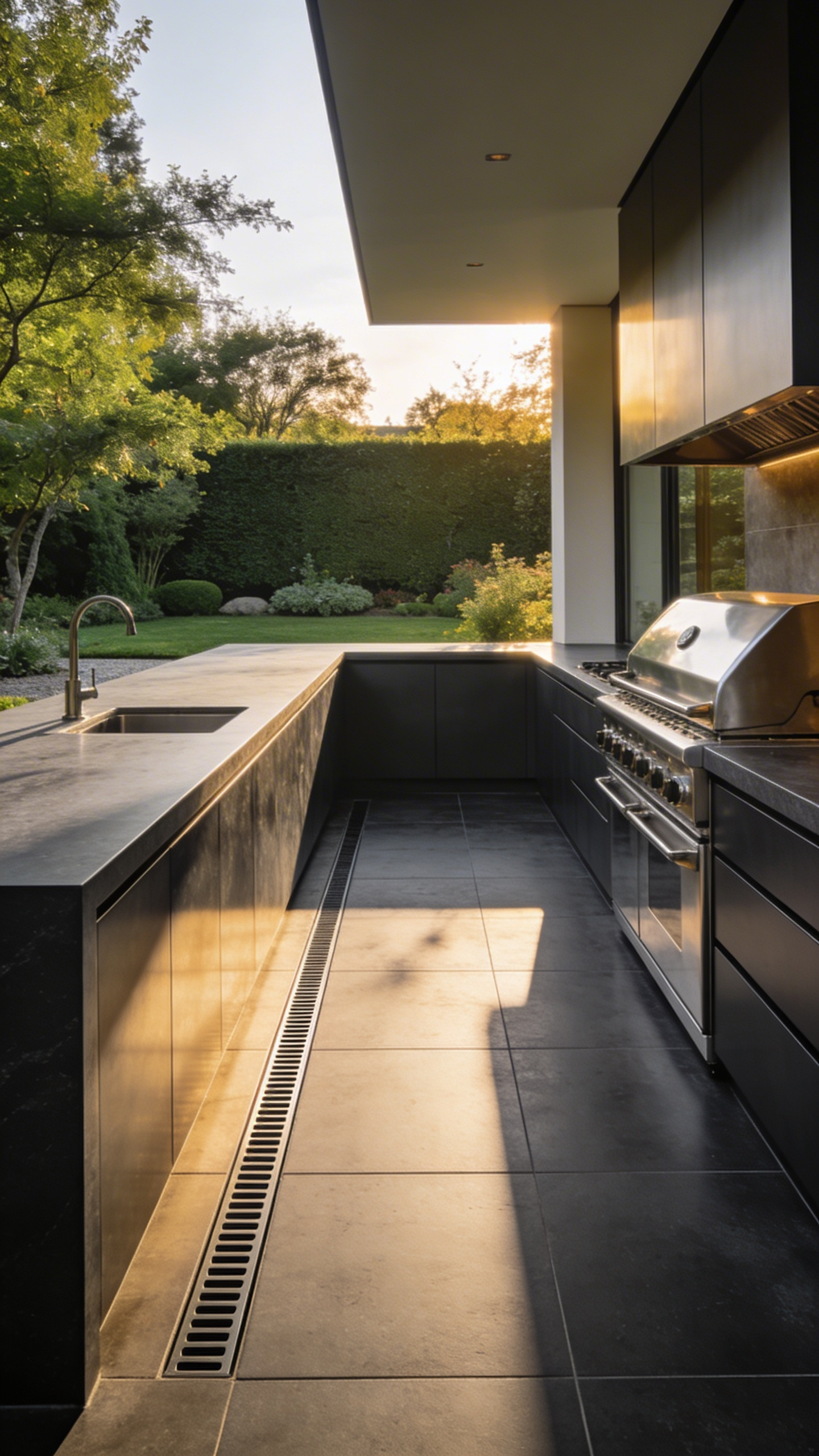
Hosing down a deck requires proper drainage. Installers slope the concrete pad slightly to funnel the water away from the house. Modern patios skip the ugly plastic drain grates. Instead, builders install hidden linear slot drains directly into the stone. Water vanishes into a tiny slit in the floor without pooling around your feet.
Cabinet design also affects cleaning. Standard cabinet bases trap leaves and moisture underneath them. Professional designs often feature cabinets mounted an inch off the ground. The wash-water flows completely under the kitchen island without getting trapped. The runoff then safely exits the patio, keeping your cooking zone pristine.
18. Graceful Weathering: Choosing Materials That Grow More Beautiful with Time
Some materials look better when you stop fighting nature. Embracing natural weathering adds instant character to a patio. Metals like copper and Corten steel change beautifully over the years. Copper darkens and eventually turns green in humid climates. This oxidation actually protects the metal from failing. A copper sink won’t stay perfectly shiny, but the lemon juice stains and water marks give it an amazing rustic look.
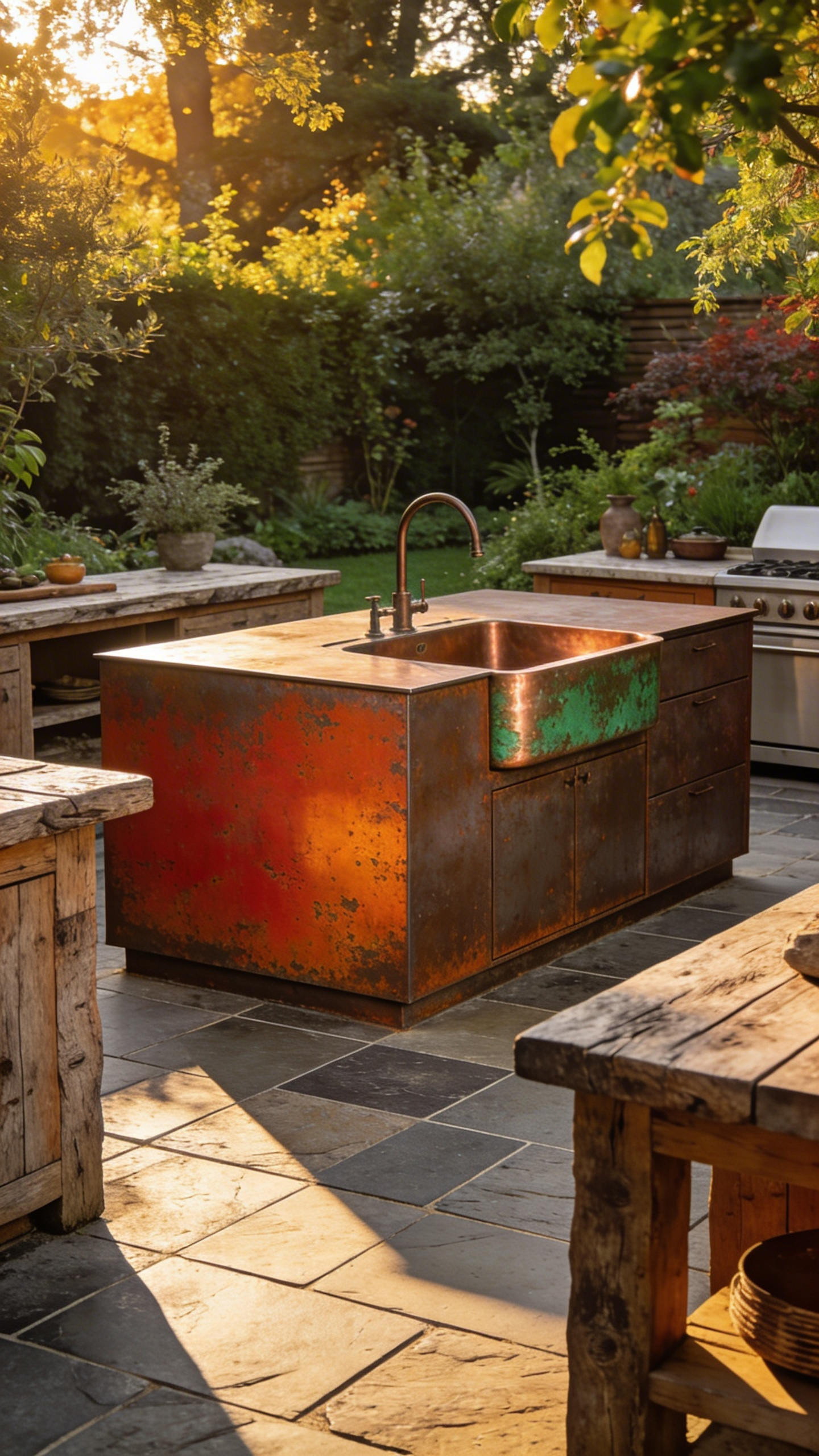
Hardwoods also evolve in the sun. If left untreated, UV rays slowly break down the surface of woods like teak or cedar. The warm brown tones fade into a soft, silvery-grey finish. This weathered driftwood look helps massive wooden cabinets blend right into the garden.
Soapstone thrives on being used hard. Heavy pans will inevitably scratch the surface. Instead of looking broken, the stone just looks rugged. Natural cooking oils gradually darken the countertop around the grill. The stone develops a deep, silky charcoal texture over the years. Embracing these minor imperfections makes owning the kitchen much less stressful. You aren’t constantly worried about the first scratch. Instead of fighting a losing battle against the weather, you let the kitchen age naturally. If a material looks better after five years in the sun, it belongs outside.
Frequently Asked Questions
What is the best material for a high-end outdoor kitchen?
Sintered stone (like Dekton) and natural soapstone are excellent choices. Sintered stone resists UV rays and stains, while soapstone holds heat well and develops a beautiful patina over time.
How do I ensure my outdoor kitchen layout is functional for entertaining?
Break your space into zones: hot (grill), cold (fridge), wet (sink), and dry (prep). Adding a raised bar-height counter gives guests a place to lean and chat without crowding the hot grill.
Can I use indoor kitchen materials for an outdoor kitchen design?
Usually, no. Standard indoor quartz contains resins that turn yellow and crack in direct sunlight. You should stick to outdoor-rated materials like 316L stainless steel, UV-stable stones, and modified woods built to handle moisture.